NASA Reveals Major Fix That Dramatically Improved Artemis II Heat Shield Performance
NASA’s Artemis II heat shield successfully withstood 4,000°F temperatures, with new inspections revealing a significant tenfold reduction in material damage.

NASA engineers have successfully demonstrated that fine-tuning the reentry path of the Orion spacecraft can drastically enhance its structural integrity during the extreme thermal demands of returning from the Moon. Following a comprehensive review of the Artemis II mission, data confirms that a modified flight trajectory resulted in a tenfold decrease in heat shield damage compared to its predecessor, Artemis I.
Mastering the Extreme Heat of Lunar Return
Returning to Earth from a lunar trajectory subjects a spacecraft to some of the most punishing conditions in human spaceflight. As the Orion capsule re-entered the atmosphere, it reached speeds approaching Mach 39, subjecting its exterior to temperatures exceeding 4,000 degrees Fahrenheit (2,204°C). Despite this intense inferno, the crew cabin remained at a stable, comfortable room temperature, validating the core design of the vehicle’s thermal protection systems.
This mission marked a critical turning point for the Artemis program, serving as the first crewed evaluation of Orion’s performance under operational conditions. Beyond the successful transport of astronauts, the mission served as a proving ground for a revised entry strategy, specifically designed to address unexpected degradation observed on the uncrewed Artemis I flight.
A Significant Reduction in Material Wear
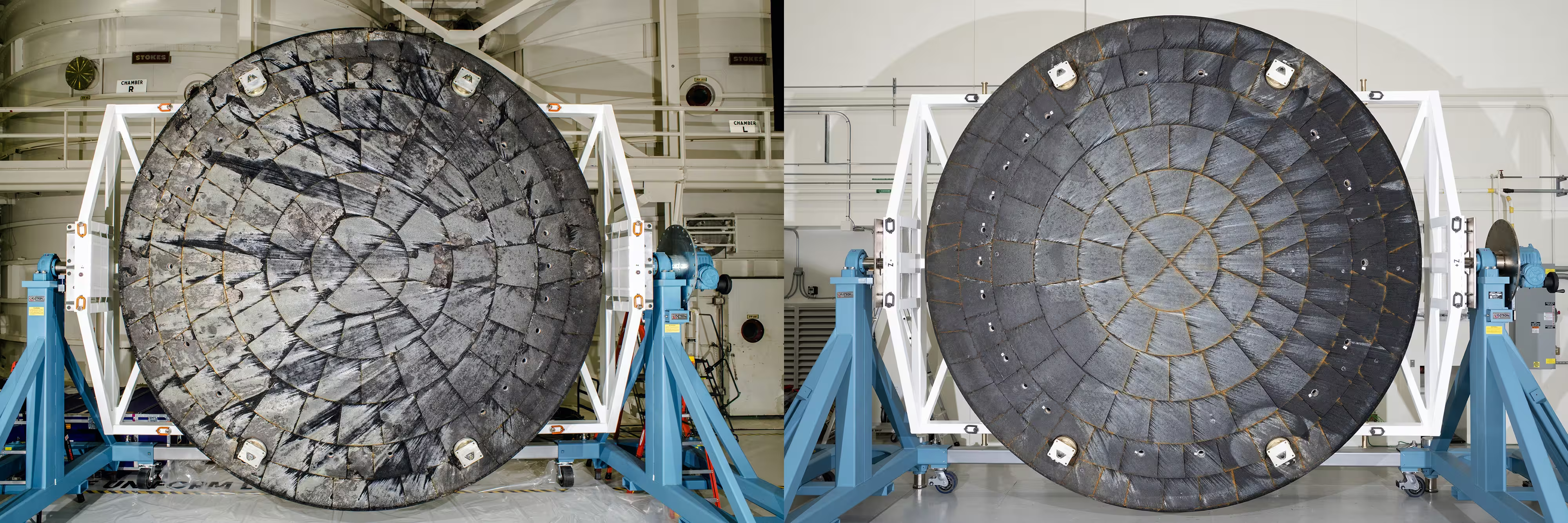
The engineering team’s decision to modify the atmospheric entry profile—specifically by shortening the duration the craft spent within a high-heat temperature window—yielded immediate results. Where the Artemis I heat shield exhibited 103 distinct areas of char loss, the Artemis II module displayed only nine.
This dramatic reduction validates the high-temperature material simulations conducted at the Ames Research Center. Furthermore, the spacecraft displayed remarkable precision during its descent. Orion hit its entry target within 192 feet of the calculated interface and splashed down just 0.59 miles from its predicted location in the Pacific Ocean off San Diego, confirming that the new, safer trajectory does not come at the cost of navigational accuracy.
Under the Surface: Analyzing the Ablative Shield
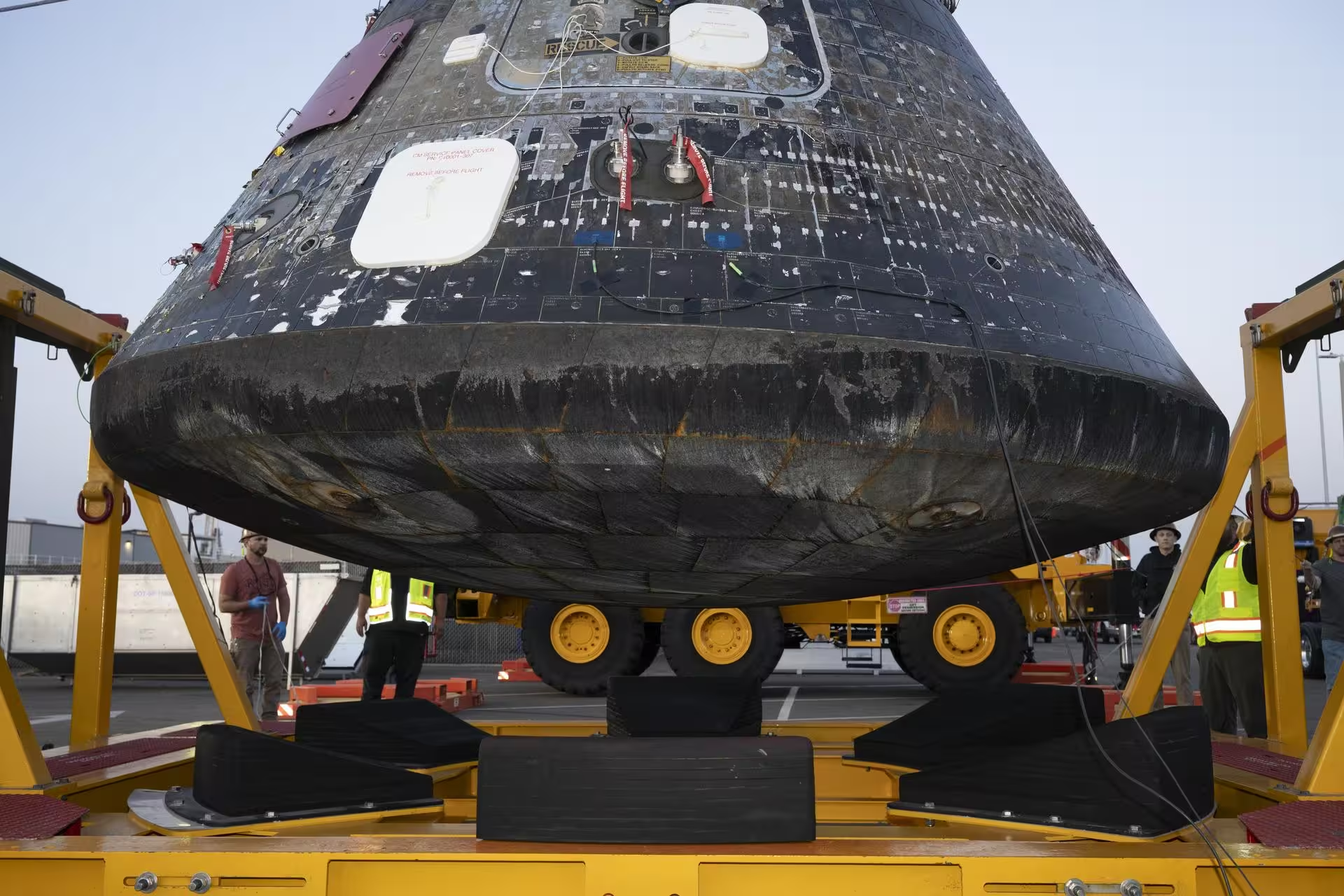
Orion’s thermal defense relies on 186 individual blocks of Avcoat, a specialized ablative material designed to shed heat as it slowly wears away. To ensure these blocks performed as expected, the team conducted a multi-phase inspection process. Following initial visual checks by recovery divers, the capsule was transported to the Kennedy Space Center, and eventually to the Marshall Space Flight Center, where engineers utilized X-rays and physical sample extraction to peer into the material’s performance at the microscopic level.
The findings indicate that the aerodynamic and thermal behavior of the capsule aligned perfectly with pre-flight models. The secondary thermal systems, including the approximately 1,300 ceramic tiles covering the backshell, also showed no signs of degradation or overheating around sensitive areas like windows, vents, and thrusters.
Charting the Path to Lunar Landings
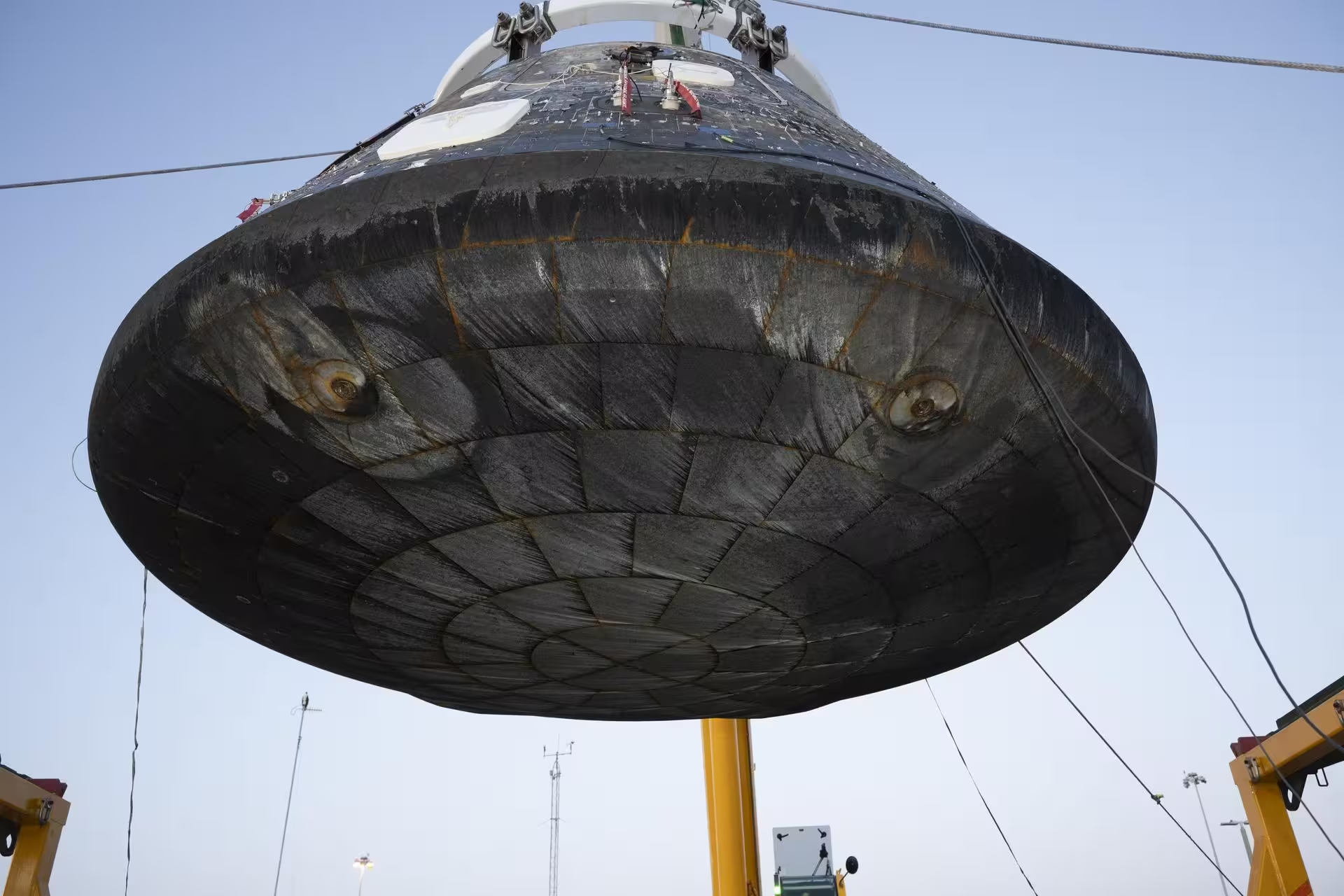
The success of the Artemis II thermal protection strategy is already being integrated into the assembly of the Artemis III spacecraft. Building on insights gained from the initial Artemis I investigations, technicians have refined the manufacturing process for the Avcoat blocks to ensure greater uniformity and permeability consistency.
With Artemis III slated for a 2027 launch, the mission will focus on low Earth orbit operations, featuring astronauts Randy Bresnik, Frank Rubio, Andre Douglas, and Luca Parmitano. The crew is tasked with conducting critical rendezvous maneuvers with lander test articles from SpaceX and Blue Origin—essential steps before NASA attempts to return humans to the lunar surface with the Artemis IV mission in 2028. By solving the challenges of atmospheric re-entry today, NASA is securing the pathway for the deeper exploration of tomorrow.
According to official reports from the agency, the ongoing analysis of surface recession and internal material responses continues to reinforce the conclusion that the modified flight profiles have significantly bolstered the reliability of the Orion platform.
This article has been fact checked for accuracy, with information verified against reputable sources. Learn more about us and our editorial process.
Last reviewed on .
Article history
- Latest version
Reference(s)
- Niles-Carnes, Elyna. “Rigorous Analysis Confirms NASA’s Artemis II Heat Shield Performance .”, October 15, 2026 NASA <https://www.nasa.gov/missions/artemis/artemis-2/rigorous-analysis-confirms-nasas-artemis-ii-heat-shield-performance/?utm_source=TWITTER&utm_medium=NASAArtemis&utm_campaign=NASASocial&linkId=1021788731>.
Cite this page:
- Posted by Karan Das