Ancient Chinese Dinosaur Fossil Shows Porcupine-Like Spikes And Cellular Skin Preservation
A Chinese dinosaur fossil shows an unprecedented feature, sparking bizarre theories about its unknown purpose.
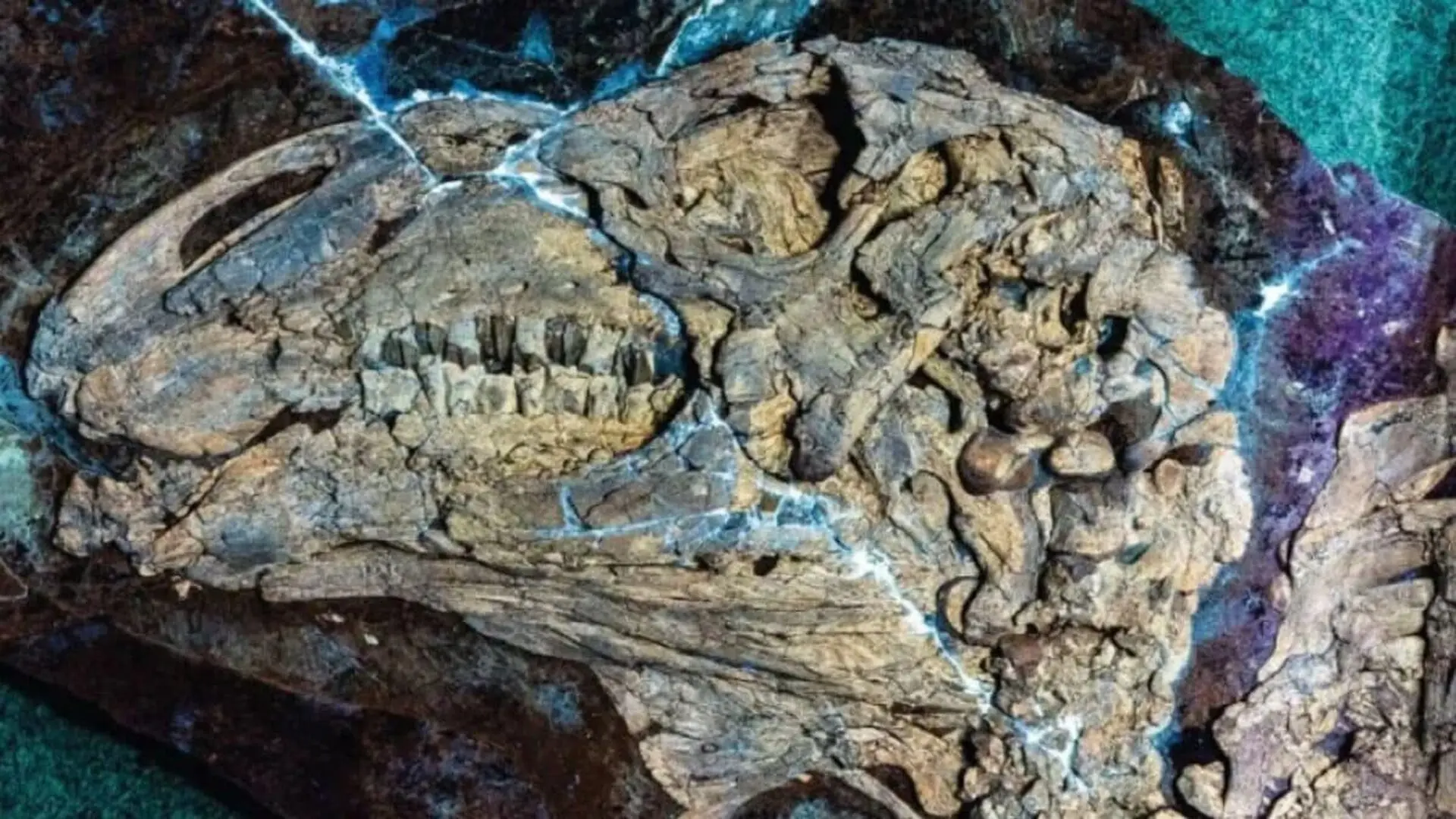
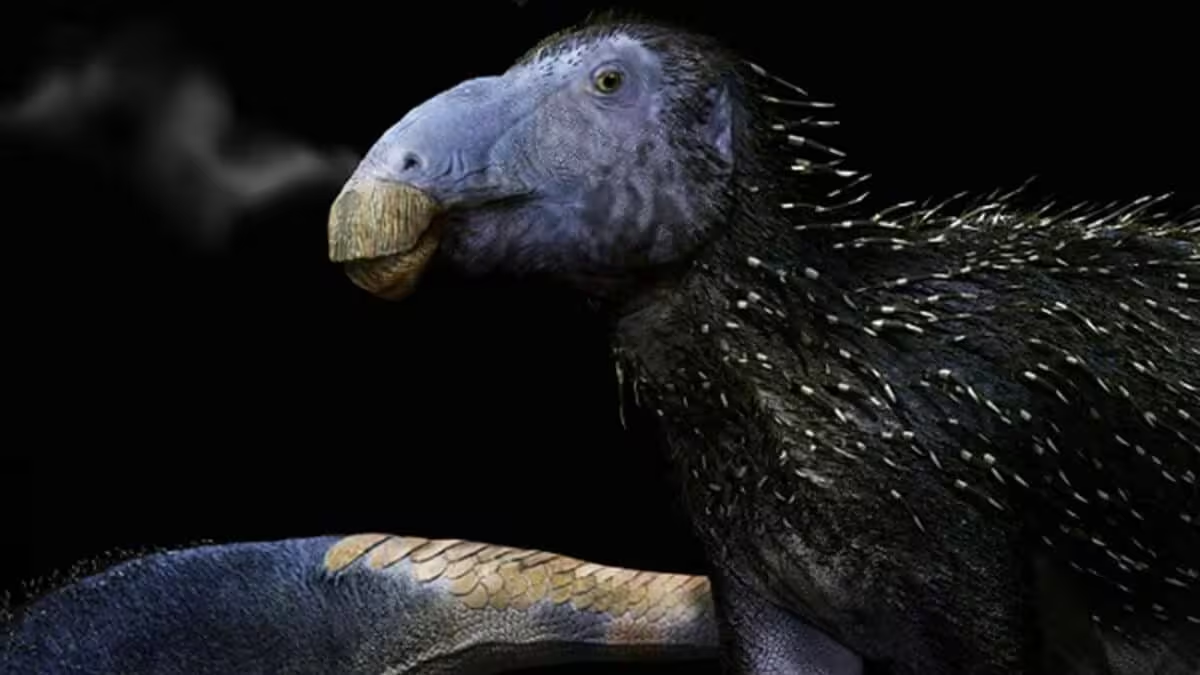
A fossil dating back 125 million years, recovered from Early Cretaceous deposits in China, has revealed a dinosaur with a skin covering unlike any seen before. The juvenile herbivore, now assigned to the new species Haolong dongi, bears a field of hollow, porcupine‑like spikes that grew directly from its epidermis, a structure never recorded in the dinosaur record. Remarkably, the skin is so well preserved that individual cells are still discernible after more than a hundred million years.
The find belongs to the Iguanodontia, a lineage of beaked, robust‑legged herbivores that have been the subject of scientific study since the early nineteenth century. After two centuries of investigation, this specimen adds a completely unexpected anatomical trait to the group.
What makes the specimen extraordinary is not merely its skeletal framework but the preservation of its soft tissue. Because soft tissue rarely survives fossilization, especially at a microscopic scale, the discovery provides insight far beyond the description of a single new taxon.
Cell‑Level Detail Locked in Stone
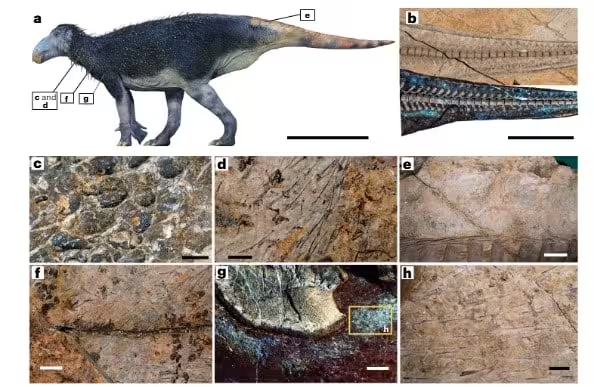
A team of researchers from CNRS and collaborating institutions employed X‑ray scanning alongside high‑resolution histological analysis, which examines ultra‑thin sections under a microscope, to probe the fossil’s cellular architecture.
These methods confirmed that individual skin cells remained intact for roughly 125 million years, setting a new benchmark for preservation among even the most exceptionally conserved fossils.
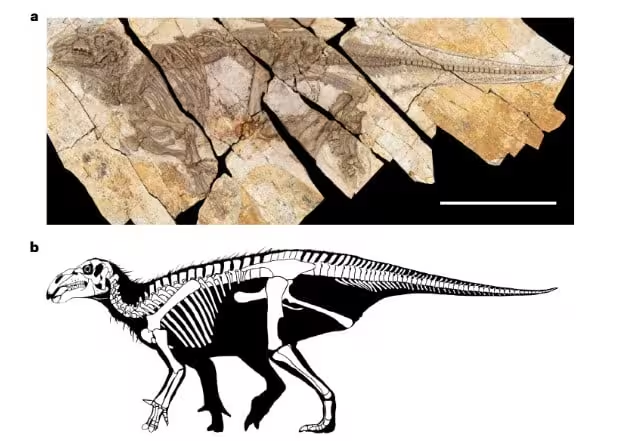
The microscopic resolution allowed the scientists to reconstruct the internal anatomy of the spikes that enveloped much of the animal’s body. Their analysis shows that these projections are cutaneous, meaning they originated directly from the skin rather than from underlying bone, distinguishing them from horns or bony plates that develop from the skeleton.
“These spikes differ structurally from known protofeathers in non‑avian dinosaurs and scaly spines in extant squamates, suggesting a distinct evolutionary origin,” stated the authors.
Why a Herbivore Would Wear Hollow Spines
One plausible function is defense. Living alongside small carnivorous dinosaurs in the Early Cretaceous, Haolong dongi may have used its porous spines much like a porcupine’s quills, deterring predators from approaching too closely. Previous work on dinosaur spikes supports this interpretation.
The authors also propose a possible role in thermoregulation. By increasing surface area, the hollow spikes could have facilitated heat exchange, helping the animal retain warmth or dissipate excess heat. A third hypothesis suggests a sensory function: the spines might have acted as a tactile network, alerting the animal to nearby movement or environmental changes.
Naming the New Species and What Remains Unknown
The dinosaur has been christened Haolong dongi in tribute to Dong Zhiming, a distinguished Chinese paleontologist whose work has illuminated the country’s rich fossil heritage. The honor reflects the fact that the specimen was uncovered in the same region where Dong conducted much of his groundbreaking research.
Because the holotype represents a juvenile individual, scientists caution that the full extent of the spike covering in adult specimens remains uncertain. Determining whether the hollow spines persisted, diminished, or vanished as the animal matured will require additional fossils from later growth stages.
This article has been fact checked for accuracy, with information verified against reputable sources. Learn more about us and our editorial process.
Last reviewed on .
Article history
- Latest version
Cite this page:
- Posted by Hassan Raza