Ancient Pterosaur Wing Bone Reveals Steroid Molecules and Microbial Secrets
Pterosaur fragment from deep time reveals surprising traces that normally wouldn’t survive, shedding new light on ancient ecosystems.
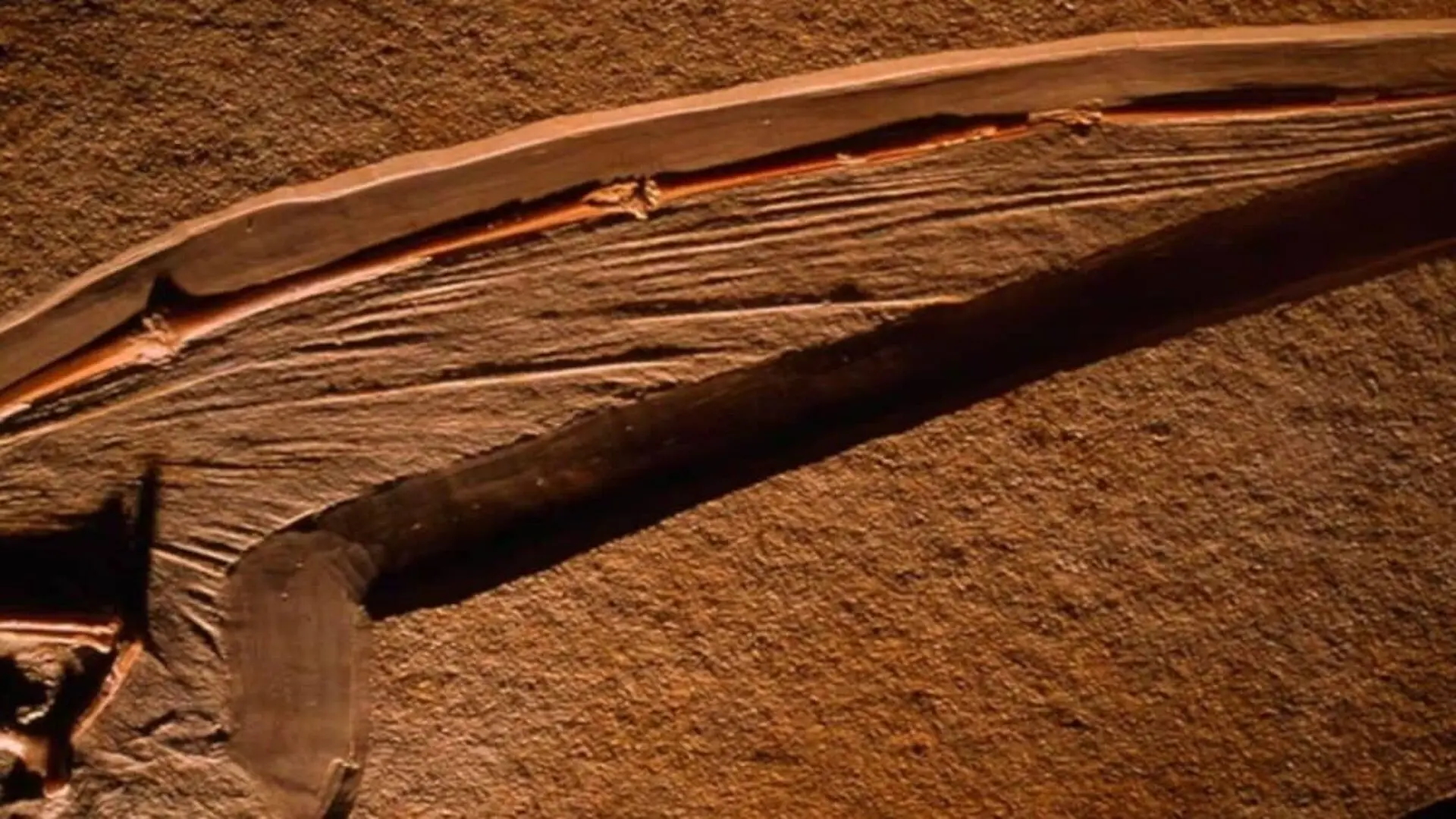
Researchers have uncovered a 113‑million‑year‑old pterosaur wing bone in the northeast of Brazil, a find that not only retains its three‑dimensional shape but also preserves chemical residues that reveal clues about the animal’s diet and the conditions of its burial. The study, appearing in iScience, represents an uncommon instance where both anatomical detail and molecular signatures survive together for more than a hundred million years.
Pterosaurs, the aerial reptiles that shared their world with dinosaurs, sported lightweight, hollow skeletons that facilitated powered flight. While some species boasted wingspans of up to 12 metres, their delicate bone structure usually disintegrates quickly after death, making this Brazilian specimen all the more remarkable.
Three‑Dimensional Bone Retains Shape and Chemistry
Unlike many fossils that collapse under sediment pressure, the wing phalanx remains fully three‑dimensional, allowing scientists to examine fine morphological features that are typically lost. The preservation quality is highlighted in the original paper, which notes that such detail offers a rare window into the creature’s original anatomy.
“This fossil is a true time capsule—not only is it beautifully preserved, but for the first time we’ve detected traces of steroids in a pterosaur, providing further evidence that these creatures likely fed on fish or squid,” she said.
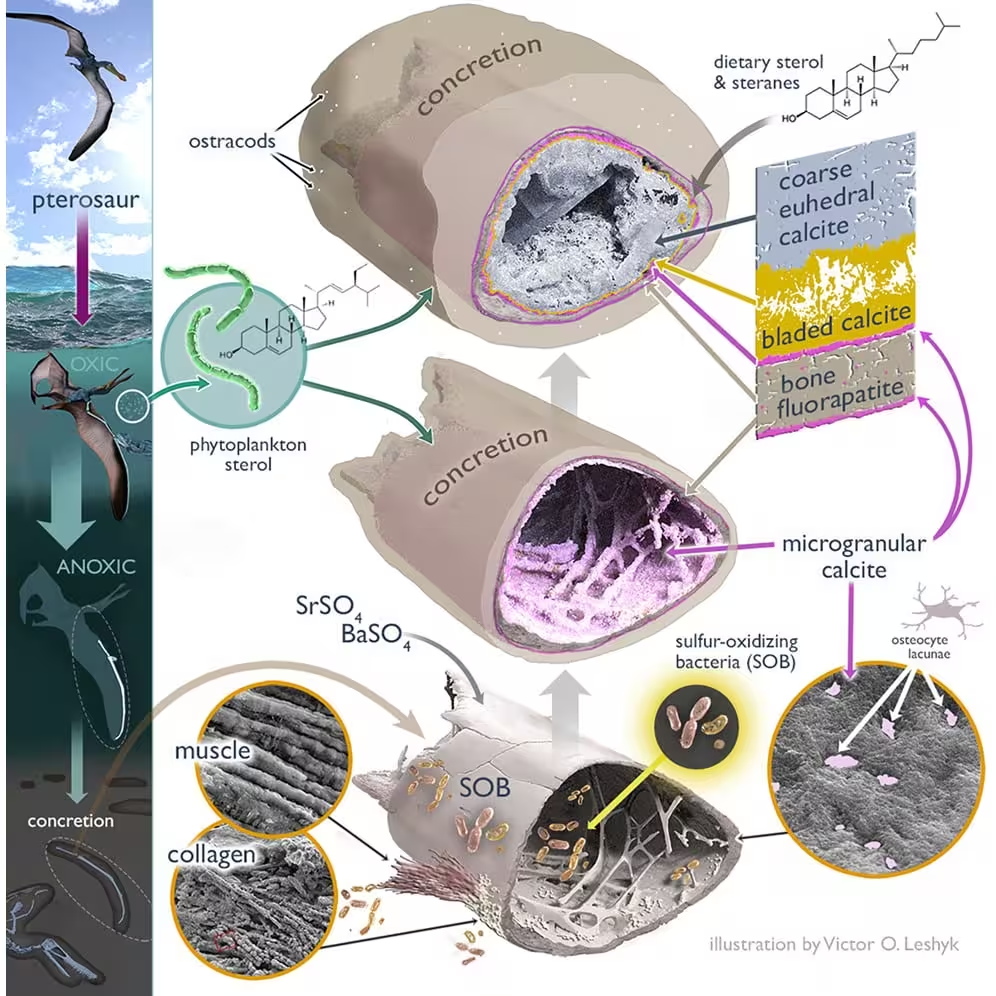
Organic molecules of this age are exceedingly rare, as they normally degrade long before the rock record can preserve them. Their survival here suggests that the burial environment acted to arrest typical decay pathways, effectively locking in biochemical information.
Microbial Mediation Locked the Bone in Stone
After the animal sank to the ancient seabed, microbes—not simple chemical decay—shaped the fossilization process. Sulfur‑oxidising bacteria, in particular, altered redox conditions in the sediment, prompting mineral precipitation around the remains. Curtin University researchers explain that these oxidative processes, driven by ancient microbiomes, can paradoxically protect rather than destroy fragile tissues.
“Rather than being destroyed by oxygen, some fossils are preserved because of it, through oxidative processes carried out by ancient microbiomes.”
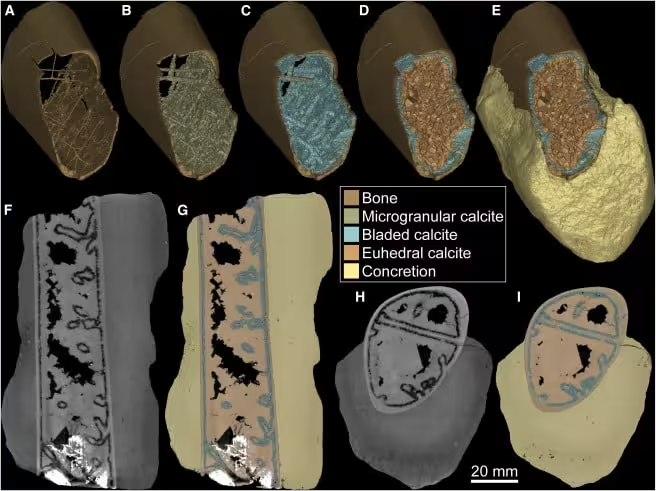
The bacterial activity broke down soft tissues and lipids, while simultaneously encouraging mineral growth that encased the bone. Over millions of years this mineral sheath preserved both the external form and internal microstructures in unprecedented detail.
“Microbes, including sulfur‑oxidising bacteria, began breaking down the soft tissue and fats and triggered mineralisation around the body – a process that, over time, helped preserve its structure in incredible detail for more than 100 million years,” she explained.
Implications for Global Fossil Preservation
The discovery was made in marine sediment of Brazil’s northeast coast, indicating rapid burial on an ancient seafloor. The combination of fine‑grained sediment, active microbes, and shifting chemical conditions created a natural “Lagerstätten” environment—rare settings that yield exceptionally preserved fossils.
Researchers suggest that the hollow architecture of pterosaur bones may have facilitated fluid flow, allowing mineral‑rich solutions to infiltrate and reinforce internal cavities, further enhancing preservation.
The international team, spanning Brazil, Germany and the United States, employed high‑resolution imaging and geochemical analyses at Curtin University to reconstruct both the bone’s morphology and its chemical narrative. Their findings echo emerging patterns at other fossil sites, hinting that microbially driven mineralisation could be a more widespread preservational pathway than previously recognized.
“It adds to the growing evidence that tiny microbes played a big role in this process—something we are now identifying at other fossil sites—presenting a new global Lagerstätten mechanism, the special conditions that make exceptional preservation possible,” said Grice in a university statement.
This article has been fact checked for accuracy, with information verified against reputable sources. Learn more about us and our editorial process.
Last reviewed on .
Article history
- Latest version
Cite this page:
- Posted by Hassan Raza