LiDAR Reveals Amazon Civilization That Supported Millions and Built Thousands of Earthworks
New research shows a lost Amazonian civilization thrived across southwestern Amazon for over a millennium, housing millions before vanishing around 850 AD.
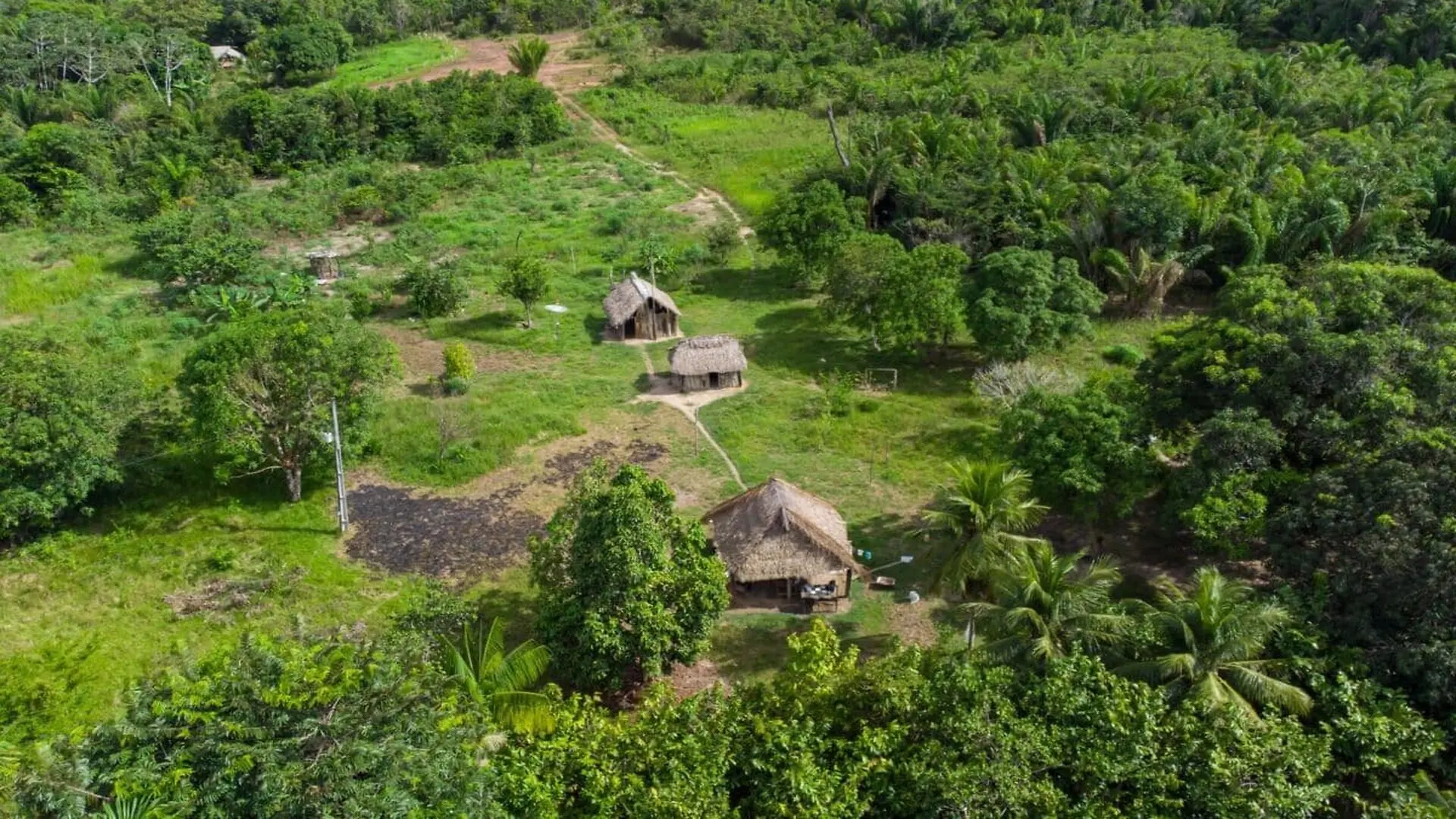
A sweeping LiDAR survey of Brazil’s Acre state has revealed a hidden world of ancient earthworks and settlements that suggests a densely populated, highly organized civilization flourished in southwestern Amazonia from roughly 600 B.C. to 850 A.D.
Airborne Laser Scans Expose Thousands of Lost Structures
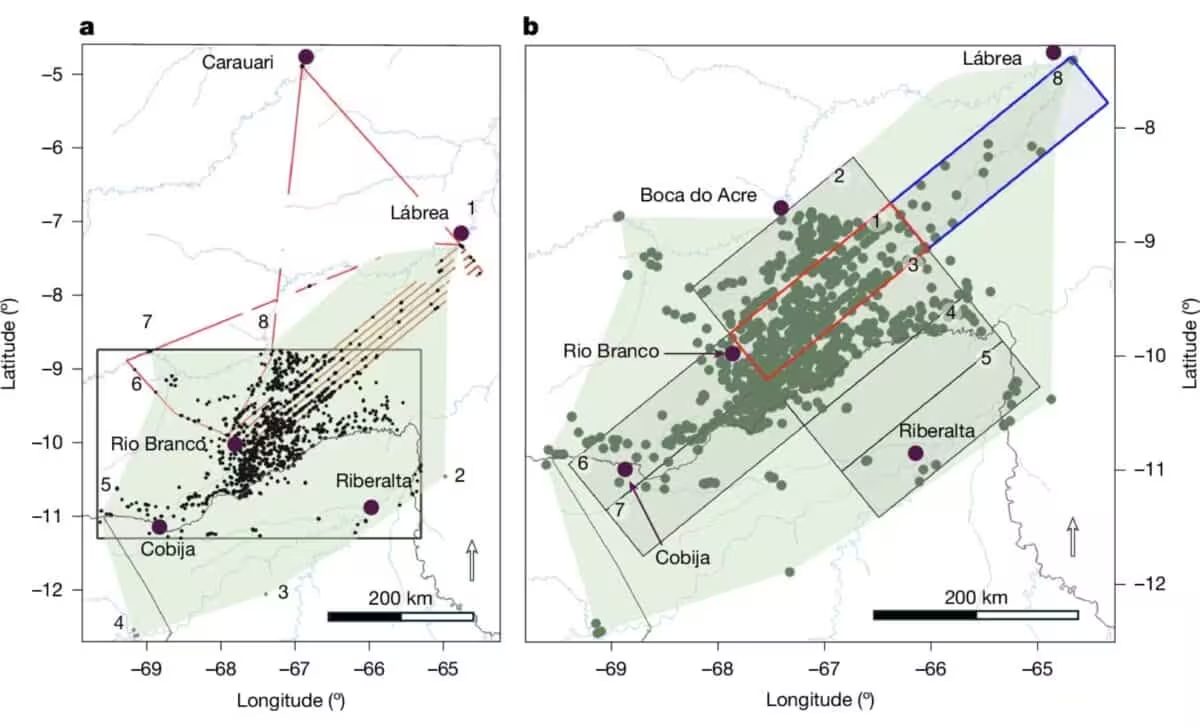
Led by Martti Pärssinen of the University of Helsinki, the research team deployed LiDAR (light detection and ranging) to pierce the dense canopy that has long hampered archaeological work in the region. Over an area of about 4,500 square kilometers, the laser pulses mapped terrain features invisible to the naked eye.
The high‑resolution data uncovered more than 400 well‑preserved archaeological sites, including geometric earthworks, straightened pathways and ceremonial plazas. Extrapolating from the surveyed sector, the authors estimate that the broader Aquiry‑associated landscape—spanning roughly 183,000 square kilometers—could host upwards of 20,000 similar ceremonial centers.
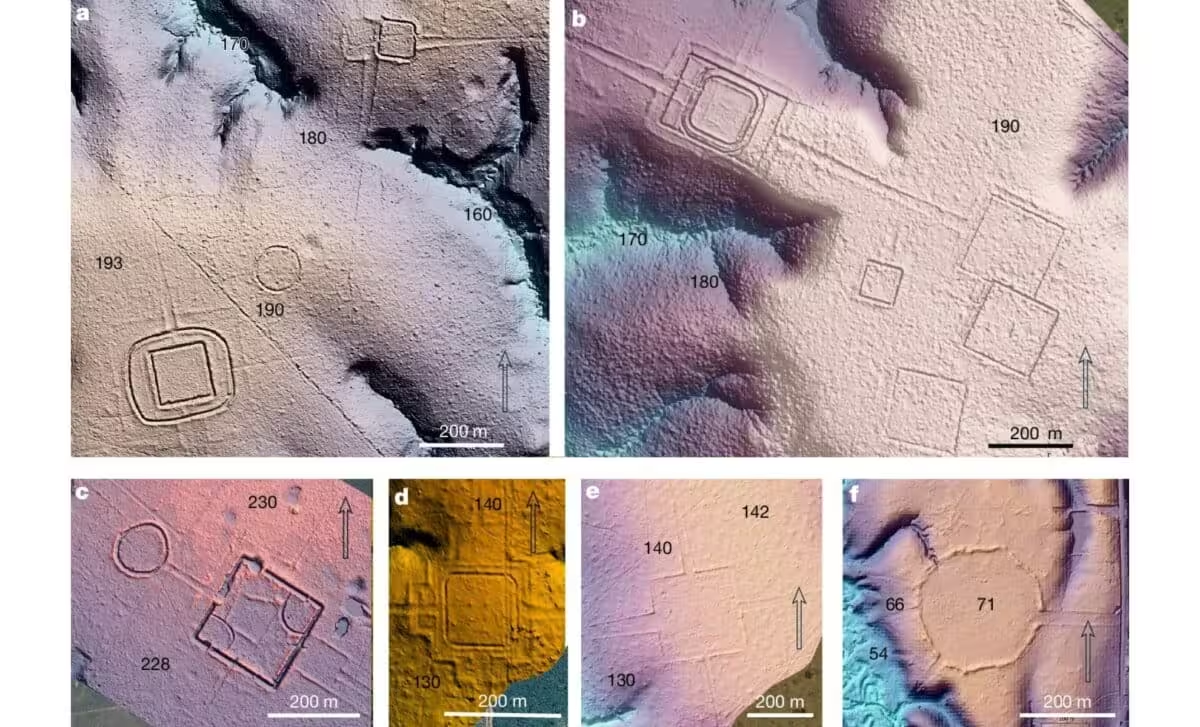
Among the discoveries, the largest complex occupies about 50 hectares, underscoring the scale of construction and the diversity of settlement patterns that point to a mosaic of autonomous communities rather than a monolithic state.
Rewriting the Story of Amazonian Prehistory
Radiocarbon dates and artifact analysis indicate that the Aquiry network may have supported between 1.25 and 3 million inhabitants at the dawn of the first millennium, a population size far exceeding previous estimates for the Amazon basin.
Archaeologists observed systematic landscape manipulation: sections of bamboo‑dominated forest were cleared to grow staple crops such as maize, squash and manioc, while valuable tree species—including Brazil nut, peach palm and other fruit‑bearing plants—were actively encouraged to spread.
The term “Aquiry” derives from Indigenous references to the Acre River. According to Pirjo Kristiina Virtanen, a professor of Indigenous studies at the University of Helsinki, the civilization comprised a network of distinct communities, each with its own cultural traits.
Pärssinen emphasizes that these findings reshape the biocultural narrative of the Amazon, highlighting the need to factor ancient human activity into models of regional carbon dynamics and climate evolution.
The decline of the Aquiry network around 850 A.D. remains enigmatic, but its timing aligns with the rapid collapse of the Classic Maya in Mesoamerica, suggesting that broader climatic or societal shifts may have impacted multiple societies across the continent.
Future investigations aim to uncover the languages, identities and eventual causes of disappearance for these complex Amazonian societies, promising deeper insight into the continent’s pre‑colonial past.
This article has been fact checked for accuracy, with information verified against reputable sources. Learn more about us and our editorial process.
Last reviewed on .
Article history
- Latest version
Reference(s)
- “Martti Pärssinen.” University of Helsinki Research Portal <https://researchportal.helsinki.fi/en/persons/martti-p%C3%A4rssinen/>.
- “Pirjo Kristiina Virtanen.” University of Helsinki Research Portal <https://researchportal.helsinki.fi/en/persons/pirjo-kristiina-virtanen/>.
Cite this page:
- Posted by Zara Tariq