LiDAR and locals find 84-meter Heaven Sword, East Asia’s tallest tree
After nine years of searching, scientists discover a record‑breaking giant tree in Taiwan’s mountains, the tallest ever recorded in East Asia.
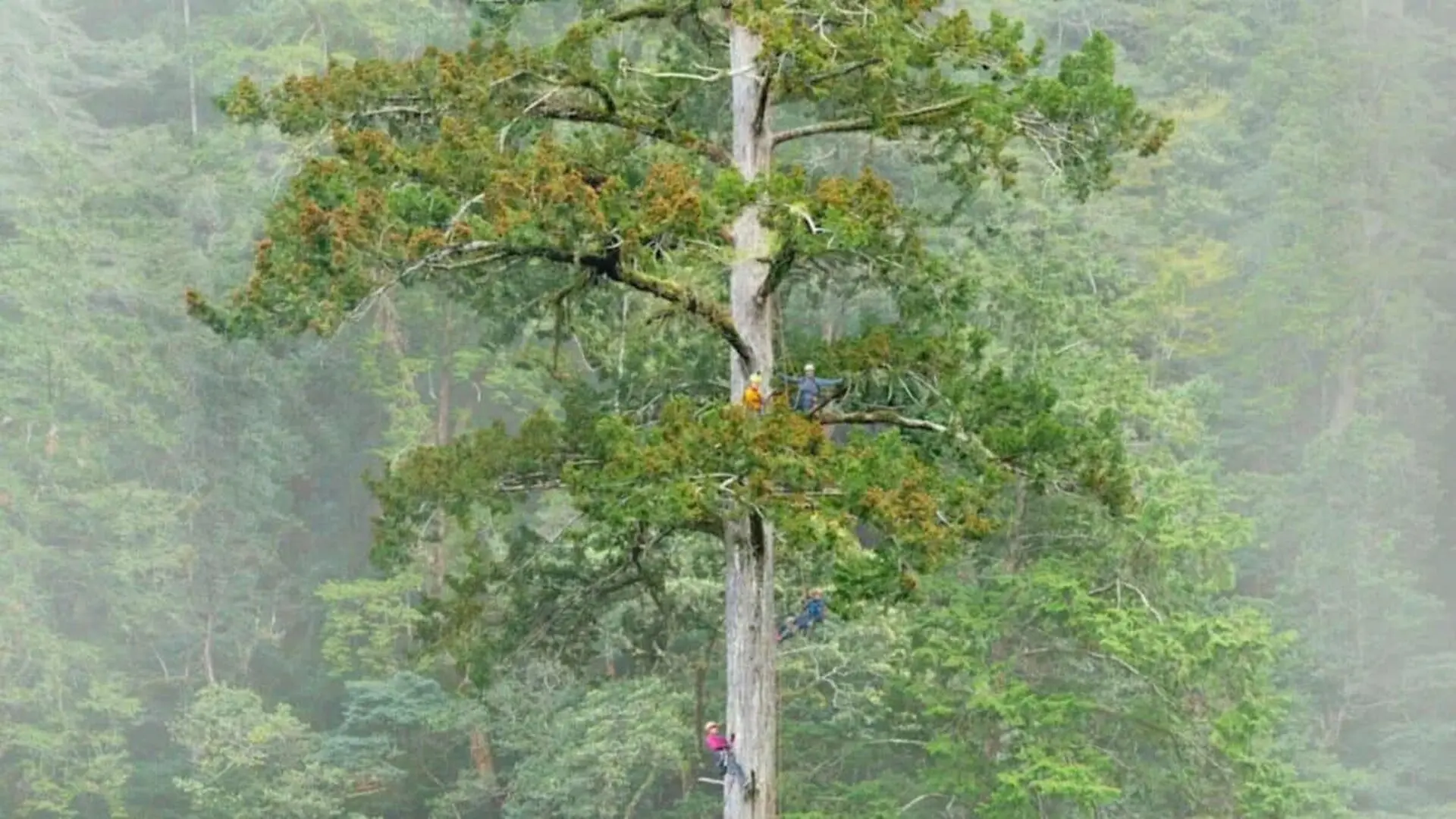
When a team of climbers finally reached the apex of a colossal Taiwania cryptomerioides fir deep within Taiwan’s Da’an River valley and let a measuring tape fall to the ground, the result settled a decade‑long mystery: the tree measured 84.1 meters tall. Now christened the “Heaven Sword of the Da’an River,” it claims the title of the tallest verified tree in East Asia.
The discoverers, who call themselves “Taiwan tree seekers,” spent nine years trekking into remote forest sections that few people have ever seen. Their findings appear in a paper published in Frontiers in Forests and Global Change.
Why Taiwan’s Rugged Peaks Sheltered Unseen Giants
Understanding how a tree of this stature escaped detection requires a look at Taiwan’s geography. The island, roughly the size of Switzerland at 36,000 km², hosts 258 summits above 3,000 meters, creating steep elevation gradients over short distances. This vertical diversity supports an estimated 5,000 plant species, ranging from tropical rainforests at sea level to alpine tundra near the peaks, and about 60 percent of the land remains forested, home to roughly 950 million trees.
Industrial logging from 1912 to 1991 removed large swaths of the original primary forest, yet the steepest, most isolated valleys proved too difficult for harvesters to access. Those inaccessible zones preserved ancient Taiwania fir stands for centuries.
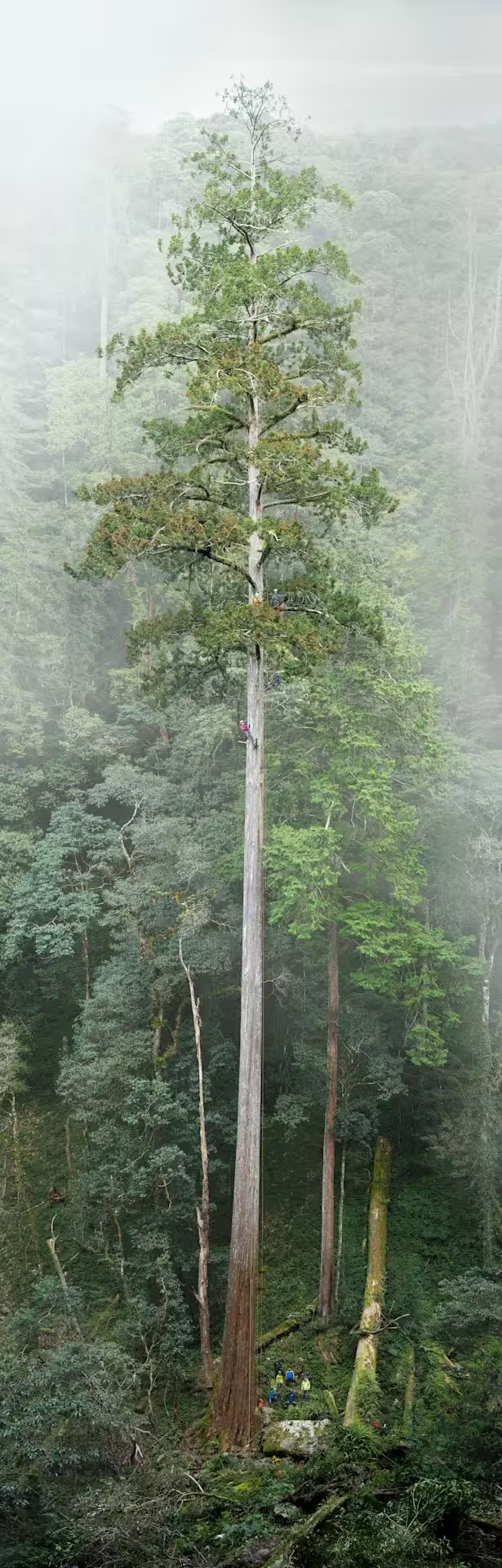
For the Indigenous Rukai people, these soaring trees bear a name that translates to “the tree that hits the moon,” a cultural memory that predates scientific surveys and guided researchers toward forest areas omitted from official records.
A Decade‑Long Hunt Across Hundreds of Millions of Trees
The formal search began in August 2014 when scientists from the Taiwan Forestry Research Institute launched an expedition into the Cilan conservation area, targeting a local cluster known as the “Chilan Three Sisters.” Although locals had long noted the trio of Taiwania firs, none had been scientifically measured. The tallest individual reached 69.3 meters with a trunk nearly three meters in diameter, drawing international attention in 2017 when climbers from Australia’s Tree Projects traveled to Taiwan to document the grove.
Subsequent efforts focused on a region near Mt. Benya, adjacent to the sacred Great Ghost Lake. Indigenous accounts described this area as the densest concentration of giant Taiwania firs on the island. After four days of arduous hiking, the team ascended a 71.7‑meter tree.
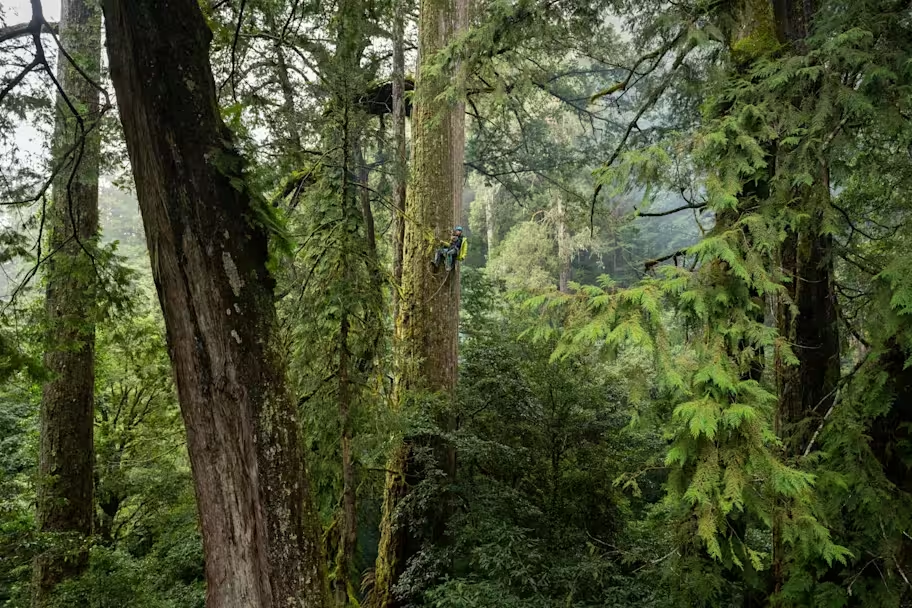
These early climbs revealed a core difficulty: dense, multi‑layered old‑growth canopies often trick the human eye, leading to misjudgments of true tree height. With 950 million trees scattered across valleys that require days of trekking, a ground‑level inventory of the whole island proved impractical, prompting the researchers to seek aerial methods.
Mapping the Giants with LiDAR Technology
Collaborating with remote‑sensing experts at National Cheng Kung University, the team turned to LiDAR (Light Detection and Ranging), which emits laser pulses from aircraft and measures return times to calculate precise elevations. Applying this across Taiwan’s forests generated a three‑dimensional model that highlighted potential giant candidates from the sky.
Taiwan’s dramatic relief introduced a challenge: the automated algorithm often inflated tree heights near cliff edges because it measured against the valley floor rather than the tree’s base. The researchers noted that 93 percent of initial candidates were mis‑measured, making raw LiDAR data unreliable without further refinement.
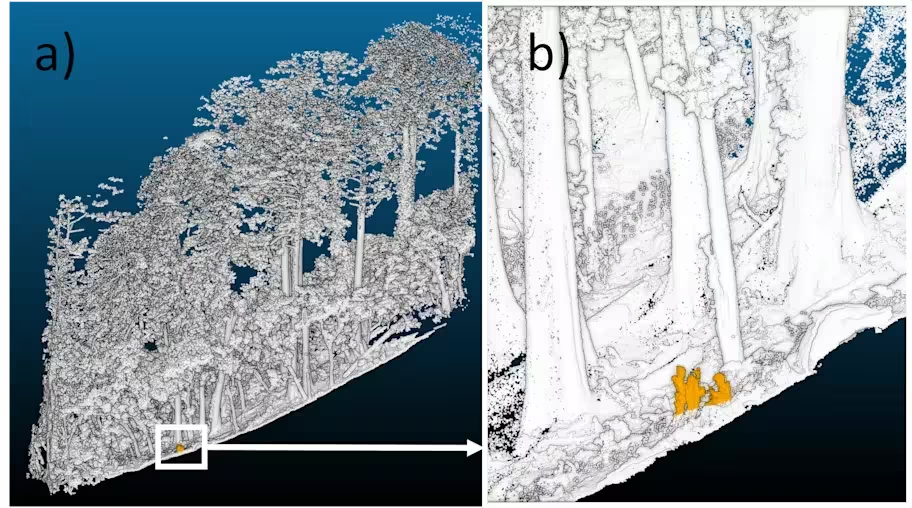
To correct the dataset, hundreds of Taiwanese citizen scientists in 2020 began reviewing LiDAR profiles, manually separating true tall trees from terrain‑induced artefacts. Their effort eliminated tens of thousands of false leads, and by the end of 2022 the team published the Taiwan Giant Tree Map, documenting 941 trees confirmed to exceed 65 meters in height. This map became the blueprint for the next field mission.
Field Verification of the Record‑Breaking Tree
Armed with the map, the researchers launched a new expedition over the Lunar New Year holiday in January 2023, targeting the most promising candidate. The journey involved a 20‑kilometer river trek followed by two days of steep, trail‑less ascent. Upon reaching the canopy and dropping a measuring tape, the tree’s height was verified at 84.1 meters, earning the formal name “Heaven Sword of the Da’an River.”
Since that landmark climb, the team has continued surveying the region. By early 2026 they reported ten separate Taiwania individuals over 70 meters, with two surpassing the 80‑meter mark. Near Mt. Benya, the Giant Tree Map pinpointed a one‑hectare stand containing 11 trees taller than 65 meters, and a cluster of about 30 ancient Taiwania firs near Great Ghost Lake.
A 2024 carbon‑density study of the “Tao Tree” valley, conducted with 15 citizen scientists, measured forest carbon storage at 1,384.5 megagrams per hectare—excluding underground roots. The authors highlighted that this places Taiwan’s giant Taiwania forests among the world’s most carbon‑dense ecosystems, rivaling renowned old‑growth forests globally. The discovery underscores how remote, unlogged terrain can preserve not only record‑breaking trees but also vital carbon reservoirs.
This article has been fact checked for accuracy, with information verified against reputable sources. Learn more about us and our editorial process.
Last reviewed on .
Article history
- Latest version
Reference(s)
- Pirchner, Deborah. “This is how we found ‘The Heaven Sword,’ East Asia’s tallest tree after years of looking.”, June 5, 2026 This is how we found ‘The Heaven Sword,’ East Asia’s tallest tree after years of looking <https://www.frontiersin.org/news/2026/06/05/how-we-found-east-asias-tallest-tree>.
- <https://www.eurekalert.org/news-releases/1128761>.
Cite this page:
- Posted by Zara Tariq