Laser Scans Reveal Mercury Vapor Seeping From Qin Shi Huang’s 2,000-Year-Old Tomb
Laser scanning of Qin Shi Huang’s sealed tomb uncovers a mysterious signal, potentially confirming a 2,000‑year‑old imperial secret hidden beneath.
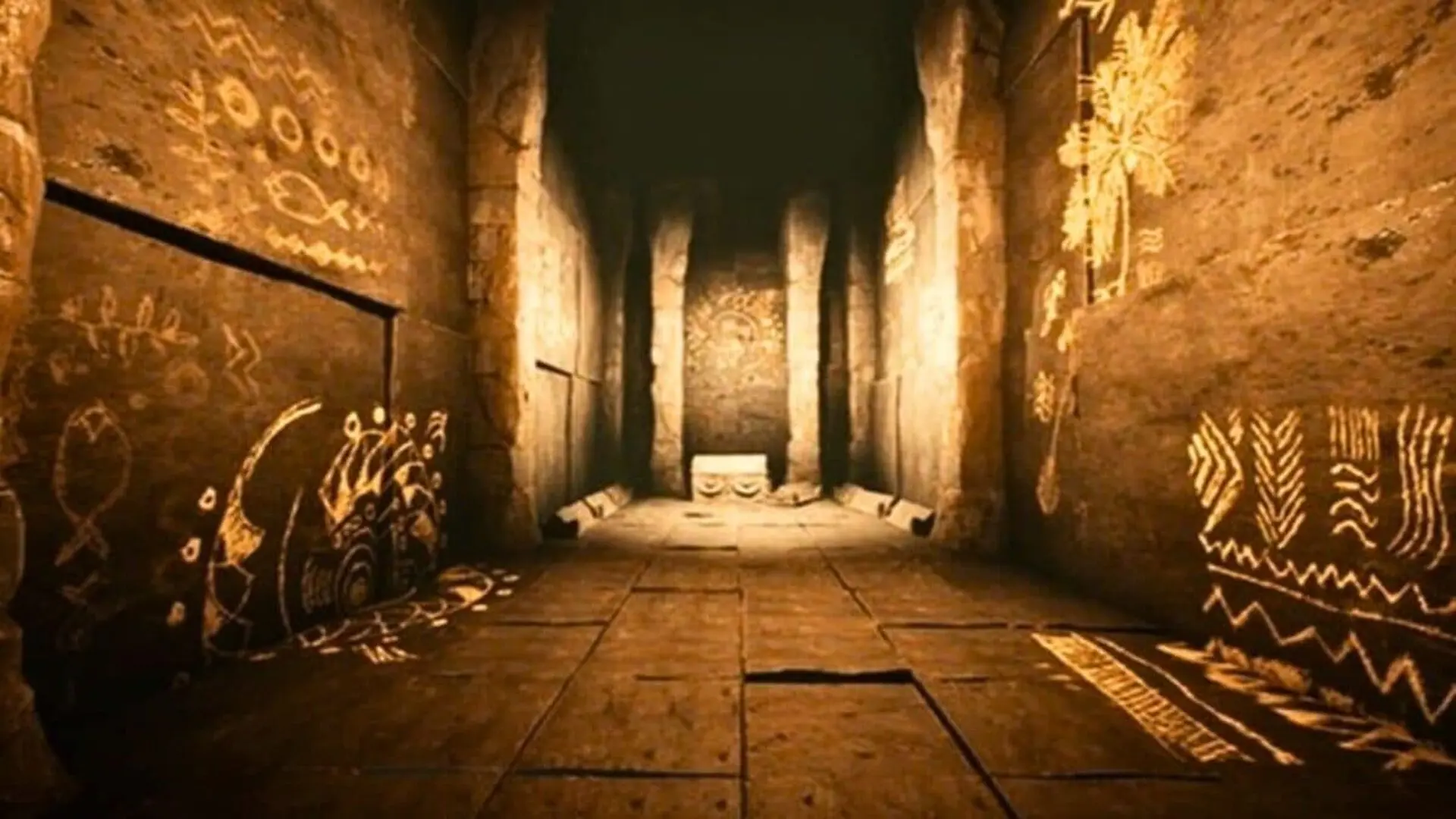
Deep beneath a pyramid‑shaped mound near Lintong, roughly thirty kilometres northeast of Xi’an, an untouched burial chamber has lain undisturbed for over two thousand years. Ancient chronicler Sima Qian claimed that Emperor Qin Shi Huang’s underground palace was lined with rivers and lakes of liquid mercury, forming a massive map of the empire. For centuries the story hovered between credible record and legend.
A new investigation published in Scientific Reports provides the first atmospheric data indicating that mercury is indeed leaking from the site. Led by physicist Sune Svanberg of Lund University and South China Normal University, the researchers measured localized spikes of mercury vapor above the Qin Shi Huang Mausoleum that exceed the surrounding background and correspond to previously identified soil‑mercury hotspots.
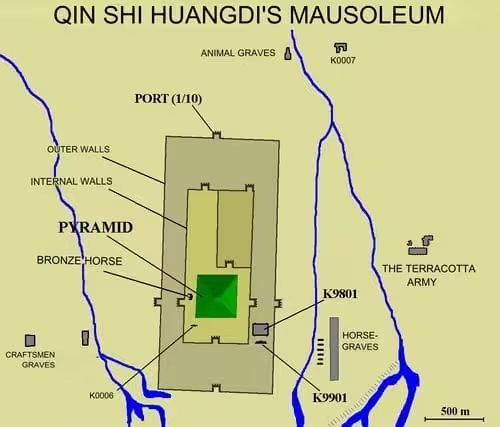
Construction of the tomb began in 246 BC and reportedly employed seven hundred thousand laborers over a thirty‑eight‑year period. Geophysical models suggest the subterranean palace measures roughly 140 × 110 × 30 metres, with the main coffin chamber situated about thirty metres beneath today’s surface. Scholars agree the inner chamber remains sealed and unlooted. Sima Qian also noted Qin’s personal use of mercury in hopes of prolonging life, and modern analysis links the emperor’s death to probable mercury poisoning.
Laser Radar Technique Reveals Invisible Mercury Plumes
The team employed differential absorption lidar (DIAL), a laser‑based remote‑sensing method that fires ultraviolet pulses at a wavelength strongly absorbed by mercury atoms and compares the return signal to a nearby reference wavelength. By analyzing the difference at 30‑metre intervals, the system can pinpoint airborne mercury concentrations without contacting the ground.
A mobile DIAL unit was assembled by South China Normal University and installed in a truck‑mounted container. The instrument emitted pulses near 254 nanometres—the peak absorption line for atomic mercury—and used a closed‑loop circuit to lock each pulse to the target wavelength. Atmospheric haze limited the effective range to about seven hundred metres.
Fieldwork spanned from 24 July to 12 August 2016, with most measurements taken at night to minimise ambient light. Daytime temperatures often topped 35 °C, a condition deliberately chosen because higher heat raises mercury’s vapor pressure, enhancing any potential emissions. Weather stations positioned at the mound’s summit and each sampling point recorded wind speed and direction throughout the campaign. Baseline mercury levels away from the mound averaged five to ten nanograms per cubic metre.
Airborne Hotspots Mirror Ground‑Level Mercury Anomalies
Two monitoring locations revealed distinct concentrations above background levels. The strongest single reading—twenty‑seven nanograms per cubic metre—was detected roughly six hundred fifty metres from the first site, directly over the western slope of the mound. Aggregated maps from multiple passes showed persistent elevated values in that zone and a secondary uplift near the southern base.
These aerial anomalies line up with earlier soil surveys that identified the western and southern faces of the mound as containing the highest mercury concentrations, with values reported up to 1,440 ppb and later up to 2,204 ppb. The DIAL findings, obtained by a completely different method, independently confirm the spatial pattern.
At a third site, no clear peaks emerged. Wind speeds there averaged 5.4 m s⁻¹—about twice the velocities recorded at the other locations—likely diluting any localized emission below the detection threshold. This absence aligns with the overall interpretation rather than contradicting it.
The authors argue that the convergence of atmospheric and soil data supports the idea that mercury vapor is seeping upward through fissures that have developed over two millennia. Because mercury readily transitions to gas at ambient temperatures, a large sealed reservoir beneath the tomb would produce a continuous, low‑level flux if the overlying structure has become partially permeable.
Measurements also indicate that the emissions do not raise mercury concentrations in the broader Xi’an region, consistent with prior water and soil monitoring in the area.
Estimating the Long‑Term Mercury Release
Combining concentration data with wind measurements, the researchers approximated a mercury outflow of about five × 10⁻⁸ kilograms per second, acknowledging uncertainties that could double this figure. Projecting this rate over 2,200 years—assuming release occurs mainly during the six warmest months each year and for roughly half the total time—yields an estimated cumulative loss near one metric ton. Independent calculations based on soil data arrive at a comparable magnitude.
Historical records suggest the original mercury stockpile could have exceeded one hundred tons. Consequently, the observed atmospheric and soil losses represent roughly one percent of the presumed original amount, leaving the vast majority still trapped underground.
While the findings do not confirm the precise figures recorded by Sima Qian, they lend physical plausibility to the notion of a massive mercury deposit beneath the emperor’s tomb.
Lessons for Modern Deep‑Geologic Waste Storage
The researchers draw parallels between the Qin mausoleum and contemporary efforts to confine high‑level radioactive waste in deep geological repositories. Nations such as Sweden, Finland, and the United States are developing facilities designed to isolate hazardous materials for timeframes extending beyond two millennia—some isotopes remain radioactive for millions of years.

The Qin tomb’s longevity demonstrates that even meticulously engineered underground structures can develop cracks over centuries, allowing volatile substances to escape. Although the study does not settle the debate over nuclear waste containment, it highlights the challenges of guaranteeing absolute isolation across geological timescales.
The authors also note that DIAL technology could serve as a non‑intrusive monitoring tool for future waste repositories, enabling remote detection of trace gas emissions from sealed sites without disturbing the surrounding rock.
This article has been fact checked for accuracy, with information verified against reputable sources. Learn more about us and our editorial process.
Last reviewed on .
Article history
- Latest version
Reference(s)
- Zhao, Guangyu. “Mercury as a Geophysical Tracer Gas - Emissions from the Emperor Qin Tomb in Xi´an Studied by Laser Radar - Scientific Reports.”, vol. 10, no. 1, June 26, 2020, pp. 10414 Nature, doi: 10.1038/s41598-020-67305-x. <https://www.nature.com/articles/s41598-020-67305-x>.
Cite this page:
- Posted by Zara Tariq