How a Navy Hoax and One Man’s Letters Fueled the Philadelphia Experiment Myth
Uncover the hidden Navy test and the mystery of a vanished warship, as new records reveal a surprising twist to the story.
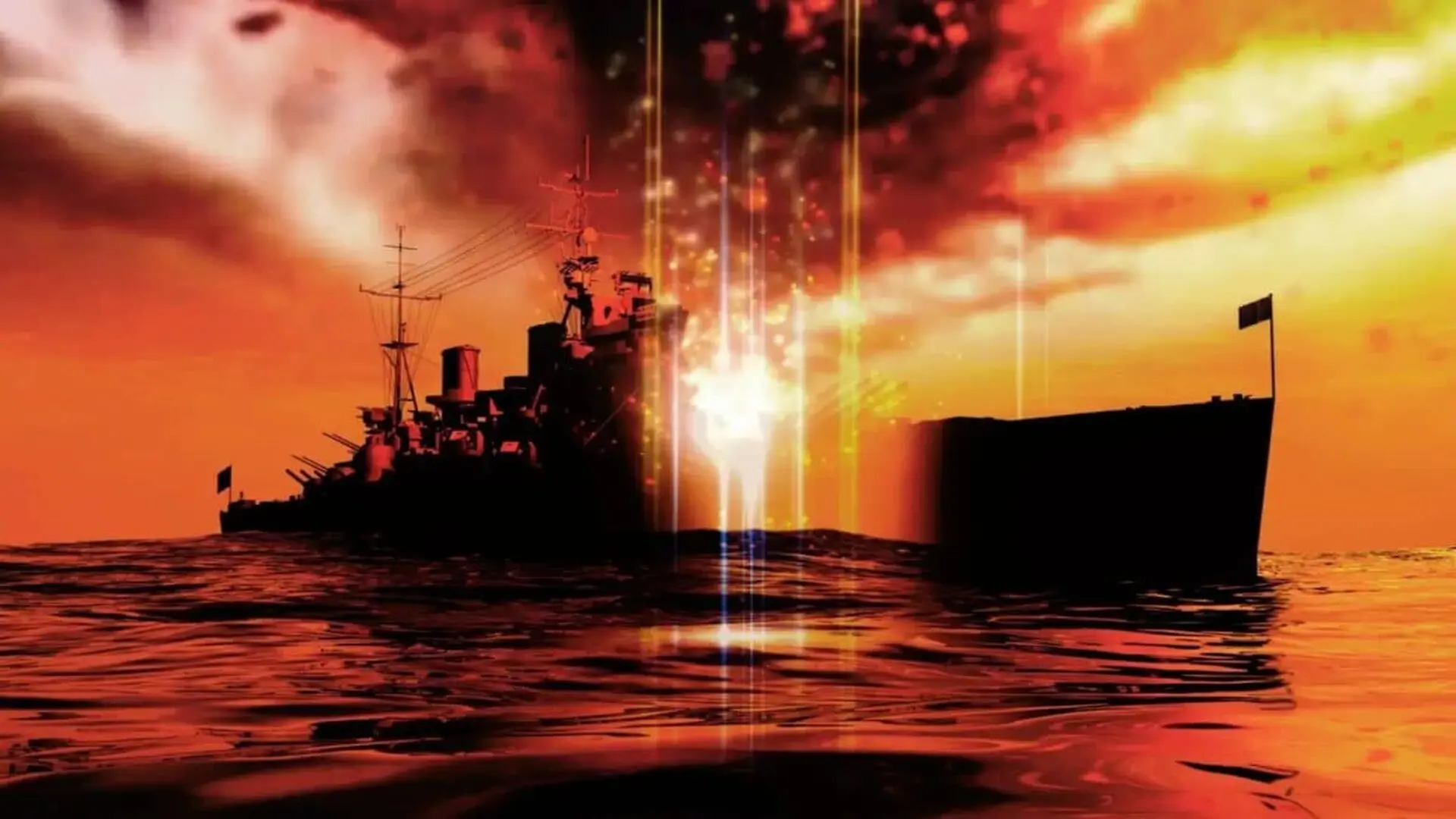
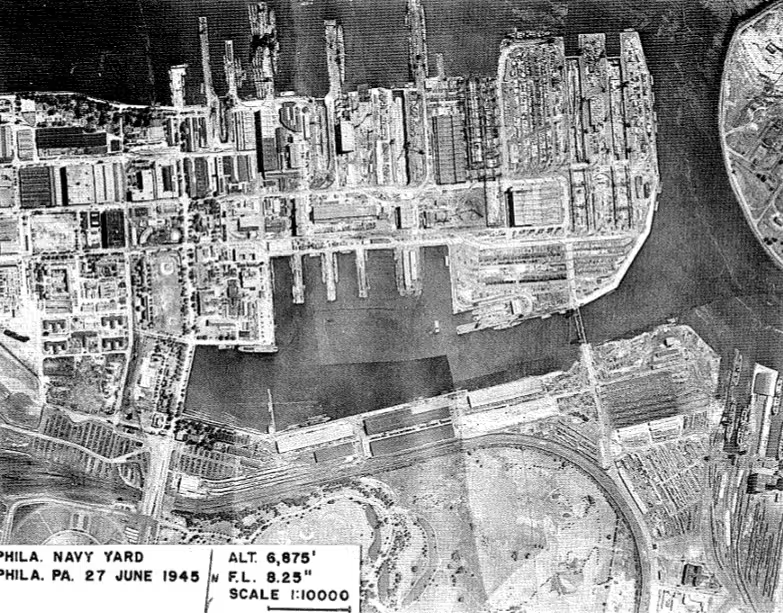
The story popularly known as the Philadelphia Experiment claims that a World II‑era Navy vessel vanished from a shipyard in Pennsylvania, reappeared miles away in Virginia, and returned with crew members suffering strange ailments. Later retellings layered in elements such as a green aura, teleportation, temporal jumps, and the notion that some sailors became fused to the hull itself.
The First Letters That Sparked the Myth
The narrative did not arise from wartime logs or testimonies of the ship’s own crew. It began with a series of missives sent by Carl Allen, a merchant mariner also known as Carlos Allende, to UFO researcher Morris K. Jessup more than ten years after the supposed incident. In those letters, Allen claimed to have observed the event while serving on the merchant ship SS Andrew Furuseth, though he never supplied a precise date.
Jessup, who had published The Case for the UFO in 1955, received the first of Allen’s over fifty letters on 13 January 1956, according to Jacques Vallée’s 1994 analysis of the case. The correspondence linked Albert Einstein’s theoretical work to an alleged Navy test that supposedly rendered a destroyer invisible. Apart from a brief roster of alleged witnesses aboard the merchant vessel, Allen offered no corroborating evidence. Over time his account expanded to include a rapid transit between Philadelphia and Norfolk, bizarre illnesses, psychological breakdowns, and even extraterrestrial contact.
A HowStuffWorks overview also traces the familiar version of the legend back to Allen’s letters rather than to any contemporary wartime documentation.
Research into Allen’s background revealed that he used multiple addresses, proved difficult for investigators to locate, and briefly admitted in 1969 that the tale was fabricated before retracting that statement. Later, Robert Goerman identified the man behind the Carlos Allende alias as Carl Meredith Allen and interviewed his relatives.
Annotated UFO Manuscript Links the Navy to the Tale
In 1957, the Office of Naval Research contacted Jessup about a copy of his book that had been filled with handwritten marginalia. The notes, rendered in various ink colors, simulated a dialogue among several individuals and referenced topics such as UFO propulsion, gravity, and advanced technology, echoing the language found in Allen’s correspondence.
Jessup supplied the Navy with copies of Allen’s letters and linked the marginal notes to his earlier exchange with the researcher. Vallée’s study reports that two ONR officers arranged for the Varo Manufacturing Company in Texas to produce a limited run of the annotated book, later dubbed the Varo edition, with 127 copies circulated among UFO investigators.
Although the reprint placed a military research office’s name alongside speculative technical claims, it never signaled official endorsement of the Philadelphia Experiment. Nevertheless, the association was often misinterpreted as proof that the Navy possessed a classified invisibility program.
Vallée noted that the book’s reputation grew to claim it contained the definitive truth about flying saucers and secret government knowledge, a perception not based on any Navy verification.
What Degaussing Actually Does
The only genuine naval technology cited in the legend is degaussing, a method used to lower a steel ship’s magnetic signature so that magnetic mines would not detonate. The process involves winding electrical cables around the hull to counteract the ship’s inherent magnetic field.
According to the Naval History and Heritage Command, degaussing “does not make the ship invisible to the human eye, radar, or underwater listening devices.” Its purpose was limited to confusing magnetic trigger mechanisms, not to conceal a vessel from visual or electronic detection.
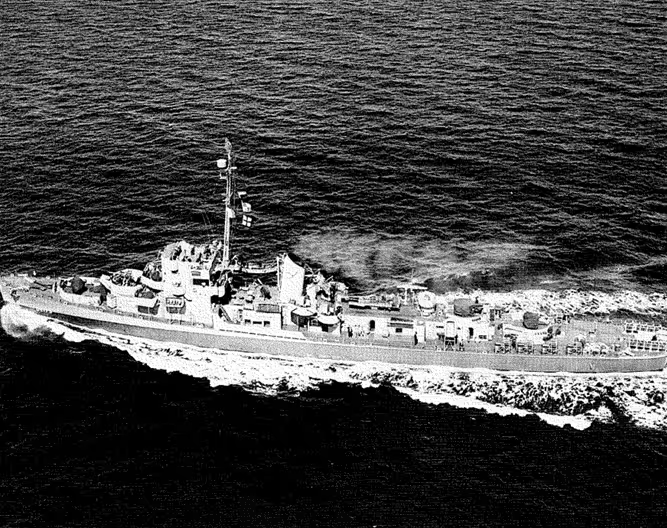
The vessel in question, the USS Eldridge (DE‑173), belonged to the Cannon‑class destroyer‑escort series. These ships were primarily designed for convoy protection and anti‑submarine warfare, featuring diesel‑electric propulsion, depth‑charge launchers, and anti‑aircraft guns. None of the class specifications indicate any capability for optical cloaking or instantaneous transport.
The broader program produced 563 destroyer escorts across six subclasses, with variations limited to propulsion type, armament, hull length, speed, and operational range. No official records describe equipment that could achieve the dramatic effects claimed in the Philadelphia Experiment story.
Official Logs Contradict the Alleged Disappearance
Naval archives, including the Eldridge’s deck log and war diary, show the ship was commissioned at the New York Navy Yard on 27 August 1943, remained in the New York area and Long Island Sound, and departed for Bermuda on 16 September. These movements directly conflict with versions of the tale that place the vessel in Philadelphia for a late‑summer test.
The merchant ship Andrew Furuseth, from which Allen claimed to have observed the phenomenon, also has recorded itineraries that never intersected with the Eldridge in the manner required by his story. Exhaustive searches of Navy files uncovered no record of a 1943 experiment aimed at rendering the Eldridge invisible or transporting it between Philadelphia and Norfolk.
Vallée’s paper, titled “Anatomy of a Hoax,” included testimony from a sailor who served on a different vessel operating in the same region during the relevant period. The abstract states that alleged eyewitness accounts have “been repeatedly found to be fraudulent.” His analysis links many aspects of the legend to ordinary naval practices, misinterpreted terminology, and later embellishments to Allen’s original narrative.
The myth persisted through numerous books and a 1984 motion picture, which introduced the story to audiences far removed from the original correspondence. Vallée observed that the precise ship names, locations, dates, and institutional references gave the tale a veneer of documentary authenticity, despite lacking any factual foundation.
This article has been fact checked for accuracy, with information verified against reputable sources. Learn more about us and our editorial process.
Last reviewed on .
Article history
- Latest version
- Posted by Zara Tariq