U.S. And South Korea Team Up To Build $3B AI‑Driven Shipyard For Autonomous Vessels
Saronic teams with Samsung Heavy Industries to revive U.S. shipbuilding and boost autonomous vessels, merging US tech with South Korea’s shipbuilding know‑how.
The partnership was unveiled in Washington, D.C., during the inauguration of the Korea–U.S. Shipbuilding Partnership Center, a program jointly backed by the U.S. Department of Commerce and South Korea’s Ministry of Trade, Industry and Energy. Saronic says the initiative will bolster domestic shipbuilding while feeding upcoming government and commercial maritime projects.
The agreement arrives as the United States works to revive a shipbuilding sector that has eroded over several decades. New capital will target shipyard upgrades, modern manufacturing techniques, workforce development, and advanced production technologies designed to expand long‑term shipbuilding capacity.
Alliance merges autonomous maritime tech with traditional shipyard expertise
Saronic brings U.S. experience in autonomous surface vessels, scalable manufacturing, and software architectures for maritime autonomy, while Samsung Heavy Industries contributes decades of commercial shipbuilding know‑how, including vessel design, automated production, and large‑scale shipyard operations.
Both firms plan to co‑develop vessels capable of autonomous operation for government and commercial customers. The collaboration will also incorporate AI‑driven digital shipbuilding tools, robotics‑based process automation, and production infrastructure for Saronic’s future shipyards.
The announcement coincided with the launch of the Korea–U.S. Shipbuilding Partnership Center, an entity created to deepen industrial cooperation between the two allied nations and reinforce U.S. shipbuilding capacity.
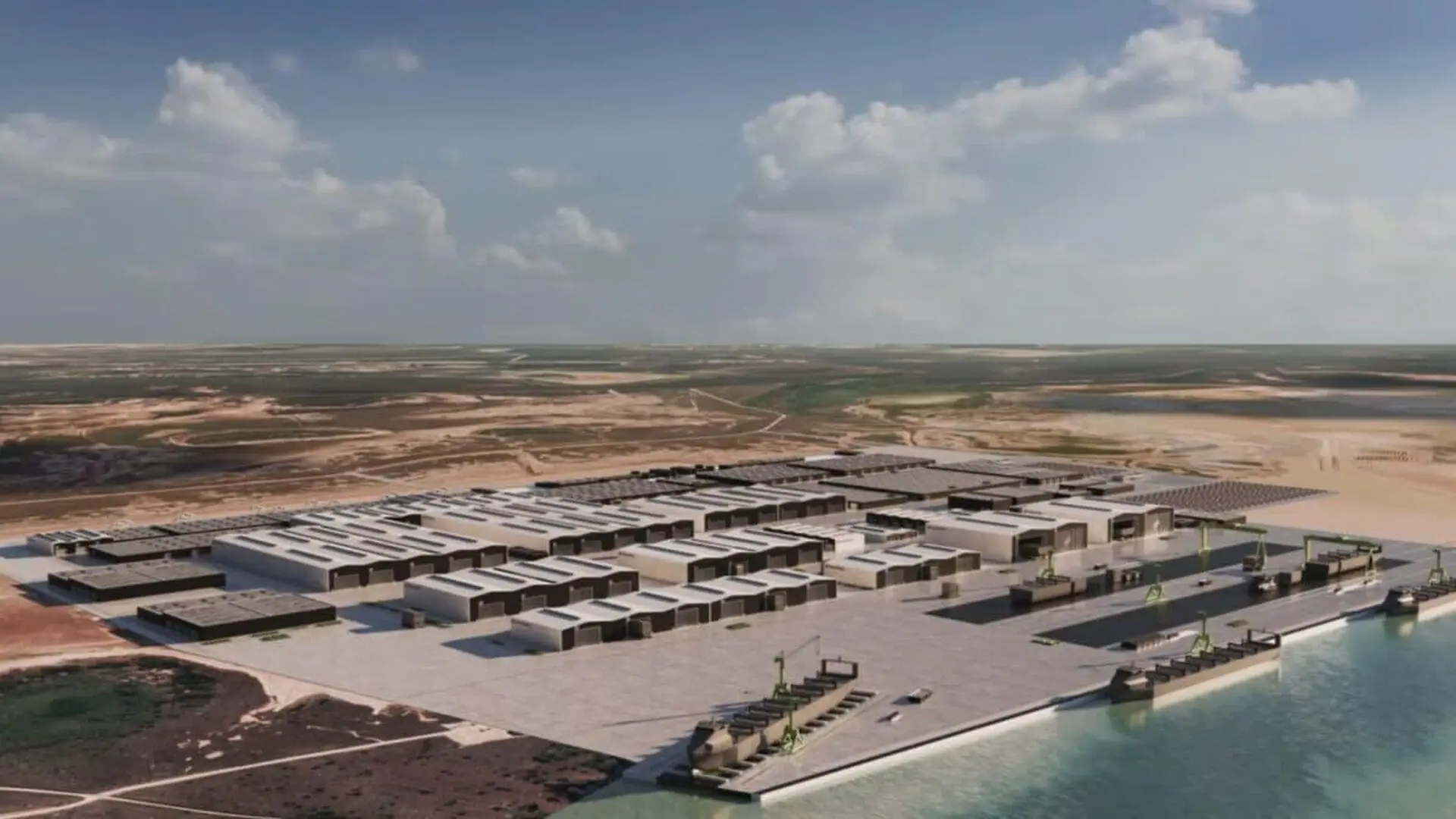
Saronic also disclosed its ongoing expansion in the United States, selecting Brownsville, Texas, for Port Alpha, a next‑generation shipyard backed by more than $3 billion in investment. Construction is slated to begin in 2026, with operations planned for 2028. In addition, the company announced a $300 million infusion to expand production capacity at its existing shipyard in Franklin, Louisiana.
According to Saronic, Port Alpha will boost domestic shipbuilding through software‑defined manufacturing, advanced automation, and facilities designed to support the production of autonomous maritime systems.
Today, we’re announcing a strategic partnership with Samsung Heavy Industries to accelerate the development of autonomy-capable maritime systems and technologies that strengthen America’s shipbuilding industrial base.
— Saronic (@Saronic) July 23, 2026
Building on our shared strengths in maritime autonomy and… pic.twitter.com/NXyyNuerVK
Deal fits into wider push to rebuild U.S. shipbuilding capacity
Beyond the direct collaboration, the agreement mirrors broader national efforts to strengthen American shipbuilding, which has contracted over the past three decades due to reduced commercial activity, shrinking supply chains, and skilled‑labor shortages, according to Naval News.
Restoring the industry demands more than new yards; it also requires modern manufacturing infrastructure, robust supplier networks, and a skilled workforce capable of sustaining long‑term output.
Samsung Heavy Industries contributes experience from building LNG carriers, container ships, and offshore platforms, operating automated shipyards that employ modular construction, robotic welding, digital production management, and optimized industrial logistics. The partnership aims to apply these manufacturing practices within American shipyards rather than relocating production abroad.
Saronic’s current family of unmanned surface vessels includes the 6‑meter Spyglass, the 14‑meter Cutlass, and the larger Corsair, introduced earlier in 2026. These vessels are built on an open architecture that accommodates mission‑specific payloads such as electro‑optical sensors, ISR equipment, secure communications, and electronic‑warfare systems.
The companies describe their future focus as “autonomy‑capable” vessels rather than fully unmanned ships. Saronic notes that these platforms may operate with reduced crews while automating navigation, ship management, or selected mission functions, with some tasks overseen remotely.
Naval News reports that such vessels could support missions ranging from intelligence collection and maritime surveillance to force protection, mine countermeasures, logistics support, and long‑endurance patrols. Within the U.S. Navy’s Distributed Maritime Operations concept, they could enable dispersed assets while allowing larger combat ships to concentrate on high‑intensity missions.
This article has been fact checked for accuracy, with information verified against reputable sources. Learn more about us and our editorial process.
Last reviewed on .
Article history
- Latest version
Reference(s)
- <https://medium.com/saronic-technologies/saronic-to-build-port-alpha-americas-next-generation-shipyard-in-brownsville-texas-f71c15565ec6>.
- “https://twitter.com/Saronic/status/2080381431230980101/photo/1.” <https://t.co/NXyyNuerVK>.
Cite this page:
- Posted by Zara Tariq