New 88‑foot giant dinosaur discovered in Thailand—most complete sauropod ever found
Newly identified giant dinosaur from Thailand’s scattered fossils hints at unexpected size, though its full story remains under reconstruction.
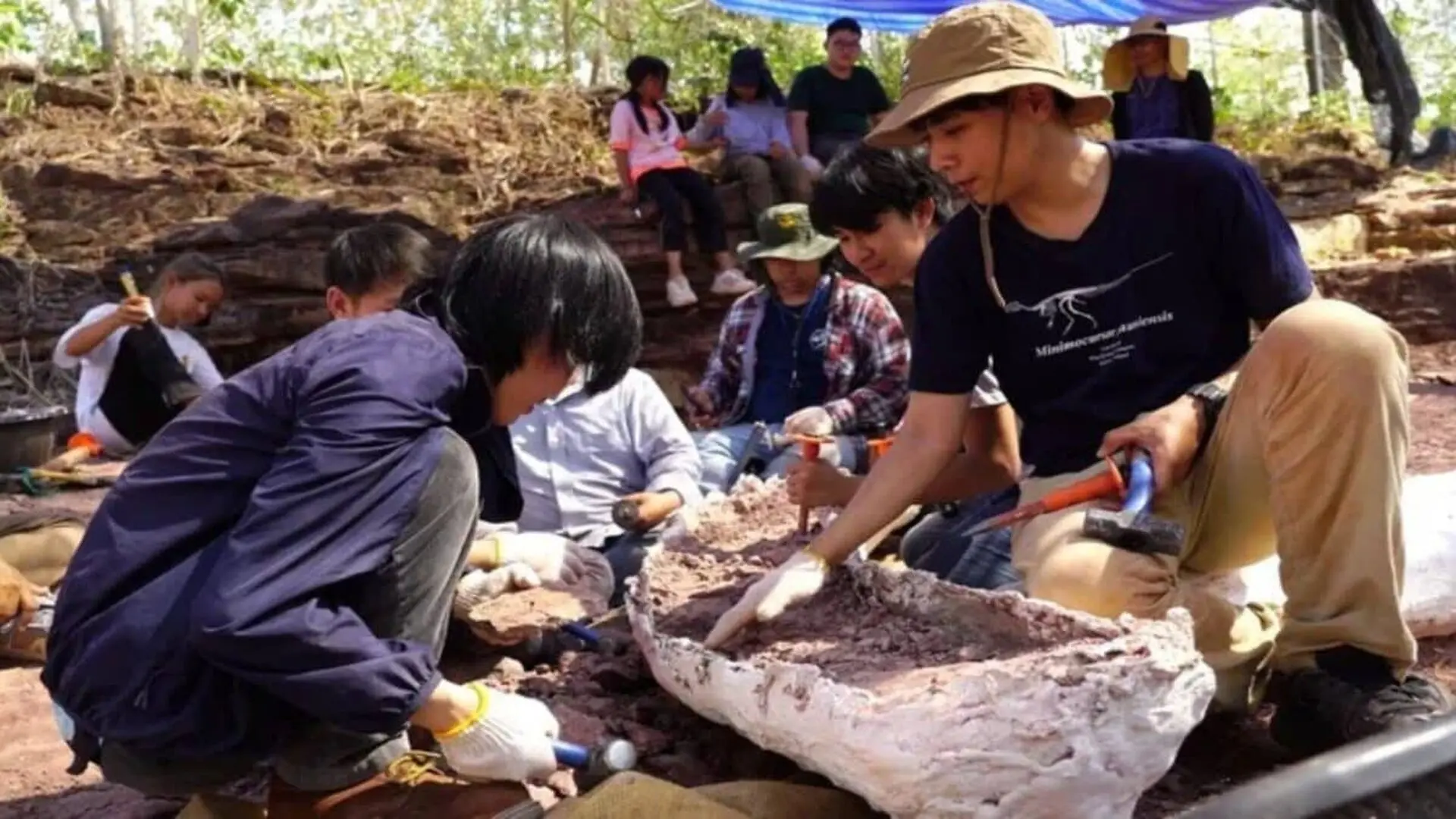
Paleontologists have announced a new giant sauropod from northeastern Thailand, dubbed Nagatitan chaiyaphumensis. Based on the recovered remains, the animal is estimated to have stretched over 88 feet (about 27 m) and weighed roughly 30 tons.
The fossils emerged from rock layers of the Khok Kruat Formation in Chaiyaphum Province, which date to around 113 million years ago. What makes the find remarkable is its completeness – a rarity in Thai dinosaur sites, where most specimens consist of isolated fragments.
The study, published in Scientific Reports, provides new insight into the diversity of gigantic herbivores that roamed Southeast Asia during a period of rapid sauropod expansion worldwide.
From Curious Stones to Fossil Treasure
In 2016, local resident Thanom Luangnan noticed oddly shaped rocks near a public pond in Chaiyaphum. Sita Manitkoon, a National Geographic Explorer from Mahasarakham University, described the objects as “strange‑looking rocks” and alerted Thailand’s Department of Mineral Resources.
When a field team arrived, the “rocks” turned out to be fossilized bones – vertebrae, ribs, hip elements and limb fragments – that revealed the true scale of the creature.
“Early measurements indicated this could be the largest dinosaur discovered in Southeast Asia to date,” the researcher explained.
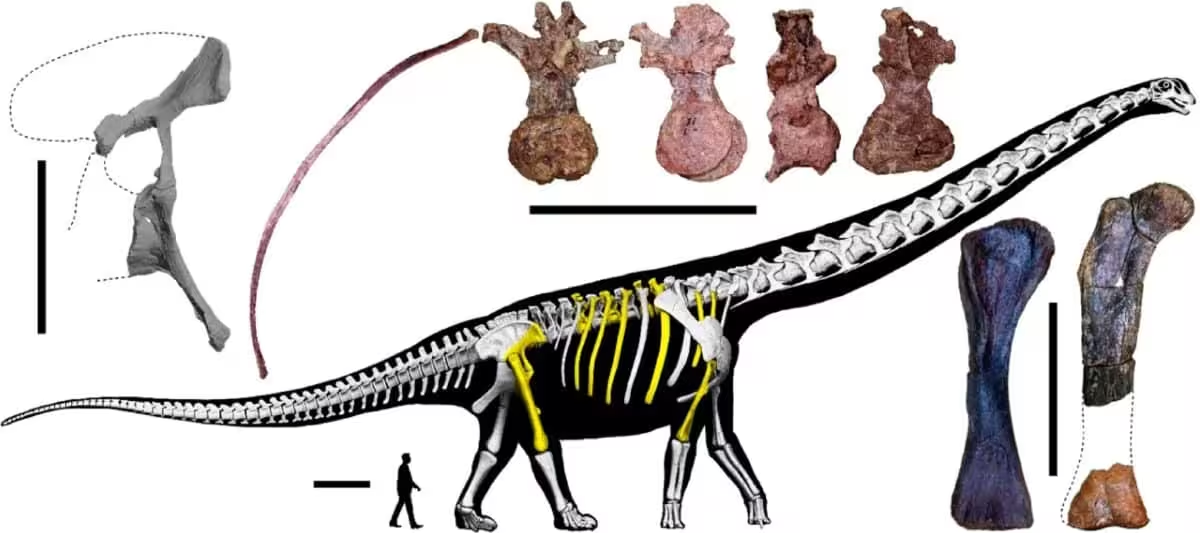
The name Nagatitan chaiyaphumensis merges the discovery site with the “Naga,” a serpentine figure from regional folklore, reflecting the animal’s elongated, snake‑like silhouette typical of sauropods.
A Sauropod Built on Classic Design
Nagatitan belongs to the somphospondyli clade, a group of long‑necked dinosaurs characterized by robust forelimbs and a broad stance that supported their massive bodies. Paul Upchurch of University College London noted that these skeletal traits, while not always obvious, are key to tracing the evolutionary path of the largest land animals.
One noteworthy feature is the right forelimb, which exceeds the length of comparable limbs in South American giants such as Patagotitan and Dreadnoughtus. Although those species ultimately outweighed Nagatitan – reaching about 60 tons and 50 tons respectively – the Thai specimen still ranks among the most massive known.
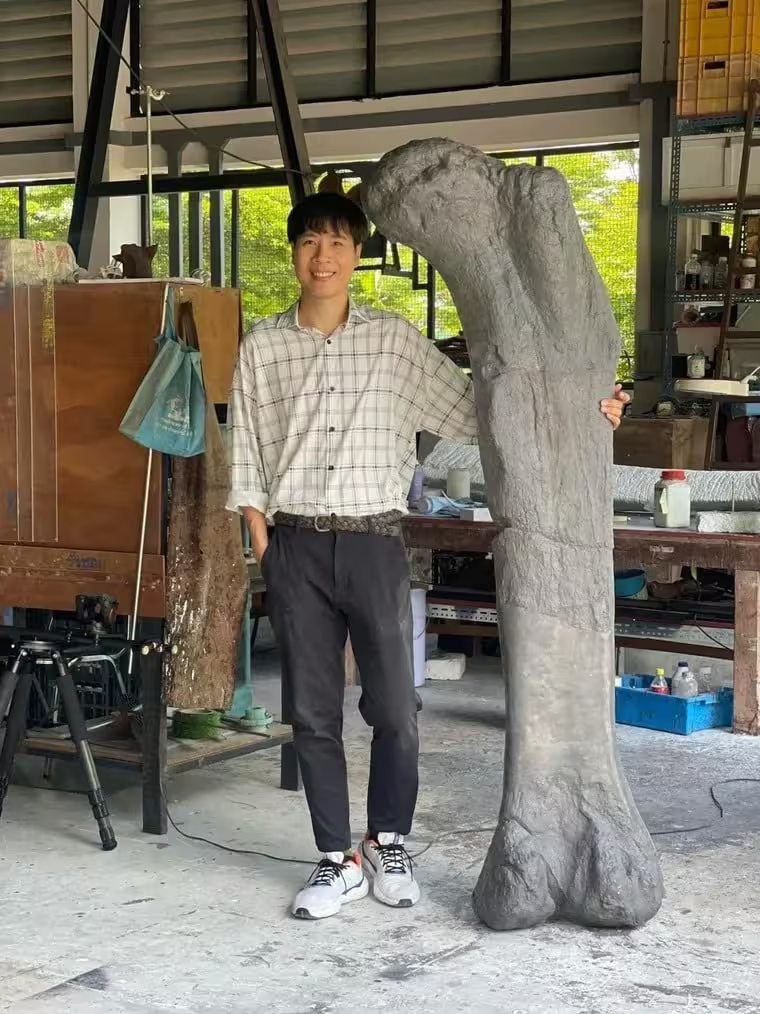
Researchers emphasize that this is the most complete sauropod recovered from the Khok Kruat Formation, a milestone that helps fill gaps left by earlier finds that consisted mainly of isolated bones.
Ecology and Classification of an Extinct Giant
During the early Cretaceous, present‑day Thailand lay near the equator and experienced a warm, arid climate. According to the Scientific Reports paper, the region was dominated by open shrubland rather than dense forest.
Such open habitats would have suited large herbivores, allowing them to browse foliage at multiple levels—from towering conifers to low‑lying ferns and horsetails—and potentially shaping the landscape through their feeding and trampling activities.
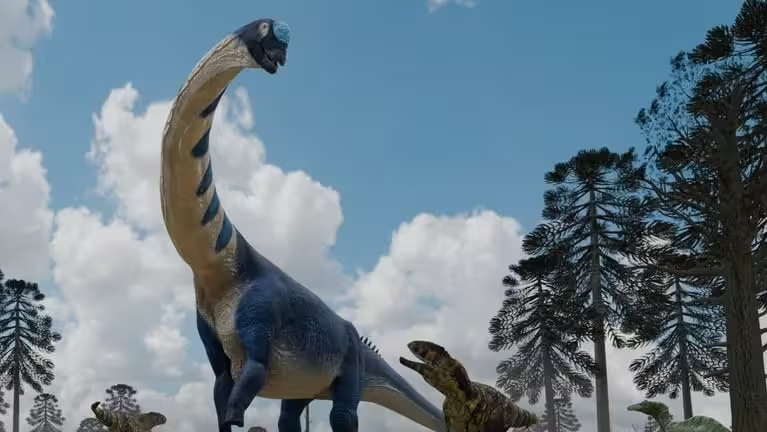
A lingering question is how such massive creatures coped with heat. Upchurch points out that the elongated necks of sauropods likely acted as radiators, while internal air sacs may have functioned as a natural cooling system during respiration.
“Finding Nagatitan and its Asian relatives confirms that these dinosaurs achieved gigantic proportions early in the Cretaceous, a strategy that proved highly successful,” Manitkoon concluded.
This article has been fact checked for accuracy, with information verified against reputable sources. Learn more about us and our editorial process.
Last reviewed on .
Article history
- Latest version
Reference(s)
- “Explorer Home.” <https://explorers.nationalgeographic.org/directory/sita-manitkoon>.
- “Discovery.” <https://profiles.ucl.ac.uk/20382-paul-upchurch>.
- Sethapanichsakul, Thitiwoot. “The first sauropod dinosaur from the Lower Cretaceous Khok Kruat Formation of Thailand enriches the diversity of somphospondylan titanosauriforms in southeast Asia - Scientific Reports.”, vol. 16, no. 1, May 14, 2026, pp. 12467 Nature, doi: 10.1038/s41598-026-47482-x. <https://www.nature.com/articles/s41598-026-47482-x>.
Cite this page:
- Posted by Hassan Raza