Ancient island hides new duck‑billed dinosaur species in Romania
New study suggests scattered Eastern European fossils, once assigned to a familiar dinosaur, could represent an entirely unknown species.
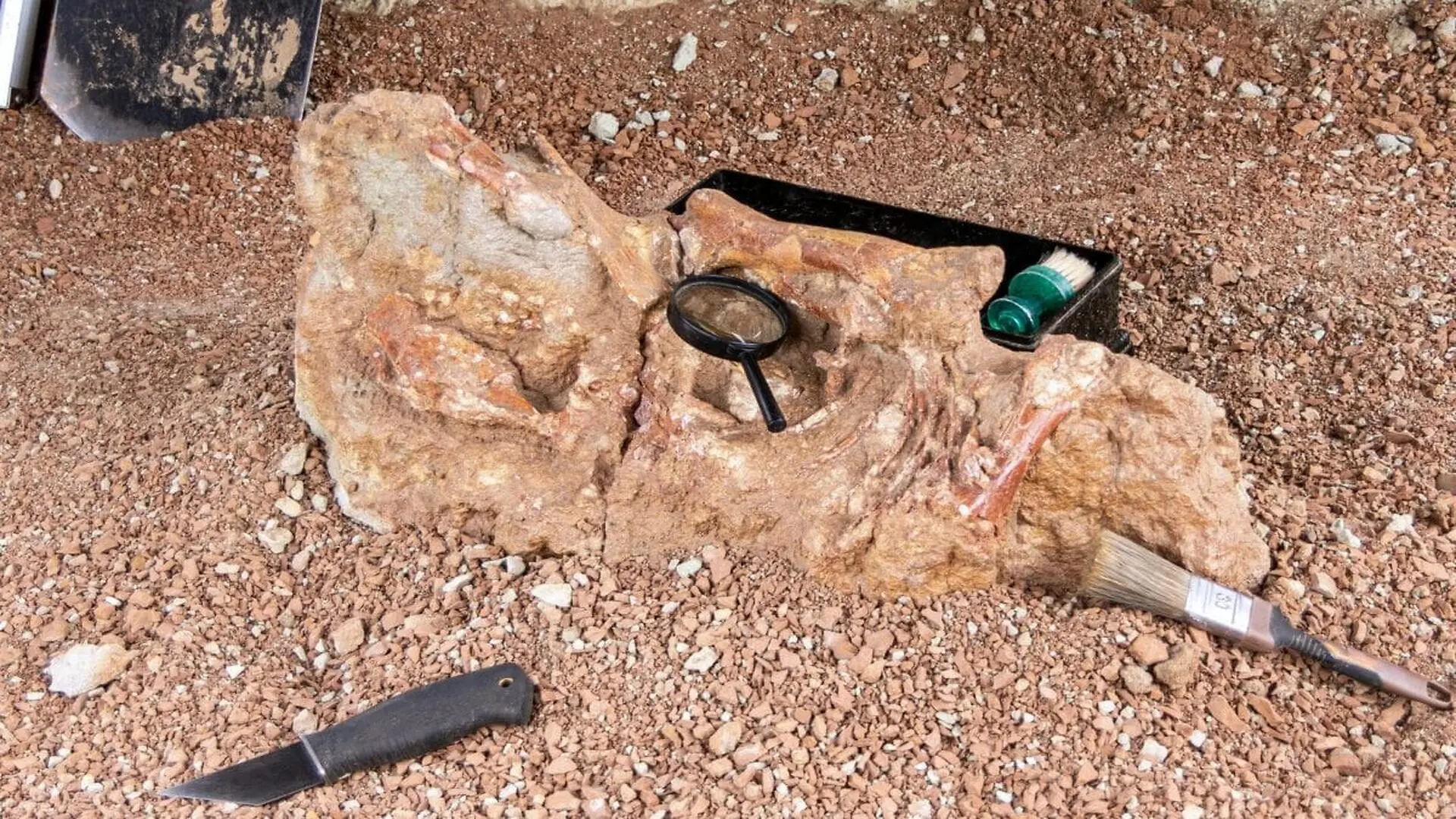
A partial skeleton unearthed in Romania’s Hațeg Basin has been assigned to a previously unknown duck‑billed dinosaur, now called Kryptohadros kallaiae. Radiometric dating places the animal at roughly 70 million years old, within the Late Cretaceous, and the find hints that the basin hosted a richer dinosaur fauna than earlier reconstructions suggested.
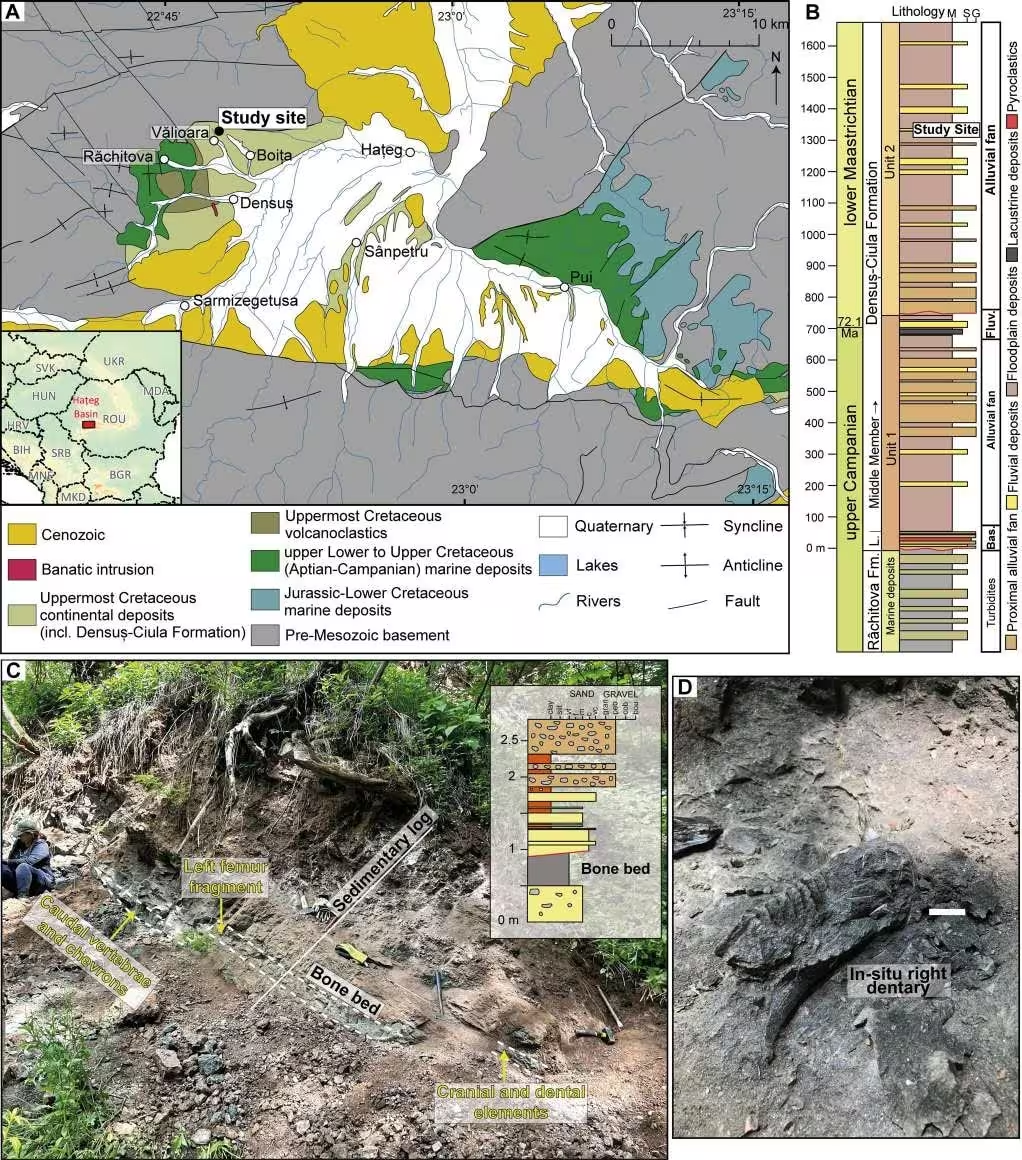
The remains originate from the Fântânele‑3 locality near the village of Vălioara, embedded in the Densuș‑Ciula Formation. At that time the region formed part of a fragmented European archipelago rather than a contiguous continent. The Hațeg Basin, in particular, has long yielded scattered dinosaur fragments that resist straightforward classification.
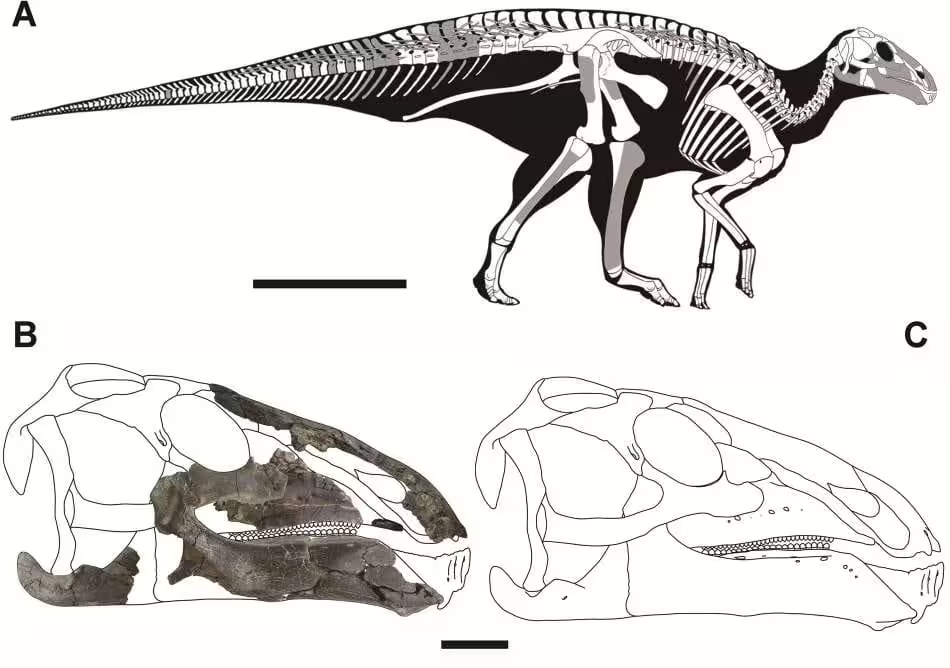
An international team spanning Romania, Hungary and Italy reports that the specimen comprises a fragmentary skull, rib portions, caudal vertebrae and part of a hindlimb. Despite the incompleteness, the preserved elements are sufficient to demonstrate that the animal does not belong to the well‑known local hadrosaurid Telmatosaurus transsylvanicus.
Revisiting Decades‑Old Assumptions About Hațeg Hadrosaurs
For many years isolated hadrosaurid bones from the Hațeg Basin were routinely attributed to Telmatosaurus transsylvanicus. Dr Attila Ősi of ELTE Eötvös Loránd University noted that the scarcity of complete specimens—especially those preserving cranial material—has encouraged a blanket assignment of fragmentary finds to the known species.
The new comparative analysis overturns that practice, revealing that the material actually represents more than one distinct taxon.
Researchers point out that Kryptohadros kallaiae shares many skeletal traits with Telmatosaurus, yet subtle variations in the cranial architecture consistently separate the two. János Magyar, a PhD candidate involved in the work, explained that “the similarity between the new species and Telmatosaurus, is quite high, because they are close relatives.” He added, “the differences are mostly visible only in the morphology of the skull elements.”
Two Duck‑Billed Dinosaurs Sharing an Island Habitat
During the Late Cretaceous the Hațeg Basin formed part of an island chain that isolated its dinosaur inhabitants from mainland faunas. Such seclusion often drives distinctive evolutionary trajectories, and the coexistence of two closely related hadrosaurs exemplifies this pattern.
According to the authors, Kryptohadros kallaiae and Telmatosaurus transsylvanicus likely occupied the same geographic area at the same time, overturning the earlier notion of a single dominant duck‑billed taxon in the basin.
The fossils were recovered from continental sediments of the Densuș‑Ciula Formation, a stratum already recognized for its fragmented and mixed dinosaur assemblage. Even limited remains such as these now allow paleontologists to refine the picture of a more intricate ecosystem than the earlier “single species per niche” model suggested.
A New Hadrosaurid Clade Emerges in Southern Europe
The authors further link Kryptohadros kallaiae with Telmatosaurus transsylvanicus from Romania and Tethyshadros insularis from Italy, proposing a novel family—Telmatosauridae. Their paper in the Journal of Systematic Palaeontology argues that this lineage evolved specifically within the insular environments of southeastern Europe.
The study also highlights that hadrosauroid dinosaurs entered Europe through several separate dispersal waves from Asia, spanning the Albian to the Maastrichtian. “At least six other dispersal events took place between the Albian (113 to 100 million years ago) and the Maastrichtian (72 to 66 million years ago) from Asia towards North America and/or Europe, besides the arrival of the ancestors of Telmatosauridae before the Campanian (84 to 72 million years ago),” the authors note.
Notably, later European dinosaur groups are absent from the southeastern island record, suggesting that some migratory routes may have bypassed the Hațeg archipelago in favor of other island chains.
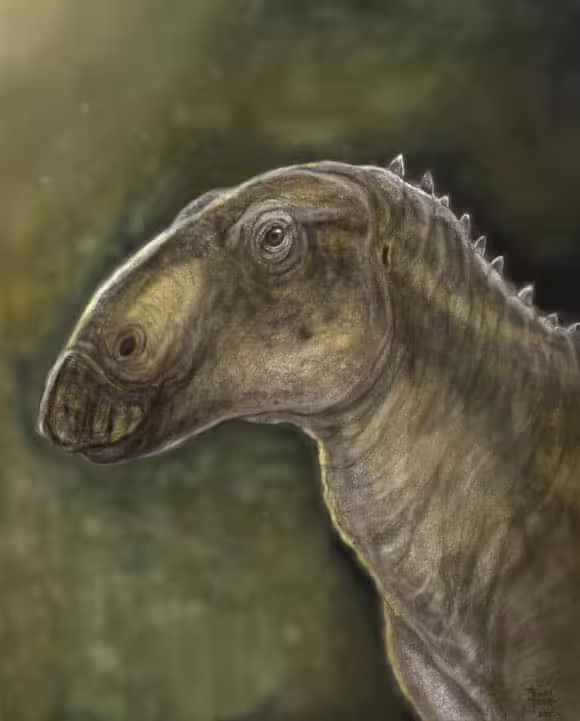
Although the known material for Kryptohadros kallaiae remains fragmentary, its identification reshapes scientific views of the Late Cretaceous island ecosystems that once dotted southeastern Europe.
This article has been fact checked for accuracy, with information verified against reputable sources. Learn more about us and our editorial process.
Last reviewed on .
Article history
- Latest version
Reference(s)
- <https://www.researchgate.net/profile/Attila-Osi>.
- <https://www.researchgate.net/profile/Janos-Magyar-2>.
- Magyar, János., et al. “New early Maastrichtian ‘duck-billed’ dinosaur from Hațeg Basin (Densuș-Ciula Formation, Romania) documents an endemic clade of non-hadrosaurid hadrosauroids in the south-eastern Late Cretaceous European Archipelago.” Journal of Systematic Palaeontology, vol. 24, no. 1, March 2, 2026 Informa UK Limited, doi: 10.1080/14772019.2025.2607800. <https://www.tandfonline.com/doi/full/10.1080/14772019.2025.2607800>.
Cite this page:
- Posted by Hassan Raza