New ‘desert sprint’ dinosaur uncovered from 135‑million‑year‑old footprints in Brazil
Scientists uncover unprecedented fossil footprints, offering the first evidence of a previously unknown track type.
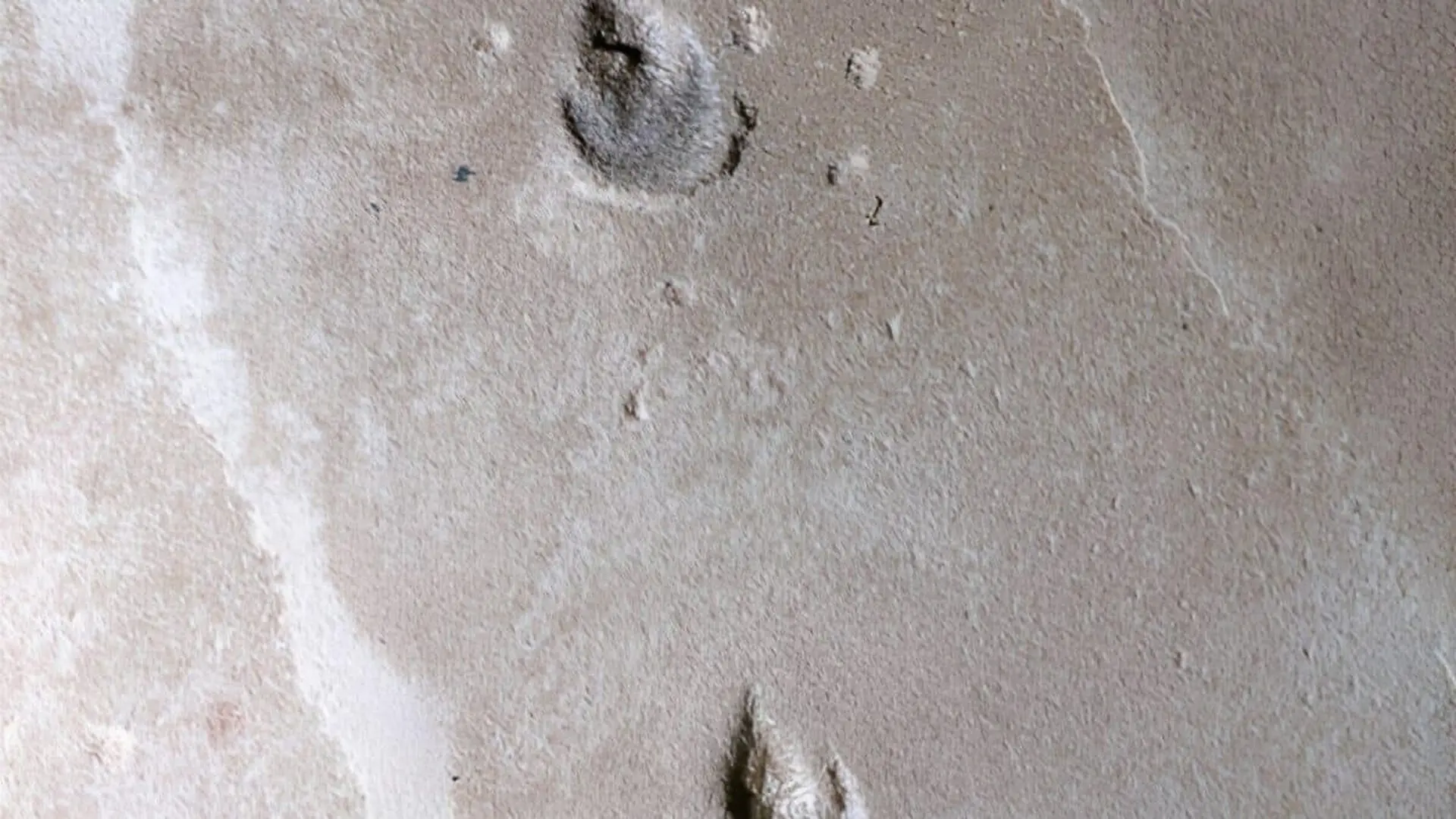
Footprint assemblages uncovered in Brazil have unveiled a previously unknown dinosaur species that inhabited an ancient desert roughly 135 million years ago. The distinctive tracks belong to a small, meat‑eating theropod, prompting researchers to assign a new ichnogenus and ichnospecies: Farlowichnus rapidus.
The finds originate from the Botucatu Formation near São Paulo, a locale renowned for preserving evidence of life in a vast prehistoric desert. Although skeletal remains of the animal have never been recovered, the preserved footprints contain enough diagnostic features for scientists to recognize a new trackmaker.
Published in Cretaceous Research, the study refines our understanding of the Botucatu paleodesert ecosystem during the Early Cretaceous and underscores how trace fossils can document organisms that left no bones.
A Nimble Predator Adapted to Shifting Sands
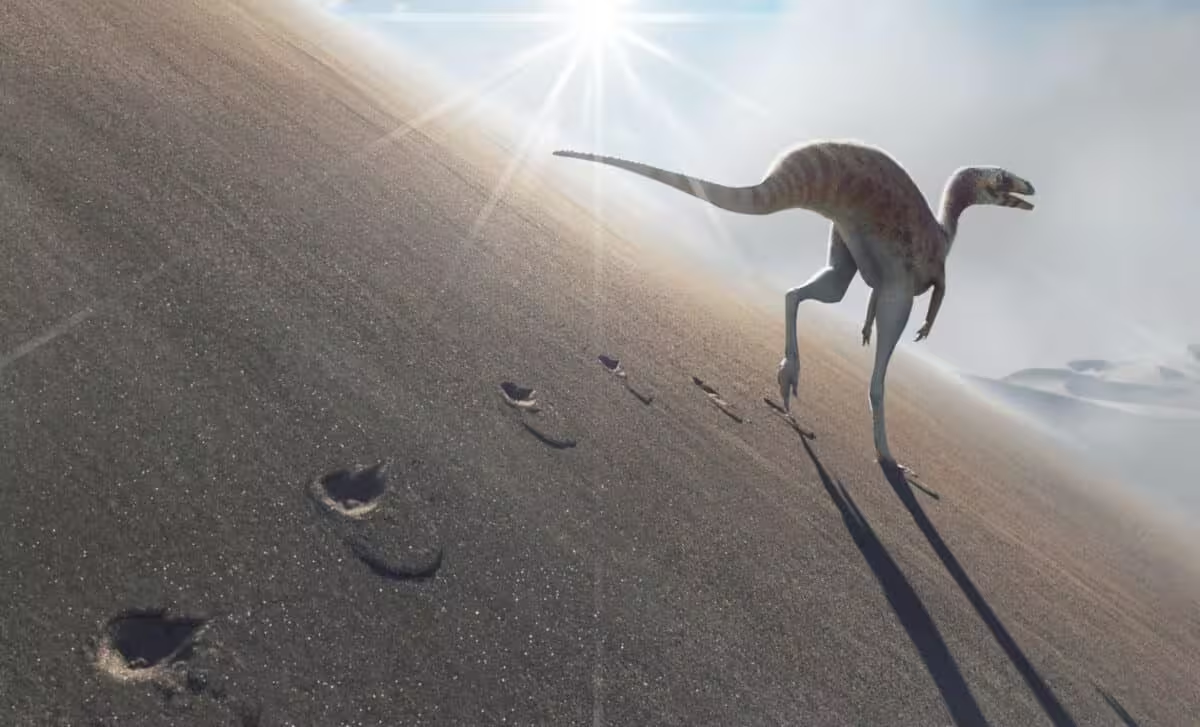
A team led by paleontologist Giuseppe Leonardi of the Federal University of Rio de Janeiro examined dozens of footprints from the formation. Their analysis indicates the trackmaker was a compact theropod about 1.5 meters long, built for rapid locomotion across loose substrates.
What set the tracks apart was their unusual geometry. The impressions display a steep step angle, elongated strides, and a narrow trackway that runs almost parallel to the direction of travel, suggesting an efficient, high‑speed gait on sand.
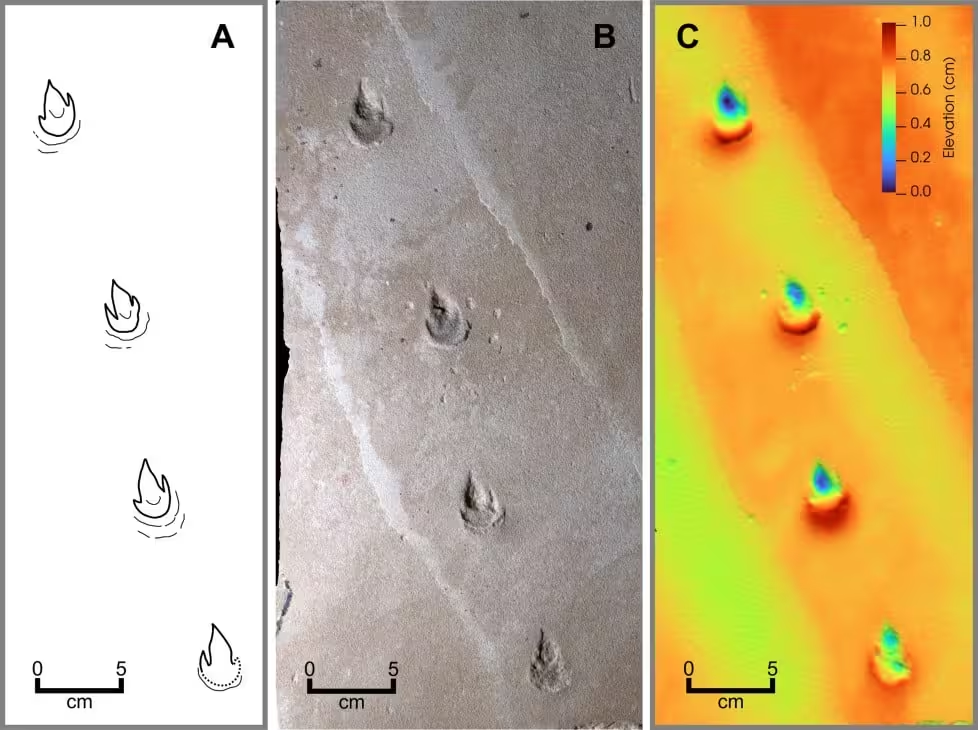
The trackway is remarkably tight, with only minor deviations along its length, and no drag marks from a tail were identified, further supporting the interpretation of a agile, bipedal animal. Because these characteristics differ from known theropod ichnotaxa, the authors erected the new ichnogenus and ichnospecies Farlowichnus rapidus.
“Among the bipedal dinosaur footprints, the most common and typical are considered theropod tracks, with long strides and high step angle and always with an acuminate termination,” the researchers wrote.
Footprints from the World’s Largest Fossil Desert
The impressions were encased in the sandstone layers of the Botucatu Formation, which records an immense desert that once stretched across at least 1.3 million square kilometers. This region is recognized as the largest fossil desert identified on Earth, hosting one of the planet’s most extensive megatrack sites.
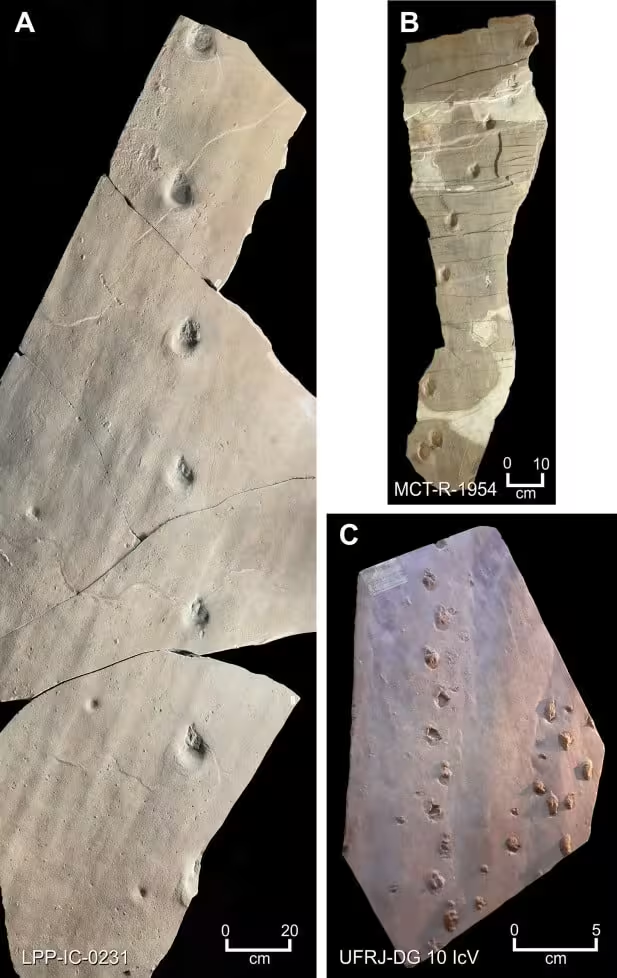
Beyond the new theropod tracks, the Botucatu Formation yields a rich tapestry of trace fossils, including thousands of footprints from early mammals and a solitary trackway linked to a lacertiform reptile. Theropod prints dominate the bipedal record, typically characterized by long strides and pointed toe marks; the newly described tracks stand out for their unique proportions and pattern.
Honoring a Pioneer of Ichnology
The genus name Farlowichnus commemorates Professor James Farlow of Purdue University, whose contributions have advanced the study of fossil footprints and dinosaur locomotion. Farlow expressed appreciation for the tribute, noting that naming fossils after colleagues is a longstanding paleontological tradition.
“It’s not unusual to name the fossil after a colleague from around the world they want to recognize, and they chose me.” He added with a smile, “I thought it would be nice if somebody sometime named something after me, but I can’t say I seriously coveted it. It would be very gauche to name something after yourself.”
This discovery adds a new dinosaur species to the fossil record based entirely on trace evidence. Even after millions of years, the Botucatu paleodesert’s footprints continue to reveal the dynamics of one of Earth’s most expansive ancient desert landscapes.
This article has been fact checked for accuracy, with information verified against reputable sources. Learn more about us and our editorial process.
Last reviewed on .
Article history
- Latest version
Reference(s)
- Leonardi, Giuseppe., et al. “Farlowichnus rapidus new ichnogen., new ichnosp.: A speedy and small theropod in the Early Cretaceous Botucatu paleodesert (Paraná Basin), Brazil.” Cretaceous Research, vol. 153, January 1, 2024, pp. 105720 Elsevier BV, doi: 10.1016/j.cretres.2023.105720. <https://www.sciencedirect.com/science/article/abs/pii/S0195667123002483>.
- <https://www.researchgate.net/profile/Giuseppe-Leonardi>.
- “James Farlow | Purdue University Fort Wayne.”, January 1, 2026 Purdue University Fort Wayne <https://www.pfw.edu/about-pfw/who-we-are/directories/james-farlow>.
Cite this page:
- Posted by Hassan Raza