Robots Map Bottom of Namibia’s Dragon’s Breath, the World’s Largest Underground Lake
Explore Namibia’s hidden sinkhole that opens into a dark underground lake teeming with blind creatures and looming hazards.
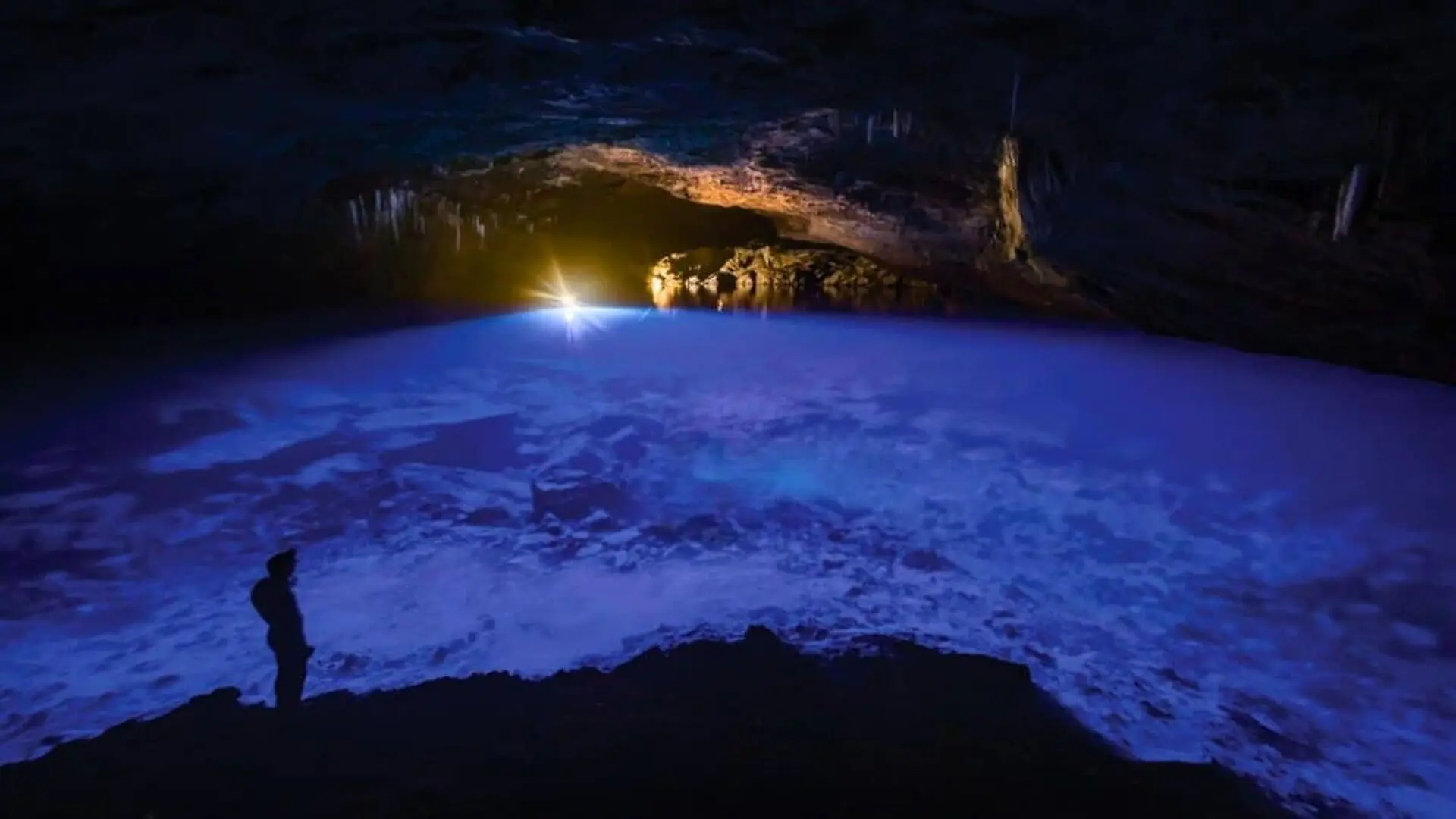
Deep beneath the arid scrubland north of Grootfontein, a narrow fissure opens onto a humid, warm current. Those who slip through the opening of Dragon’s Breath Cave transition from Namibia’s scorching surface to an expansive subterranean basin where a lake cloaks the darkness.
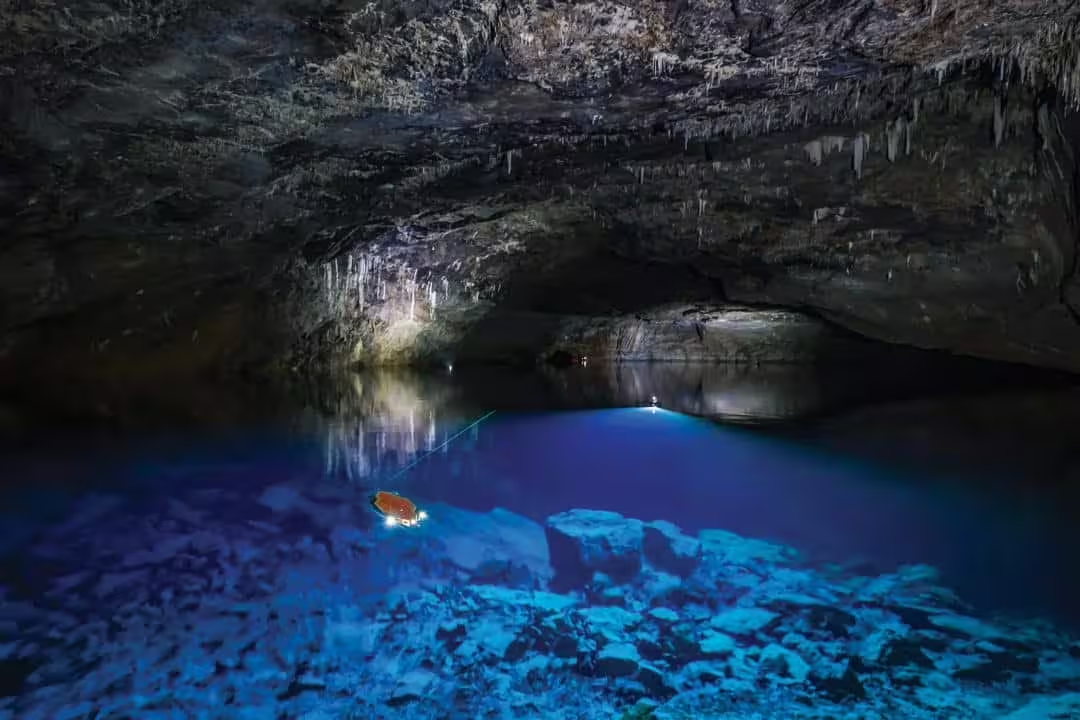
Located in the Otjozondjupa province roughly 46 km from Grootfontein, the modest mouth guards a water body that spreads across almost two hectares—about the size of two football fields. Survey data indicate the lake extends to a depth of 264 metres, according to Discover Wildlife’s profile of Dragon’s Breath Cave, placing it among the planet’s most extraordinary underground reservoirs.
Beyond its sheer dimensions, the cave hosts a secluded ecosystem populated by species that thrive in utter darkness, relying on nutrients supplied by bat guano that drifts down from the surface. This mix of magnitude, isolation, and biological intrigue has attracted scientists as well as seasoned cavers.
A Subterranean Reservoir Beneath Parched Terrain
Namibia’s hidden lake first entered the record in 1986 when South African explorer Roger Ellis identified it during a speleological survey. He returned the following year with members of the South African Speleological Association, navigating drops, ledges, and vertical shafts to finally encounter the water.
Their initial assessments measured a surface area of about two hectares (4.9 acres). From the surface, the presence of the flooded chamber below is barely perceptible, creating a striking juxtaposition: a barren, rocky plateau conceals a vast aquatic expanse in total darkness.
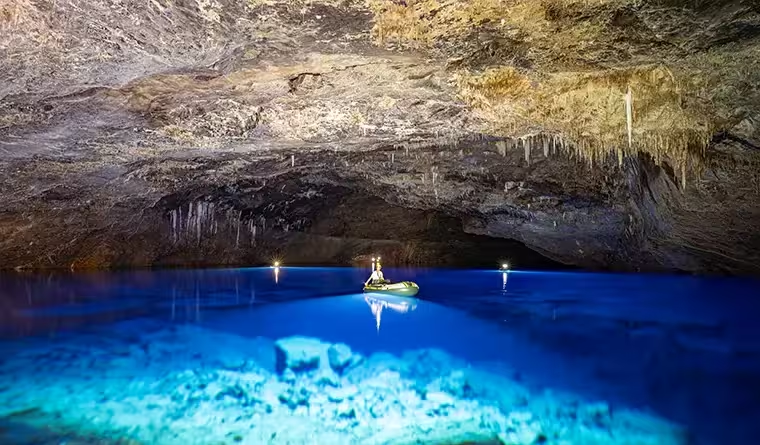
The cavern formed through a slow process of karst dissolution, where groundwater gradually erodes soluble rock, eventually creating voids, shafts, and water‑filled passages. A Travel Namibia feature by Linda de Jager notes that the system lies about 60 metres underground, accessed via a narrow ladder and a series of tunnels leading to the lake chamber.
The moniker “dragon’s breath” derives from the warm, moist airflow that exits the cave. De Jager recalled entomologist John Irish describing a gentle, heated breeze that surges upward through a small aperture near the lake’s ceiling, occasionally condensing into a fine mist at the entrance.
From Human Limits to Autonomous Mapping
For many years the true depth of the world’s largest underground lake remained a mystery, hindered by the cave’s remote access and the hazards of deep diving. Transporting heavy technical equipment down the shafts alone posed a formidable challenge.
In 2015 a dedicated team pushed human diving capability to a record 132 metres, a depth described as the threshold of technical diving endurance at the time. Yet the lake floor stayed out of reach, constrained by prolonged descents, darkness, and the need for extensive decompression.
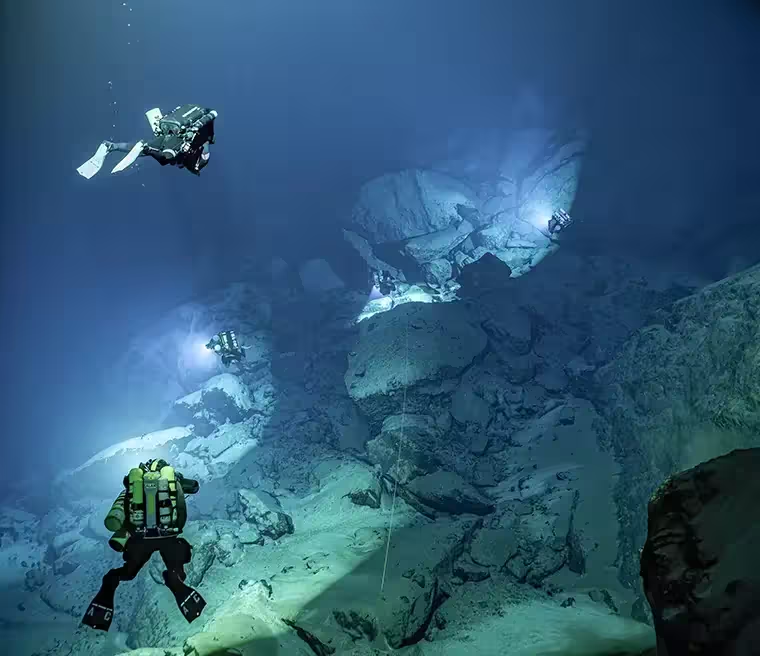
A breakthrough arrived in 2019 when Stone Aerospace deployed the Sunfish autonomous drone, an AI‑driven vehicle designed for cave exploration. Using multibeam sonar, the drone charted the basin and identified its bottom at 264 metres. Expedition leader Vickie Siegel highlighted Sunfish as the inaugural autonomous system to investigate a completely unknown terrestrial environment.
Robotic surveying did not halt human ambition. In 2023 a crew achieved a 160‑metre descent during a nine‑hour dive, uncovering previously unmapped sections of the cave network and confirming that further scientific work remains.
Logistics of the 2024 Exploration
A comprehensive InDEPTH expedition dossier authored by Oliver Schöll and released on 6 November 2024 details the enormity of the operation. The six‑day mission enlisted Tom Baier, Alan Calovs, Louw Greef, Stefan Gries, Stefan Pape, Oliver Schöll, Markus Schuster, Chris Steencamp, and Ralf Wupper.
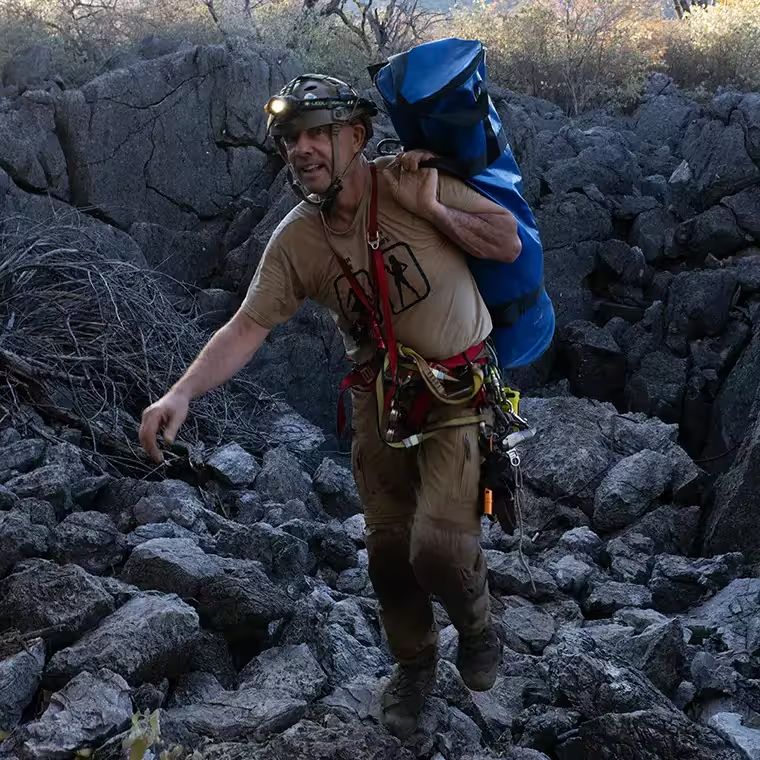
Preparing for the mission consumed a full year, as the target depth of about 60 metres demanded rigorous safety drills. A 2023 reconnaissance revealed a further obstacle: the lack of solid ground near the dive site forced the team to construct a floating platform to serve as a work base.
Training emphasized rapid descent techniques, including lowering divers into inflatable boats from a three‑metre platform, donning drysuits and rebreathers underwater, and streamlining the process. The team trimmed individual preparation time from roughly 20 minutes to a window of 7‑10 minutes, a critical gain in a confined environment.
The 2024 venture departed Windhoek on 12 June, hauling over 800 kilograms of gear. After a 450‑kilometre drive to Haarsieb Farm near Tsumeb, the explorers moved approximately 1.5 tons of equipment across 200 metres to the cave mouth before lowering it to the lake level.
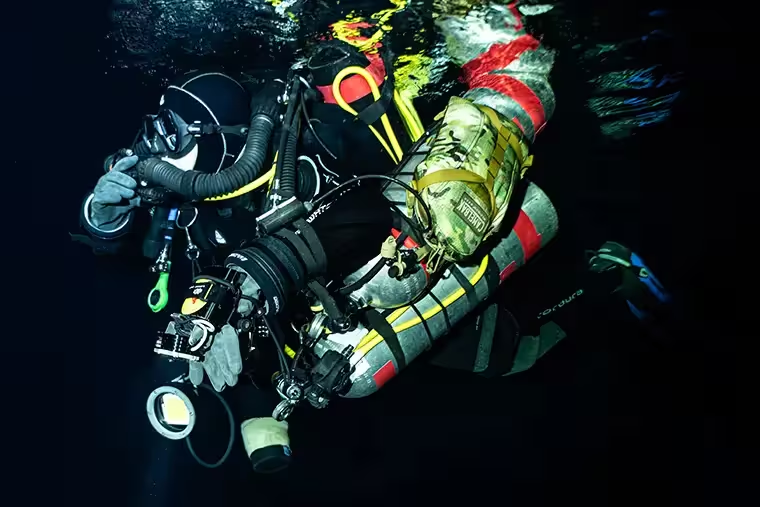
Inside the cavern, conditions grew oppressive before the dive even began. On 16 June, the crew hauled heavy rebreathers through a shaft saturated with 100 percent humidity and a temperature of 30 °C. The following day, divers entered water measured at 25 °C, planning immersion periods of up to ten hours.
At a depth of 60 metres the team reached the lake floor, anchoring a reel while the main tunnel continued to slope down at angles of 30‑40 degrees. Schöll noted that 50,000‑lumen video lights illuminated the passage as brightly as daylight, yet the cavern stretched beyond view, with no discernible ceiling or walls within a 100‑metre visibility range.
A Fragile Ecosystem in Total Darkness
Dragon’s Breath Cave also shelters a suite of troglobitic organisms adapted to clear water, stable temperatures, and perpetual darkness. The most renowned resident is the blind golden cave catfish (Clarias cavernicola), regarded as one of the planet’s most isolated fish species.
The subterranean habitat also supports eyeless white prawns and Trogloleleupia dracospiritus, a diminutive amphipod whose Latin epithet translates to “spirit of the dragon.” These organisms survive far removed from sunlight and surface food webs.
According to Travel Namibia, the amphipod and most other cave fauna depend on bat guano that settles on the lake bottom. John Irish described the environment as a vast, largely barren lake that nonetheless nurtures a modest community of specially adapted creatures in its most secluded niches.
This article has been fact checked for accuracy, with information verified against reputable sources. Learn more about us and our editorial process.
Last reviewed on .
Article history
- Latest version
Reference(s)
- Havercroft, Matt. “60 metres below an arid desert lies a secret, gigantic underground lake that's hundreds of metres deep and home to animals found nowhere else on earth.”, June 7, 2026 Discover Wildlife <https://www.discoverwildlife.com/environment/dragons-breath-cave>.
- Klerk, Leon. “The Spirit of the Dragon and this thing called life: Dragon’s Breath.”, November 7, 2024 Travel News Namibia <https://travelnam.com/the-spirit-of-the-dragon-and-this-thing-called-life-dragons-breath/>.
- Kas, Stratis. “Deep in Dragon’s Breath.”, November 6, 2024 InDEPTH - Get Deeper Into Diving <https://indepthmag.com/expedition-in-the-dragons-breath-cave-namibia/>.
Cite this page:
- Posted by Hassan Raza