August Skywatching Guide: Venus Peaks, Mercury‑Jupiter Conjunction, Saturn Shines
August’s top sky event approaches, plus a lineup of planets to watch all month.
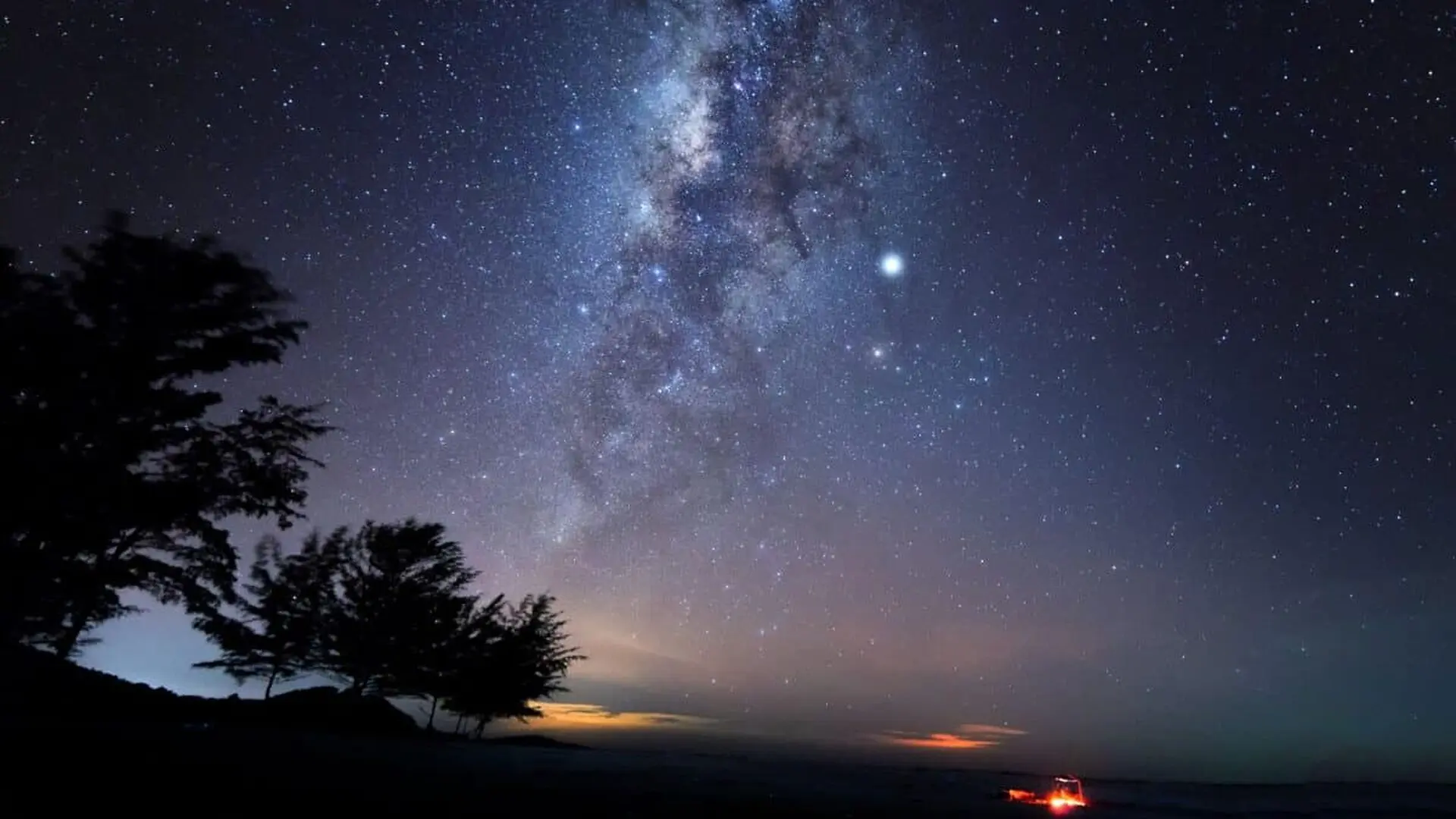
August provides a rich program for amateur astronomers, with Venus dominating the evening sky and a tight Mercury‑Jupiter pairing lighting up the pre‑dawn horizon in mid‑month. Saturn also offers excellent viewing conditions, while Mars continues its gradual return to the morning sky.
The shifting planetary configurations produce a diverse schedule of events, some visible to the naked eye and others requiring binoculars or a telescope.
According to Space.com, the month’s highlights include Venus reaching its peak eastern elongation, Mercury delivering its brightest morning appearance, and Jupiter slowly emerging from solar glare.
Venus Shines as the Evening Sky’s Leading Light
Throughout August, Venus outshines every star and planet after sunset. Its apparent magnitude improves from -4.2 at the start of the month to -4.5 by month’s end, making it the brightest object after the Moon.
On Aug. 15, the planet attains its greatest eastern elongation, positioned 46° east of the Sun. Despite this separation, Venus remains relatively low in the western sky and begins a slow descent toward the west‑southwest horizon as the month progresses, due to its southern declination.
Space.com notes that the effect is amplified by the seasonal tilt of the ecliptic, which in late summer hugs the western horizon after sunset, causing Venus to set in brighter twilight during the latter half of August and into September.
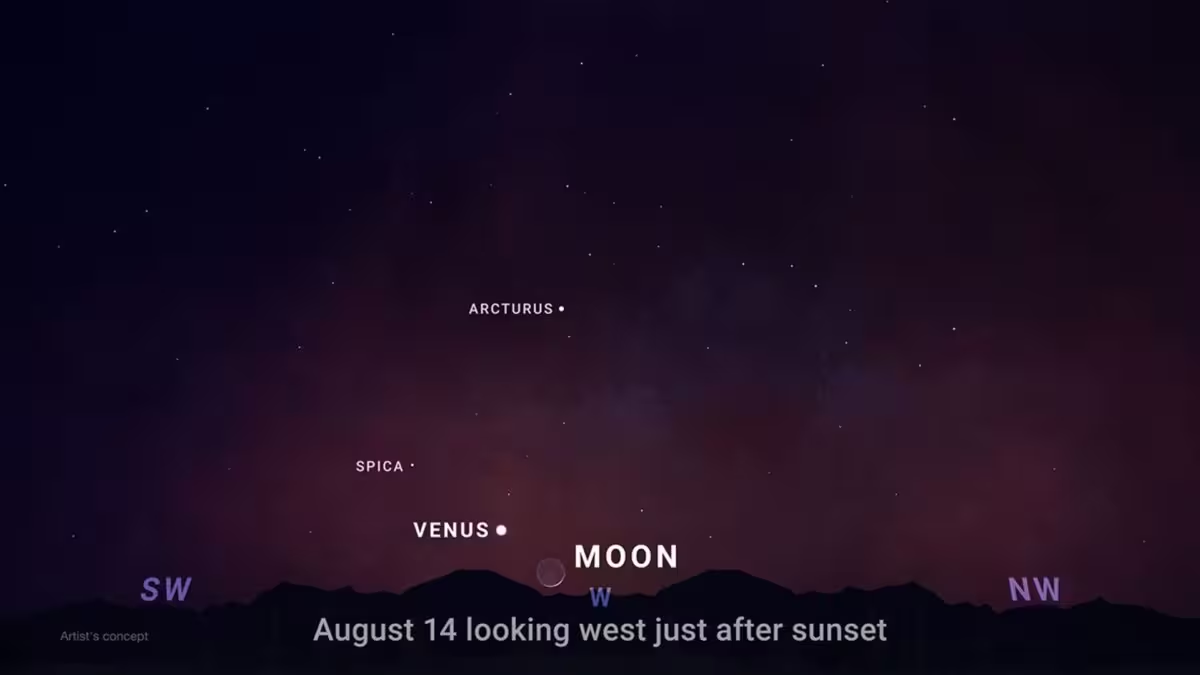
Through a telescope, observers will notice Venus displaying a half‑moon phase around mid‑month, with roughly 48 % of its disk illuminated. On the evening of Aug. 15, a waxing crescent Moon sits just to the lower right of the planet.
Mercury‑Jupiter Close Approach Lights Up Dawn
The most striking pre‑sunrise event unfolds between Aug. 13 and Aug. 17, when Mercury draws near to Jupiter above the eastern horizon. Mercury reaches its greatest western elongation on Aug. 2, standing 19° from the Sun and appearing at magnitude +0.2 about fifty minutes before sunrise.
During the following days Mercury climbs higher while brightening rapidly, attaining magnitude ‑1.3 by Aug. 16. On Aug. 9, observers can trace a line from the bright stars Castor and Pollux to locate Mercury low in the east‑northeast.
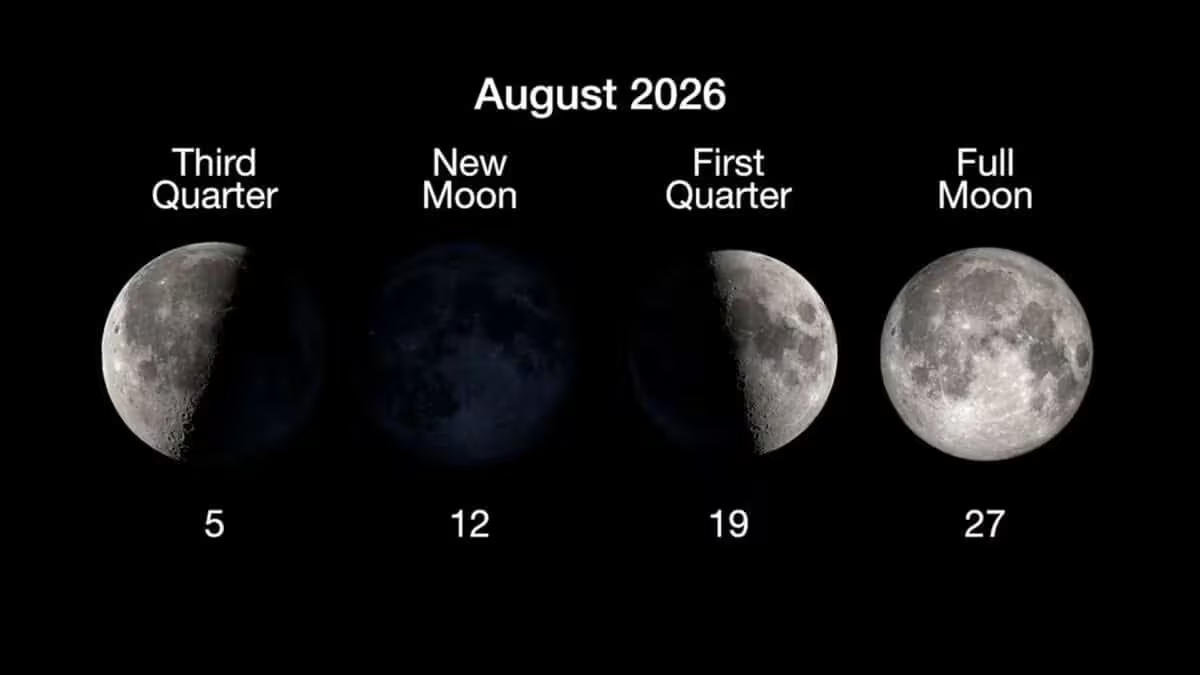
An extremely thin crescent Moon, illuminated by merely 2 %, passes within 2° of Mercury on Aug. 11, offering a handy visual marker.
Jupiter, having emerged from solar conjunction on July 29, remains hidden in the early part of August before becoming visible low in the dawn twilight by Aug. 12, positioned roughly 5° beneath Mercury.
The closest separation occurs in the early hours of Aug. 15, with the two planets less than 0.6° apart. Jupiter outshines Mercury by about a factor of two at this time. Both bodies rise roughly 65 minutes before sunrise and sit only about 10° above the east‑northeastern horizon at first light, making binoculars an effective tool for spotting them against the brightening sky.
Saturn and Mars Offer Prime Telescope Targets
While the dawn conjunction captures attention, Saturn stands out as the month’s premier telescopic target. The ringed planet rises a few hours after sunset near the border of the constellations Cetus and Pisces, reaching a high position in the south‑southeastern sky by daybreak. Its rings remain well‑tilted for detailed viewing, though they will appear slightly narrower in the coming months.
On the night of Aug. 3, a bright gibbous Moon appears to the lower right of Saturn, providing an easy reference point for locating the planet.
Space.com reports that Earth closes on Mars by an average of 425,800 miles (685,100 km) each day during August. By month’s end, the two planets remain separated by about 172.2 million miles (277.1 million km), so Mars’s increase in brightness is modest and gradual.
On the morning of Aug. 9, a waning crescent Moon sits roughly 4.5° to the right of Mars, adding another noteworthy pairing to August’s skywatching calendar.
This article has been fact checked for accuracy, with information verified against reputable sources. Learn more about us and our editorial process.
Last reviewed on .
Article history
- Latest version
Reference(s)
- Rao, Joe. “The night sky is changing this August — here's which planets to watch.”, July 31, 2026 Space <https://www.space.com/stargazing/the-night-sky-is-changing-this-august-heres-which-planets-to-watch>.
Cite this page:
- Posted by Karan Das