30-Year-Old Asteroid Revealed as Secret Comet After Precise Orbital Analysis
NASA uncovers a hidden comet, previously misidentified as an asteroid for 30 years, after spotting a subtle orbital anomaly.
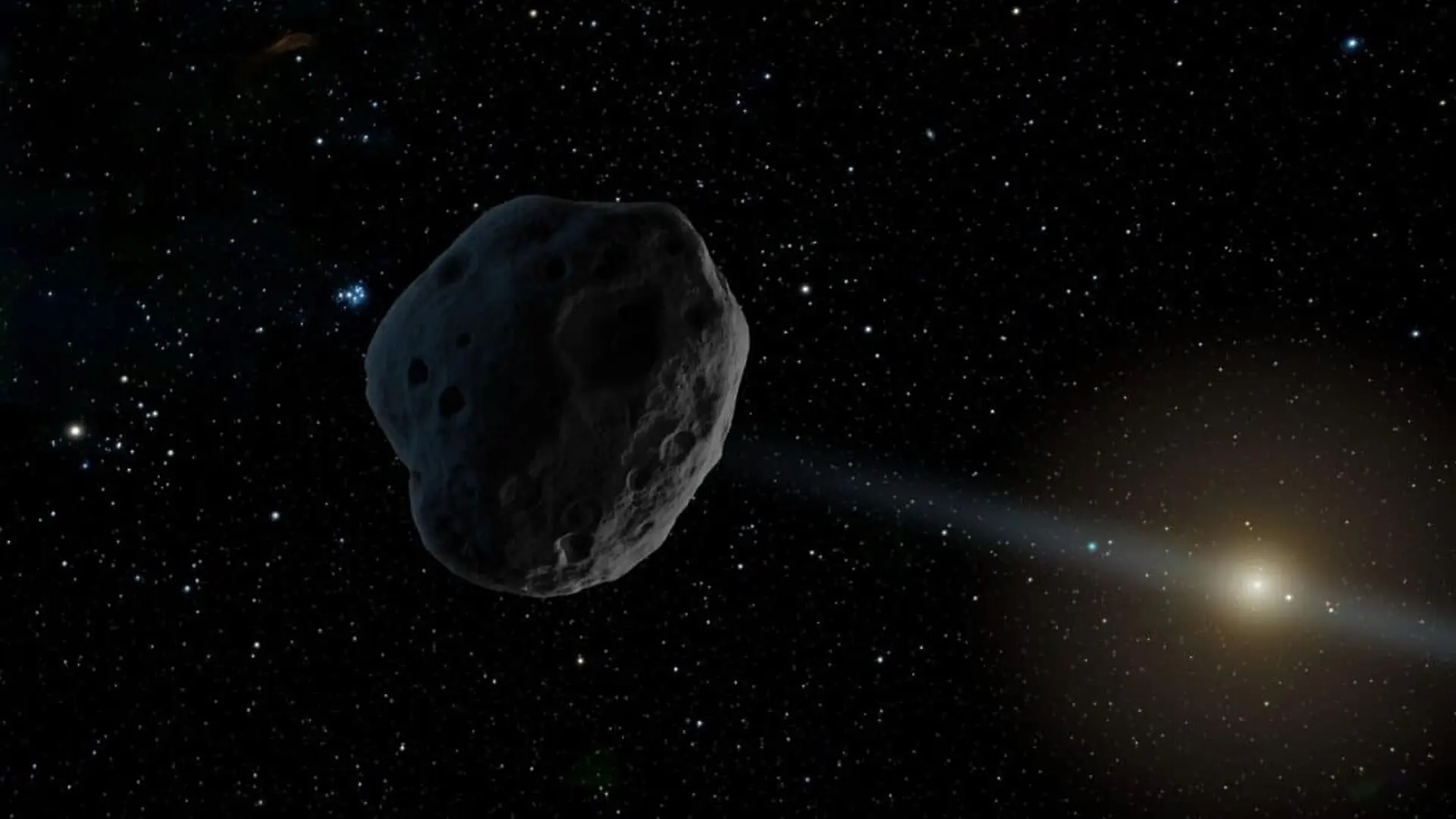
Astronomers have re‑identified a long‑known near‑Earth object as a faint, active comet after more than two decades of tracking. The object, originally catalogued as 1998 SH2, now bears the cometary designation P/1998 SH2.
Orbital Anomalies Reveal Outgassing
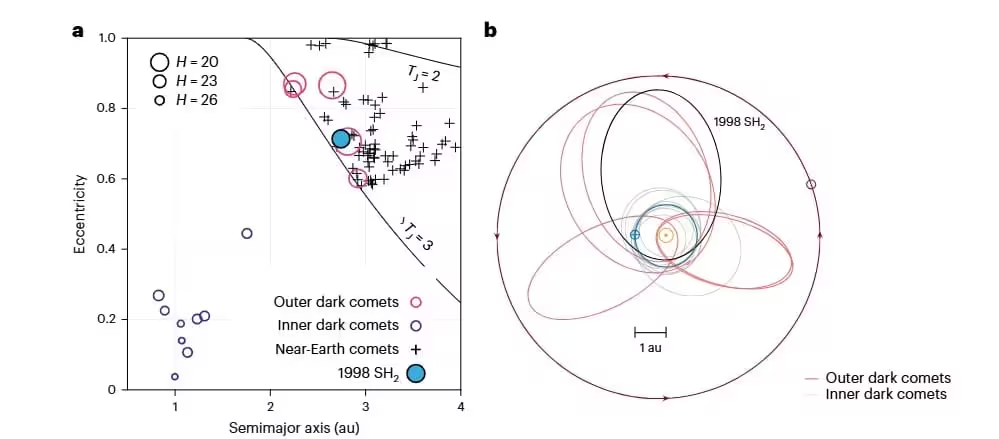
When the asteroid‑like body passed close to Earth in August 2025, radar data from NASA’s Deep Space Network showed a small but measurable deviation from its predicted trajectory. A review of optical astrometry spanning nearly thirty years confirmed that gravitational forces alone could not explain the drift.
The analysis uncovered subtle nongravitational accelerations consistent with jets of gas escaping from sublimating ice beneath the surface. Such outgassing can act like miniature thrusters, gradually altering an object’s orbit.
“After we measured the nongravitational perturbations affecting the motion of 1998 SH2 and recognized they weren’t compatible with the object being an asteroid, we suspected the object could be an active comet,” said Davide Farnocchia, lead author of the study and navigation engineer with NASA’s Center for Near‑Earth Object Studies at the Jet Propulsion Laboratory.
Telescopic Follow‑Up Captures Faint Tail
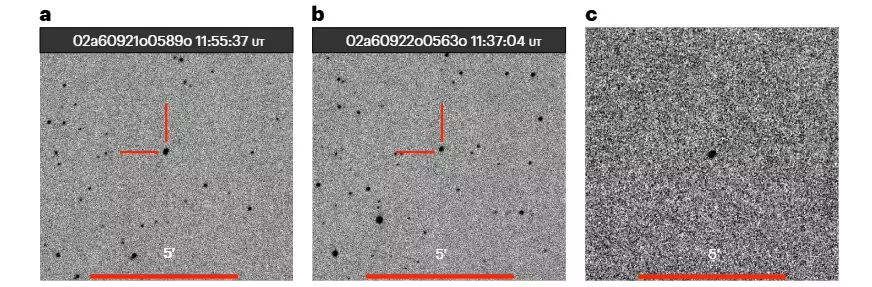
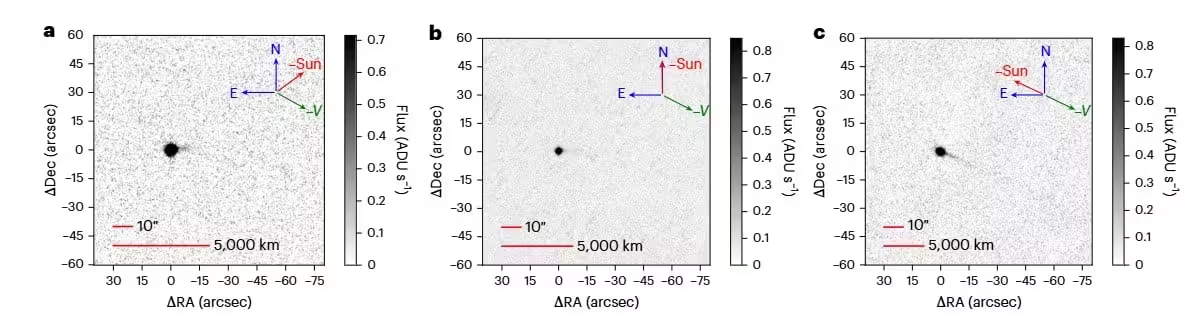
Armed with the orbital clue, researchers pointed the European Southern Observatory’s Very Large Telescope in Chile and the Canada‑France‑Hawaii Telescope on Mauna Kea at the object. Both facilities recorded a delicate, yet unmistakable, tail extending from the nucleus, confirming the presence of escaping material.
The observations prompted the formal reclassification of the body as comet P/1998 SH2. The findings were published in Nature Astronomy on July 10, highlighting how legacy data can uncover hidden activity.
Implications for Earth‑Crossing Object Surveys
The case of P/1998 SH2 underscores a broader challenge: many near‑Earth objects lack the bright comae or tails that readily signal cometary activity. Without careful astrometric monitoring, such bodies can remain misidentified for years.
By quantifying nongravitational forces, scientists can refine orbital forecasts for both asteroids and comets, improving planetary‑defense models that rely on precise trajectory predictions.
“This work shows the importance of continuously tracking near‑Earth objects,” Farnocchia said. “Because of outgassing, the motion of comets is more significantly perturbed than that of asteroids.”
Future surveys that combine long‑term astrometric records with high‑resolution imaging may uncover additional hidden comets, ensuring that the catalog of near‑Earth objects reflects their true physical nature.
This article has been fact checked for accuracy, with information verified against reputable sources. Learn more about us and our editorial process.
Last reviewed on .
Article history
- Latest version
Reference(s)
- “Research at JPL | Profile Davide Farnocchia.” <https://www.jpl.nasa.gov/site/research/dfarnocc/>.
- Farnocchia, D.. “Non-gravitational acceleration indicative of cometary activity of near-Earth object.”, pp. 1-9., doi: 10.1038/s41550-026-02913-7. <https://www.nature.com/articles/s41550-026-02913-7.epdf?sharing_token=9Tyupu4lm8WCiQN9V4uRpNRgN0jAjWel9jnR3ZoTv0O84-m2iWHZz4iV2hT32uLAbHe5sb0xl89wktx4_l0h7YzBZMRyDOSyjQNggyMpO13q_DgXU9bhmcGdlhgM_FYaPgkyxjrDRZbEUugt7jKl1K-HJuNbYtqdlXGXWfBi114=>.
Cite this page:
- Posted by Karan Das