5,000-Year-Old Wooden Posts Reveal a Pre-Stonehenge Solar Alignment
Archaeologists unearthed two wooden posts dating 500 years before Stonehenge, a rare find that may rewrite the origins of Britain’s iconic stone circle.
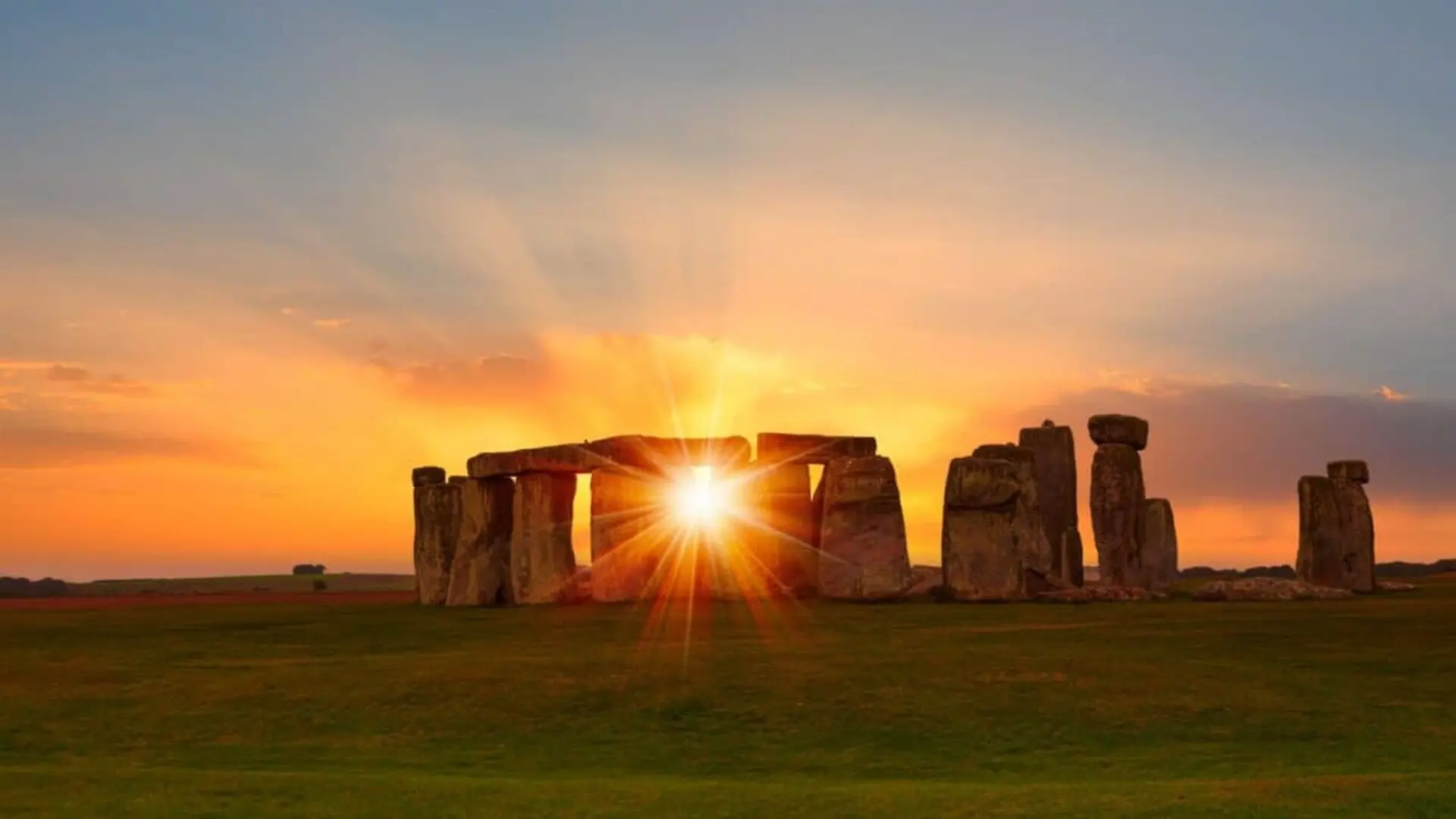
Archaeologists working near Stonehenge have uncovered a timber framework that dates back roughly 5,000 years, suggesting an early form of the monument’s famous solstice orientation that predates the stone circles by about five centuries. The structure was discovered at Bulford, a site three miles from the iconic stones on land currently used for Ministry of Defence housing.
The find reshapes our understanding of the ritual landscape that surrounds Stonehenge, indicating that the practice of tracking the sun’s path on Salisbury Plain began earlier than the archaeological record previously showed. Announced just days before the summer solstice, the discovery arrives as thousands of visitors prepare to watch the sunrise at the World Heritage site.
Twin Timber Poles Mark Solar Orientations
At the heart of the site are two wooden uprights set about 120 metres apart, arranged so that a line drawn between them aligns with the rising sun on the summer solstice and the setting sun on the winter solstice. Archaeologist Phil Harding, who directed the Wessex Archaeology excavation, first noticed the potential alignment after sketching a line between the two post pits and seeing that it matched Stonehenge’s own solstitial axis.
Skyscape specialist Dr Fabio Silva later modelled the ancient horizon and confirmed that the posts would have pointed toward both solstices with an accuracy of roughly one degree. Analysis of the pit depths suggests the poles stood three to four metres high and were likely fashioned from ash, a timber traditionally linked to strong pagan symbolism.
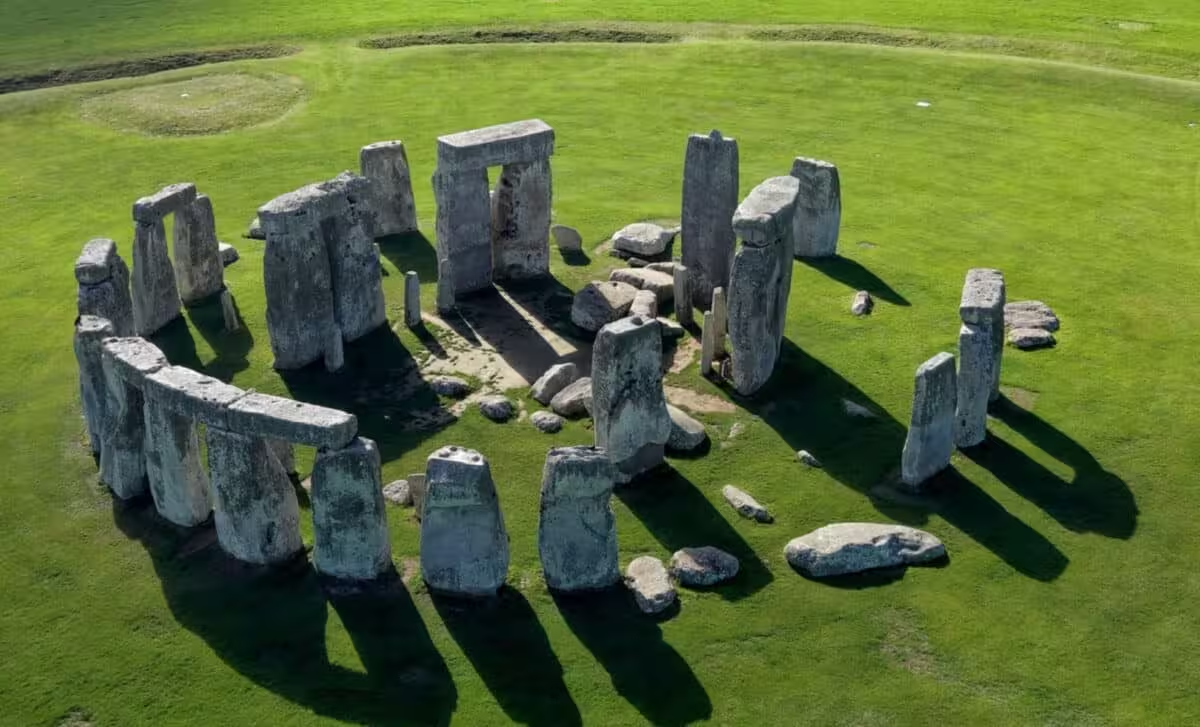
The original dig, carried out between 2015 and 2017 ahead of a Ministry of Defence housing project on Salisbury Plain, uncovered 48 pits that have been radiocarbon‑dated to around 2950 BC – the same era when the first earthworks and ditches were erected at Stonehenge. One of the original post pits now lies beneath army housing, while the second remains exposed in a nearby recreational field.
Signs of Communal Feasting and Ritual Activity
A suite of artifacts recovered from the pits includes pottery fragments, animal bones, worked flint tools and charcoal, all pointing to sizable gatherings that likely involved feasting linked to the solar calendar. One pit, interpreted as a viewing platform for the solstices, contained a rare disc‑shaped flint knife whose rounded silhouette may have been intended as a symbolic reference to the sun.
Matt Leivers, senior research manager at Wessex Archaeology, said the scale of the effort to mark the solstices demonstrates a belief system centred on solar movements. He added that the proximity and timing of the Bulford site make it plausible that the same communities responsible for this timber arrangement also participated in the earliest phases of Stonehenge’s construction.
Richard Osgood, senior archaeologist with the Ministry of Defence’s Defence Infrastructure Organisation, noted that what first appeared to be a modest set of features has fundamentally altered the perception of the ceremonial landscape around Stonehenge.
Harding, widely known for his work on Channel 4’s “Time Team,” described the discovery as one of the most important of his career, emphasizing how rare such opportunities are and expressing gratitude for being able to contribute at this stage of his professional life.
This article has been fact checked for accuracy, with information verified against reputable sources. Learn more about us and our editorial process.
Last reviewed on .
Article history
- Latest version
Reference(s)
- “Meet The Expert: Phil Harding.” English Heritage <https://www.english-heritage.org.uk/members-area/members-magazine/meet-the-expert/bts-phil-harding/>.
- “Fabio Silva.” <https://scholar.google.com/citations?user=mzk1M1kAAAAJ&hl=en>.
- “Matt Leivers | Wessex Archaeology.” Wessex Archaeology <https://www.wessexarch.co.uk/user/matt-leivers>.
Cite this page:
- Posted by Hassan Raza