San Rock Painting Could Depict Extinct Dicynodont, Linking Fossils to Ancient Rituals
A 200‑year‑old Karoo Basin rock painting in South Africa upends ideas about early humans’ awareness of extinct species.
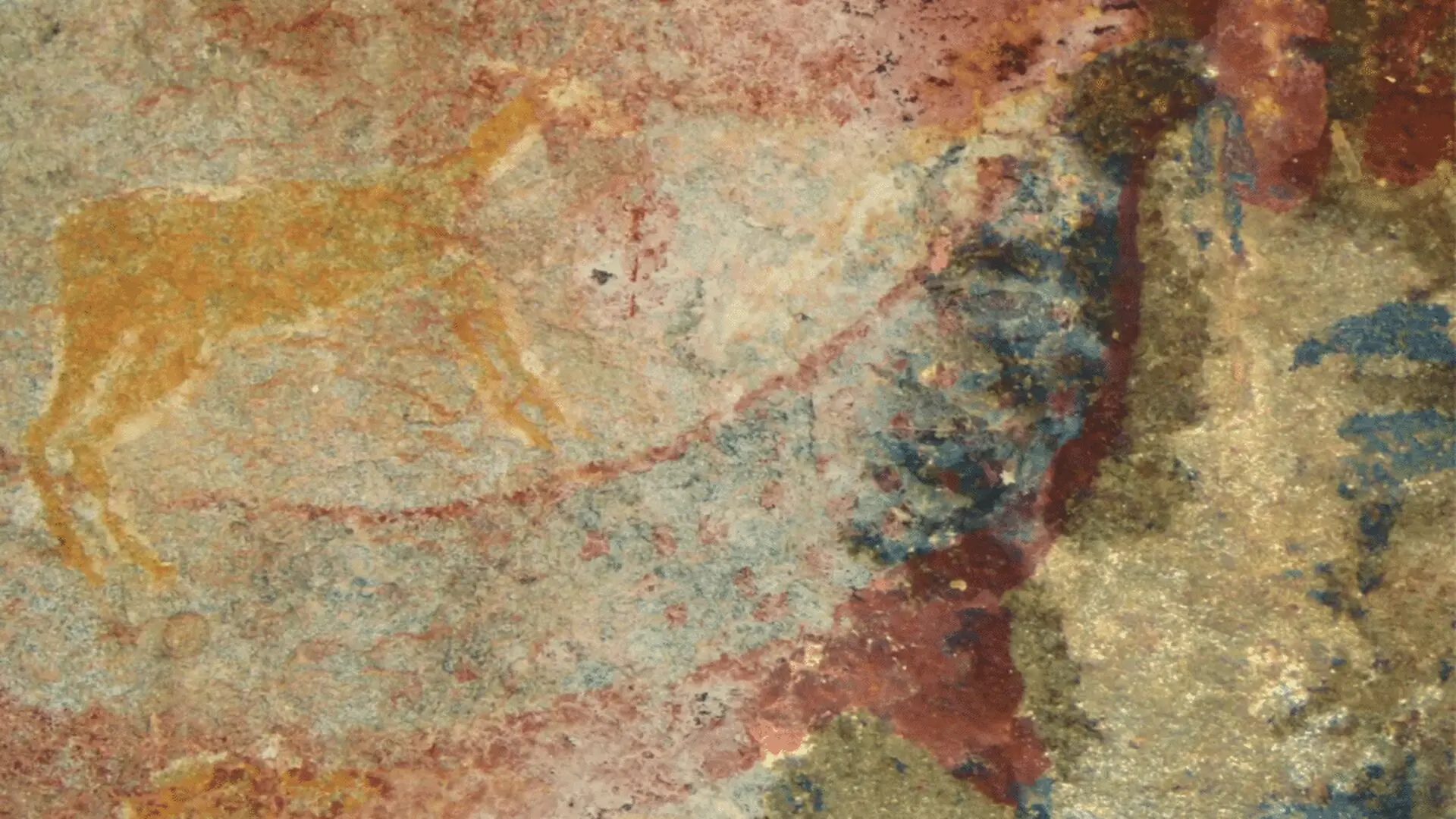
A sandstone panel in South Africa’s Karoo Basin, etched by the San people in the early nineteenth century, has attracted fresh scholarly interest after a recent PLOS One article suggested the image could represent an animal that vanished from Earth long before modern ecosystems formed. The composition depicts a slender creature with downward‑curving tusks flanked by human figures engaged in what appears to be a ceremonial tableau. Its unusual morphology does not match any living species known from the region, prompting researchers to explore connections with the basin’s deep‑time fossil record.
Cultural Context of the Karoo Rock Painting
The work belongs to the extensive corpus of San rock art, celebrated for its symbolic richness and ties to ritual practice throughout southern Africa. In this particular panel, human figures bearing shields gather around the central tusked form, forming a composition that suggests a story or a rite rather than random decoration. Scholars argue that the image reflects a structured visual grammar linked to everyday experience and environmental knowledge.
The Karoo Basin is famed for its Permian and Triassic fossil deposits, which have yielded a wealth of ancient vertebrate remains over many decades. This geological backdrop has led some investigators to propose that the presence of exposed fossils may have left an imprint on local cultural memory.
The creature’s long body and prominent tusks differ markedly from recognizable African fauna, inviting comparisons with prehistoric taxa preserved in the surrounding rock layers. The proximity of fossil‑rich terrain and symbolic art raises the prospect that early inhabitants encountered skeletal fragments that shaped their perceptions of the natural world across generations.
Scientific Perspectives on the Figure
A 2024 investigation published in PLOS One examined both the visual motif and the regional fossil record. The authors propose that the tusked animal resembles a dicynodont, a group of extinct synapsids that roamed the planet roughly 200 million years ago and are characterized by paired tusks and stout skulls. Dicynodont fossils are abundant across southern Africa, including locales later inhabited by San communities.
The study stops short of declaring a definitive identification; instead it offers a framework in which fossil exposure could have informed cultural representation. Within this model, ancient observers might have stumbled upon eroded skulls or bone fragments that resembled living creatures, embedding those impressions into spiritual or mythic narratives. The authors suggest that such “indigenous paleontology” predates modern scientific approaches, positioning early societies as active participants in the observation of deep‑time evidence.
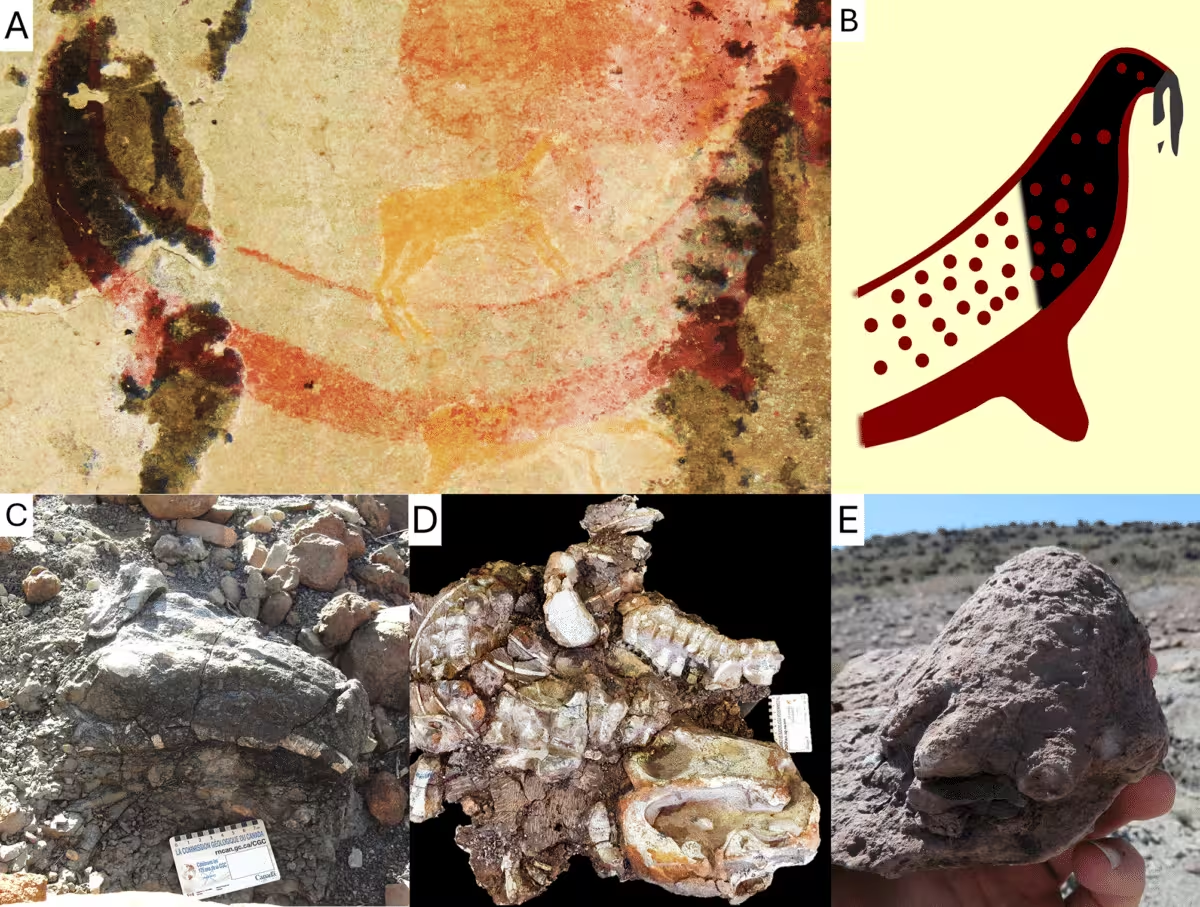
Indigenous Knowledge and the Notion of “Indigenous Paleontology”
The debate extends beyond taxonomy into broader questions about how knowledge systems shape cultural interpretation. One of the study’s authors highlighted the possibility that fossil awareness became woven into spiritual frameworks long before formal scientific disciplines emerged.
“Many cultures explored the world of fossils before Western scientists did,” Julien Benoit, lead author from the Evolutionary Studies Institute at the University of the Witwatersrand, told IFLScience when the paper was released.
Benoit’s comment frames fossil interpretation as a universal human activity rather than a uniquely Western development. From this perspective, rock art serves as a conduit through which environmental observation and spiritual meaning intersect.
San ritual practice, which often involves trance states and storytelling, frequently assigns animals metaphysical roles linked to weather, ancestors, and transformation. Within such a worldview, extinct creatures could acquire symbolic significance that transcends their biological identity, embodying forces tied to rain, life cycles, and the boundary between worlds. While the concept of “Indigenous paleontology” remains contested, it underscores the potential for ancient societies to engage with deep‑time evidence in ways that differ from contemporary scientific categories.
Rain‑Animal Theory and Ceremonial Implications
A prominent hypothesis suggests the tusked figure may have functioned as a rain‑animal in San rain‑making rituals, where symbolic creatures mediate between the physical and spiritual realms. Benoit told IFLScience that the panel was likely painted as a rain‑animal, a participant in ceremonies intended to summon rain.
In this interpretation, the animal’s importance derives not from a match with any living species but from its resonance with attributes of power, absence, and transformation. The fact that the creature is extinct may have amplified its ritual potency, positioning it as a bridge between the world of the living and the realm of ancestors.
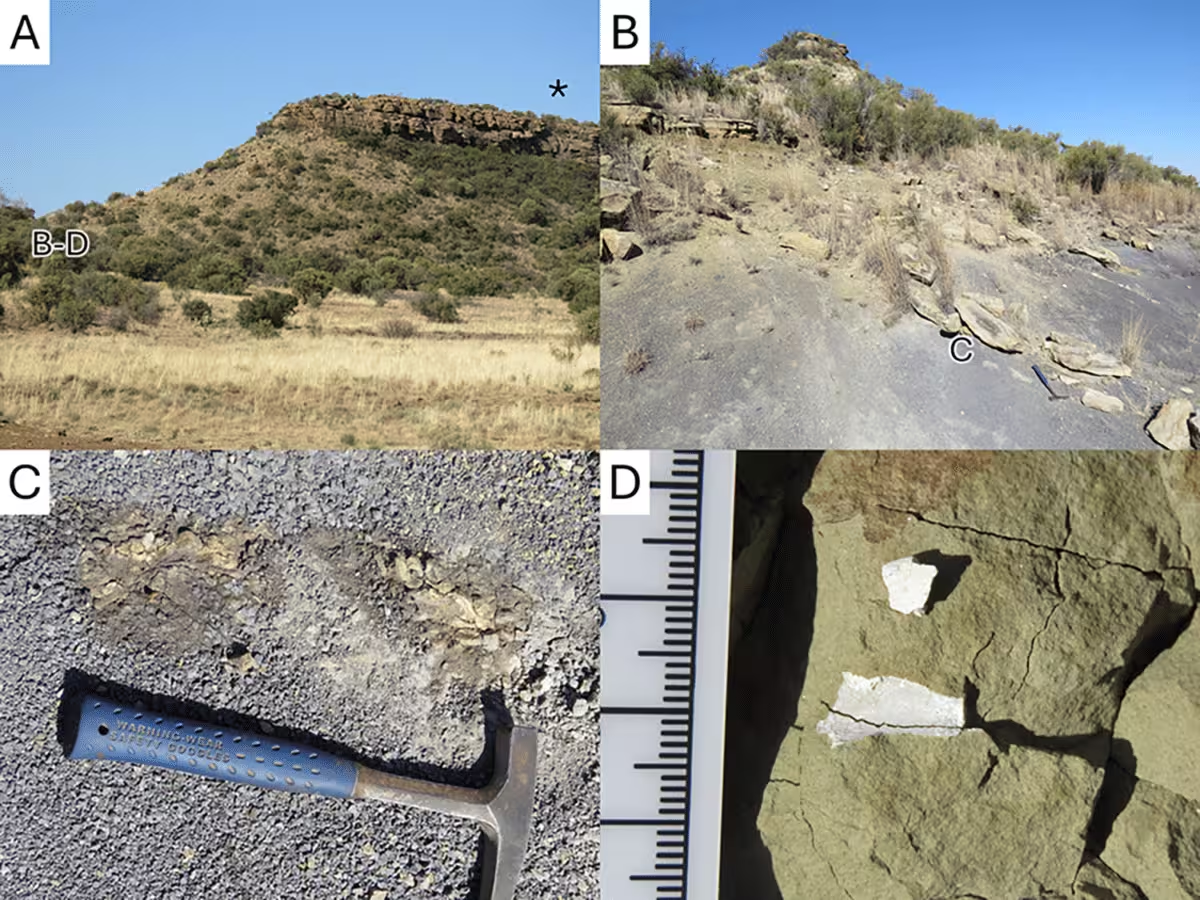
Balancing Fossil Evidence, Mythology, and Scholarly Caution
Linking the rock art to dicynodonts or other extinct animals remains a matter of ongoing debate, with alternative explanations invoking known fauna such as seals or hippo‑like mammals. The lack of a conclusive identification leaves space for multiple readings, each supported by different strands of evidence ranging from fossil distribution to ethnographic accounts. “During rain‑making ceremonies, the San enter a trance state and travel to the realm of the dead to capture rain‑animals and bring the rain back to the world of the living,” Benoit explained.
By selecting a species presumed extinct, the participants may have believed that the rain‑animal possessed heightened potency to connect the two worlds. This view merges ecological observation with spiritual symbolism, suggesting that the very concept of extinction could have carried interpretive weight within ritual contexts.
Scholars caution, however, against drawing direct one‑to‑one correspondences between fossil taxa and artistic depictions without stronger corroboration. The panel thus remains an open‑ended artifact situated at the crossroads of archaeology, geology, and cultural memory, where certainty yields to layered possibilities.
This article has been fact checked for accuracy, with information verified against reputable sources. Learn more about us and our editorial process.
Last reviewed on .
Article history
- Latest version
Reference(s)
- Benoit, Julien. “A possible later stone age painting of a dicynodont (Synapsida) from the South African Karoo.”, vol. 19, no. 9, pp. e0309908, doi: 10.1371/journal.pone.0309908. <https://journals.plos.org/plosone/article?id=10.1371/journal.pone.0309908>.
- <https://www.iflscience.com/200-year-old-rock-art-of-a-tusked-monster-may-depict-an-extinct-creature-that-vanished-200-million-years-ago-83850>.
Cite this page:
- Posted by Hassan Raza