Goblin Shark Caught on Camera at Record Depth, Revealing New Pacific Habitat
After 50 days of darkness, deep‑sea cameras captured a fleeting 20‑second glimpse of a ghostly shark, reshaping our understanding of its habitat.
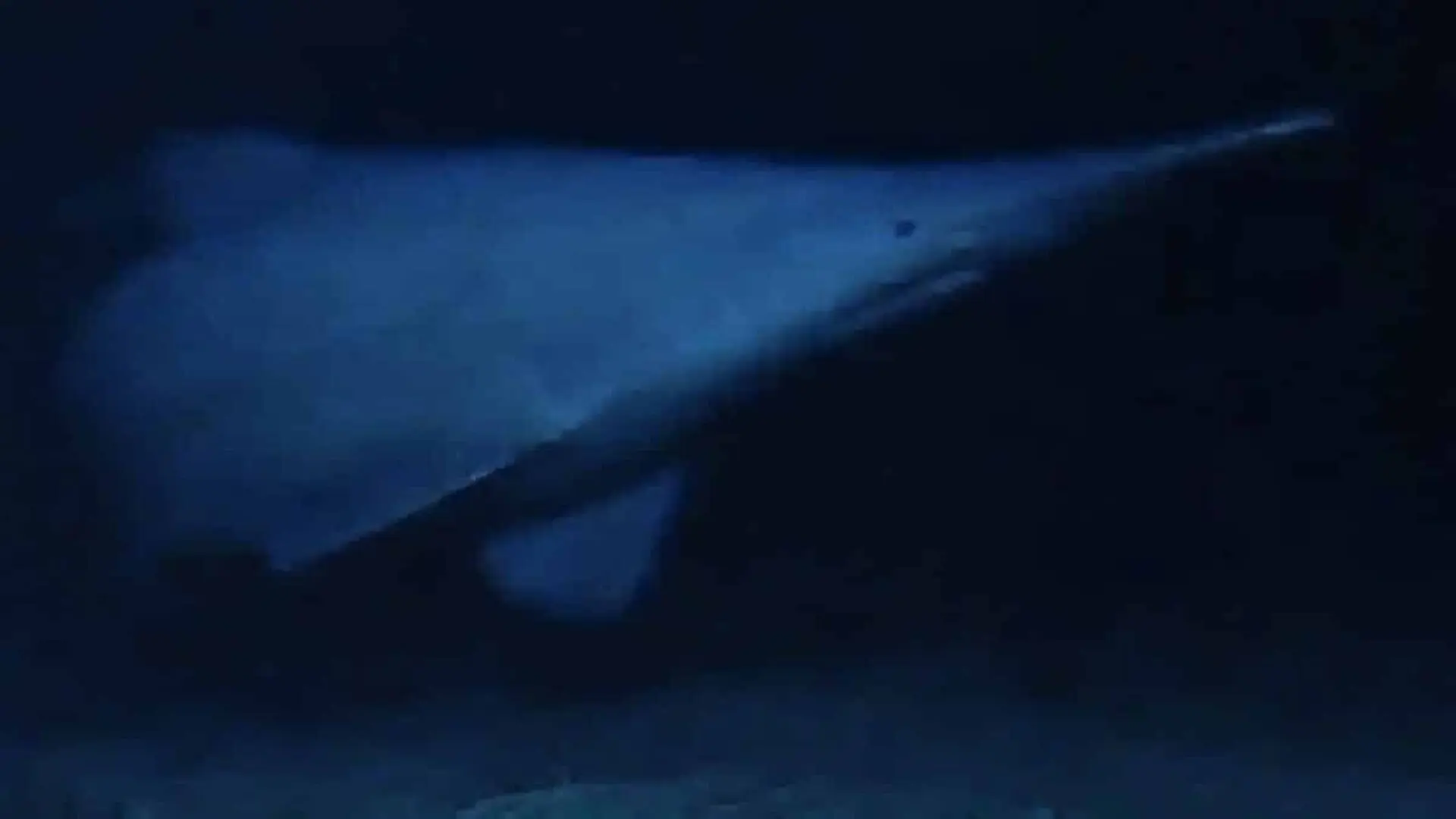
Over a span of more than 50 days, cameras surveyed ocean depths ranging from 800 to 10,800 metres. A goblin shark crossed the field of view for just over 20 seconds.
The fleeting encounter, recorded on the slope of the Tonga Trench at 1,997 metres, provided scientists with the first moving image of a live goblin shark in its natural deep‑sea environment. The elusive species Mitsukurina owstoni had previously been observed alive only after being hauled aboard fishing vessels, where the animals quickly perished.
Researchers from the University of Hawaiʻi at Mānoa say the new documentation does more than confirm a rare sighting; it pushes the shark’s known distribution into the Central Pacific and extends its depth range by nearly 700 metres.
The observations, now appearing in the Journal of Fish Biology, stem from two separate live recordings. One originates from archived footage of a 2019 expedition near Jarvis Island, while the other comes from a 2024 mission to the Tonga Trench that used a baited camera on the trench’s slope.
Archived 2019 Video Reveals Goblin Shark in Central Pacific
The first record was uncovered when lead author Aaron Judah, a doctoral candidate at the University of Hawaiʻi at Mānoa, learned in 2025 that colleagues at the Deep‑Sea Animal Research Center had mentioned a possible goblin shark sighting from a 2019 cruise. Judah combed the public video archive and identified the shark in a livestreamed dive.
That footage was captured by Hercules, a remotely operated vehicle deployed during an Ocean Exploration Trust mission aboard the research vessel Nautilus. The expedition examined deep‑sea habitats around Kingman Reef, Palmyra Atoll and Jarvis Island within the Pacific Remote Islands Marine National Monument. The shark appeared on an unnamed seamount northwest of Jarvis Island.
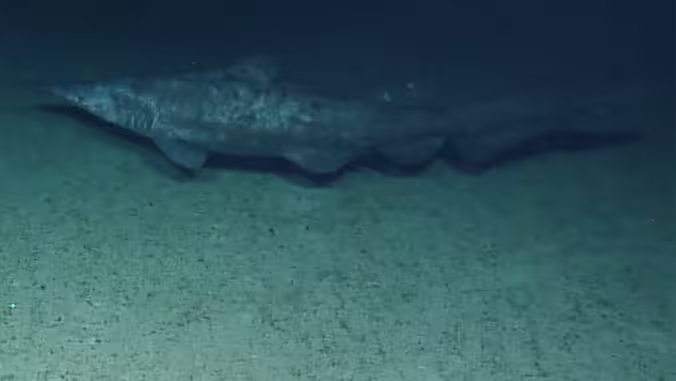
Prior to this find, goblin sharks had only been recorded from limited locales off the western United States, Australia and Japan in the Pacific, plus scattered sites in the Atlantic and Indian Oceans. The Jarvis Island observation adds a new Central Pacific point to that distribution map.
Judah noted his surprise at the 2019 sighting because the species had not been documented in that region before. The discovery also underscores how valuable existing video archives can be when a brief image is linked to a rarely seen organism.
2024 Tonga Trench Capture Extends Depth Limits
The second record comes from a 2024 expedition to the Tonga Trench aboard the research vessel Dagon. Part of the Inkfish Open Ocean Expedition led by the Minderoo‑UWA Deep‑Sea Research Centre, a baited deep‑sea camera mounted on a bottom lander captured the shark at 1,997 metres.
A bottom lander is a platform that descends to the seabed carrying cameras or sensors. In this case, it offered a rare glimpse of a species that almost never appears in natural‑habitat footage. The brief passage set a new depth record for the goblin shark.
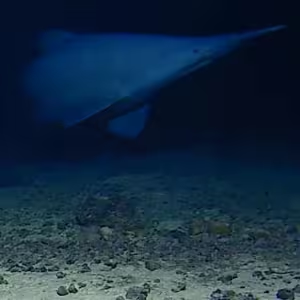
The Tonga Trench observation places the species almost 700 metres deeper than previously documented and also extends the known depth range for the order Lamniformes, which includes white, basking and mako sharks.
Professor Alan Jamieson, founding director of the Minderoo‑UWA Deep‑Sea Research Centre and co‑author of the study, remarked that he never expected to see a goblin shark alive. His team recorded more than 50 days of continuous deep‑sea video, yet the shark appeared for just over 20 seconds.
Goblin Shark: A Deep‑Sea Relic Seen Alive
Goblin sharks are frequently labeled as living fossils because they are the sole surviving members of a shark family that dates back nearly 125 million years. The term highlights their ancient lineage and distinctive position in shark evolution.
Although the moniker suggests familiarity, the new records reveal how few live observations exist. Before these two videos, goblin sharks had only been reported alive after capture on fishing gear, a circumstance that does not reflect their behavior in the deep ocean.
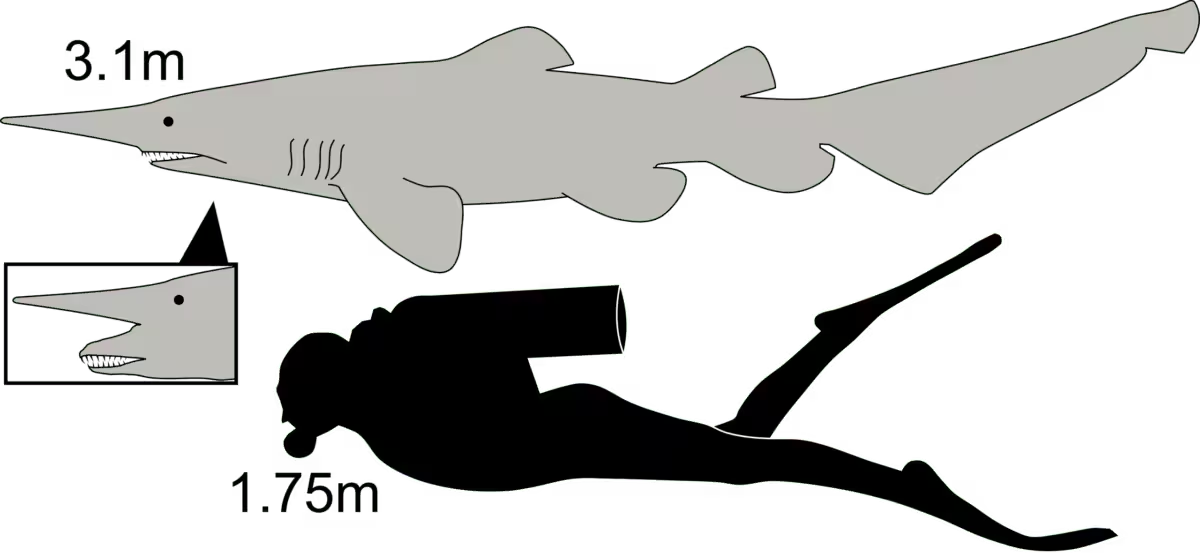
The importance of seeing the shark in situ lies in confirming its natural posture, swimming style and interaction with the surrounding environment—details that a surface‑capture cannot provide. The footage therefore supplies a genuine record of the animal living where it normally resides.
While the observations do not establish how common goblin sharks are in the Central Pacific or how frequently they occupy these depths, they do demonstrate that the species inhabits a region where it was previously undocumented and at depths deeper than known before.
Implications of a Brief Observation
These video records give scientists concrete data to refine the geographic and depth range of a little‑known deep‑sea shark. Accurate range maps are essential for understanding species distributions, especially for organisms that are rarely encountered and difficult to study directly.
Judah noted that expanding the known range allows the goblin shark to be considered in regional management plans and national biodiversity inventories where it had previously been absent. The practical outcome of two short sightings is that the species can now be accounted for in areas that were once thought to be outside its range.
This article has been fact checked for accuracy, with information verified against reputable sources. Learn more about us and our editorial process.
Last reviewed on .
Article history
- Latest version
Reference(s)
- News, UH. “Rare, deep-sea goblin shark observed in natural habitat.”, June 16, 2026 University of Hawaii News <https://www.hawaii.edu/news/2026/06/15/goblin-shark/>.
Cite this page:
- Posted by Hassan Raza