Hidden 70-Year-Old Fossil Reveals New Ice Age Frog Species at La Brea Tar Pits
A forgotten frog fossil in a historic collection surprises scientists with an unexpected discovery, reshaping our view of ancient amphibians.
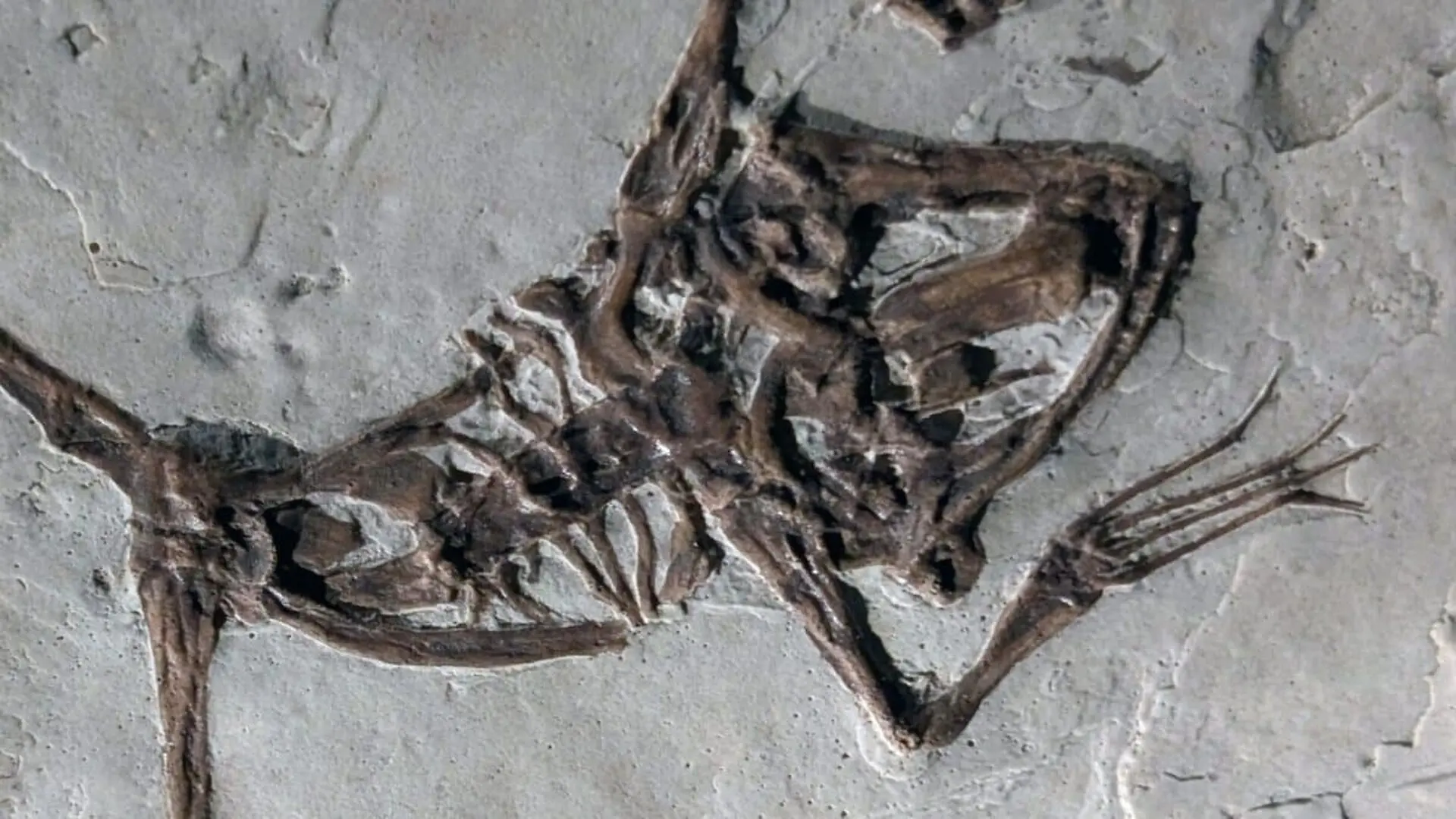
A fossil recovered from California’s La Brea Tar Pits in the 1950s has been identified as a previously unknown Ice Age spadefoot toad, now named Spea labreae. This discovery marks only the second Pleistocene amphibian species documented from North America.
The findings, detailed in the Journal of Vertebrate Paleontology, underscore how revisiting historic museum collections can still yield groundbreaking insights. By re‑examining decades‑old material, researchers demonstrated that even well‑studied sites retain the potential for novel revelations.
While La Brea is famed for its saber‑toothed cats, dire wolves, and mammoths, it also preserves a suite of smaller organisms that often escape attention. Amphibians, whose delicate bones seldom fossilize, provide a unique window into ancient climate and vegetation patterns because they remain tightly linked to their local habitats.
A Seven‑Decade‑Old Specimen Unveils a New Species
Researcher Alberto Cruz was cataloguing La Brea’s amphibian fossils when he encountered a bone with atypical morphology. Initially, the irregularities were thought to represent an injury or a developmental anomaly in a single individual.
Further comparison with modern spadefoot toads revealed a consistent set of traits across multiple specimens, prompting Cruz to conclude that the bone belonged to a distinct species.
“I reviewed and reviewed a lot of specimens until I was convinced. I thought, ‘Oh my gosh, this is a new species,’” Cruz said in a statement. “This material is originally from the 1950s, but when you study it again, you can find gold in these specimens.”
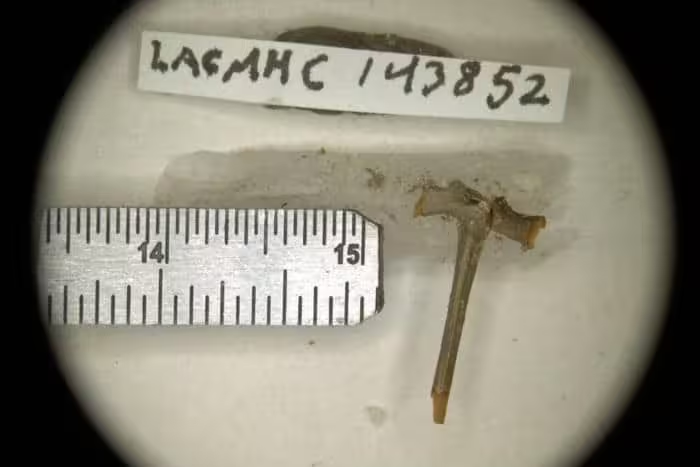
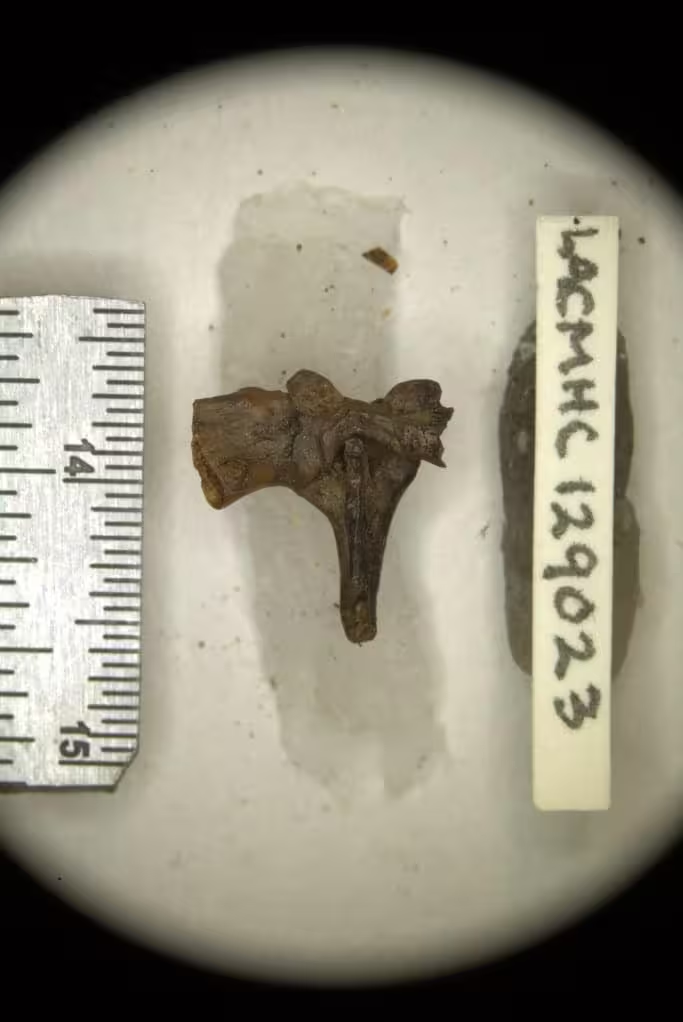
The holotype for Spea labreae consists of an incomplete sacro‑urostyle, the bony bridge between the vertebral column and the pelvis. Although minute, this fragment provided the decisive evidence needed to establish the species.
Tiny Amphibian, Big Implications for the Ice Age
Discovering a new Ice Age amphibian is rare because their fragile skeletons seldom survive the fossilization process. Nonetheless, the identification of Spea labreae offers a fresh perspective on Southern California’s Pleistocene ecosystems. Because amphibians respond swiftly to shifts in temperature, moisture, and vegetation, they serve as sensitive indicators of past environmental change.
“If you change the environment, you change the vegetation, the climate is warmer or colder, it affects these animals directly.”
The species’ disappearance coincides with major ecological transformations that occurred toward the end of the last Ice Age, roughly 10,000 years ago. Its presence indicates that southern California once supported amphibian communities no longer found in the region.
Broad Comparative Work Confirms a New Taxon
To verify the distinctiveness of Spea labreae, Cruz and colleagues examined specimens from the La Brea collection alongside 80 comparative fossils housed at the Natural History Museum of Los Angeles County and the Museum of Vertebrate Zoology at the University of California, Berkeley.
The analysis also uncovered the earliest documented occurrence of the Mexican burrowing toad (Rhinophrynus) in the southwestern United States. Although the species persists in Mexico, it no longer inhabits the Los Angeles basin.
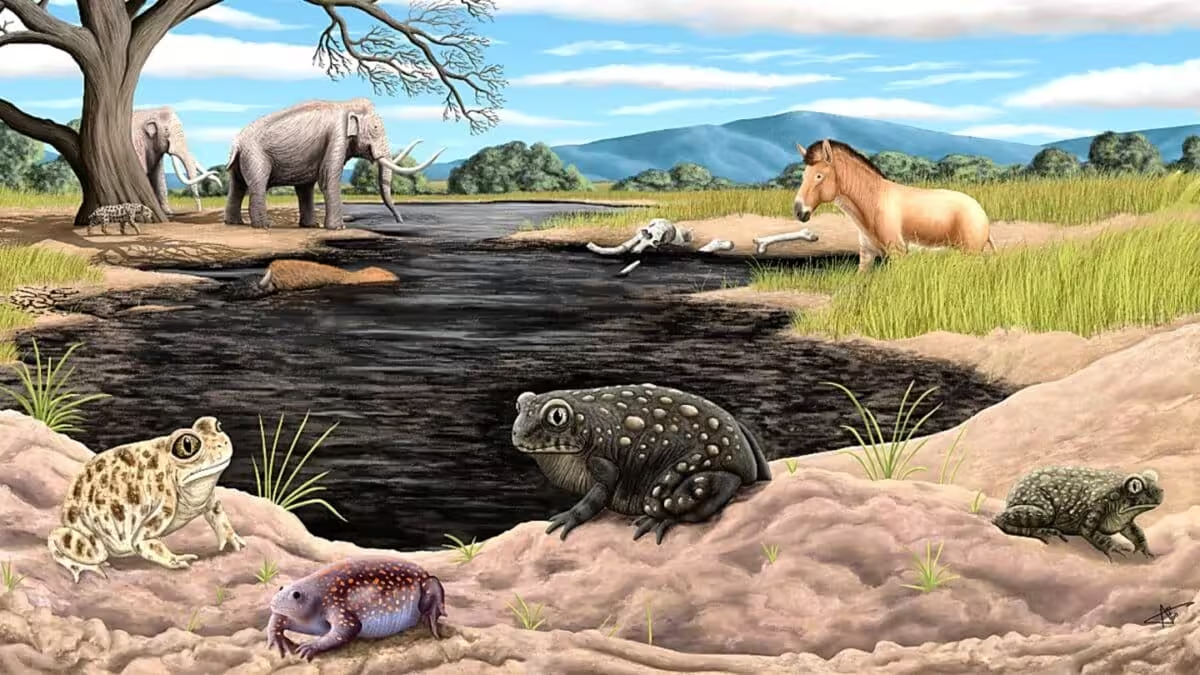
Modern relatives of Spea labreae now reside nearly 1,500 miles away in southern Mexico. Co‑author Emily Lindsey, curator and director of the Samuel Oschin Center for Global Ice Age Research, emphasized the broader significance:
“It’s a great example of how we’re still finding new things at La Brea Tar Pits, even after a century of ongoing excavation and research. There’s definitely more to come.”
This article has been fact checked for accuracy, with information verified against reputable sources. Learn more about us and our editorial process.
Last reviewed on .
Article history
- Latest version
Reference(s)
- <https://www.researchgate.net/profile/Jose-Alberto-Cruz>.
- <https://www.eurekalert.org/news-releases/1137560>.
- “Emily Lindsey.” Natural History Museum <https://nhm.org/person/lindsey-emily>.
Cite this page:
- Posted by Hassan Raza