Spider Launches Ants At 140 G Using Silk Catapult, Setting Record For Biological Power
Rainforest spider uses a unique hunting technique that catapults prey at up to 140 g, a record-breaking method scientists just documented.
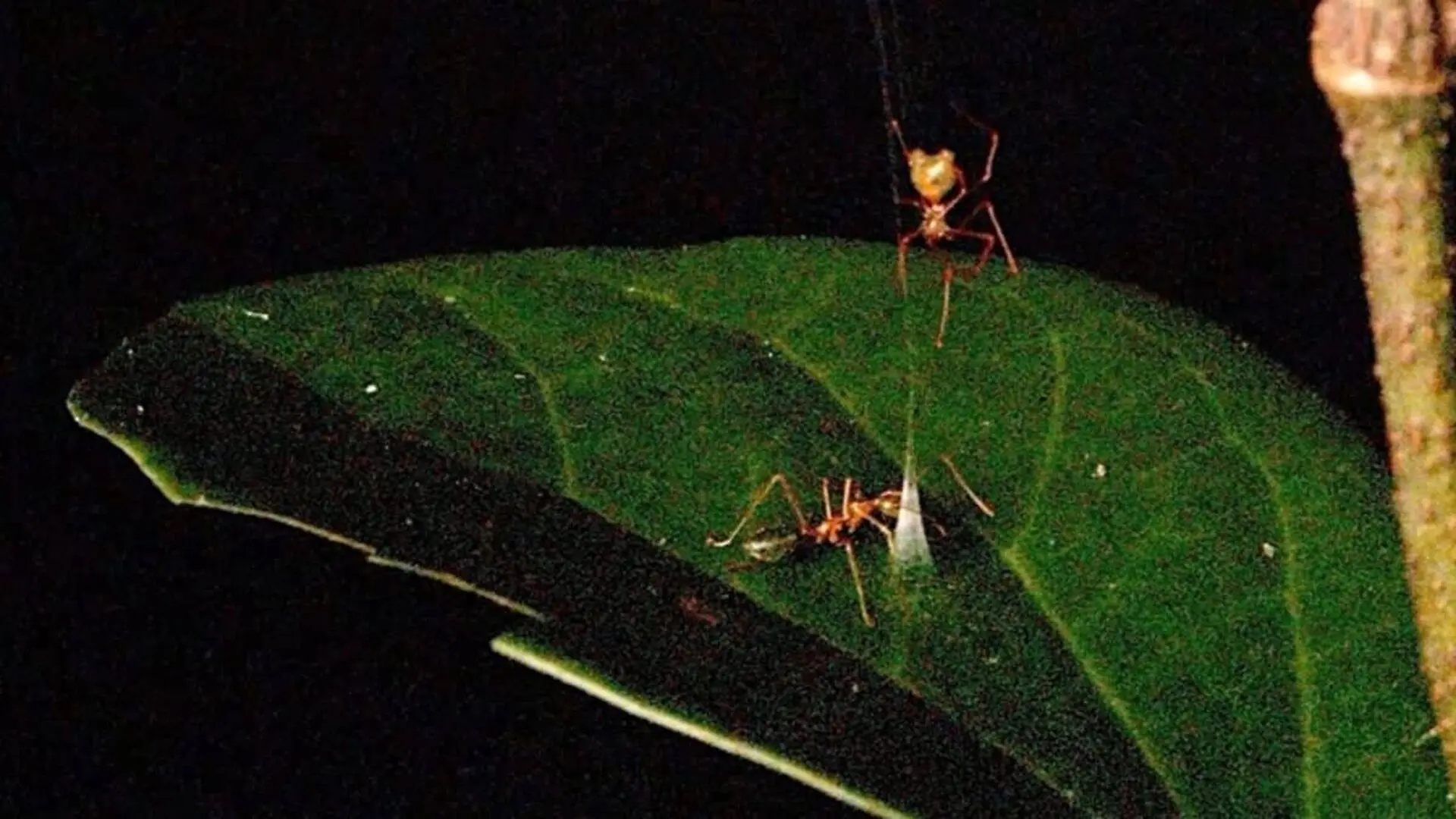
Researchers have identified a previously unknown spider from the rain‑forested regions of northern Australia that uses an unprecedented predatory mechanism. Dubbed the “ballista spider,” the creature launches green tree ants into its web with a spring‑loaded silk trap that can accelerate prey at forces approaching 140 times Earth’s gravity, the study reports in Current Biology.
The organism was found on the Cape York Peninsula in Queensland, where scientists observed a nocturnal member of the genus Propostira. While many spiders employ a range of hunting tactics, this species appears to have evolved a highly specialized trap that targets a single prey type.
The discovery broadens the catalog of arachnid foraging strategies. Net‑casting spiders fling silk nets at unsuspecting victims, and slingshot spiders use taut webs to launch themselves toward targets. By contrast, the ballista spider builds a dormant trap that activates only when its intended prey engages it.
Precision‑Built Silk Apparatus
During daylight, the spider hides in a silken shelter beneath leaf undersides. At night it begins a choreographed series of movements to construct its capture device.
According to Current Biology, the spider descends on a silk filament to set anchor points, then repeatedly returns to the web’s center. This iterative process yields a fan‑shaped network of tension lines that gradually forms a small conical framework.
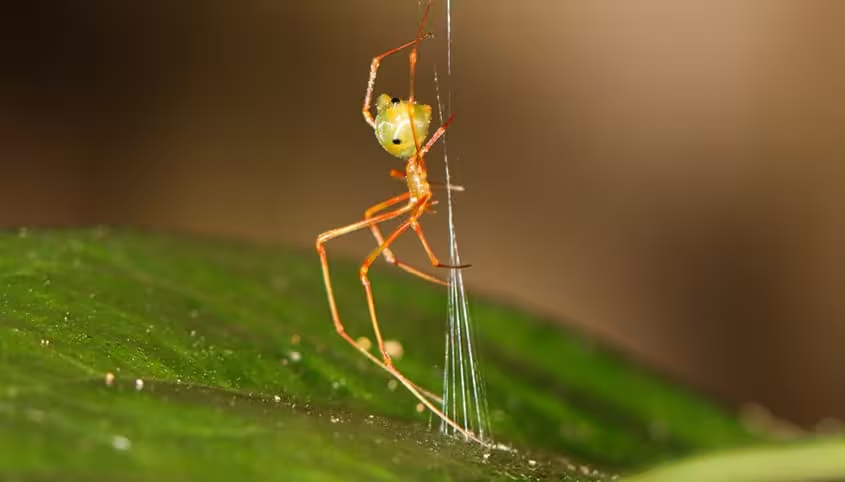
A finer silk coating encases the cone, creating a spring‑loaded structure that stores considerable elastic energy. The researchers noted that the spider repeats the same construction sequence until the trap is complete, as illustrated by a related article on spider behaviour.
Unlike passive webs that intercept prey by chance, this device depends on a deliberate interaction with a specific insect. The trap remains idle until an ant contacts it.
Targeted Assault on Green Tree Ants
The ballista spider appears to focus almost exclusively on the green tree ant (Oecophylla smaragdina), an aggressive species known for robust colony defence.
The team hypothesizes that the silk sheath surrounding the cone may release pheromones or other chemical signals that lure ants and trigger an aggressive response. Once the outer silk is applied, worker ants typically converge on the structure, investigate it, and then attack rather than avoid it. The pivotal moment occurs when an ant bites the silk‑coated cone.
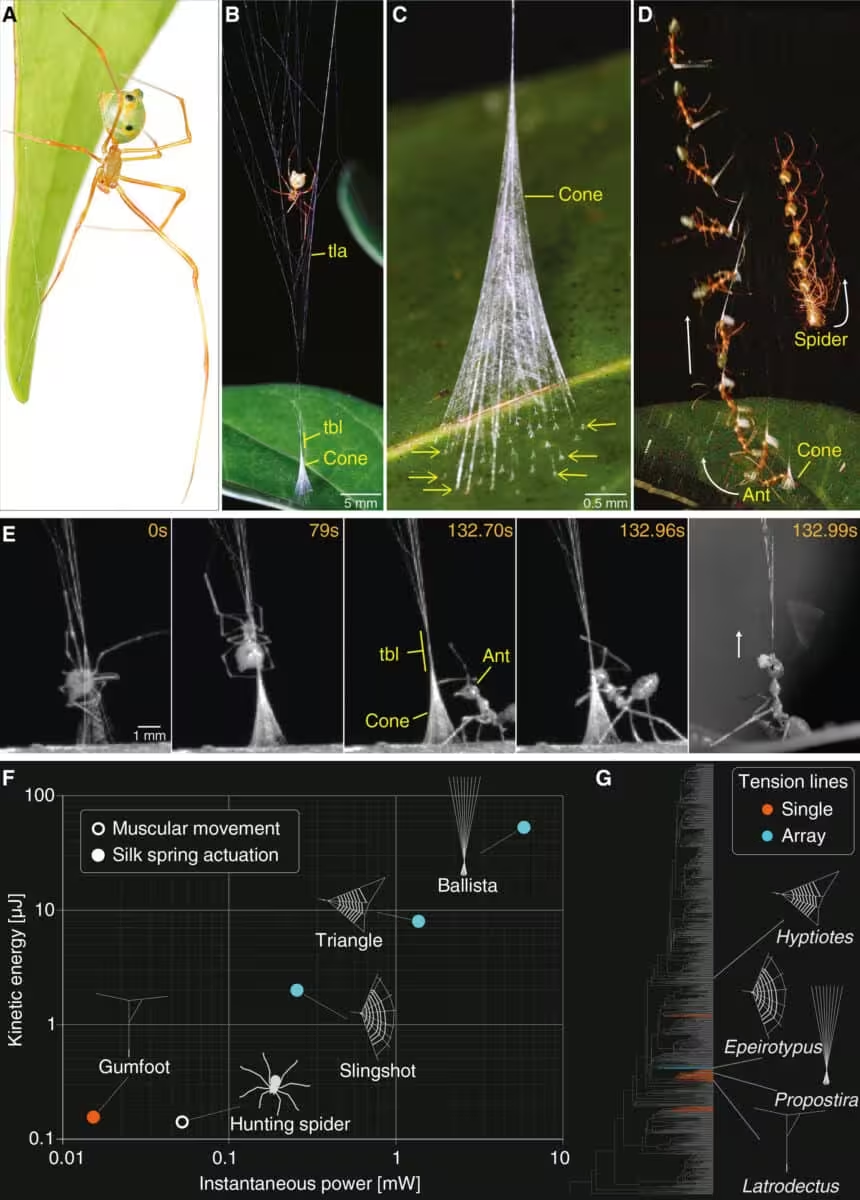
According to Macquarie University, the ant’s bite releases the cone from the leaf surface, unleashing the stored tension. In a split second the ant is pulled upward and flung into the spider’s central web, where it becomes fully entangled. The spider then approaches, wraps the prey in additional silk, and begins feeding.
Record‑Breaking Silk‑Powered Catapult
Measurements taken during the experiments revealed extreme forces at work. Accelerations reached up to 1,367 m s⁻², roughly 140 g, a magnitude about fifteen times greater than the highest g‑forces experienced by jet pilots.
The performance of this trap exceeds that of other known silk‑based catapults. On a per‑gram basis, the ballista spider’s web stores more energy and delivers greater power than any previously documented silk system.
Calculations suggest that a kilogram of the spider’s silk could hold 78.17 kJ of kinetic energy and generate a brief power output of 11.73 MW.
The authors propose that such formidable power enables the spider to yank ants away from nests and foraging trails before colony members can react. The study also highlights two unusual traits: a pronounced specialization on a single prey species and a reliance on a prey‑triggered capture mechanism.
This article has been fact checked for accuracy, with information verified against reputable sources. Learn more about us and our editorial process.
Last reviewed on .
Article history
- Latest version
Cite this page:
- Posted by Hassan Raza