How Two FDA-Approved Proteins Made Mice Grow New Digits
Scientists uncover hidden switch in wound cells that enables a normally impossible mammalian ability.
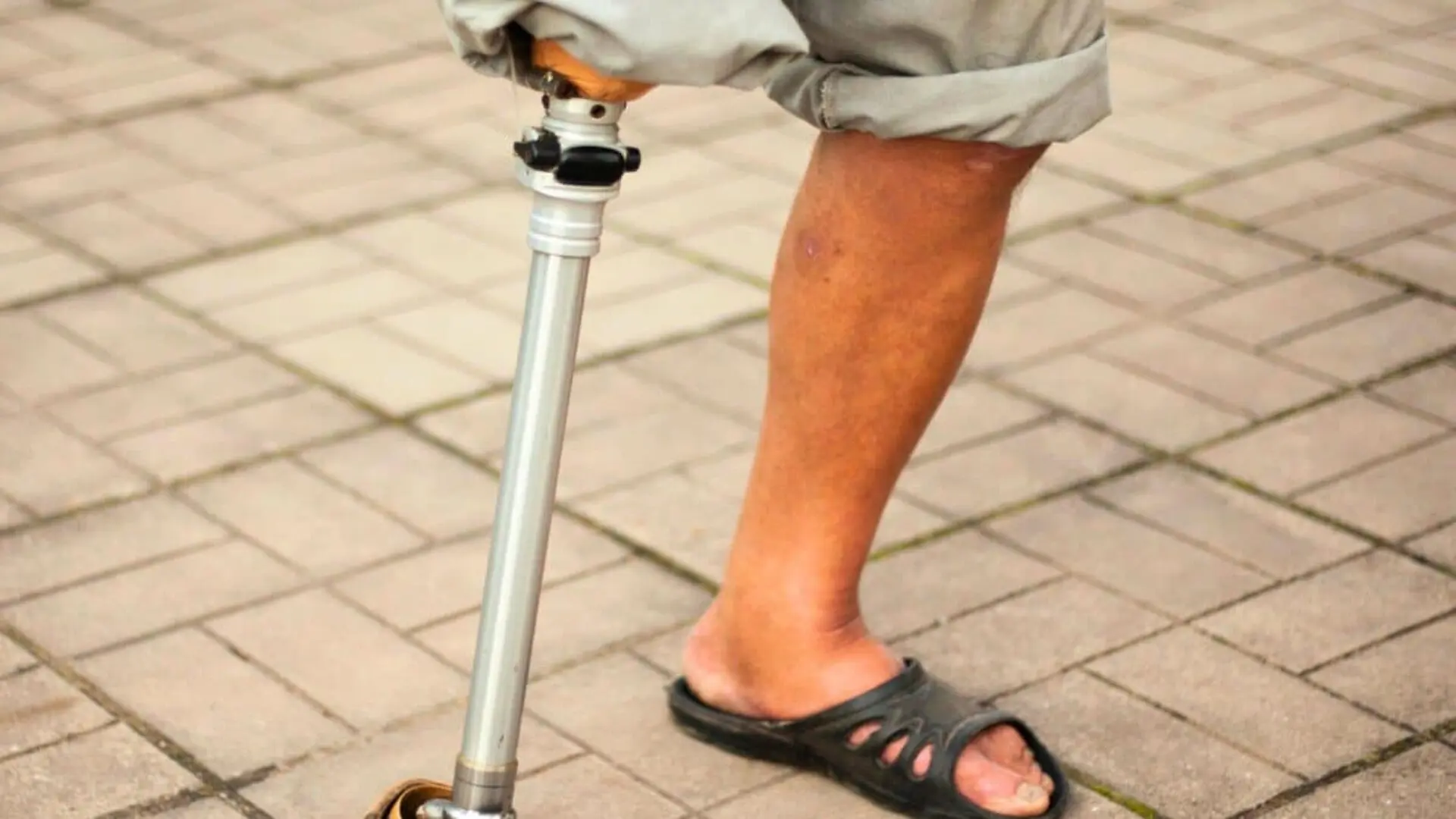
A Texas A&M University team has shown that a simple chemical treatment can coax mammalian wound cells to rebuild bone, joints, tendons and ligaments after an amputation, without the need to transplant stem cells. Their findings, published in Nature Communications, suggest that the regenerative ability thought to be missing in mammals may merely be dormant, and that applying two growth‑factor proteins in the right order can awaken it.
The researchers focused on the formation of a blastema—a cloud of rapidly dividing, undifferentiated cells that appears at the cut end of highly regenerative species such as salamanders and serves as the building block for regrown structures. In typical mammalian healing, this stage never occurs; instead, fibroblasts lay down collagen and fibronectin, sealing the wound through fibrosis. The Texas A&M scientists discovered a way to steer those same fibroblasts down a different developmental path.
Sequential Growth‑Factor Treatment Triggers Mammalian Regeneration
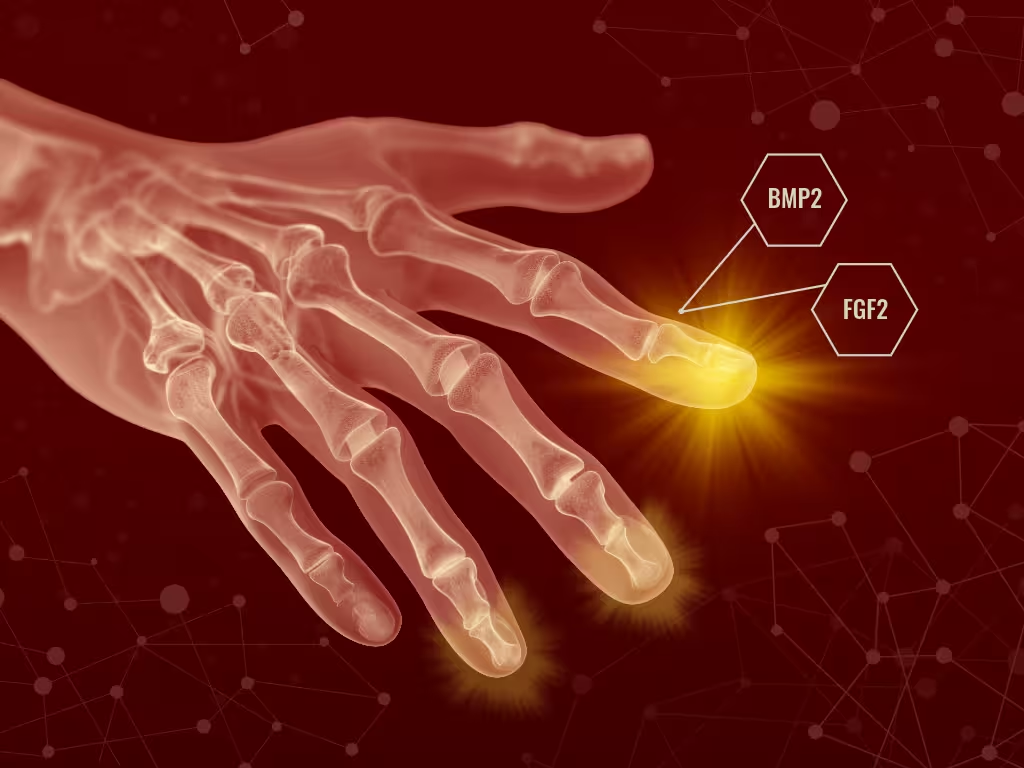
The protocol starts after the wound has already closed. The first application delivers fibroblast growth factor 2 (FGF2), which induces a blastema‑like cell mass at the amputation site—something that does not happen under normal mammalian healing conditions.
A few days later, a second dose of bone morphogenetic protein 2 (BMP2) is administered, prompting the assembled cells to begin constructing new tissue. The outcome is a regenerated digit that contains two novel bone fragments, a synovial joint, tendon, and ligament tissue extending from the stump, as well as a newly formed ligament linking the ectopic bones.
“We regenerated what you would expect to see at that level of injury,” said Dr. Ken Muneoka, the study’s lead author. “The structures are there, just not in a perfect form.” Although the newly formed elements are not identical copies of the original anatomy, their presence demonstrates a regenerative capacity that mammalian biology was previously assumed to lack.
Fibroblasts at the Wound Edge Can Switch Between Scarring and Regrowth
A key insight from the work is that regeneration does not require the introduction of external stem cells—a cornerstone of many current regenerative‑medicine strategies. Instead, the fibroblasts already residing at a mammalian wound site retain the latent ability to generate a blastema when presented with the appropriate molecular cues at the right moment.
“It’s as if these cells can move in two different directions,” Muneoka explained. “They could either make a scar or make a blastema. Our research focused on redirecting the behavior of fibroblasts already present at the injury site.” Co‑investigator Dr. Larry Suva added, “The cells that we thought to be unprogrammable, in fact are. The capacity is not absent, it’s just obscured.”
The experiment also revealed positional re‑specification: cells were coaxed to assemble structures in locations that lie beyond the original anatomical boundaries. Such spatial reprogramming is a hallmark of developmental biology, yet it had not been documented as a response to injury in a mammalian system before now.
Cross‑Species Gene Signals Hint at a Shared Regenerative Toolkit
Blastema research has traditionally centered on organisms with extensive whole‑body regenerative abilities. A 2024 Nature Communications paper on fragmenting potworms (Enchytraeus japonensis) identified two genes—soxC and mmpReg—as critical drivers of blastema formation in that species.
The same study reported comparable expression patterns of SoxC orthologues during tail regeneration in frog tadpoles, raising the possibility that the molecular circuitry governing blastema creation is conserved across a broader evolutionary spectrum, perhaps including mammals that simply fail to activate it under normal circumstances.
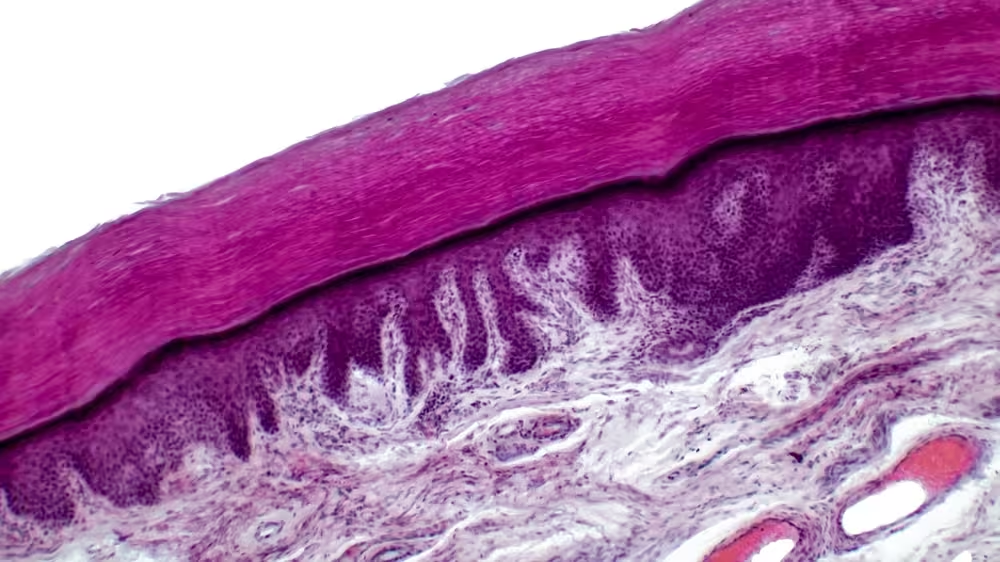
In contrast, the typical mammalian wound response favors rapid scar formation. When tissue is damaged, platelets generate clots, immune cells clear debris, and fibroblasts proliferate to deposit collagen, creating a fibrotic seal. The American Liver Foundation describes a similar fibrotic process in chronic liver disease, where repeated scarring replaces regeneration and eventually compromises organ function. This illustrates a broader principle: fibrosis is quick and dependable, but it precludes the more intricate structural outcomes that a blastema can produce.
Path Toward Human Applications May Be Shorter Than Anticipated
The researchers are not claiming that entire limbs can be regrown in humans at this stage. Instead, they point to nearer‑term clinical scenarios where altering the balance between scarring and regeneration could be transformative—for example, improving outcomes after amputations or enhancing musculoskeletal repair. “People should start thinking about using these signals during the healing process,” Muneoka said. “Even shifting the response slightly away from scarring could have real benefits.”
Both proteins employed in the study already have established clinical histories. BMP2 is FDA‑approved for specific orthopedic uses, and FGF2 is undergoing multiple clinical trials. This existing regulatory background could lower the hurdle for testing the sequential protocol in humans, although translating results from a mouse digit model to patients will require extensive additional research. “This changes the way we think about what’s possible,” Suva noted. “Once you show that regeneration can be activated, it opens the door to asking entirely new questions.”
This article has been fact checked for accuracy, with information verified against reputable sources. Learn more about us and our editorial process.
Last reviewed on .
Article history
- Latest version
Reference(s)
- Yu, Ling. “Digit regeneration in mice is stimulated by sequential treatment with FGF2 and BMP2 - Nature Communications.”, vol. 17, no. 1, April 17, 2026, pp. 5346 Nature, doi: 10.1038/s41467-026-72066-8. <https://www.nature.com/articles/s41467-026-72066-8>.
- Fujita, Toshiyuki. “SoxC and MmpReg promote blastema formation in whole-body regeneration of fragmenting potworms Enchytraeus japonensis - Nature Communications.”, vol. 15, no. 1, August 22, 2024, pp. 6659 Nature, doi: 10.1038/s41467-024-50865-1. <https://www.nature.com/articles/s41467-024-50865-1>.
- <https://liverfoundation.org/about-your-liver/how-liver-diseases-progress/fibrosis-scarring/>.
Cite this page:
- Posted by Hassan Raza