New 55-Million-Year-Old Primate Fossil From Wyoming Reveals Parallel Evolution Path
New Wyoming primate fossil Tetonius varleyorum reshapes ideas on early primate evolution, hinting at gradual change and parallel branching.
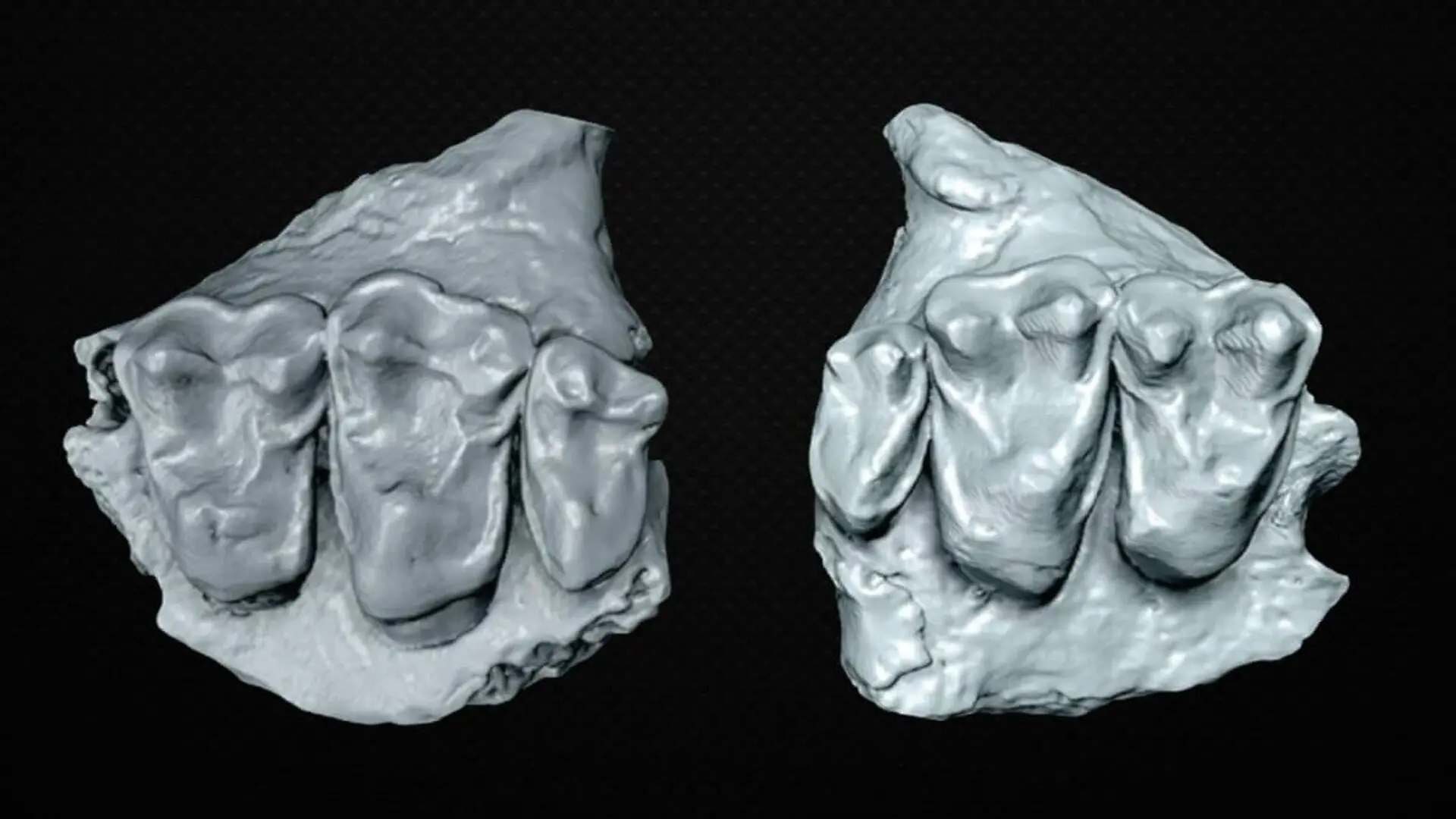
During the early Eocene, roughly 55 million years ago, tiny primates were proliferating across North America, Europe and Asia. Researchers say that the latest find adds nuance to a fossil record that has often been built on evidence from a single geographic area.
New Early‑Eocene Primate Highlights a More Intricate Evolutionary History
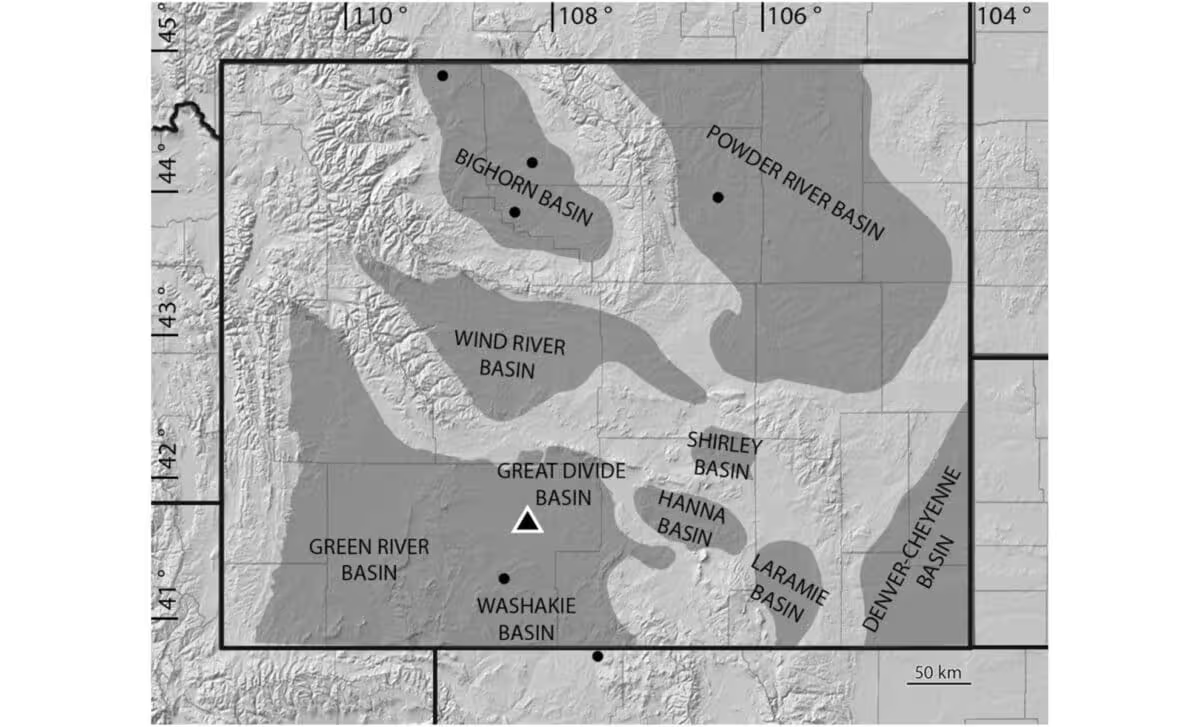
Paleontologists uncovered the remains of Tetonius varleyorum at Smiley Draw in the Great Divide Basin of southern Wyoming. The majority of the material originated from a sandstone layer nicknamed “Tim’s Confession,” which yielded nearly a thousand fragments of upper and lower jaws bearing teeth.
The creature belongs to the omomyids, an extinct lineage of true primates that occupied a position near the base of later primate branches. Most omomyids were diminutive, under 100 grams, and likely arboreal, moving by climbing and leaping.
Because tiny primate skeletons fracture easily over geologic time, researchers often rely on durable tooth enamel and jaw fragments. The team applied precise measurements and three‑dimensional scanning to compare tooth size, shape, count and placement with those of related species.
Lead author Parker Rhinehart, a doctoral candidate at the University of Kansas Biodiversity Institute, notes that the animal exhibits a blend of primitive and derived traits. Roughly the size of a modern mouse lemur, Tetonius varleyorum possessed a shortened anterior segment of the lower jaw and an enlarged first incisor.
The species lacks one lower premolar—normally situated between the canine and molars—yet retains a premolar with dual roots, a characteristic seen in earlier omomyids. This mosaic of features justified its designation as a separate species, and the specific epithet honors the Varley family for their long‑standing support of regional fieldwork.
Finds Beyond the Bighorn Basin Redefine Evolutionary Interpretations
Previous models of Tetonius evolution relied heavily on specimens from the Bighorn Basin in northwestern Wyoming, where a continuous stratigraphic sequence seemed to document a gradual shift from an ancestral Tetonius form to the later Pseudotetonius ambiguus.
That scenario exemplifies anagenesis, a linear transformation of a single lineage without branching. Rhinehart argues that earlier work presented the transition as a straightforward, unbranched sequence. The newly reported fossils introduce a pattern that does not align perfectly with pure anagenesis.
By evaluating 39 dental characteristics across 12 related primate groups, the researchers found that Tetonius varleyorum clusters near Pseudotetonius ambiguus but occupies a distinct branch on the phylogenetic tree.
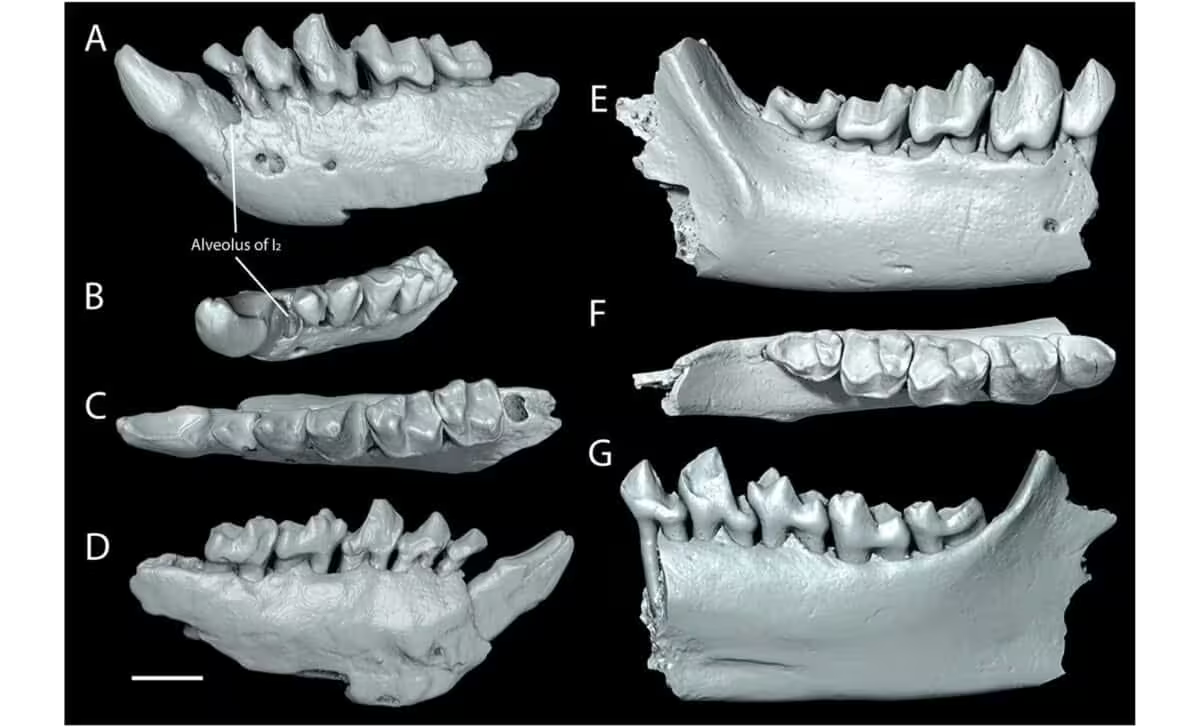
The evidence points to parallel evolution, where two lineages independently arrive at similar morphological outcomes. Both species exhibit shortened jaws and densely packed anterior teeth, yet they achieved these changes via different routes: Tetonius varleyorum moved one incisor forward toward the lip, while Pseudotetonius ambiguus reduced a different tooth and fused its roots.
The authors stress that the Bighorn Basin record is not necessarily invalid; gradual transformation may still have occurred there, while branching processes unfolded elsewhere. Incorporating specimens from outside that basin broadens the perspective on early primate diversification.
Smiley Draw also yielded two additional omomyid taxa—Arapahovius gazini and Anemorhysis savagei. Their coexistence complicates age estimates for the site, as some associated fauna imply an older horizon while others suggest younger deposits. The team currently favors a younger age, though direct radiometric dating of the rocks remains pending.
Future mineralogical analyses could refine the chronology of these fossils. For now, Tetonius varleyorum illustrates that early primate evolution in Wyoming followed multiple, intersecting pathways rather than a single, uninterrupted line.
This article has been fact checked for accuracy, with information verified against reputable sources. Learn more about us and our editorial process.
Last reviewed on .
Article history
- Latest version
Reference(s)
- “Parker Rhinehart.” <https://biodiversity.ku.edu/people/parker-rhinehart>.
Cite this page:
- Posted by Hassan Raza