Rare Complete Skeleton of 30‑Million‑Year‑Old Dog Unveils Stocky Ambush‑Hunter Design
A near‑complete 30‑million‑year‑old Mesocyon coryphaeus skeleton from Oregon shows how this coyote‑sized early dog with short legs hunted and moved.
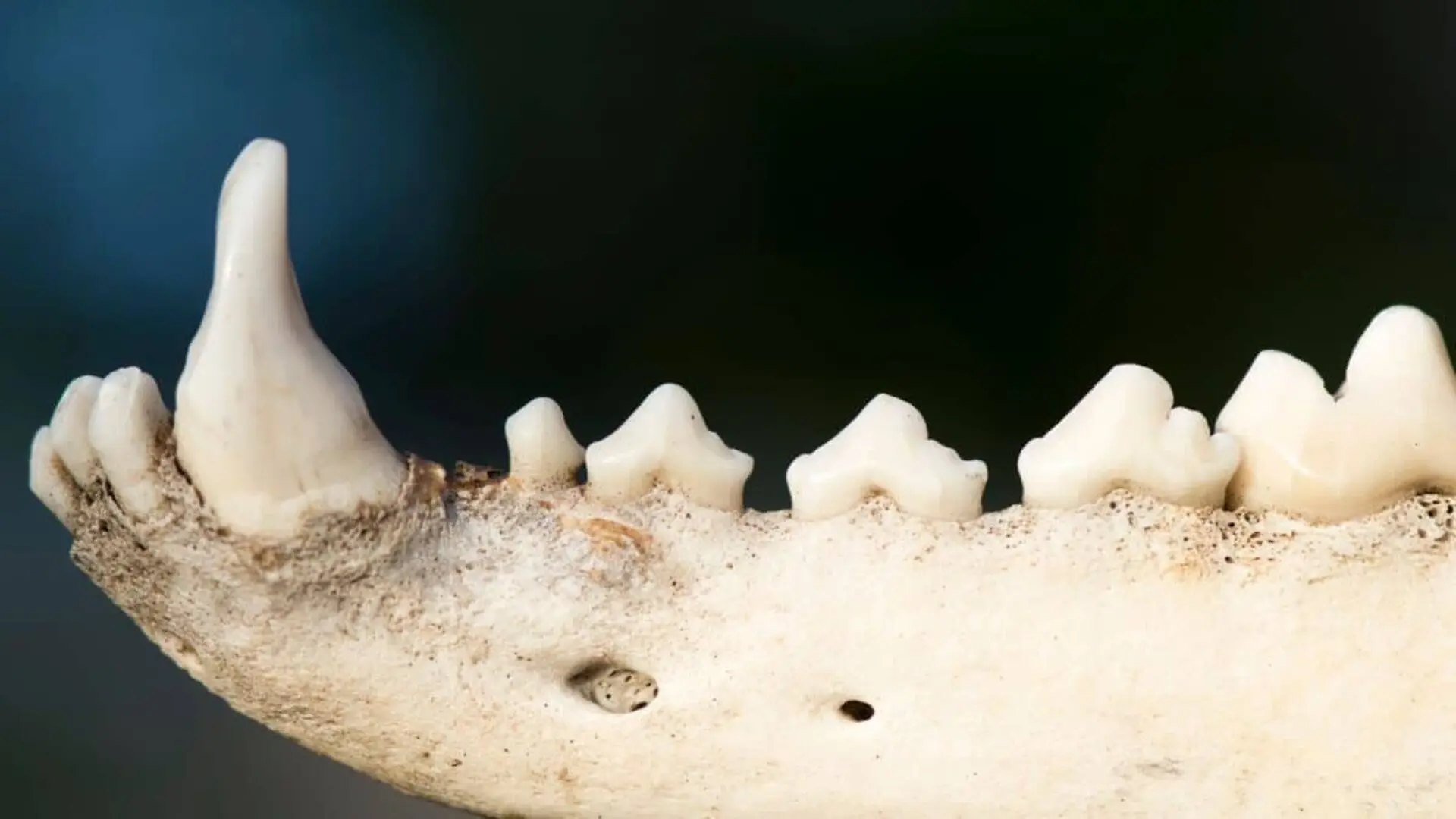
A newly uncovered skeleton of the early North American canid Mesocyon coryphaeus is bridging a 150‑year knowledge gap that previously relied almost entirely on isolated skulls and teeth. Named by paleontologist E. D. Cope in 1879, the specimen now offers a rare glimpse into the animal’s full anatomy, shedding light on its movement, hunting tactics, and its role in the early diversification of dogs.
Compact Predator Built for Quick Strikes
Workers at John Day Fossil Beds National Monument unearthed the bones in the late 1980s on BLM‑managed land. Initial assessments mistook the remains for an oreodont—a group once described by Anne Kort as “sheep‑camel‑pigs.” Extracting the fossil proved labor‑intensive, demanding more than 500 hours of meticulous rock removal.
Kort, a researcher at the University of Michigan, later examined the specimen and noted that its skeletal structure diverged sharply from the slender, long‑legged build typical of modern, distance‑running canids. “The answer is pretty definitely no. Mesocyon also just has more robust bones in general. It’s shorter and stockier,” she explained, emphasizing the contrast with today’s sprinting dogs.
Measurements indicate a shoulder height of roughly 40 cm and a total length of about 80 cm from snout to tail base, with an estimated mass of 14–15 kg. Unlike most contemporary dogs that walk on their toes, Mesocyon adopted a more flat‑footed gait, a trait linked to its short limbs and sturdy frame—features that predate the evolution of specialized running adaptations in the canine lineage.
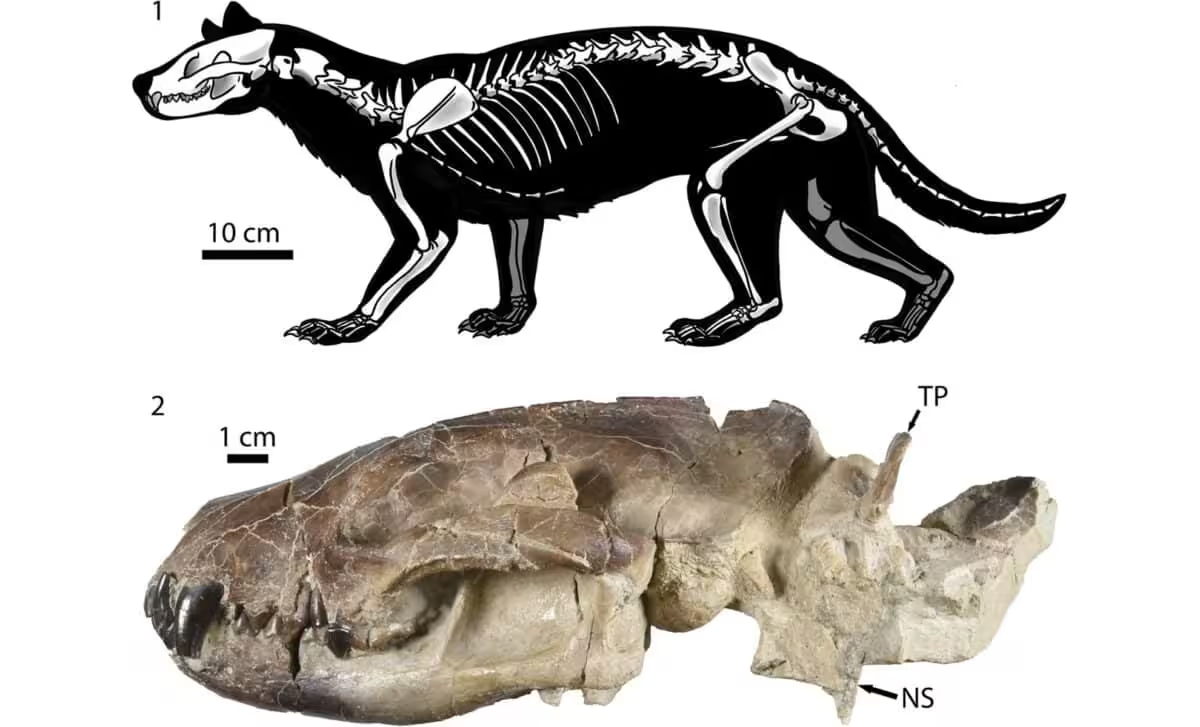
The animal’s anatomy points to a hunting style based on rapid, short‑range bursts. A rotating elbow joint and powerful shoulder muscles would have enabled it to grasp prey, while a flexible lower back could generate swift acceleration over brief distances. Although its forelimbs were capable of limited climbing, the creature was principally a ground‑dwelling predator.
Rarely Preserved Details Reveal Sex, Genetics and Environment
Beyond its completeness, the skeleton preserves several unusual features. A baculum—commonly called a penis bone—was located between the femora, confirming the individual was male. “The other fun thing is, it even had the baculum, so the penis bone. That means we definitely know this was a male,” Kort said.
Researchers also identified a small osteochondroma on the wrist, a growth that appears in about 60 % of the oldest known dog fossils. This inherited trait provides a direct genetic link among early canids. “It’s just this really cool direct hereditary link that we wouldn’t normally find. This is another line of evidence, and that gives you an idea of how great this fossil is,” Kort added.
During the Miocene, Mesocyon inhabited an Oregon landscape that oscillated between moist woodlands and drier shrublands. Trees reached heights of roughly 14 m in forested phases and shrank to about 3 m during more arid intervals, offering ample cover for an ambush predator.
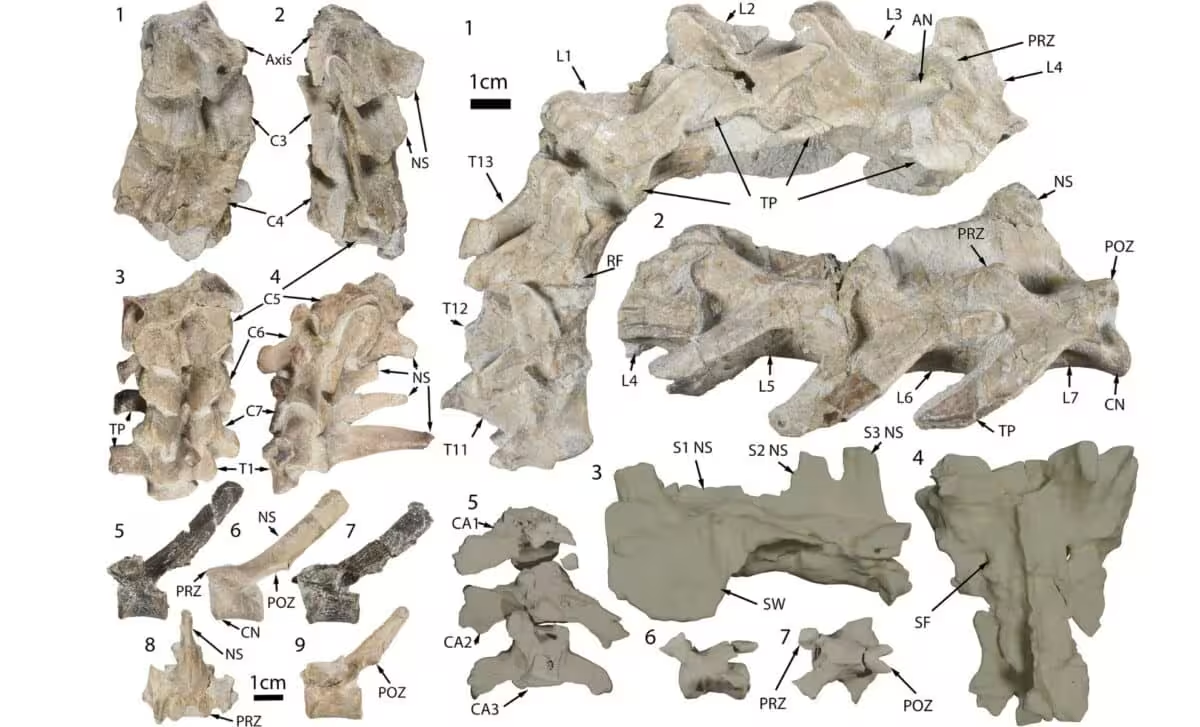
Based on data from Earth.com, the species likely preyed on small vertebrates such as rodents, early lagomorphs and hypertragulids—tiny forest ruminants resembling modern mouse deer. Larger carnivores like the nimravid Nimravus coexisted in the same ecosystems, targeting bigger animals such as early horses.
The characteristic running adaptations seen in later canids evolved after extensive grassland expansion, roughly 15 million years ago. In contrast, Mesocyon belonged to an early branch that retained a compact, short‑limbed build even as it grew larger than its ancestor Hesperocyon.
The lineage vanished around 21 million years ago, likely outcompeted by borophagine “bone‑crushing” dogs rather than succumbing to climatic shifts. “This fossil is not our current dogs’ great‑great‑great uncle, because this whole line went fully extinct,” Kort explained, noting that its disappearance erased an entire ecological niche no longer represented among modern canids.
This article has been fact checked for accuracy, with information verified against reputable sources. Learn more about us and our editorial process.
Last reviewed on .
Article history
- Latest version
Cite this page:
- Posted by Hassan Raza