First Diplodocus Fossils Found Outside North America Upend Dinosaur History
The discovery of fourteen dinosaur bones in Spain challenges long-held beliefs, suggesting a species thought exclusive to America traveled much further.
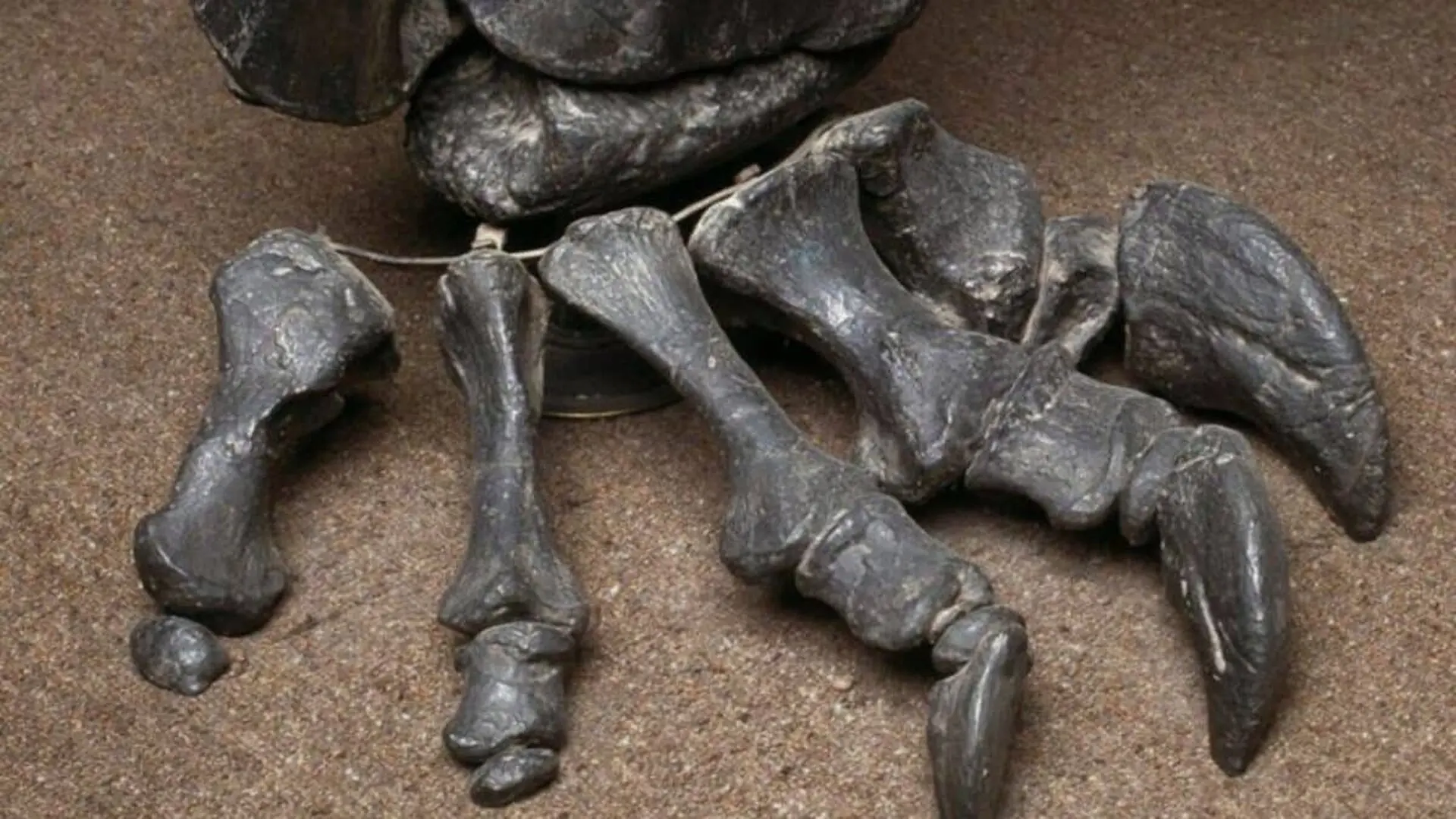
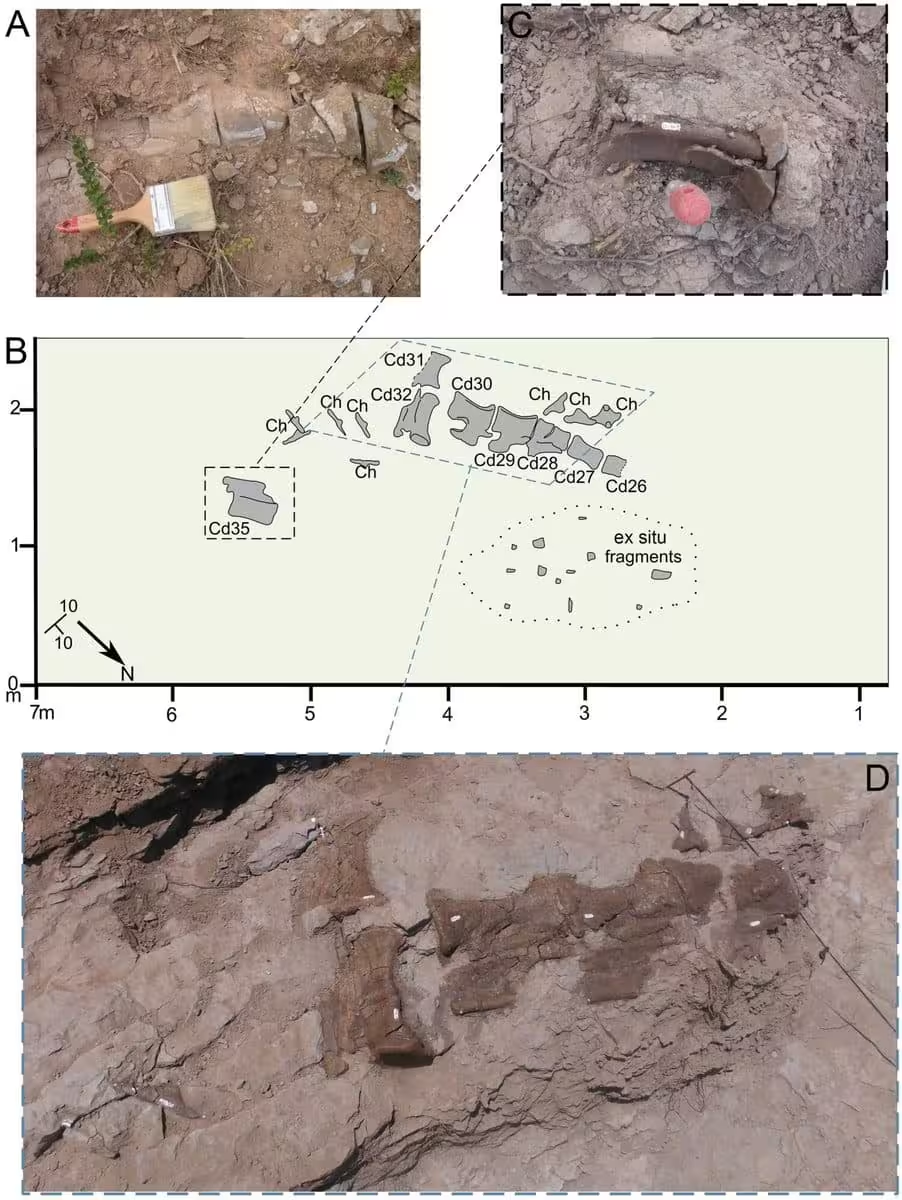
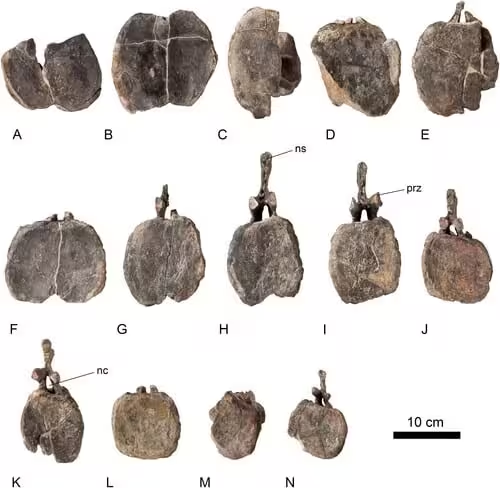
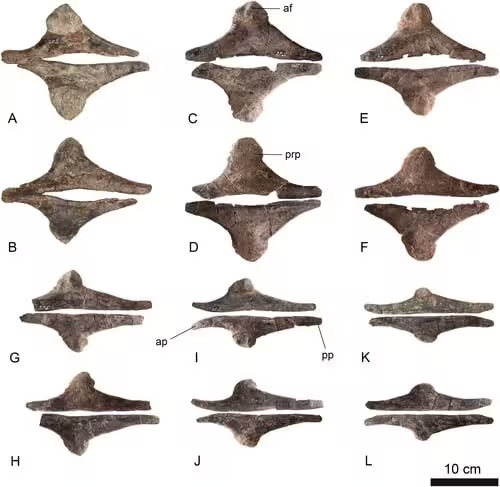
Paleontologists in Spain have identified the first confirmed fossils of Diplodocus ever discovered outside of North America, a finding that challenges long-held assumptions about the geographic range of these iconic Jurassic giants. The discovery, unearthed at the La Tejería site in Teruel, consists of fourteen tail vertebrae and several chevron bones, representing one of the most complete specimens of its kind found within Europe.
For more than a century, the genus Diplodocus was considered an exclusively North American inhabitant. Nearly every significant specimen previously documented originated from the Morrison Formation, a sprawling geological unit in the western United States. The new research, published in the Journal of Vertebrate Paleontology, shifts this narrative, suggesting that these massive sauropods moved between continents during the Late Jurassic, approximately 150 million years ago.
Unearthing a Jurassic Traveler
The excavation, conducted by the Fundación Conjunto Paleontológico de Teruel-Dinópolis, focused on the El Castellar municipality. According to lead researcher Sergio Sánchez Fenollosa, the identification process was a systematic verification of evolutionary characteristics. As the team recovered the bones and compared them against known diplodocine anatomy, the evidence consistently pointed toward the genus Diplodocus.
“We were looking at a Diplodocus,” Sánchez Fenollosa noted, explaining that the team utilized phylogenetic methods—including Bayesian inference and maximum parsimony—to confirm the classification. Key diagnostic features included specific pneumatic cavities within the vertebrae and the unique morphology of the forked chevrons.
Evidence of Ancient Continental Connections
The existence of this specimen in Spain provides rare physical evidence for trans-Atlantic dispersal. During the Late Jurassic, the proto-Atlantic Ocean was significantly narrower than it is today. Scientists believe that periodic drops in sea levels created temporary land bridges, allowing terrestrial giants like Diplodocus to migrate between North America and Europe.
Dr. Alberto Cobos, the managing director of Fundación Dinópolis, notes that the specimen measured roughly 25 meters (82 feet) in length, mirroring the dimensions of its North American counterparts. The presence of this dinosaur alongside other regional giants like Turiasaurus and Losillasaurus underscores the rich, diverse ecosystem that once thrived in what is now the Teruel region.
“The fossils of all these dinosaurs, including those of the new Diplodocus specimen, make Teruel a reference place for understanding this great diversity,” Cobos added. The fossils are currently on public exhibition at the Museo Aragonés de Paleontología in Dinópolis, providing a new focal point for both public education and ongoing academic study.
This article has been fact checked for accuracy, with information verified against reputable sources. Learn more about us and our editorial process.
Last reviewed on .
Article history
- Latest version
Reference(s)
- SáNchez-Fenollosa, Sergio., et al. “Intercontinental evidence of the iconic genus Diplodocus Marsh, 1878 (Dinosauria, Sauropoda).” Journal of Vertebrate Paleontology, September 14, 2026 Informa UK Limited, doi: 10.1080/02724634.2026.2718423. <https://www.tandfonline.com/doi/full/10.1080/02724634.2026.2718423?__cf_chl_tk=j8sfFilOa3WqIs3ifM6ufd2bmqztQKveHFL.YXEWBnQ-1789477573-1.0.1.1-Oc86gbLeRSyUYYhTe8SoeU6JF7O9KpfVubb2QVB2nq0>.
- <https://www.researchgate.net/profile/Sergio-Sanchez-Fenollosa>.
Cite this page:
- Posted by Hassan Raza