Scientists Reveal the True Colors of Mammals That Lived Among Dinosaurs
Researchers have discovered a surprising trait shared by six ancient mammal species separated by 45 million years of evolution. Here is what they found.
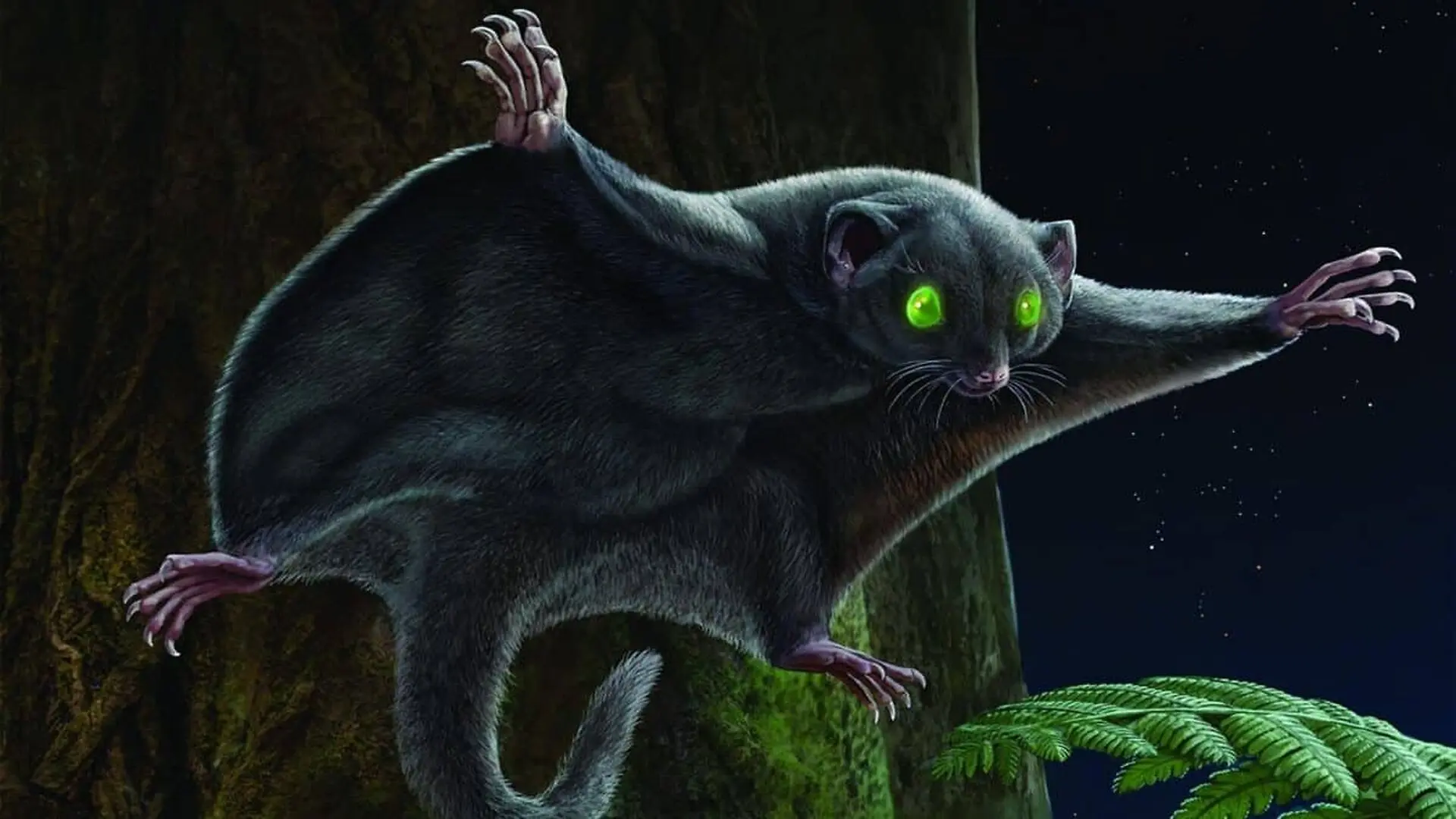
New research suggests that the ancestors of modern mammals maintained a low profile during the age of dinosaurs, sporting a uniform, muted palette that likely served as a critical survival mechanism. A study analyzing fossils from the Jurassic and Cretaceous periods has revealed that six ancient mammal species shared a consistent, greyish-brown appearance, suggesting that camouflage was a priority in an environment dominated by formidable predators.
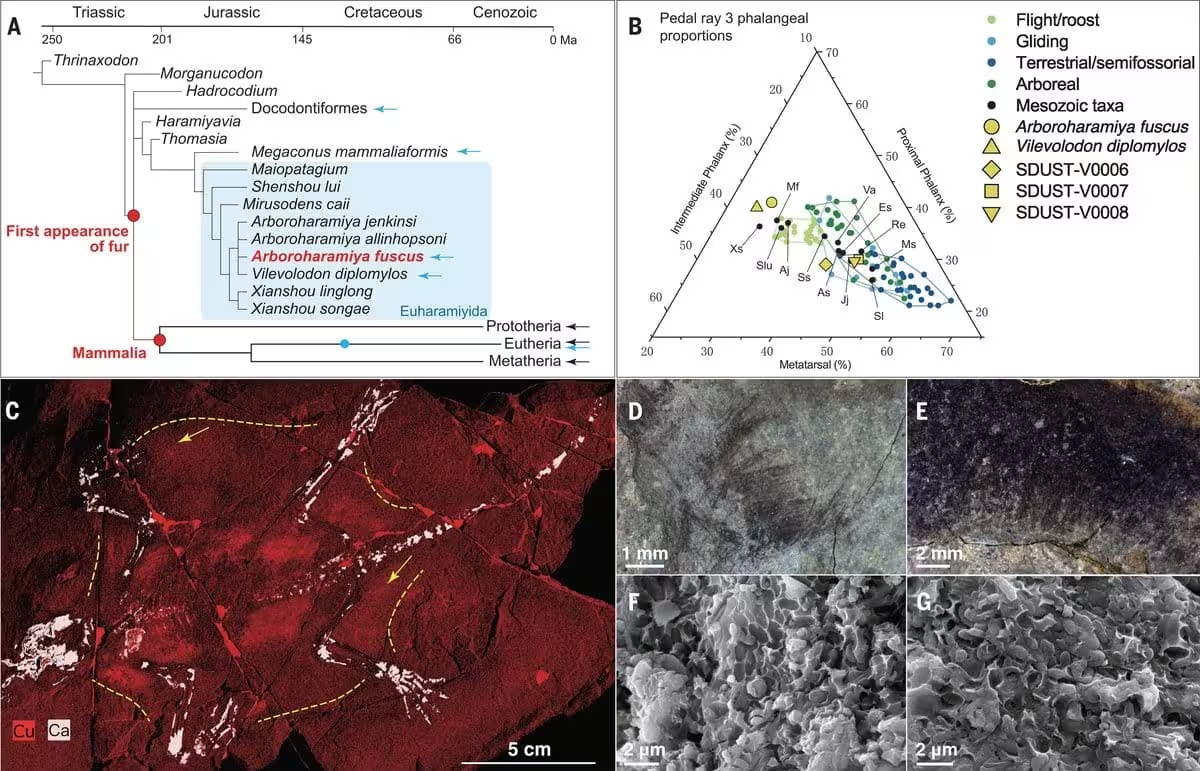
Historically, paleontologists struggled to reconstruct the physical appearance of extinct creatures because soft tissues—such as fur—rarely survive the fossilization process. However, recent advancements in analytical techniques have allowed researchers to identify microscopic structures called melanosomes. These organelles, which house the pigment melanin, leave behind physical signatures in fossilized remains. By examining the shape and distribution of these structures, scientists can infer the presence of black-brown or yellow-red pigments, effectively providing a window into the coloration of long-extinct species.
Uniformity in an Age of Giants
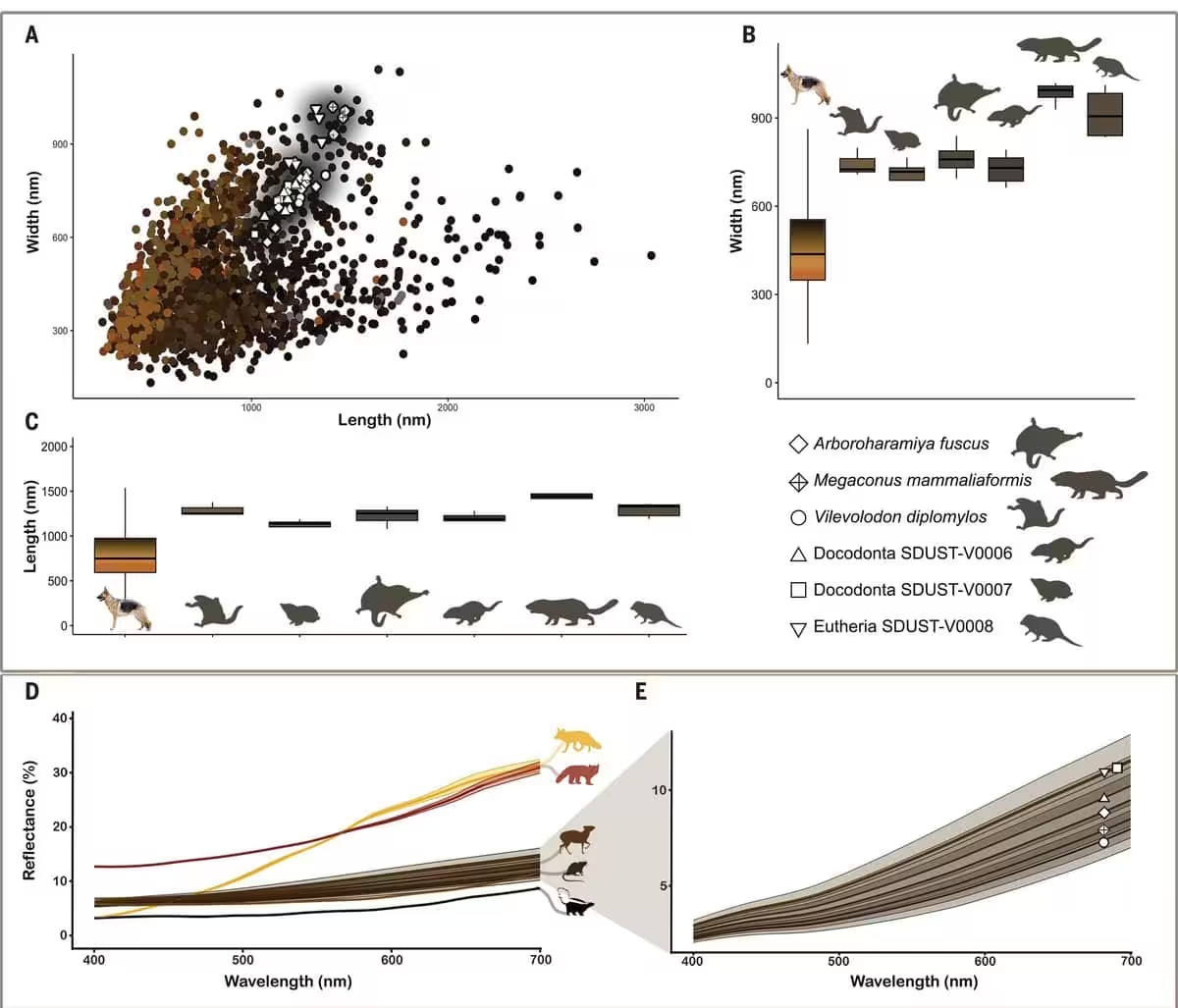
The findings, detailed in the journal Science, were derived from a predictive model built upon data from 116 modern mammal species. By mapping the correlation between melanosome geometry and fur pigmentation in living animals, the team was able to apply these criteria to six fossilized specimens unearthed in China. These subjects spanned the Middle Jurassic to the Early Cretaceous, a timeframe reaching back approximately 165 million to 120 million years, and included the gliding mammal Arboroharamiya fuscus.
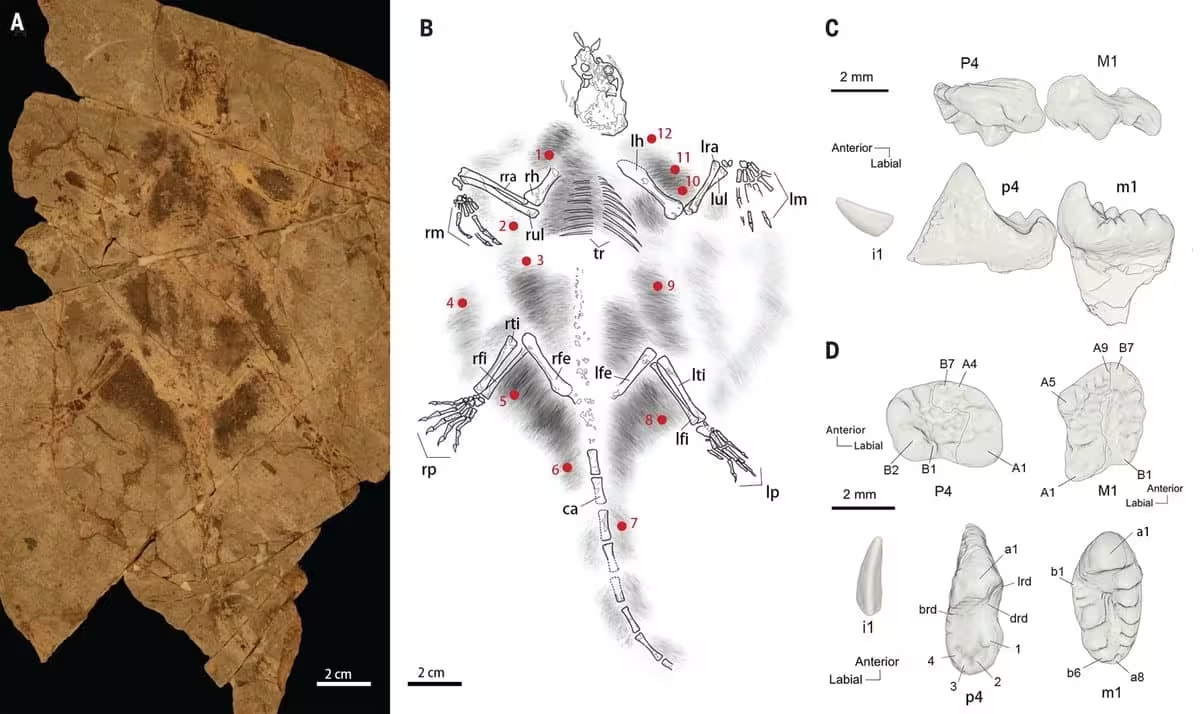
The results were remarkably consistent. Despite the millions of years separating these species, all six displayed the same drab, greyish-brown coat. Matthew Shawkey, a researcher from Ghent University, noted that the lack of diversity was unexpected. While scientists anticipated subdued tones, the sheer degree of invariance across the samples surpassed their initial projections.
This aesthetic simplicity is widely interpreted as an evolutionary response to extreme predation pressure. Because these early mammals were likely nocturnal, vibrant colors would have offered no competitive advantage. Instead, a dull coat provided essential concealment, helping these small creatures avoid detection by the dinosaurs that ruled the landscape.
Pioneering New Methods in Paleontology
This technique of melanosome analysis has previously been used to color-map feathered dinosaurs and pterosaurs, but its application to mammalian fur remains a burgeoning field. By pushing these methods beyond birds and reptiles, the research provides a more holistic view of the Mesozoic era’s visual landscape.
As Shawkey bluntly put it, these small mammals were effectively living as prey, making any form of conspicuous display a high-stakes liability. Their survival strategy was rooted in blending into the shadows, a reality that persisted until the mass extinction of non-avian dinosaurs 66 million years ago. It was only after this seismic shift in the ecosystem, when mammalian lineages began to occupy diverse niches—including diurnal activities—that color variation truly began to flourish.
While the researchers intend to broaden their scope to include fossils from other global regions, the current data suggests that the greyish-brown camouflage was a widespread standard for mammals inhabiting the shadow of the dinosaurs. Future studies may reveal more nuances, but for now, the evidence points to a long, monochromatic chapter in the history of mammalian evolution.
This article has been fact checked for accuracy, with information verified against reputable sources. Learn more about us and our editorial process.
Last reviewed on .
Article history
- Latest version
Reference(s)
- Li, Ruoshuang., et al. “Mesozoic mammaliaforms illuminate the origins of pelage coloration.” Science, vol. 387, no. 6739, March 14, 2025, pp. 1193-1198. American Association for the Advancement of Science (AAAS), doi: 10.1126/science.ads9734. <https://www.science.org/doi/10.1126/science.ads9734>.
Cite this page:
- Posted by Hassan Raza