Ancient Giant Octopuses Reveal Secret Lives As Top Ocean Predators In New Fossil Discovery
Fossilized jaws dating back 100 million years reveal a terrifying ancient ocean predator that earns its reputation as a real-life kraken.
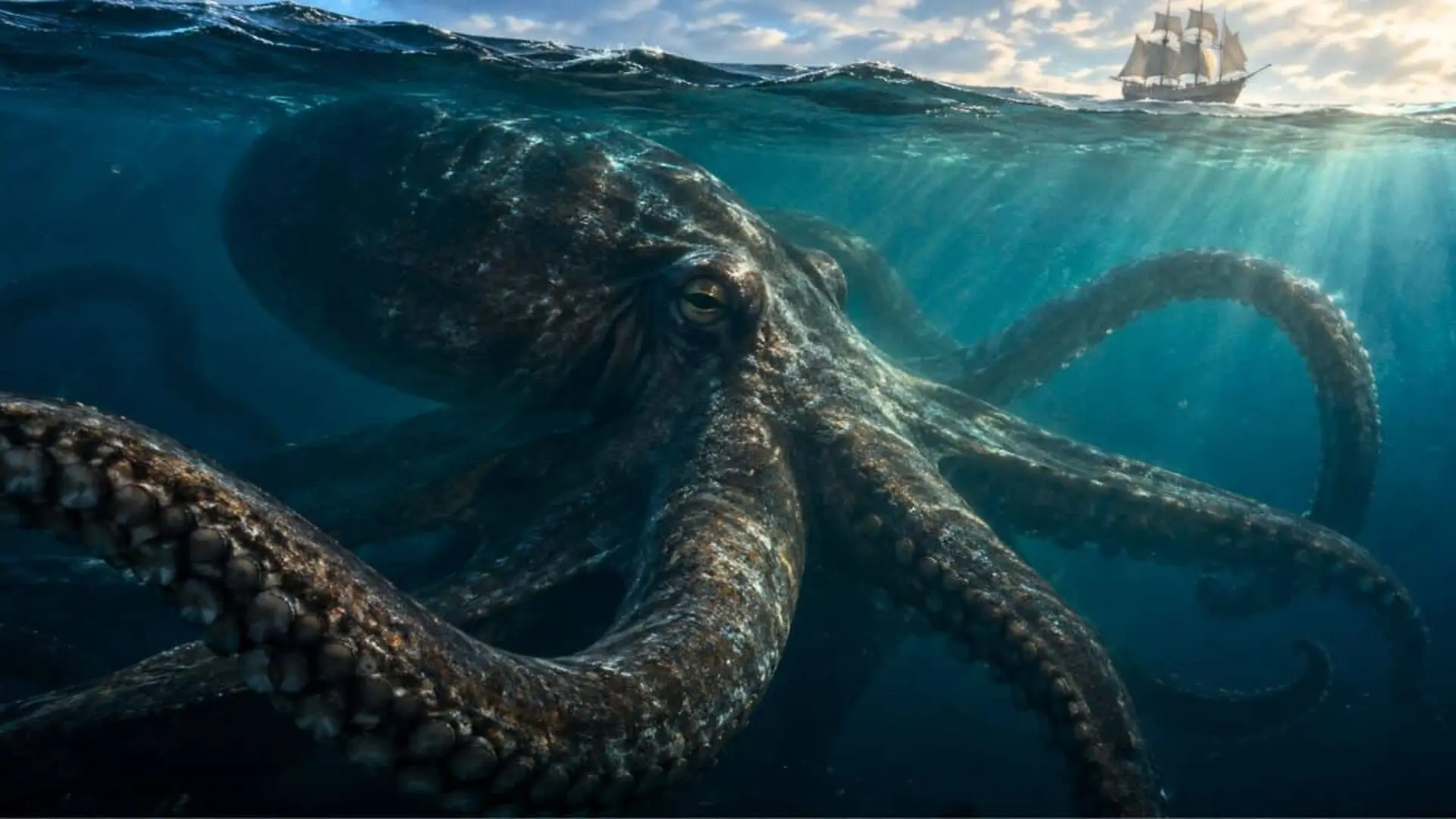
For generations, the legend of the kraken dominated maritime folklore, capturing the imaginations of sailors with tales of a colossal sea beast capable of dragging entire vessels into the abyss. While these myths eventually faded into the realm of speculative history, discarded by scientists as little more than sailors’ superstitions, new paleontological evidence suggests that nature may have once hosted a predator just as formidable as the fabled monster.
A study published April 23 in Science, led by Yasuhiro Iba of Hokkaido University, has fundamentally altered our understanding of the cephalopod lineage. By analyzing fossilized jaws recovered from sedimentary rock formations in Japan and on Vancouver Island, researchers have reconstructed the lives of octopuses that thrived between 100 and 72 million years ago. Far from being the shy, reef-bound invertebrates known to modern marine biology, these Cretaceous-era octopuses were massive, dominant predators that occupied the apex of the marine food web, hunting alongside the giant marine reptiles of the era.
Because soft-bodied creatures rarely leave behind a skeletal record, scientists have long struggled to piece together the history of octopuses. However, their jaws are composed of hard, chemically resilient material that can endure for tens of millions of years. To extract these findings, Iba’s team utilized high-resolution grinding tomography paired with zero-shot learning artificial intelligence. This allowed them to identify, within otherwise nondescript rock, fossilized jaws that still retained clear evidence of their ancient biological function.
Evidence of Apex Predation and Massive Scale
The findings center on Cirrata, an extinct group of finned octopuses. While previous research in the Journal of Paleontology had established that substantial octobrachiate cephalopods inhabited the Late Cretaceous North Pacific, the current study provides significant new detail on their behavior and evolutionary timeline.
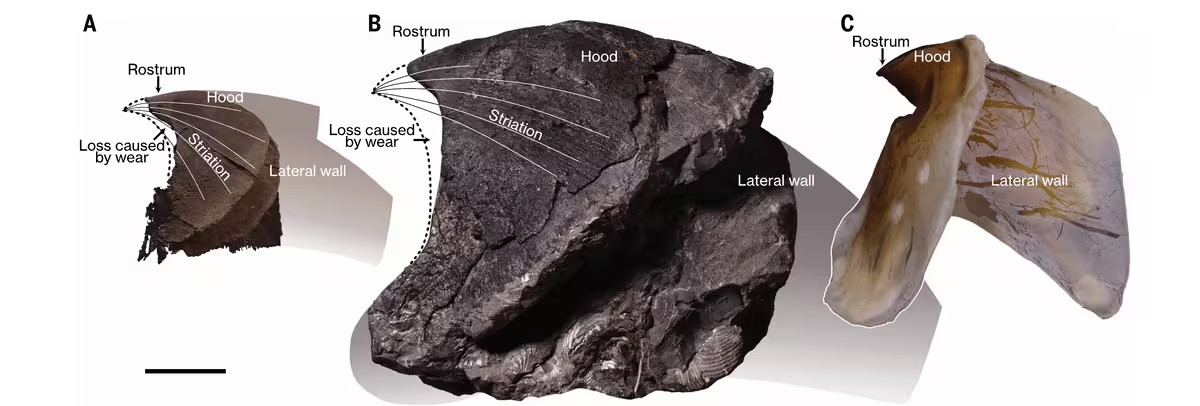
The wear patterns on the fossilized beaks were particularly revealing. “In well-grown specimens, up to 10% of the jaw tip relative to the total jaw length had been worn away, which is larger than that seen in modern cephalopods that feed on hard-shelled prey,” Iba noted. This level of degradation indicates persistent, high-force feeding strategies against armored prey. Based on these dimensions, researchers estimate that some of these creatures reached lengths of nearly 20 meters, potentially rivaling the marine reptiles that shared their environment.
Beyond their sheer size, the study identified a surprising degree of behavioral complexity. The fossils displayed a marked asymmetry in wear—a phenomenon known as lateralization—suggesting these animals consistently favored one side of their jaws. In modern biology, lateralization is frequently associated with advanced neural processing, hinting that these prehistoric giants may have possessed a level of cognitive sophistication previously unimagined for the era.
Reevaluating Ancient Marine Ecosystems
The traditional consensus has long held that vertebrates maintained a near-exclusive grip on the top of the marine food chain throughout history. These findings challenge that narrative, positioning octopuses as a rare, highly successful exception to the rule.
“Our findings suggest that the earliest octopuses were gigantic predators that occupied the top of the marine food chain in the Cretaceous,” Iba explained. He identified two specific evolutionary adaptations—powerful, durable jaws and the abandonment of rigid external skeletons—as the primary drivers that allowed these cephalopods to evolve into such formidable marine predators.
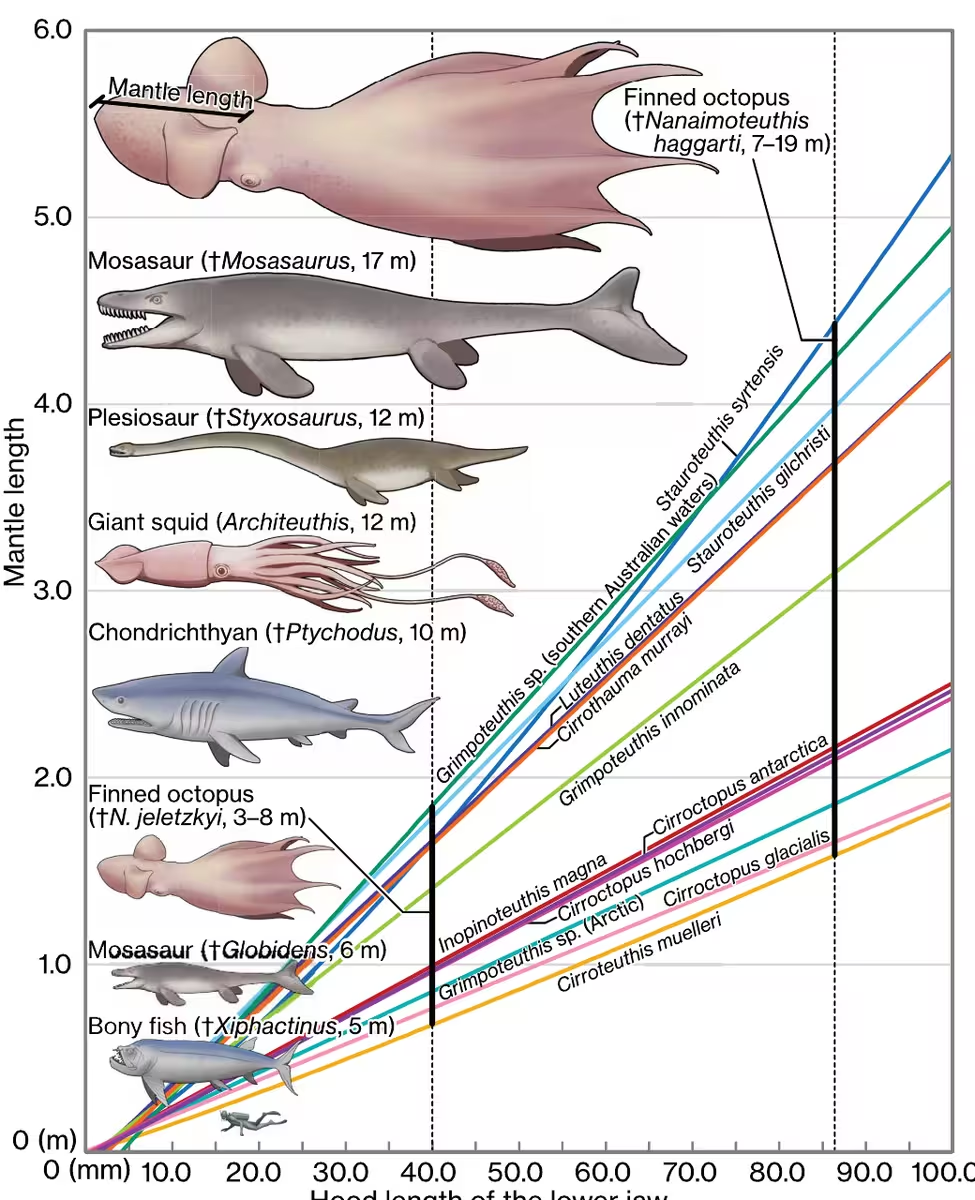
While these prehistoric behemoths had no connection to the maritime legends of the kraken—which are more likely rooted in rare, distorted sightings of giant or colossal squids—the study effectively pushes the known history of the octopus lineage back to at least 100 million years ago. As researchers continue to apply AI-driven detection methods to existing rock collections, they anticipate that this discovery is only the beginning of a broader reassessment of cephalopod evolution.
This article has been fact checked for accuracy, with information verified against reputable sources. Learn more about us and our editorial process.
Last reviewed on .
Article history
- Latest version
Reference(s)
- Ikegami, Shin., et al. “Earliest octopuses were giant top predators in Cretaceous oceans.” Science, vol. 392, no. 6796, April 23, 2026, pp. 406-410. American Association for the Advancement of Science (AAAS), doi: 10.1126/science.aea6285. <https://www.science.org/doi/10.1126/science.aea6285>.
- Tanabe, Kazushige., et al. “Late Cretaceous octobrachiate coleoid lower jaws from the north Pacific regions.” Journal of Paleontology, vol. 82, no. 2, May 20, 2016, pp. 398-408. Cambridge University Press (CUP), doi: 10.1666/07-029.1. <https://doi.org/10.1666/07-029.1>.
Cite this page:
- Posted by Hassan Raza