Scientists Are Baffled by a Mysterious Physical Mutation in Rare Japanese Leopard Cats
A mysterious short-tail trait has emerged in Japan’s critically endangered Tsushima leopard cats, with genetic testing ruling out domestic cat crossbreeding.
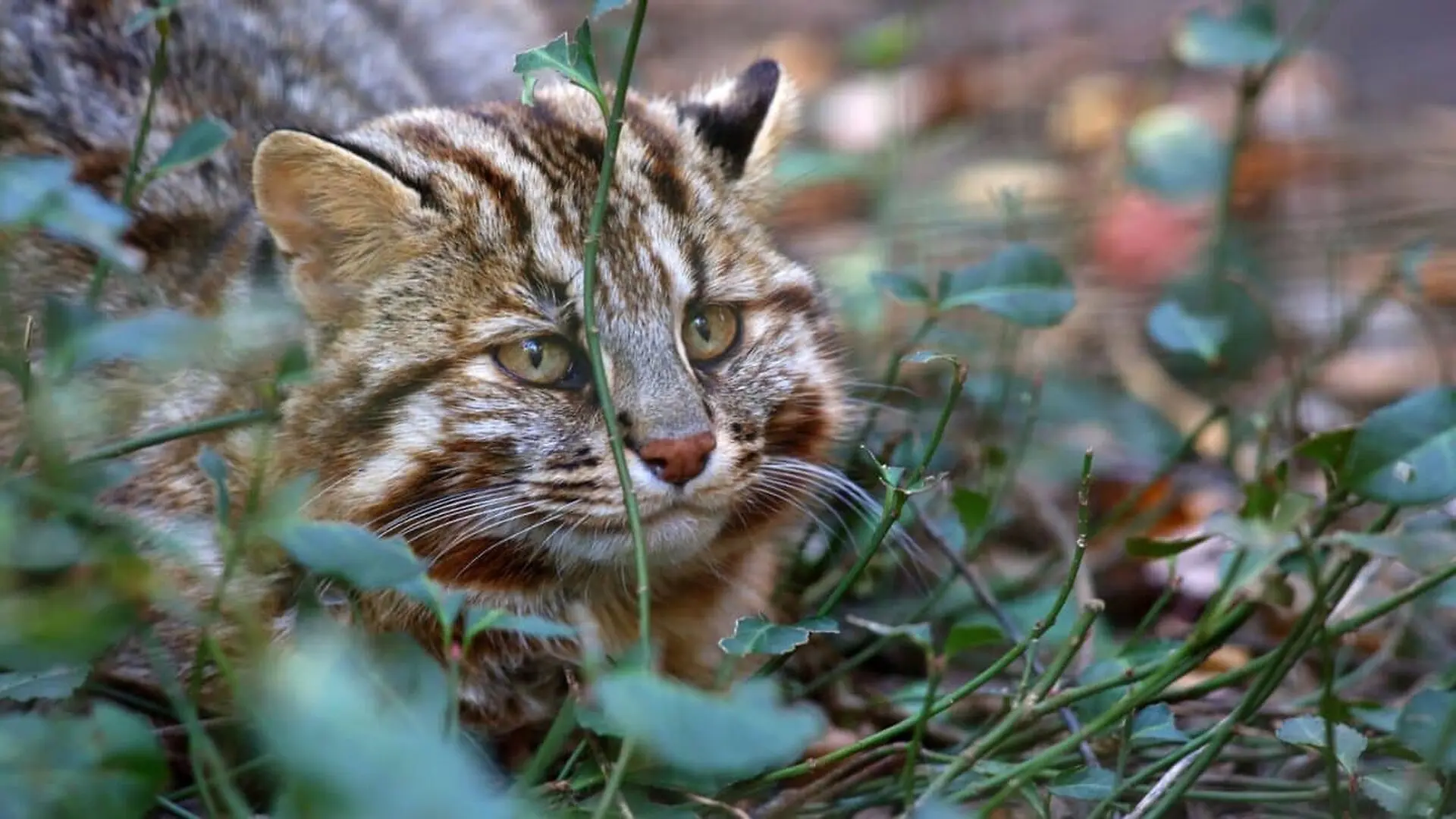
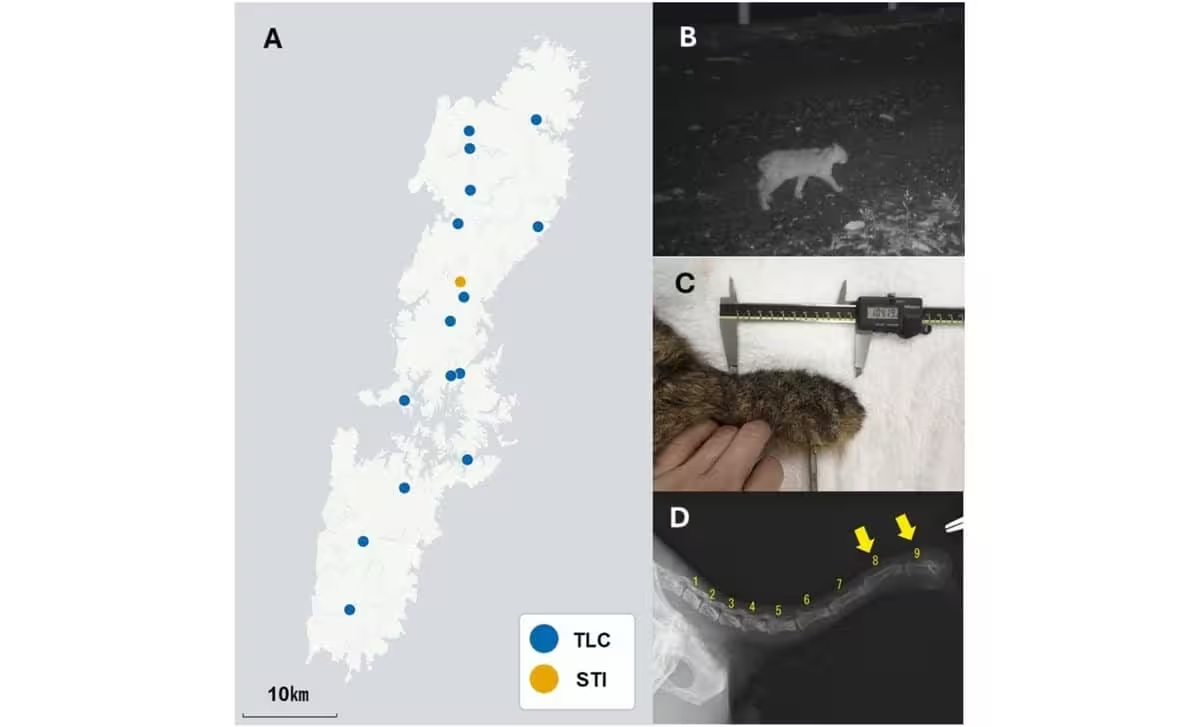
Conservationists monitoring the critically endangered Tsushima leopard cat (Prionailurus bengalensis euptilurus) have reported a concerning rise in physical abnormalities among the population. Recent field surveys conducted between 2024 and 2025 on Tsushima Island have identified at least three individuals displaying significantly shortened tails, a trait previously undocumented in this subspecies or within the broader Prionailurus genus.
The Tsushima leopard cat population is remarkably fragile, with recent estimates suggesting only 90 to 100 individuals remain on the northern landmass of Kamijima, and at least 17 on the southern area of Shimojima. The discovery of these physical mutations has triggered an urgent investigation into the health and genetic integrity of the isolated group.
Investigating the Hybridization Hypothesis
Given that domestic cats on the island are known to carry genes for kinked or short tails, researchers initially hypothesized that the leopard cats might be interbreeding with local house cats. Such hybridization is biologically possible, as evidenced by domestic Bengal cat breeds.
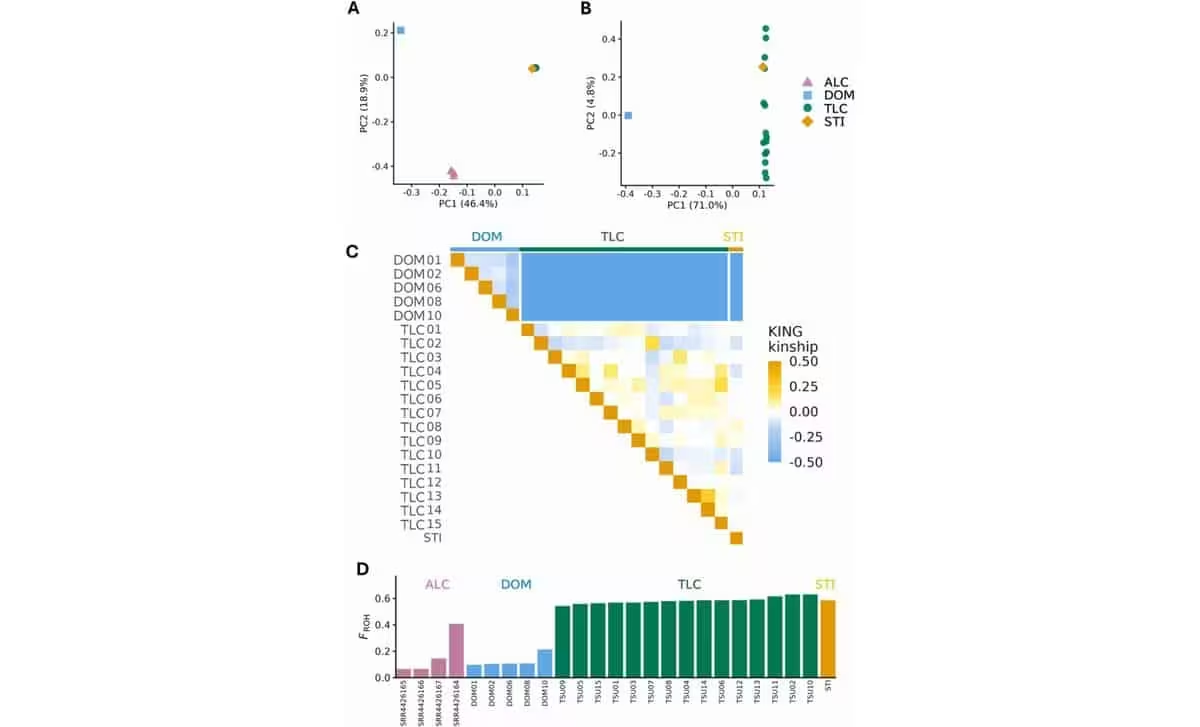
To investigate, scientists analyzed genome-wide data from 25 animals, including the short-tailed leopard cat, other Tsushima leopard cats, local domestic cats, and reference Amur leopard cats. The results, published in Global Ecology and Conservation, provided no evidence of cross-breeding. Sophisticated ancestry modeling and mitochondrial DNA analysis confirmed that the short-tailed individual was fully aligned with the wild leopard cat genetic cluster, with domestic cat ancestry measured at less than 0.01 percent.
Seeking the Origins of the Anomaly
With hybridization ruled out, researchers turned their attention to other potential causes, including genetic mutations and inbreeding. The team screened for variants in genes known to govern tail development in other felids, such as TBXT and HES7. While some minor variants were identified in the TBXT gene of the affected cat, none were deemed significant enough to trigger such a pronounced physical change.
The study also examined whether the island’s extreme isolation has led to detrimental inbreeding. The data confirmed that Tsushima leopard cats possess significantly higher levels of genomic inbreeding compared to their continental relatives. However, the short-tailed cat’s own inbreeding profile was not markedly different from the rest of the population, suggesting that the deformity is not a simple consequence of a highly inbred individual.
Clinical examinations of one captured cat revealed that the tail’s vertebrae were poorly defined, with indicators suggesting potential trauma near the base. While there were no obvious external signs of a recent injury, researchers could not rule out the possibility that the damage was historical. Because only a few individuals have been identified with these traits, the team notes that further long-term monitoring and genetic sampling are essential to determine whether these abnormalities are hereditary or the result of isolated environmental incidents.
This article has been fact checked for accuracy, with information verified against reputable sources. Learn more about us and our editorial process.
Last reviewed on .
Article history
- Latest version
Reference(s)
- Matsumoto, Yuki., et al. “Genome-wide assessment of suspected domestic cat introgression in the critically endangered Tsushima leopard cat.” Global Ecology and Conservation, vol. 70, October 1, 2026, pp. e04365 Elsevier BV, doi: 10.1016/j.gecco.2026.e04365. <https://www.sciencedirect.com/science/article/pii/S235198942600315X?via%3Dihub>.
Cite this page:
- Posted by Hassan Raza