Archaeologists Discover Ancient Roman Mosaic Featuring Named Pet Cat and Dog
A stunning new Roman villa mosaic discovered in Turkey reveals rare, intricate details about daily life in the ancient world.
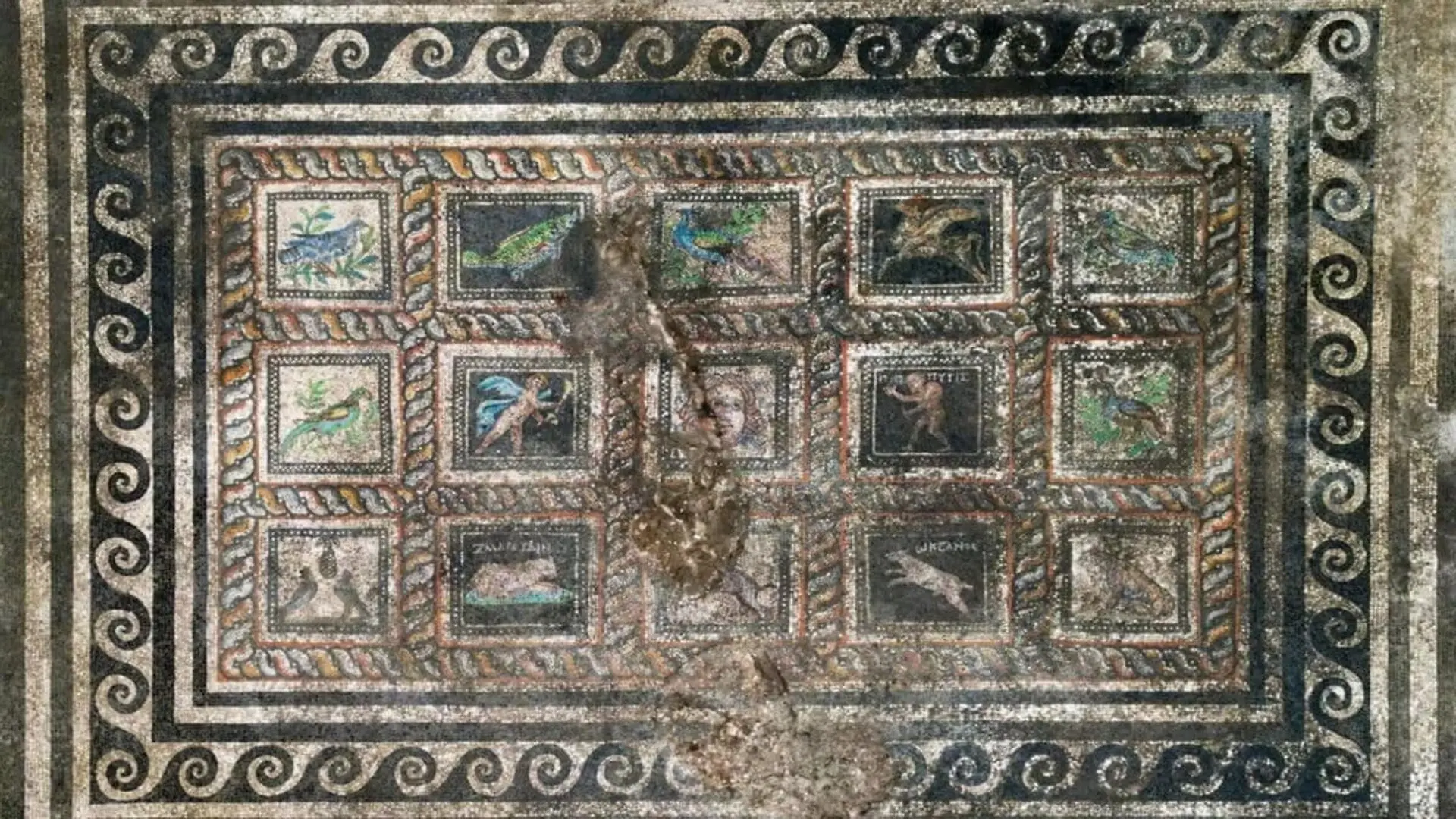
Archaeologists working on Turkey’s Aegean coast have unearthed a remarkably preserved Roman villa, offering a rare glimpse into the domestic lives and personal connections of provincial elites. The residence, discovered beneath the ancient settlement of Adramytteion, features a sophisticated layout including a central atrium and a series of living spaces connected by an intricate plumbing network.
Led by Hüseyin Özgen of Mimar Sinan Fine Arts University, the research team began intensive excavations at the site between 2025 and 2026. The most striking find within the structure is a large, elaborate mosaic flooring located in what researchers have identified as the primary reception hall, positioned to impress guests upon their arrival from the courtyard.
A Masterpiece of Roman Decorative Art
The reception hall mosaic spans approximately 16.4 by 11.8 feet (5 by 3.6 meters) and is composed of 15 distinct panels arranged in three rows. These panels showcase a vibrant palette of white, black, red, orange, yellow, pink, burgundy, blue, turquoise, and green tiles. The imagery is a blend of natural history and mythology, featuring various fish and bird species alongside legendary figures, including a winged horse reminiscent of Pegasus and a gorgon likely representing Medusa.
Personalizing the Past Through Inscribed Mosaics
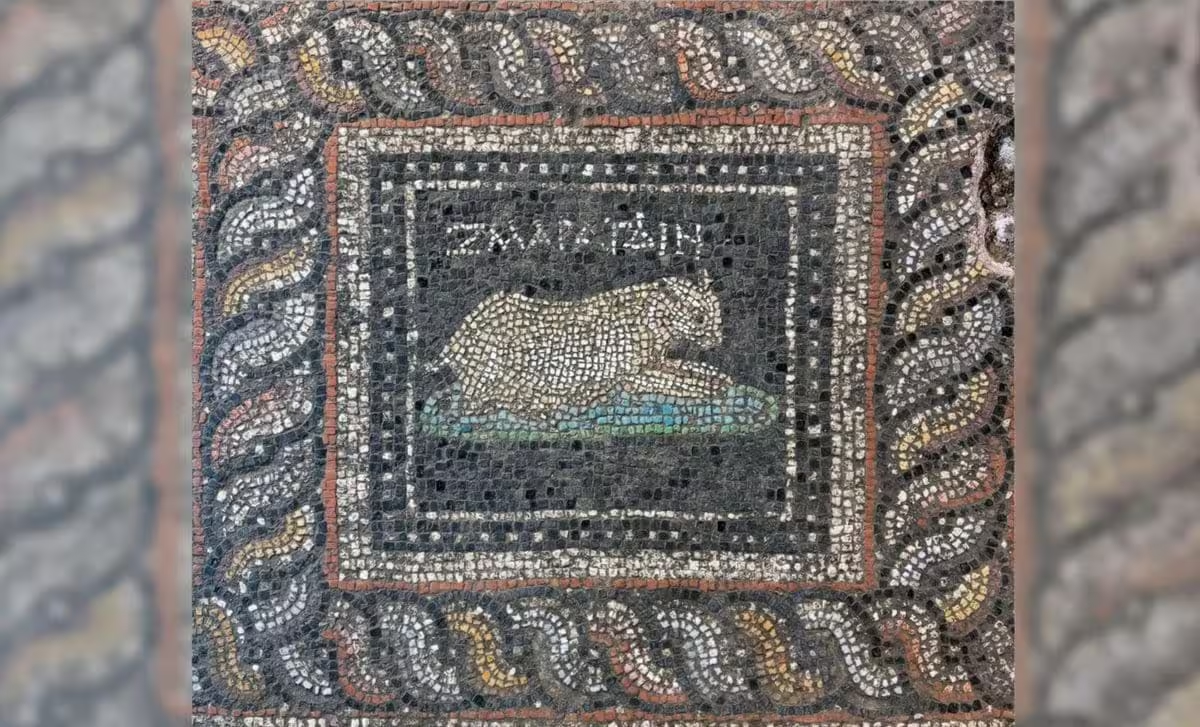
Perhaps the most significant detail of the discovery lies in two Greek inscriptions that personalize the animal subjects. Near the hall entrance, a depiction of a pale cat lounging on a blue-green cushion is labeled with the word ΖΜΑΡΑΓΔΙΝ, or “Emerald.” According to the study led by Özgen, the cat’s relaxed posture suggests it was a cherished house pet. The name itself may hint at the villa owner’s broader economic ties, potentially referencing the emerald mines of Roman Egypt and suggesting involvement in extensive North African trade networks.
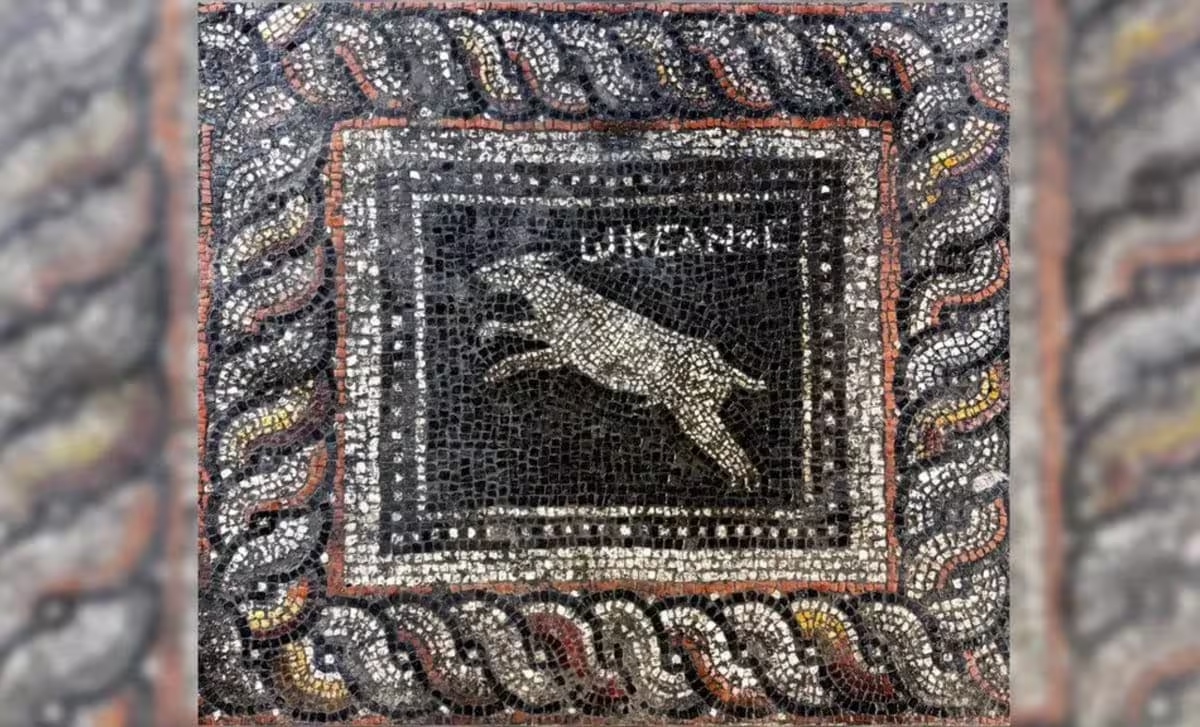
Across from the cat, the mosaic displays a leaping dog accompanied by the inscription ΩΚΕΑΝΟΣ, meaning “Ocean.” This choice of name appears to serve as a symbolic nod to the city’s status as a bustling Roman maritime hub on the Aegean coast.
A Window Into Ancient Identity
By integrating these named animals into the home’s primary reception area alongside mythological figures, the residents of the Adramytteion villa were likely projecting their personal identities and status to their guests. The mosaics serve as a unique intersection of classical mythology and intimate, daily life, preserving the memory of specific animals long after the ancient city fell into decline.
The archaeological team continues to excavate and analyze the site, hoping that the ongoing investigation of the villa and its surrounding structures will reveal further insights into the social hierarchy and domestic customs of the region during the Roman era.
This article has been fact checked for accuracy, with information verified against reputable sources. Learn more about us and our editorial process.
Last reviewed on .
Article history
- Latest version
Reference(s)
- “Making sure you're not a bot!.” <https://pleiades.stoa.org/places/550403>.
- <https://mimarsinan.academia.edu/H%C3%96zgen>.
- “Journal of Mosaic Research Home.” <https://dergipark.org.tr/en/pub/jmr>.
Cite this page:
- Posted by Hassan Raza