Desert Mosses Harbor Hidden Fungi Inside Their Cells, Revealing Unexpected Plant Partnerships
New study shows mosses, Earth’s ancient survivors, might conceal a crucial biological secret.
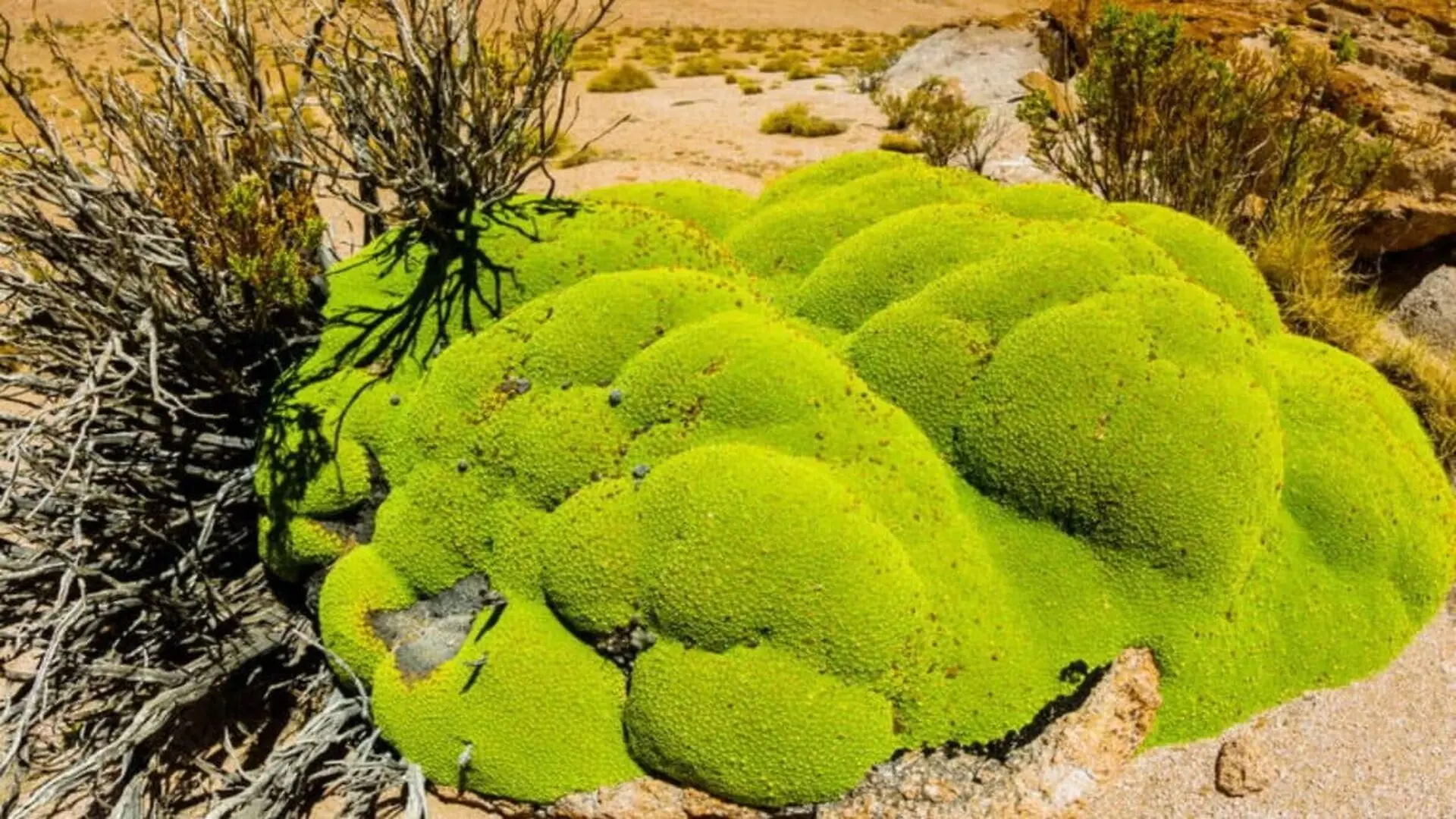
For many years mosses have been regarded as the outliers of the plant world, persisting without the fungal allies that most terrestrial plants rely on. A recent investigation overturns this perception, presenting evidence that fungal organisms can inhabit moss cells – a partnership never documented before.
While more than 85 % of land‑plant species exchange carbohydrates for mineral nutrients with fungi, mosses – tiny, rootless plants – were thought to be exceptions to this rule.
New findings published in New Phytologist reveal fungal genetic material inside moss tissues and even show fungal filaments developing within individual moss cells, indicating a far tighter connection than previously assumed.
Desert Mosses Reveal Unexpected Fungal Residents
The project was led by Kian Kelly, a Ph.D. candidate at the University of California, Riverside, who studies biological soil crusts – complex assemblages of fungi, bacteria, algae, mosses and microscopic fauna that occupy a single soil patch.
Kelly collected samples across the scorching Mojave and Sonoran deserts, where daytime temperatures regularly exceed 100 °F. While comparing mosses from arid zones with those from cooler habitats, he wondered whether the associated fungal communities also shifted with the environment.
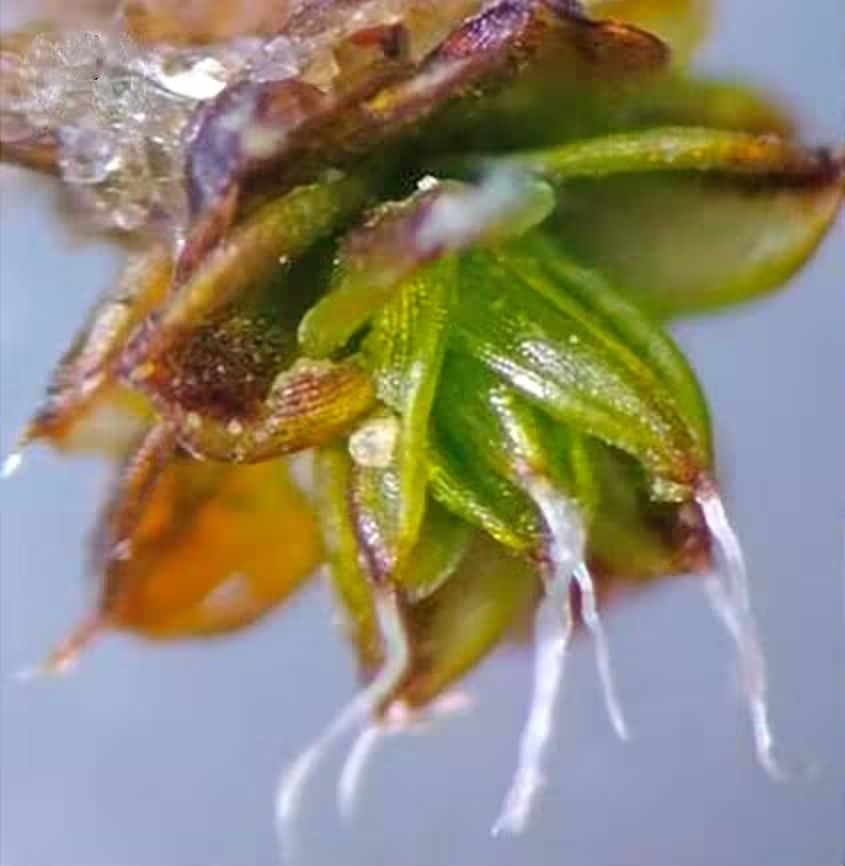
Analysis reported in New Phytologist uncovered fungal DNA in mosses from both desert and temperate locales. Researchers were especially surprised to detect mycorrhizal fungi – organisms that normally depend on a plant host for survival – inside the moss samples.
Fungal Profiles Inside Moss Differ From Those in the Soil
A striking observation emerged when the team compared the fungal assemblages living inside the mosses with those present in adjacent soil. The two communities were distinct, suggesting that the moss‑associated fungi are not simply soil contaminants.
Further, mosses growing in hot, dry deserts hosted fungal taxa that differed from those found on the same species in milder climates, hinting at a possible ecological specialization of certain fungi for extreme environments.
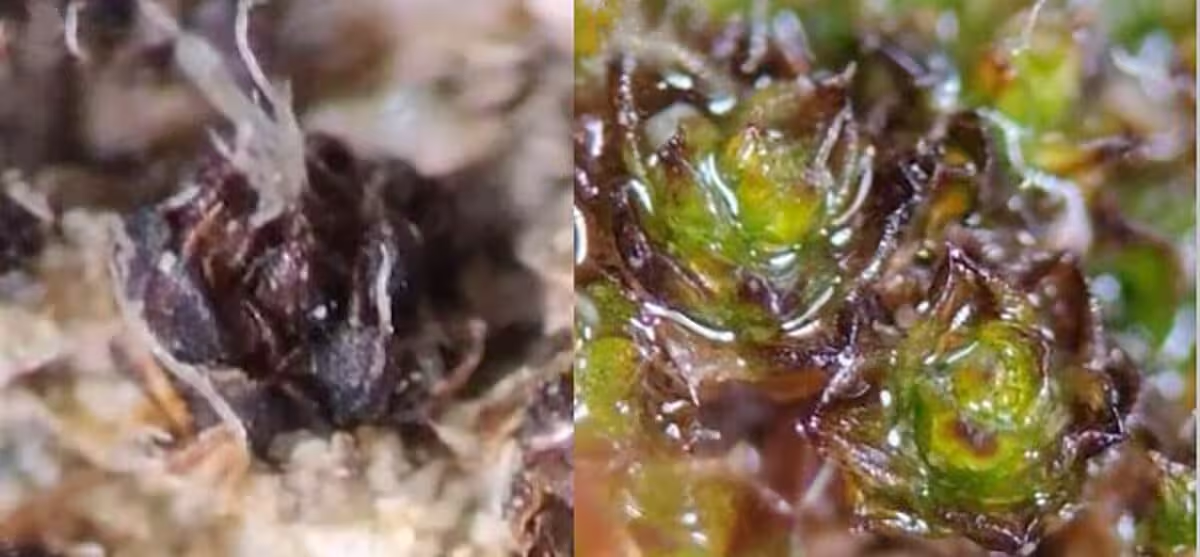
These results challenge the long‑standing view that mosses are completely autonomous, pointing instead to selective fungal partnerships.
Microscopic Evidence of Intracellular Fungal Networks
To pinpoint fungal location, Kelly applied a blue stain that binds specifically to fungal cell walls. Microscopic examination revealed branching filaments embedded directly within moss cells.
“As soon as I saw that, I knew we had something really interesting,” he said.
The observed structures resembled arbuscules – delicate, tree‑like formations typical of mycorrhizal interactions in plant roots. Since mosses lack roots, these arbuscule‑like features appeared in the leafy tissues instead.
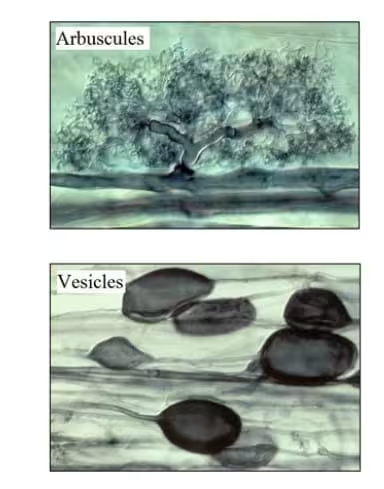
Although the formations differ slightly from those documented in root systems, the press release accompanying the study suggests they may represent a nutrient‑exchange interface. Further experiments will be required to clarify the exact dynamics of this moss‑fungus interaction.
The discovery implies that one of Earth’s earliest land plants may have relied on fungal partners far more than previously thought.
This article has been fact checked for accuracy, with information verified against reputable sources. Learn more about us and our editorial process.
Last reviewed on .
Article history
- Latest version
Cite this page:
- Posted by Hassan Raza