Lost City Hydrothermal Field: Alien Towers Offer Clues to Life’s Deep Origins
A newly discovered Atlantic wreck reveals an alien‑like city of towering chimneys, shedding light on Earth’s past life and alien habitats.
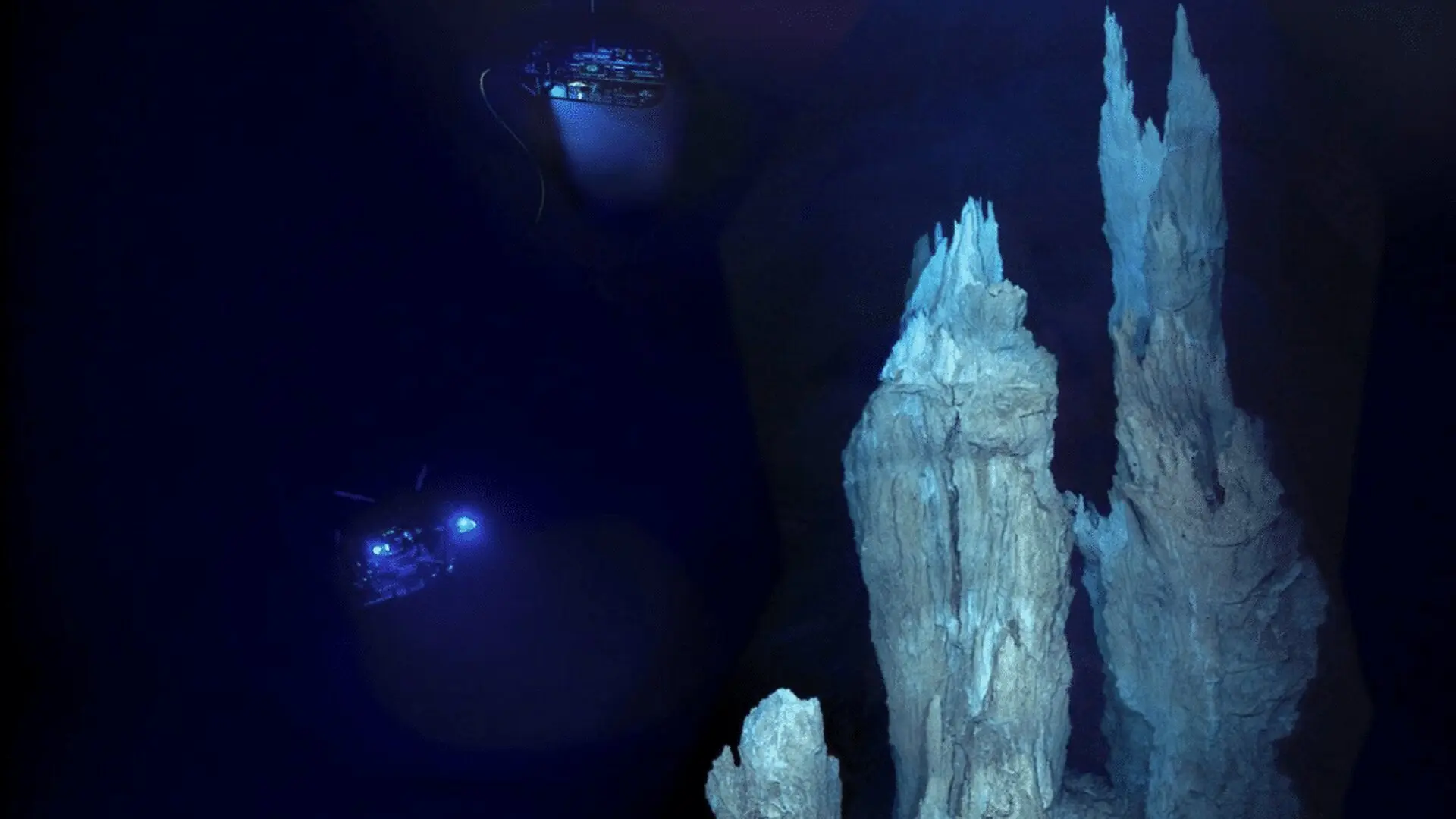
A recent seafloor survey has brought to light an extraordinary hydrothermal complex that dwarfs anything previously recorded on the planet. Nestled on a submarine mountain west of the Mid‑Atlantic Ridge, the feature known as the Lost City Hydrothermal Field sits more than 700 metres beneath the ocean surface and is built from a chaotic array of towering carbonate edifices. Discovered at the turn of the millennium, this extensive, alien‑resembling setting is now identified as the longest‑lasting vent system on Earth, offering a rare window into how life can originate under extreme conditions.
Towering Chimneys and Spire‑Like Formations
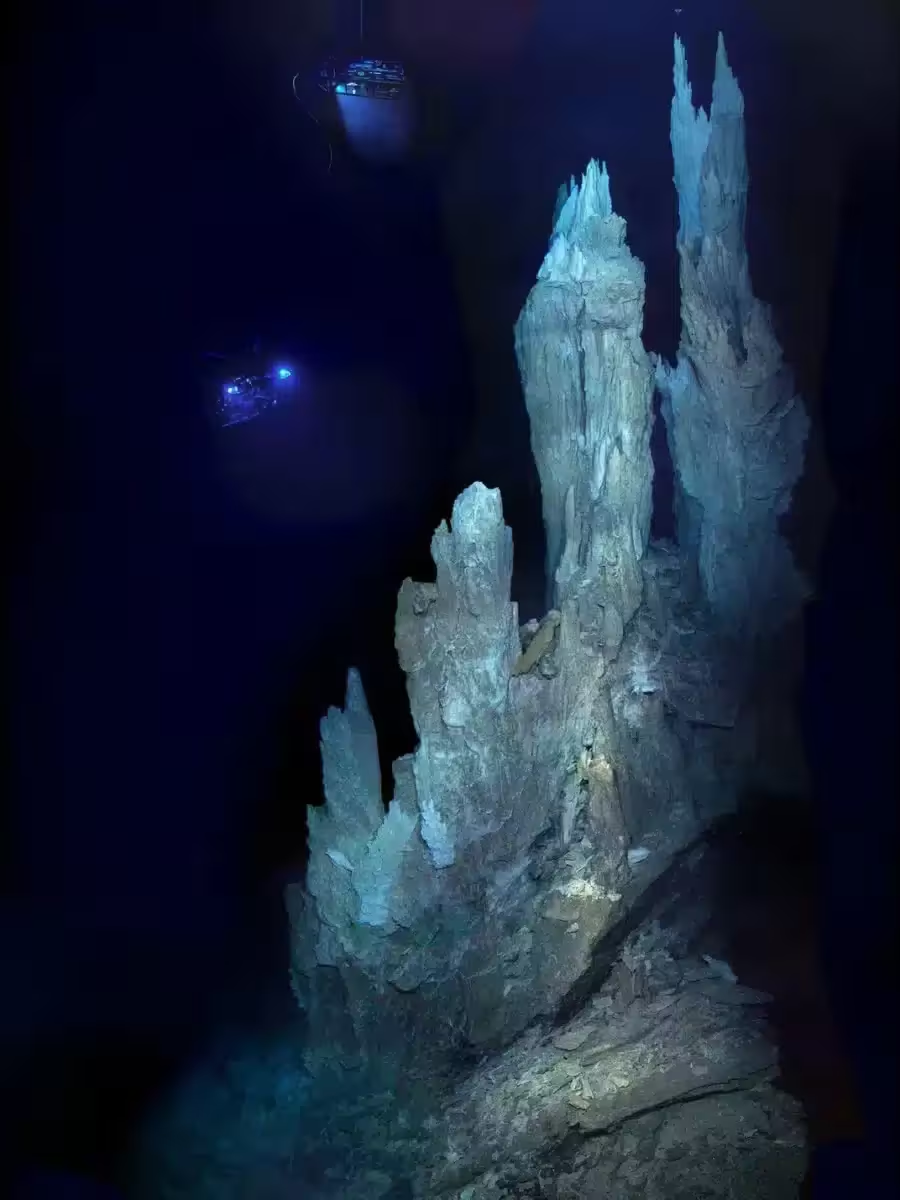
The landscape is punctuated by massive monoliths and a multitude of smaller pillars that range from delicate, mushroom‑shaped knobs to structures approaching 200 feet tall. These calcite towers emit a faint blue glow when illuminated by the lights of remotely operated submersibles, creating a surreal skyline that appears frozen in time.
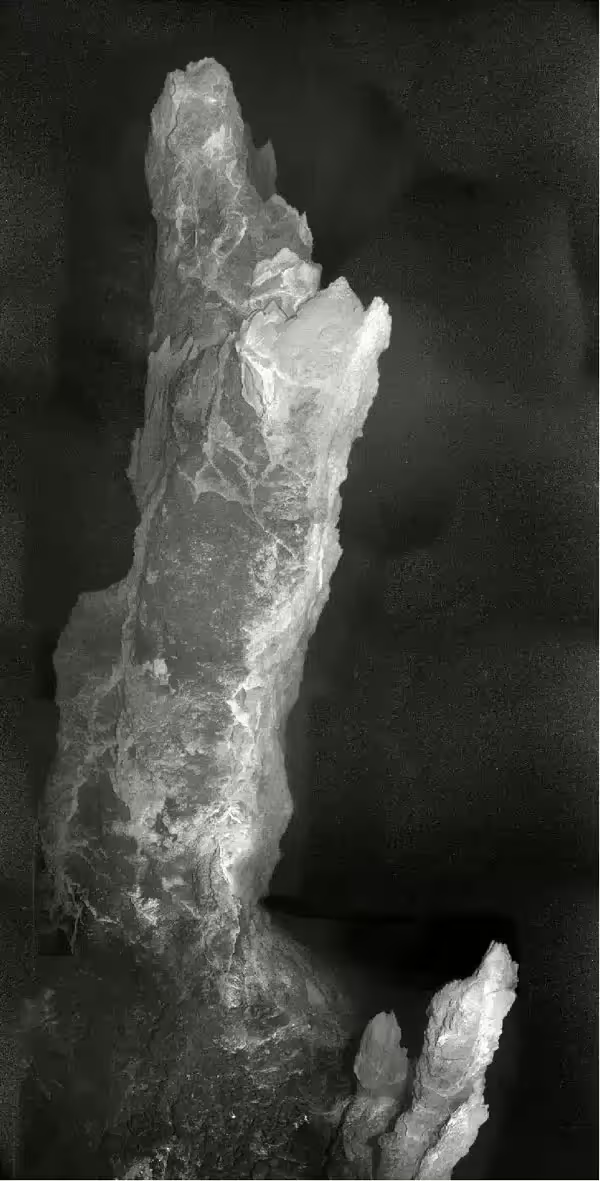
Unlike the classic black‑smoker vents, the emissions here generate hydrogen and methane at concentrations up to a hundred times greater while releasing comparatively little heat. This distinctive chemical profile fuels diverse microbial colonies in an oxygen‑free environment, establishing an ecosystem that operates independently of sunlight. The most imposing formation, dubbed Poseidon, towers over 60 metres and exemplifies the interplay of geological persistence and biological tenacity.
Chemistry That Outpaces Typical Vents
Investigations led by the University of Washington demonstrate that this vent field releases essential compounds at rates unmatched by conventional black‑smoker systems. The interaction of seawater with mantle rock—a process called serpentinization—directly yields hydrocarbons such as methane and hydrogen, which serve as the foundational molecules for cellular life. UW researchers report that these fluids produce ten to one hundred times more hydrogen and hydrocarbons than standard vents, fostering an alkaline milieu that supports thriving microorganisms. In contrast to the acidic, iron‑ and sulfur‑rich outputs of black smokers, the Lost City’s emissions are dominated by near‑pure carbonate, giving rise to the colossal structures that define the site.
A Glimpse Into Earth’s Early Biosphere
For more than 120 000 years, upward‑moving mantle material has interacted with seawater at this location, continuously releasing gases that sustain microbial life. In 2024, an unprecedented 1 268‑metre core was extracted from the field, aiming to decode the environmental conditions that may have nurtured life’s earliest forms. These vents draw energy from deep‑sea chemical reactions rather than from surface carbon cycles or solar illumination.
Microbiologist William Brazelton told The Smithsonian’s Anna Kusmer in 2018, “This is an example of a type of ecosystem that could be active on Enceladus or Europa right this second. And maybe Mars in the past.” The statement underscores the site’s relevance not only as a geological marvel but also as a critical arena for astrobiology research.
Organisms Flourish Amidst Extreme Conditions
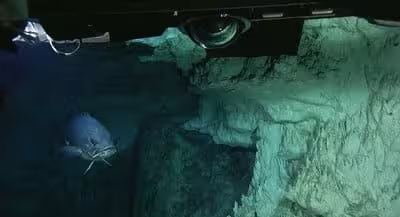
Despite the harsh setting, a rich assemblage of fauna—snails, crustaceans, crabs, shrimp, sea urchins and eels—makes its home on the chimneys, subsisting on the vent‑derived hydrocarbons. Bacterial layers coat the mineral surfaces, forming dense mats that persist under pressures and temperatures that can reach 104 °F (40 °C).
The vent field’s stability markedly exceeds that of volcanic black smokers, which frequently collapse within a few decades. This longevity permits intricate ecological networks to evolve, granting scientists an unrivaled perspective on life thriving in isolated, high‑stress habitats. Researchers note that such insights may inform predictions about potential biospheres on other planetary bodies.
Mining Pressures and Calls for Protection
Although the Lost City itself is not a repository of valuable metals, adjacent regions are under consideration for deep‑sea mining, sparking concerns about the preservation of this delicate ecosystem. Disturbances could unleash sediment plumes or alter chemical balances, threatening the unique habitats that have persisted for millennia. Scientists are urging that the site receive World Heritage status to safeguard it before industrial activities compromise its fragile equilibrium.
Wider Implications for Planetary Exploration
The field functions as a natural laboratory for probing the interplay of chemistry and biology in extreme environments. Its enduring activity challenges traditional notions of habitability and provides a template for analogous systems that may exist elsewhere in the solar system. By dissecting this hidden marvel, researchers gain valuable perspectives on the conditions that shaped early Earth and the possible niches that could support life on icy moons such as Enceladus and Europa.
This article has been fact checked for accuracy, with information verified against reputable sources. Learn more about us and our editorial process.
Last reviewed on .
Article history
- Latest version
Reference(s)
- Hines, Sandra. “Lost City pumps life-essential chemicals at rates unseen at typical black smokers.” UW News <https://www.washington.edu/news/2008/02/07/lost-city-pumps-life-essential-chemicals-at-rates-unseen-at-typical-black-smokers-2/>.
Cite this page:
- Posted by Hassan Raza