NASA’s Featherweight Radar Antenna Could Let Future Mars Helicopters See Below the Surface
NASA tests a lightweight radar antenna for future Mars helicopters, opening a new aerial method to explore the Red Planet.
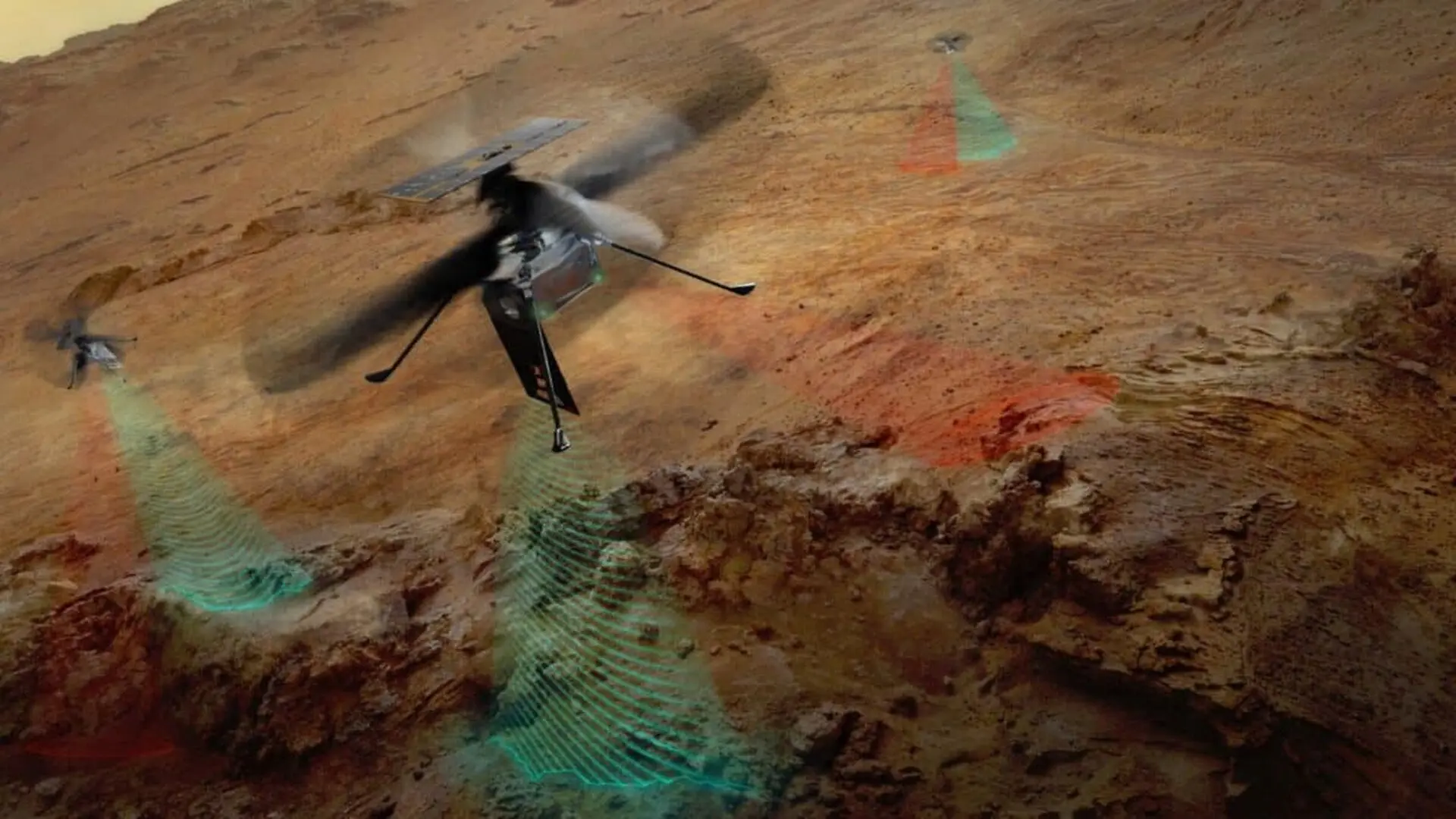
Engineers at NASA’s Jet Propulsion Laboratory have successfully demonstrated a ultra‑light radar antenna that could become a core component of the upcoming SkyFall Mars helicopter program, paving the way for aerial subsurface surveys on the Red Planet.
A Compact Radar Solution for an Aerial Mars Mission
The antenna is being engineered for SkyFall, a helicopter concept intended to fly over Mars repeatedly while carrying scientific payloads. By operating from the sky, the vehicle could traverse terrain that is difficult for rovers and acquire data over broader regions.
Integrated into a ground‑penetrating radar (GPR) suite, the antenna would emit radio waves during flight, probing beneath the surface to reveal hidden geological layers, voids, and other structures.
Designing a component that is both lightweight and resilient posed a significant engineering challenge. The hardware must endure the stresses of multiple take‑offs, landings on uneven ground, and the thin Martian atmosphere without compromising performance.
Testing took place at NASA’s JPL, where engineers evaluated the antenna’s mechanical behavior under simulated mission conditions, gathering data essential for future qualification.
Engineering a Vivaldi Antenna That Can Bend and Recover
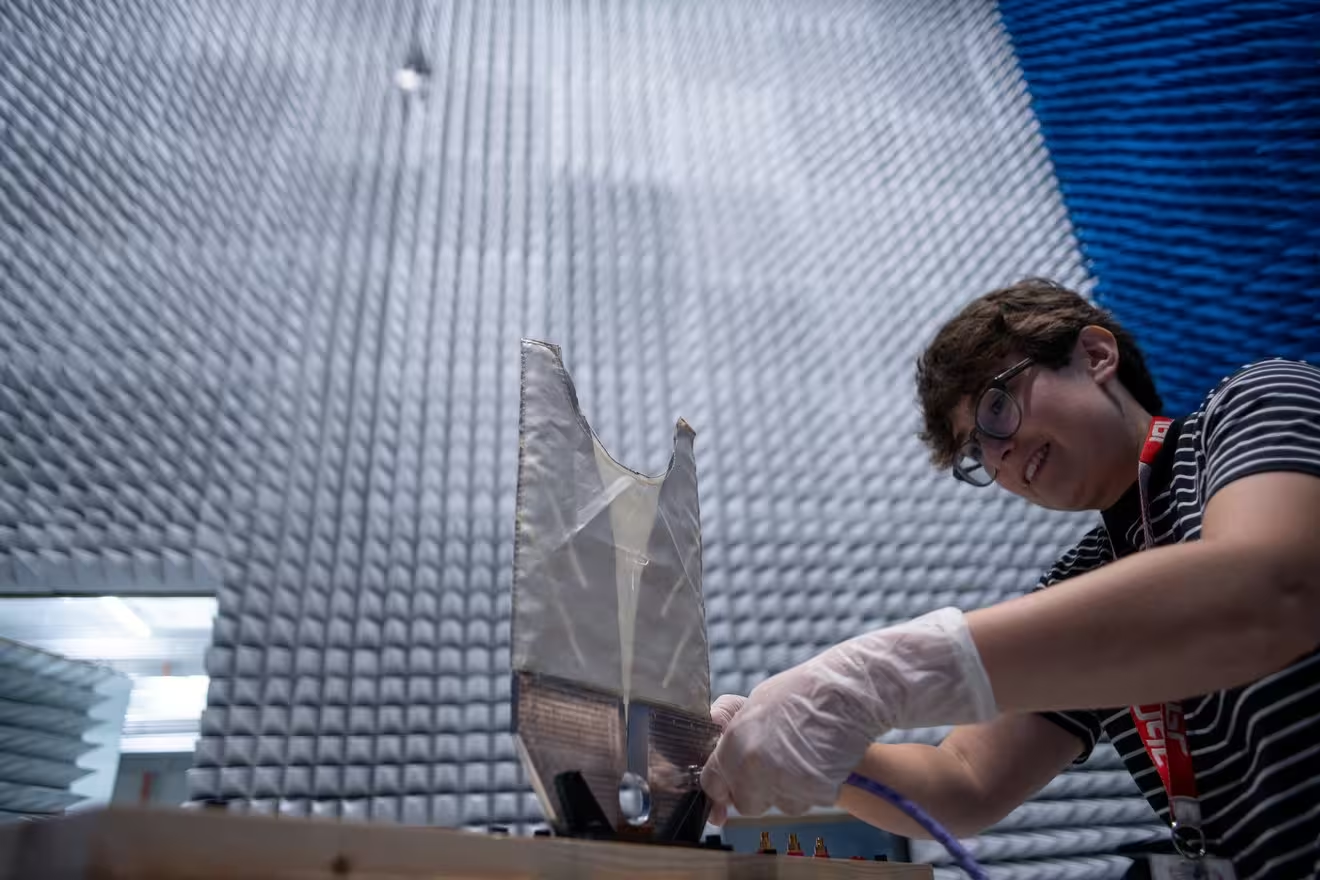
The SkyFall antenna adopts a Vivaldi architecture, a broadband design known for its low mass and wide‑band performance. Because the element extends beyond the helicopter’s landing gear, it must flex when the vehicle touches down on rocks or uneven ground.
“Although we managed to shrink the antenna quite a bit, it is about 1½ times longer than the helicopter’s legs,” said Christine Gebara, SkyFall ground‑penetrating radar mechanical lead at JPL. “That means during landing, the Vivaldi has to bend out of the way — and if it lands on a rock, it bends even further. But when the helicopter takes off again, the antenna must spring back into place for data collection. Because SkyFall is expected to make dozens of flights exploring Mars, we needed an antenna that could repeatedly handle those pressures without losing its shape in flight.”
To satisfy this requirement, the team engineered a structure that not only tolerates deformation but also reliably returns to its original geometry after each cycle.
Mars‑bound aircraft will operate under low atmospheric pressure, rugged terrain, and minimal maintenance opportunities, demanding components that can survive long‑term use without on‑site repair.
Test Results Confirm Durability Under Simulated Mission Loads
During the recent experiment, the antenna was subjected to repeated bending forces to mimic the mechanical stresses of landing and take‑off. Engineers monitored how the element responded and whether it could reliably resume its operational posture.
“This test checked every box it was supposed to and answered our biggest technical questions,” said Tang. “While we still have work ahead of us before the antenna is fully flight‑qualified, this was a major milestone, and the hardware performed exactly as expected.”
The successful outcomes provide the SkyFall team with added confidence as they move toward more rigorous qualification phases, though further evaluation remains before the antenna can be declared flight‑ready.
The effort reflects a broader shift toward lighter, more versatile spacecraft that enable mission concepts once considered impractical, building on the success of earlier Mars helicopters that proved powered flight is possible in a thin atmosphere.
Aerial Radar Could Transform Subsurface Mapping on Mars
Equipping a helicopter with ground‑penetrating radar would give scientists a new vantage point for locating buried structures, water ice deposits, and stratigraphic layers, complementing rover‑based observations.
By surveying from the air, researchers could rapidly identify scientifically compelling targets, refine landing site selections, and prioritize subsequent investigations with greater precision.
Each successful hardware demonstration narrows the gap between concept and reality, bringing the prospect of airborne subsurface science missions ever closer.
This article has been fact checked for accuracy, with information verified against reputable sources. Learn more about us and our editorial process.
Last reviewed on .
Article history
- Latest version
Reference(s)
- Laboratory, Jet. “NASA Tests Featherweight Radar Antenna for SkyFall Mars Helicopters | NASA Jet Propulsion Laboratory (JPL).” <https://www.jpl.nasa.gov/news/nasa-tests-featherweight-radar-antenna-for-skyfall-mars-helicopters/>.
Cite this page:
- Posted by Karan Das