14,000-Year-Old Cave Trail Reveals Adults And Children Crawling In Darkness
Child’s tiny footprints found deep in a Paleolithic cave uncover an unexpected, mysterious journey beyond a simple underground walk.
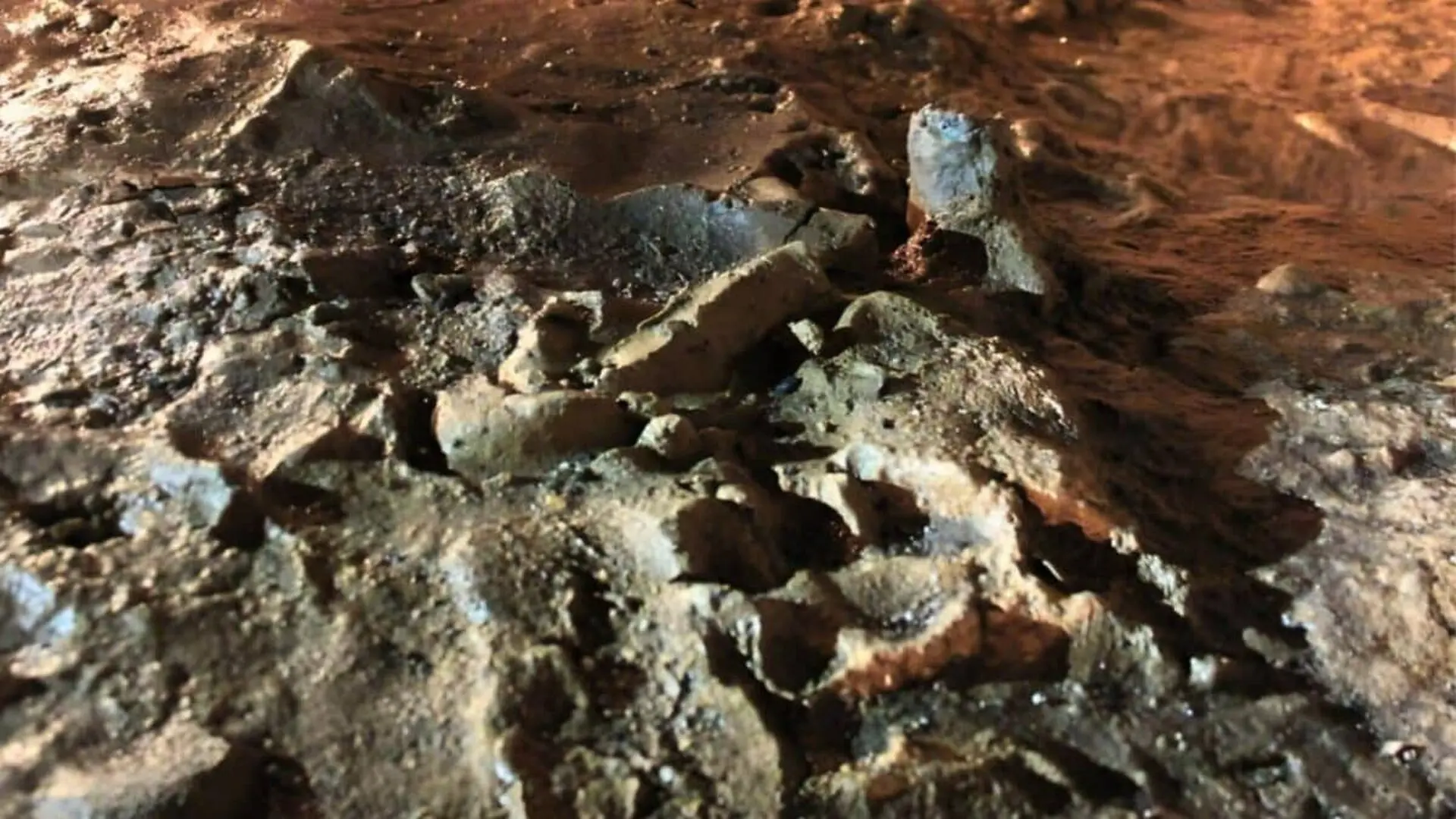
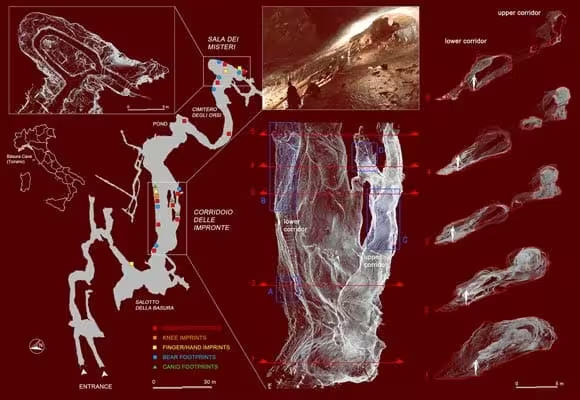
A series of tiny handprints, knee impressions and bare footprints etched into the clay of Italy’s northern Grotta della Bàsura reveal a journey that took place roughly 14,000 years ago. The marks stretch for more than 400 meters from the cave entrance, documenting a Paleolithic party navigating the darkness with torches and leaving a continuous trail on the cave floor.
Analysis of the prints, published in eLife, identifies the group as five individuals: two adults, one adolescent and two children. The younger child was about three years old, while the other was near six. Their footprints intertwine with those of the older members, providing a rare snapshot of adults and children moving together through a challenging underground passage.
The route was narrow, slick and uneven. In one segment the ceiling sank below 80 centimeters, forcing the explorers to drop to their hands and knees. Their crawl left a distinctive series of hand and knee marks in the soft clay, illuminated only by the glow of their wooden torches.
Footprints Capture a Living Scene
Researchers catalogued roughly 180 footprints along with handprints, knee marks, finger traces and charcoal residues. The spatial arrangement of these marks allowed the team to reconstruct the party’s path and to observe how their locomotion shifted when the passage narrowed, steepened or became wet.
Variations in the clay’s consistency influenced the level of detail preserved: firmer sections retained only vague outlines, whereas softer deposits captured crisp impressions of feet, palms, knees and fingers. Some segments show clear walking strides, others display climbing or crawling postures, creating a continuous movement record rather than isolated archaeological artifacts.
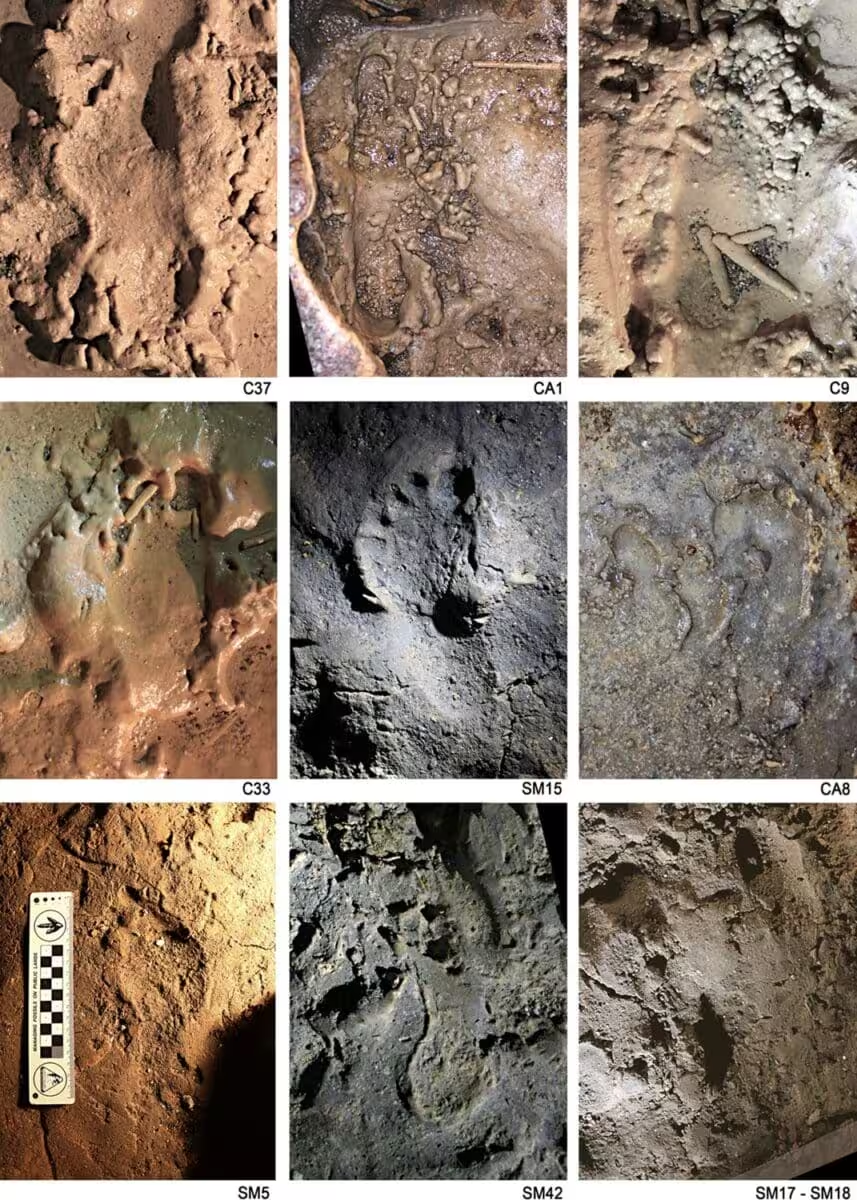
Charcoal fragments found along the passage date the visit to the Upper Paleolithic, roughly 14,700 to 14,000 calibrated years before present. The remnants also confirm that the explorers carried torches fashioned from Pinus t. sylvestris/mugo wood, using firelight to negotiate the cave’s interior.
A Low Passage Recorded Hand‑and‑Knee Traces
The most pronounced crawling marks appear in the section known as the Footprints Corridor, where the ceiling forced the group to move on all fours. Hands, knees and feet pressed into the sediment, preserving a detailed record of the body mechanics required to crawl through such a confined space.
The eLife paper cites this as the first documented instance of crawling in the global human trace record. Ichnology, the study of footprints and related marks, traditionally focuses on walking or running traces; here, the preserved impressions reveal how the participants physically managed the cave’s constraints.
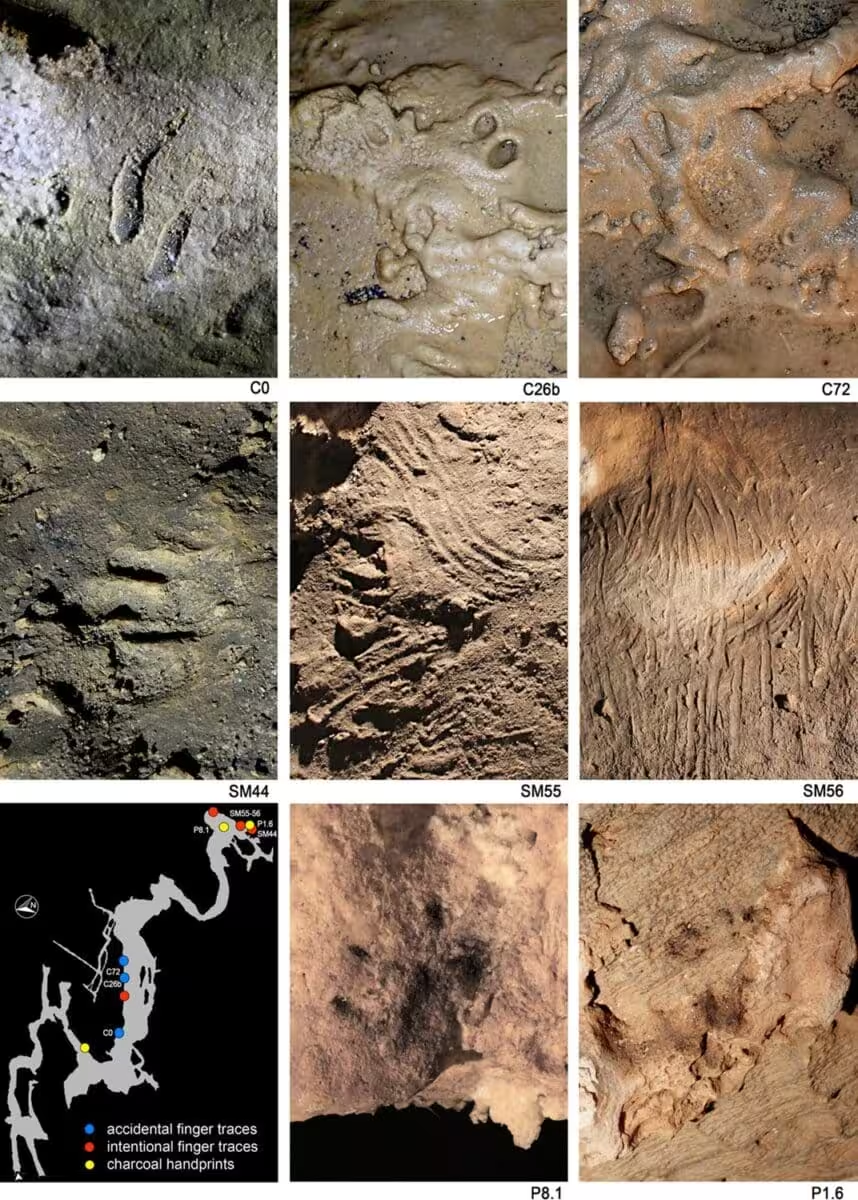
The combination of a low ceiling, pliable floor and a sequence of hand, knee and foot impressions makes the Bàsura trail an unusually clear example of how prehistoric people adapted their posture to the cave environment.
Children’s Prints Add a Human Dimension
The presence of a three‑year‑old child’s footprints, extending hundreds of meters into the cave, and a six‑year‑old’s marks alongside those of an adolescent and adults, underscore the inclusive nature of the expedition. The study does not embellish the story; the spatial context of the small prints already conveys the significance of very young participants navigating a torch‑lit, narrow passage.
These juvenile traces differentiate the site from many others that reflect only adult activity inferred from tools or wall art. Here, the same difficult route bears the footprints, handprints and knee marks of children, indicating that the group’s movement through the cave was a collective effort.
Thus, the discovery is not merely a collection of ancient footprints; it documents a small Paleolithic party—including its youngest members—traversing a deep cave together.
Deeper Chambers Yield Additional Traces
The explorers eventually arrived at the Sala dei Misteri, or Hall of Mysteries, an inner chamber where further handprints, finger marks, footprints, clay impressions and charcoal were recorded. These later marks extend the pathway beyond the low corridor, indicating continued activity deeper within the cave system.
To map the route, the team employed laser scanning, photogrammetry, sediment analysis, geochemical testing, archaeobotanical assessment and precise footprint measurement. In plain terms, they created a three‑dimensional model of the cave, quantified the marks, examined the floor material and linked the impressions to body size, movement style, torch usage and passage geometry.
The research, led by scientists such as Marco Romano, underscores that the most compelling evidence remains the trail itself: adults and children walked, climbed and crawled through Grotta della Bàsura, leaving an enduring record of their movement in the clay.
This article has been fact checked for accuracy, with information verified against reputable sources. Learn more about us and our editorial process.
Last reviewed on .
Article history
- Latest version
Reference(s)
- Romano, Marco. “A multidisciplinary approach to a unique palaeolithic human ichnological record from Italy (Bàsura Cave).”, May 14, 2019 eLife Sciences Publications, Ltd <https://elifesciences.org/articles/45204>.
- “Explorer Home.” <https://explorers.nationalgeographic.org/directory/marco-romano>.
Cite this page:
- Posted by Hassan Raza