Ancient Trilobite Tracks Reveal Social Hunting in Morocco Before Devonian Extinction
A new Moroccan trilobite trace fossil reveals animal behavior and marine ecosystems just before one of Earth’s great extinction events.
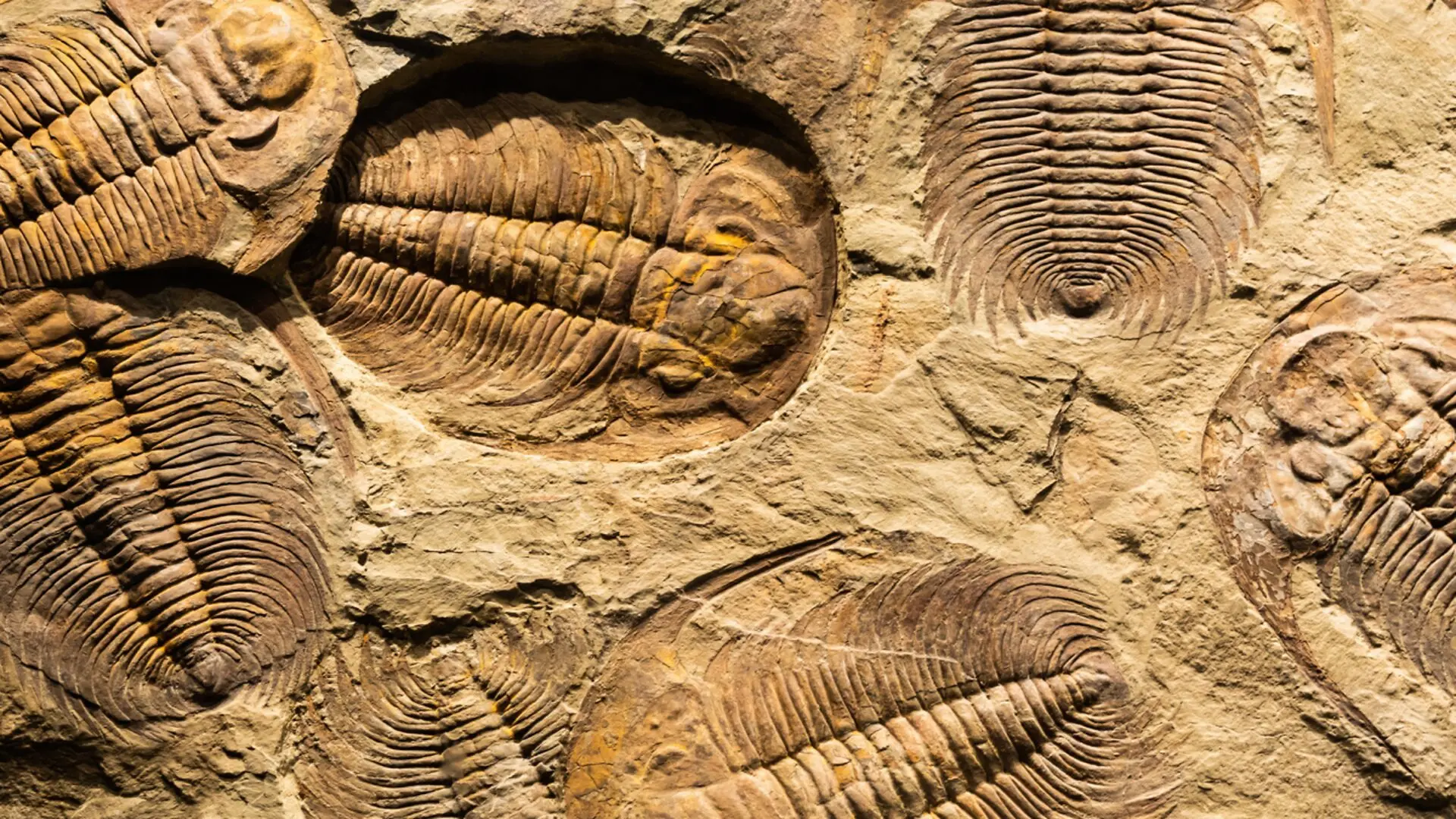
Researchers have identified a previously unknown trace fossil left by trilobites about 360 million years ago in Morocco’s Anti‑Atlas, offering a rare glimpse of marine life just before the Late Devonian extinction. The findings, detailed in Acta Palaeontologica Polonica, document not only a new ichnospecies but also behavioural patterns, community interactions and environmental clues preserved on an ancient seafloor.
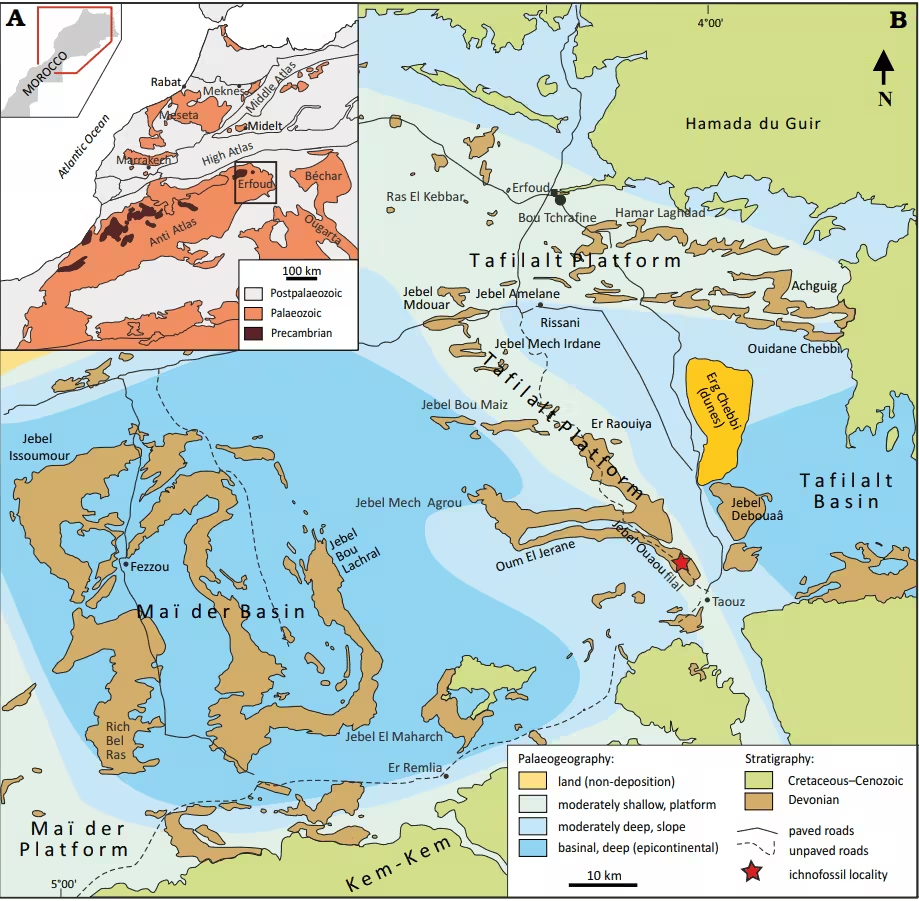
A New Ichnospecies From Morocco’s Eastern Anti‑Atlas
Extensive field surveys carried out between 2018 and 2025 in the Aoufilal Formation near El Khraouia and Taouz yielded over 60 specimens dating to the Famennian stage of the Late Devonian (approximately 372‑359 million years ago). Rather than fossilised bodies, the rocks contain impressions of activities performed by the organisms, providing direct evidence of movement, feeding and resting that body fossils rarely reveal.
The team named the new trace fossil Rusophycus antiatlasensis, a tribute to the region where it was found. The impressions consist of paired lobes intersected by a central cylindrical groove, a pattern that may record the outline of a trilobite’s digestive canal as it pressed into soft mud. Some slabs display sequences of up to eleven such marks, hinting that several individuals moved together, possibly indicating a form of group behaviour rarely captured in the fossil record.
Trackways Suggest Predator‑Prey Dynamics
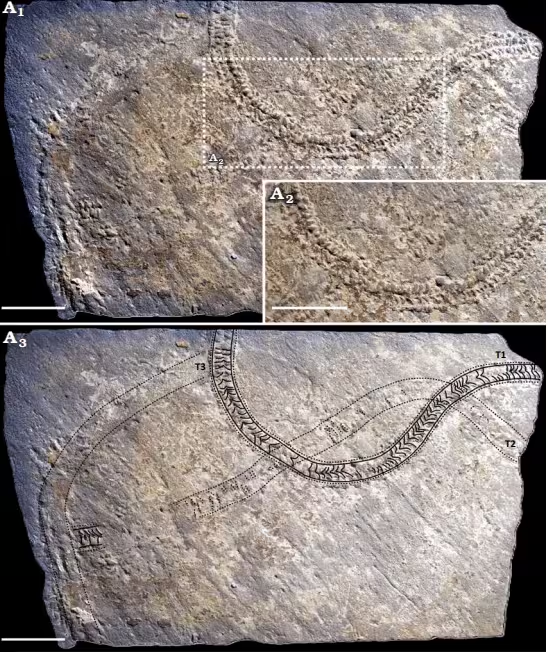
Among the most compelling evidence are combined walking traces (identified as Diplichnites) that lead directly into resting impressions classified as Rusophycus. Because the same individual appears to have produced both the locomotion and the pause marks, researchers interpret the sequence as a momentary behavioural snapshot.
One scenario proposes that the trilobites halted to conceal themselves while hunting, using the sediment as a hideout. The authors note: “The producer being on the lookout and stalking for its prey; it took a resting position so that its prey does not sense its presence.” An alternative view suggests the pause was a defensive maneuver to avoid becoming prey.
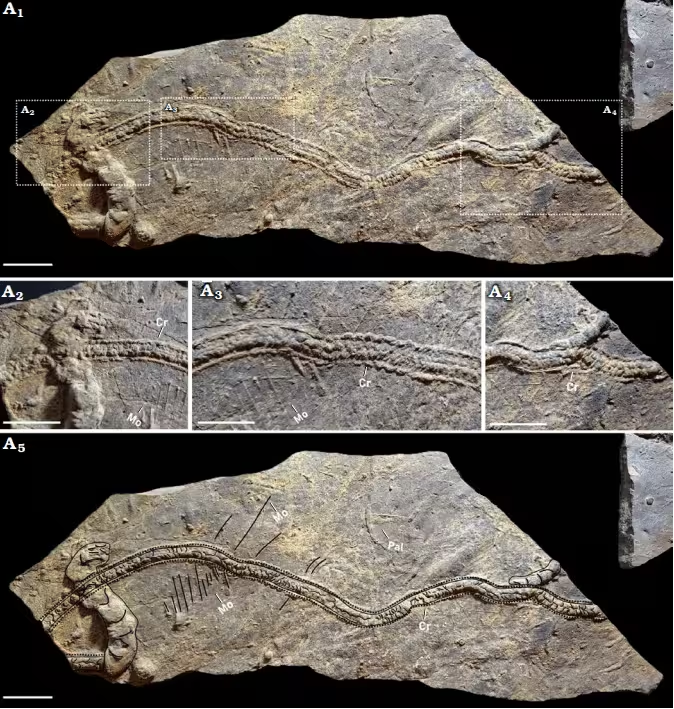
Fish swimming traces (designated Undichna) on the same bedding planes confirm that vertebrates were active in the area, creating a dynamic setting where predator‑prey interactions likely influenced the observed behaviours.
A Snapshot of a Late Devonian Shallow Sea
The trace‑fossil assemblage reflects a vibrant shallow‑marine environment on the north‑western edge of ancient Gondwana. Researchers identified twelve distinct ichnotaxa that fall into five behavioural categories: locomotion, grazing, feeding, resting and dwelling.
In addition to trilobites, the site records activity of worms, crustaceans, bivalves, fish, cephalopods, brachiopods and crinoids, all thriving under relatively stable conditions with periodic fluctuations in oxygen levels. Geological indicators suggest the water depth remained within the photic zone, allowing sunlight to sustain primary productivity.
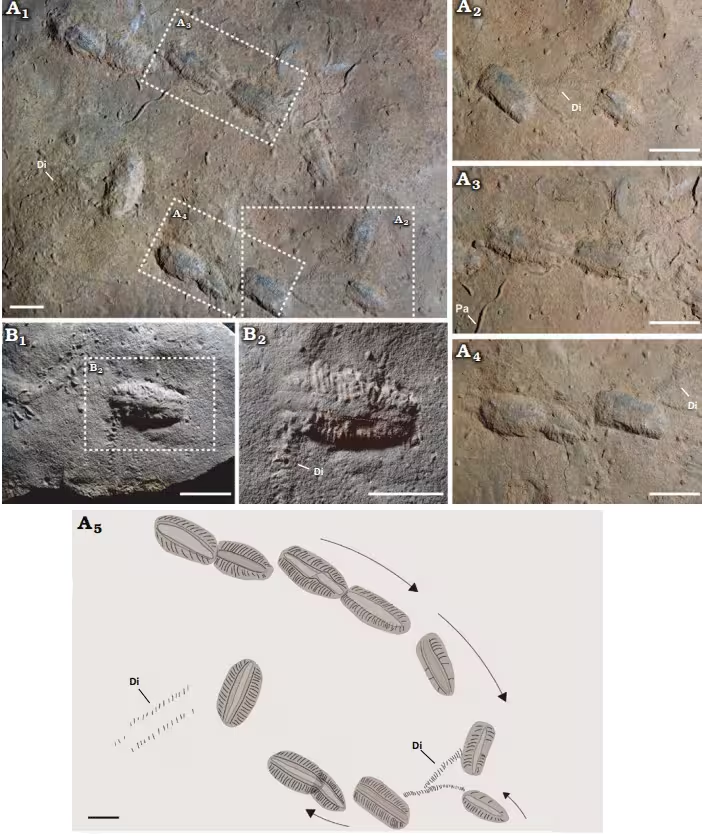
“Judging from the diversity of the invertebrate and vertebrate trace fossils and previously described fish and cephalopod remains, a shallow marine ecosystem was present during the latest Devonian in the eastern Anti‑Atlas,” the authors wrote.
These observations demonstrate that the ecosystem remained productive despite mounting global stresses that would soon culminate in a major extinction event.
Insights Into the Last Trilobite Survivors
By the end of the Devonian, trilobites were already in decline, with only the orders Phacopida and Proetida persisting into the Famennian. The new trace records shed light on how these remnants lived amid ecological turbulence.
Morphometric analysis suggests that phacopid trilobites produced the classic Cruziana lobosa burrows, while both phacopids and proetids may have generated the newly described Rusophycus antiatlasensis and associated walking tracks. Notably, the study documents the youngest occurrence of Cruziana lobosa yet known, extending its temporal range to the very end of the Devonian.
Because these traces date to a narrow interval before the Hangenberg Event—a major mass‑extinction pulse—the site provides a rare window onto marine communities on the brink of a profound ecological reshuffle.
This article has been fact checked for accuracy, with information verified against reputable sources. Learn more about us and our editorial process.
Last reviewed on .
Article history
- Latest version
Cite this page:
- Posted by Hassan Raza