Hiker Finds 280‑Million‑Year‑Old Alpine Footprints That Capture Whole Prehistoric Landscape
Unusual alpine footprints turn a casual hike into a discovery of ancient traces predating humanity, unveiling a long‑lost story.
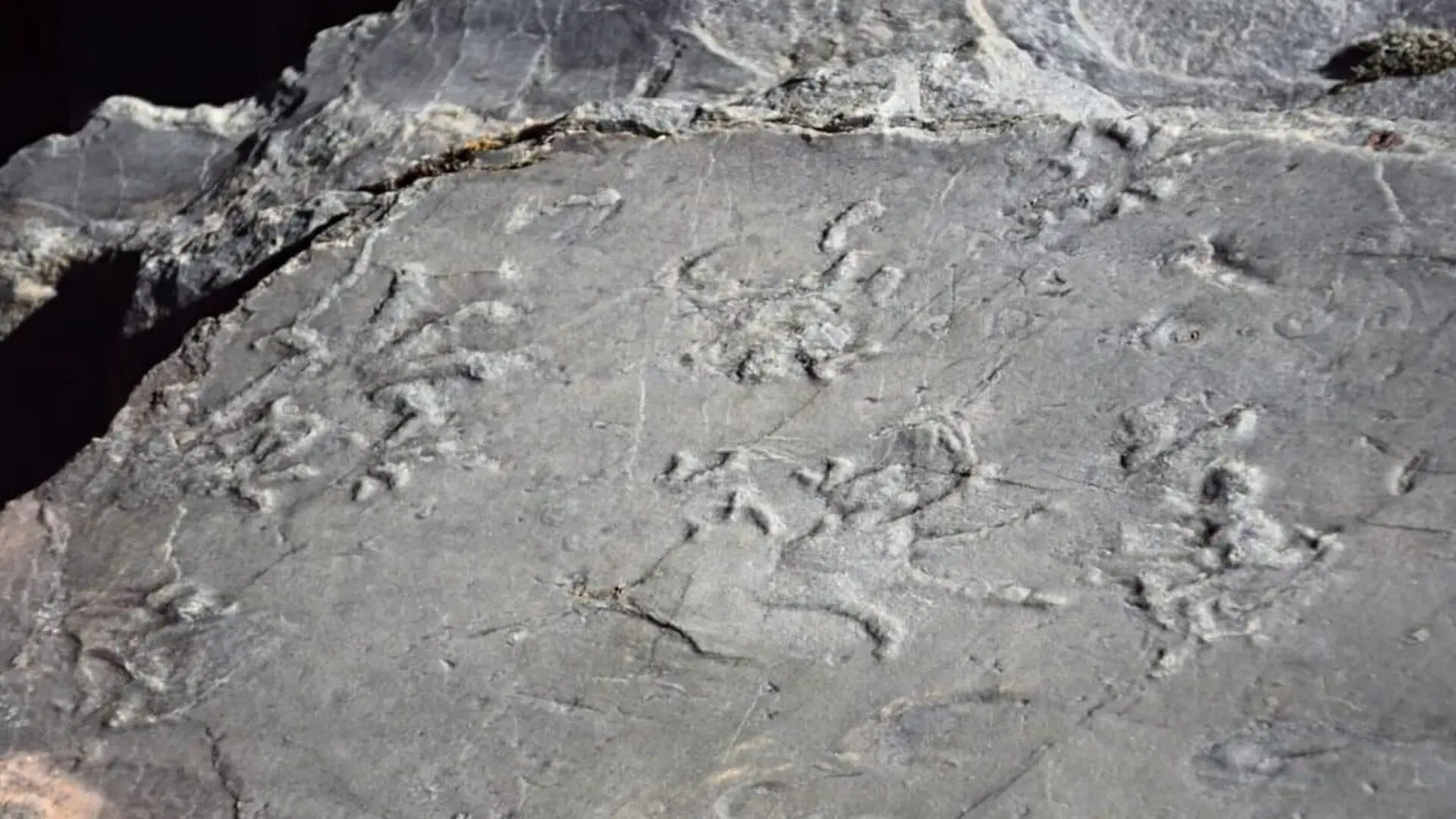
A fossil locality dating back roughly 280 million years has emerged in the Orobie Valtellinesi Park of the Italian Alps after recent snow melt exposed rock faces littered with ancient traces. The assemblage includes footprints, plant fragments and even rain‑drop impressions, offering scientists a rare, integrated picture of a long‑gone Paleozoic ecosystem.
The story began in 2023 when a hiker spotted unusual markings on a mountain path; photographs of the pattern were forwarded to researchers at the Natural History Museum of Milan, prompting a systematic survey of the area.
What distinguishes this locality is the breadth of information preserved in the stone. Rather than isolated specimens, the rock records a full environmental snapshot, revealing how animals, vegetation and water interacted on a Permian‑age landscape.
Trail Observation Opens a Door to Deep Time
While descending a sunny trail, Claudia Steffensen noticed a slab that “looked like a slab of cement,” later recognizing a series of circular and wavy marks as footprints. She described the find to the Guardian and captured images on her phone.
She shared the pictures with photographer Elio Della Ferrera, who passed them on to the Milan museum. The material was sufficient to launch field investigations that soon uncovered hundreds of fossil traces across cliffs and loose rock.
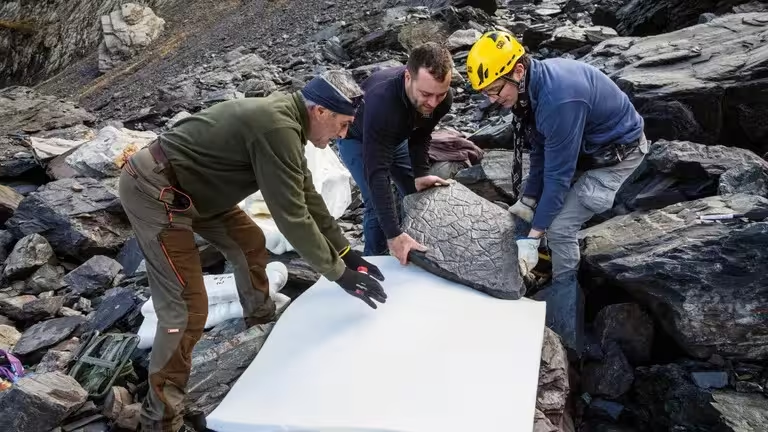
The fossil‑bearing zone extends over vertical faces and landslide deposits, reaching elevations close to 10 000 feet above sea level. According to a release from the Natural History Museum of Milan, the distribution implies that several ancient surfaces have been uncovered rather than a single stratum.
A Detailed Record of an Ancient Alpine Habitat
Among the preserved elements are tracks from amphibians and reptiles, tail drag marks, fragments of plants, seeds and tiny depressions interpreted as fossilized raindrops. Ripple‑like patterns on the stone also suggest the presence of shallow water margins or lake edges.
Lorenzo Marchetti, a sedimentology expert at the Leibniz Institute for Research on Evolution and Biodiversity, emphasized that the fine‑grained matrix captured minute details such as fingertip imprints and belly skin textures.
“The very fine grain of the sediments, now petrified, has allowed the preservation of sometimes impressive details, such as the imprints of the fingertips and the belly skin of some animals.”
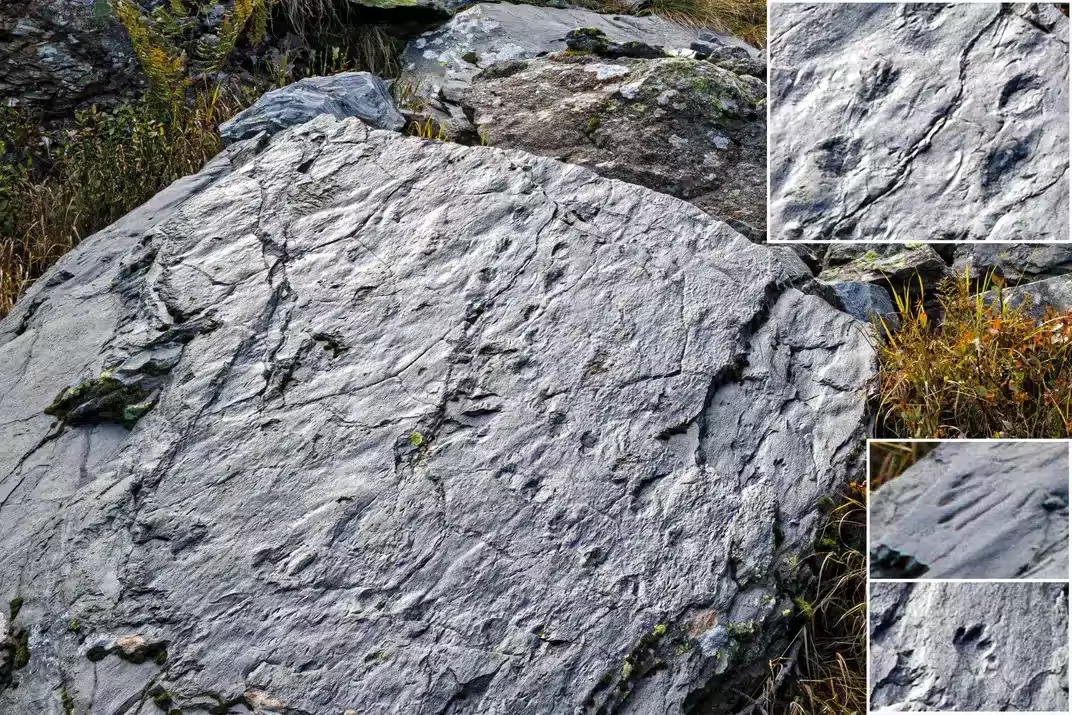
The site therefore records not only the remains of organisms but also their locomotion, the direction of water flow and the way sediments captured these fleeting moments, providing a dynamic view that goes beyond traditional bone or single‑fossil finds.
From Mud to Stone: How the Footprints Were Saved
Researchers explain that the area was originally covered by wet sandstones and clays. As Ausonio Ronchi of the University of Pavia notes, animals left impressions while the ground remained soft and saturated. Subsequent drying hardened the surface, and additional sediment layers buried the tracks before they could be eroded.
These successive layers acted as a natural seal, eventually lithifying into rock and preserving the fine details that would otherwise have vanished quickly.
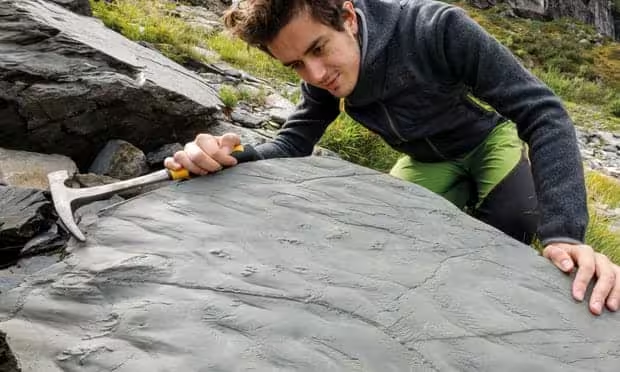
The exposure of the site is a recent phenomenon, linked to the retreat of snow and glaciers that have uncovered the fossil‑bearing layers. Scientists warn that similar revelations may become more common as alpine ice continues to recede.
The Alpine Park as an Open‑Air Research Facility
Current investigations treat the Orobie Valtellinesi Park as a field laboratory. Park director Massimo Merati reports that teams employ drones to generate high‑resolution maps of steep walls and use helicopters to extract fragile blocks that cannot be moved by hand, including a stone bearing reptile footprints.
“Dinosaurs did not yet exist at that time, but the authors of the largest footprints found here must have been still considerable in size,” said paleontologist Cristiano Dal Sasso from the Natural History Museum of Milan.
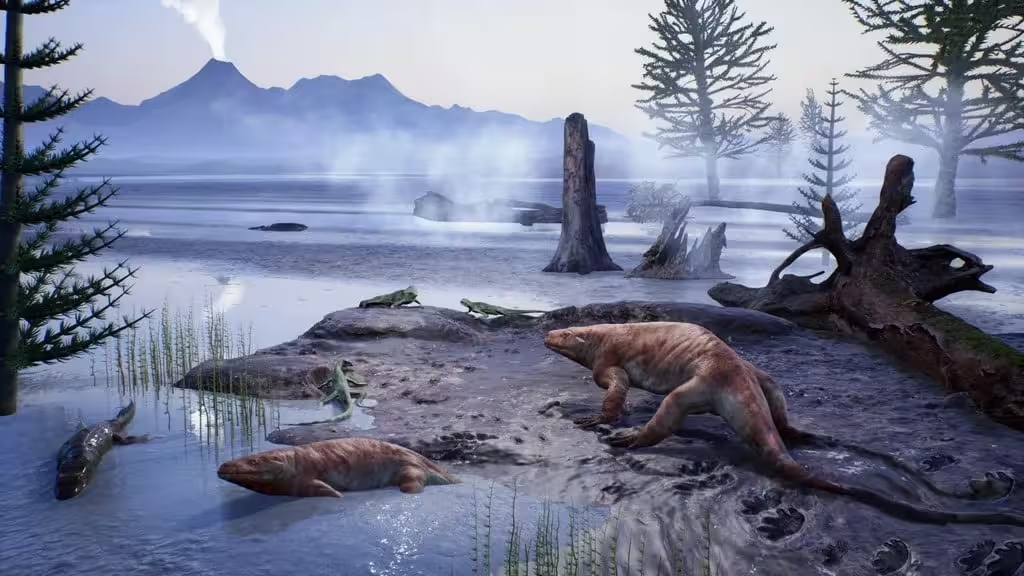
Analysis indicates that at least five distinct species left the preserved tracks, some of which were relatively large despite the absence of true dinosaurs at that stage of Earth’s history.
Regional heritage officials, represented by Stefano Rossi, see the locality as a valuable training site for students and scholars, allowing direct study of fossils still emerging from the rock face.
This article has been fact checked for accuracy, with information verified against reputable sources. Learn more about us and our editorial process.
Last reviewed on .
Article history
- Latest version
Reference(s)
- Giuffrida, Angela. “Hiker discovers first trace of entire prehistoric ecosystem in Italian Alps.”, November 14, 2024 The Guardian <https://www.theguardian.com/world/2024/nov/14/hiker-discovers-first-trace-of-entire-prehistoric-ecosystem-in-italian-alps>.
- “Nature Picture Library Elio della Ferrera.” <https://www.naturepl.com/wild-wonders-of-europe/the-photographers/elio-della-ferrera.html?srsltid=AfmBOooiZqWaEKx5C5me85NnbmYzkEbzblsfh24E220dc5qbTJxVJCwG>.
- “Af7f1289 E577 37c7 8ba9 A7be48936325.” <https://museodistorianaturalemilano.it/documents/87930661/493948003/COMUNICATO+STAMPA+scoperto+sito+con+fossili+sulle+orobie+valtellinesi.pdf/af7f1289-e577-37c7-8ba9-a7be48936325?t=1731497715545>.
- <https://www.researchgate.net/profile/Lorenzo-Marchetti-5>.
- <https://www.researchgate.net/profile/Ausonio-Ronchi>.
- <https://www.researchgate.net/profile/Massimo-Merati>.
- <https://www.researchgate.net/profile/Stefano-Rossi-37>.
Cite this page:
- Posted by Hassan Raza