Cross‑Species Transcriptomic Clock Predicts Human Lifespan With Unprecedented Accuracy
New cross-species gene activity study builds a biological aging clock that predicts cellular aging speed and functional decline.

Chronological age does not always match the physiological state of the body. Two individuals born in the same year may experience very different rates of cellular wear, prompting scientists to search for reliable metrics that capture this discrepancy. Epigenetic “aging clocks,” which track chemical tags on DNA, have been developed for this purpose, but their precision has been limited.
A recent study published in Nature proposes a different strategy. Rather than concentrating solely on DNA modifications, the investigators mapped gene‑expression patterns across several species and a wide array of tissues, creating a “transcriptomic clock.” This model could eventually enable clinicians to tailor interventions according to a patient’s biological age rather than their calendar age.
Cross‑Species Gene‑Expression Model
The research team compiled roughly 11,000 transcriptomes from 25 distinct tissue types in mice, rats, macaques and humans. A transcriptome records which genes are actively being transcribed at a given moment, offering a functional snapshot of cellular activity.
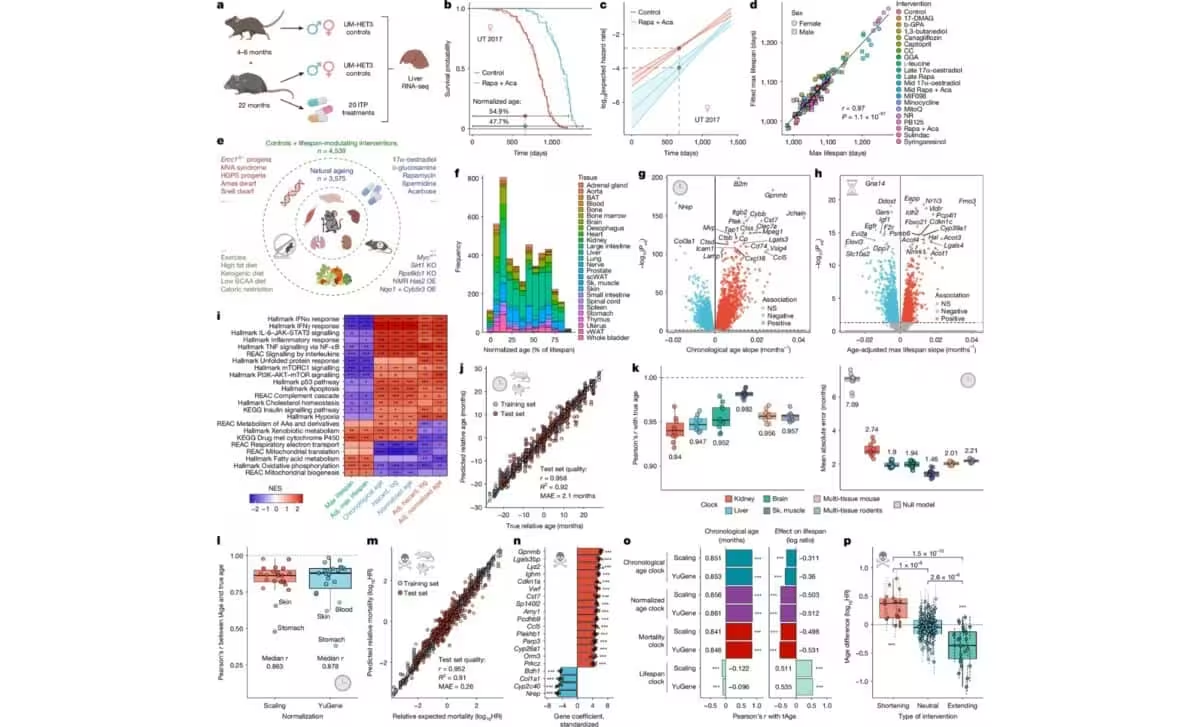
By comparing genes that turned on or off during natural aging and in response to lifespan‑altering interventions, the scientists uncovered patterns that appear to be conserved across mammals. “These clocks could provide a finer‑grained measure of aging, help forecast disease risk, and inform personalized treatment based on biological age,” said Vadim Gladyshev, senior author of the paper.
Universal Molecular Signatures
A striking observation was the consistency of aging‑related gene activity across diverse cell types—including immune, stem, liver and muscle cells. Genes linked to robust cell division and tissue repair tended to signal slower aging, whereas those associated with apoptosis and chronic inflammation correlated with accelerated aging.
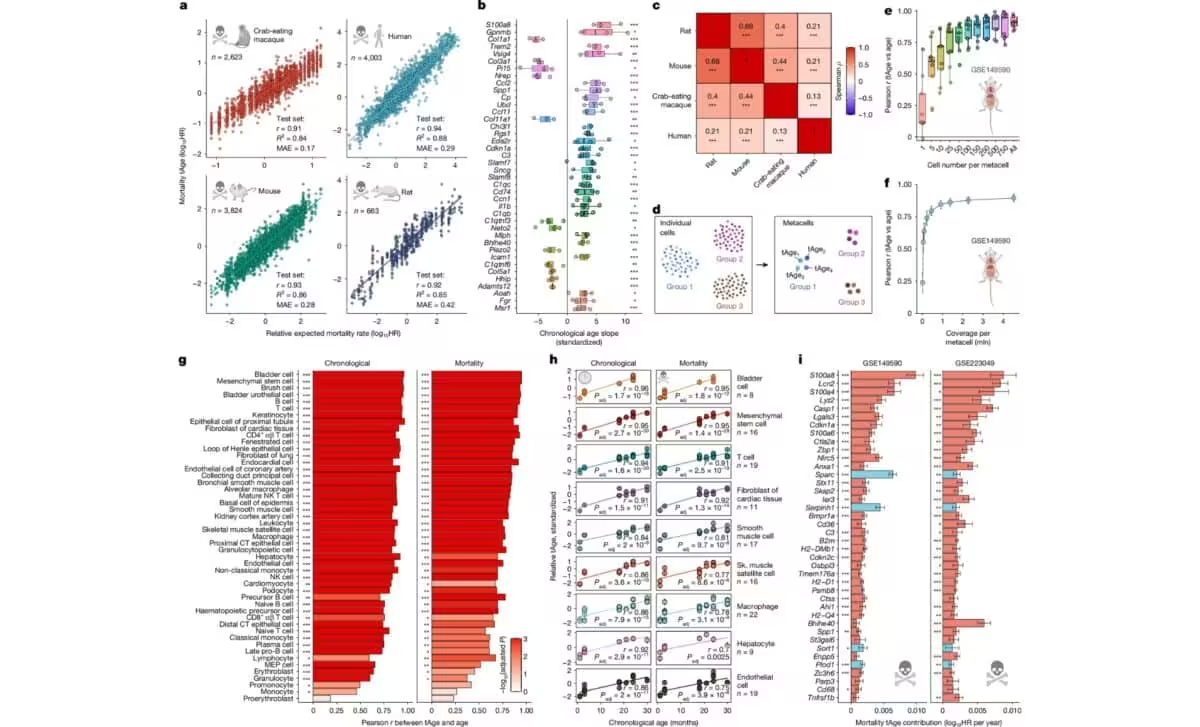
Lead author Alexander Tyshkovskiy emphasized that these expression signatures do more than reflect current age; they “predict prospective time to death in humans,” suggesting the clock captures information relevant to lifespan. Prior epigenetic clocks measured DNA methylation marks, but transcriptomic markers have now reached comparable predictive accuracy, as noted by Popular Mechanics.
From Research Tool to Clinical Potential
The authors caution that the transcriptomic clock is presently a research instrument and will need extensive validation before influencing patient‑care decisions. Nonetheless, its ability to streamline aging research could be transformative.
In a commentary accompanying the paper, João Pedro de Magalhães of the University of Birmingham highlighted a practical implication: the clock could accelerate drug development by offering rapid readouts of treatment efficacy in preclinical and clinical settings. “Transcriptomic clocks could prove to be valuable readouts of that assessment…potentially enabling shorter preclinical and clinical trials in rodents and humans,” he wrote.
If researchers can use this metric to confirm that a therapy truly decelerates molecular aging, ineffective candidates could be dismissed early, conserving resources. Gladyshev added that future interventions might target specific aging pathways—such as inflammation or metabolic decline—guided by the insights provided by the transcriptomic clock.
This article has been fact checked for accuracy, with information verified against reputable sources. Learn more about us and our editorial process.
Last reviewed on .
Article history
- Latest version
Cite this page:
- Posted by Hassan Raza