How a Boy and His Dog Stumbled Into a 17,000 Year Old Time Capsule of Paleolithic Art
Four boys exploring a hidden shaft in France stumbled upon a prehistoric world that had remained perfectly sealed for thousands of years.
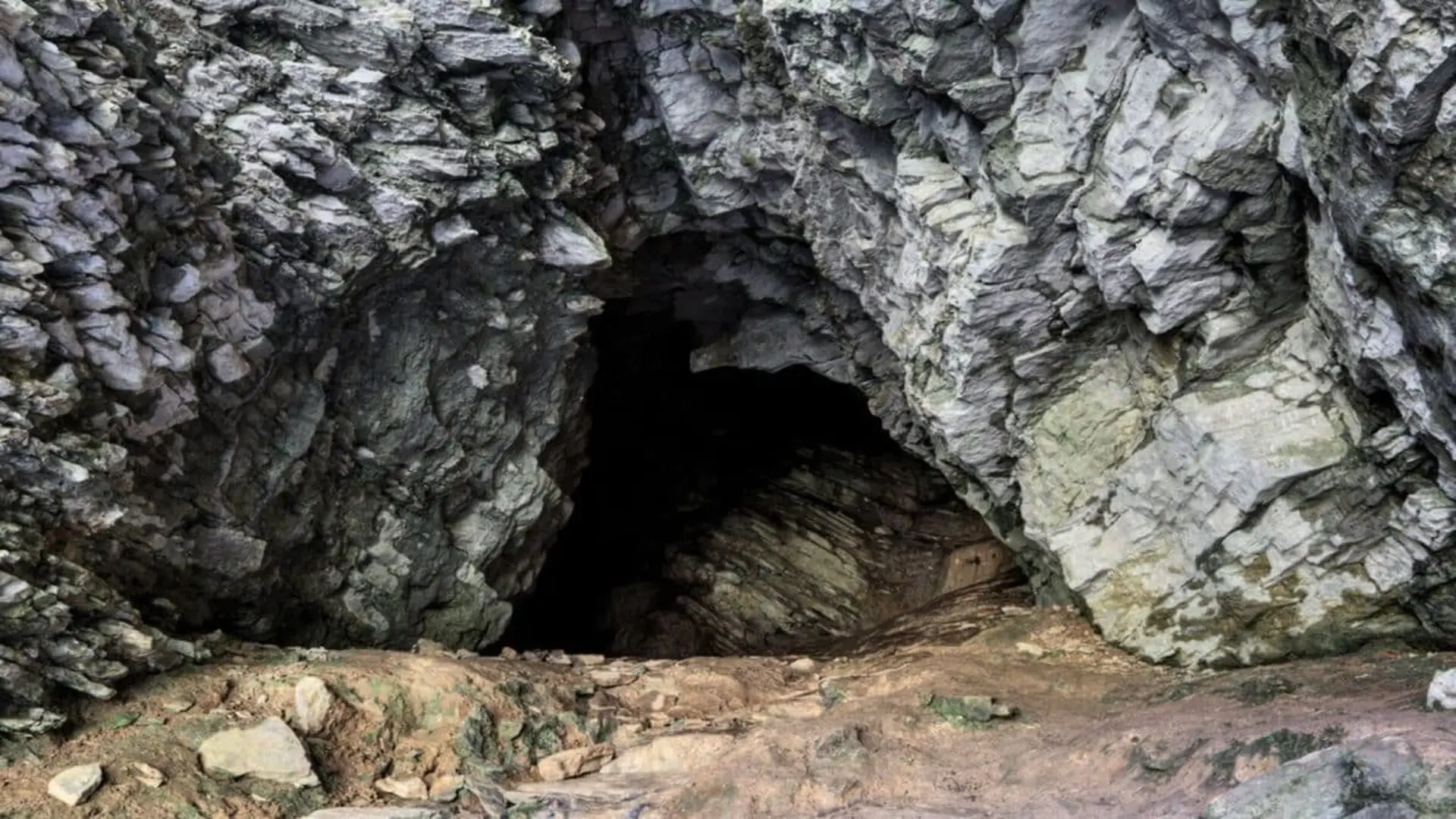
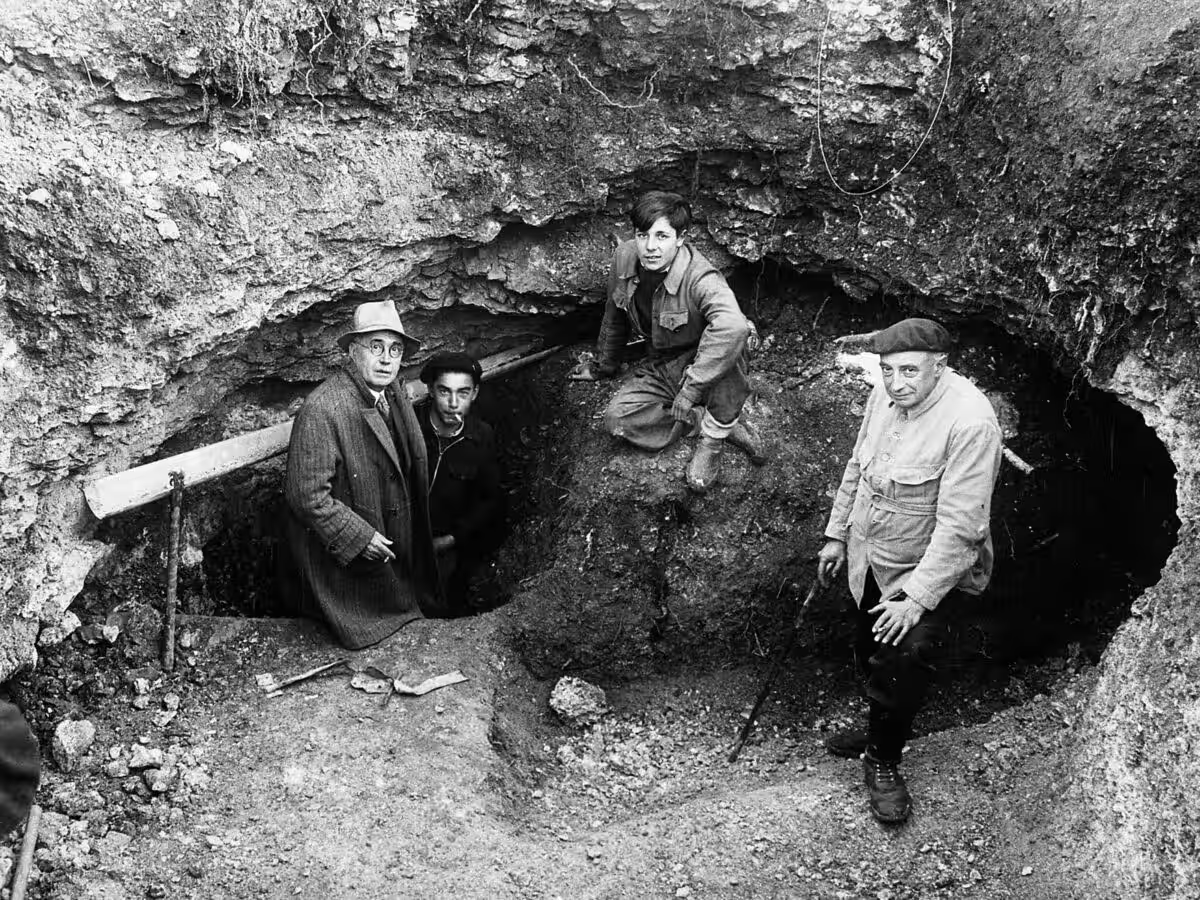
On September 12, 1940, a 17-year-old apprentice mechanic named Marcel Ravidat stumbled upon a piece of history while exploring the woods near Montignac in southwestern France. After his dog, Robot, vanished into a fissure near a fallen tree, Ravidat investigated, eventually sliding down a narrow shaft into a subterranean gallery. What he and his three companions—Jacques Marsal, Georges Agnel, and Simon Coencas—discovered on the walls would eventually be recognized as one of the most significant archaeological finds of the 20th century.
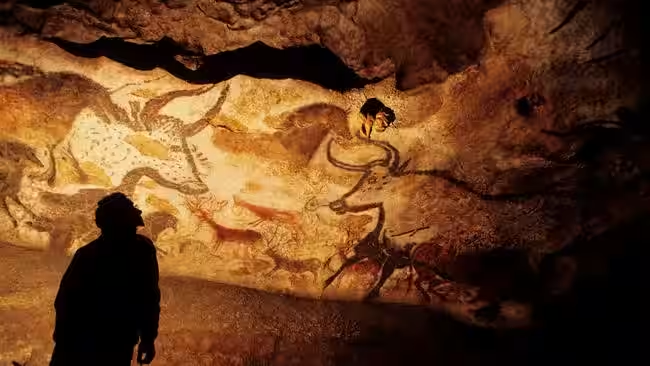
The group had entered the Lascaux cave, a labyrinthine complex containing roughly 2,000 distinct images, including aurochs, horses, deer, and complex abstract symbols. Created by the Magdalenian culture between 17,000 and 19,000 years ago, the site features more than 6,000 figures, some reaching lengths of over six feet. These Paleolithic artists utilized natural pigments like charcoal, hematite, and ochre, and they likely constructed sophisticated scaffolding to reach the highest points of the cave ceiling—the earliest known example of such engineering.
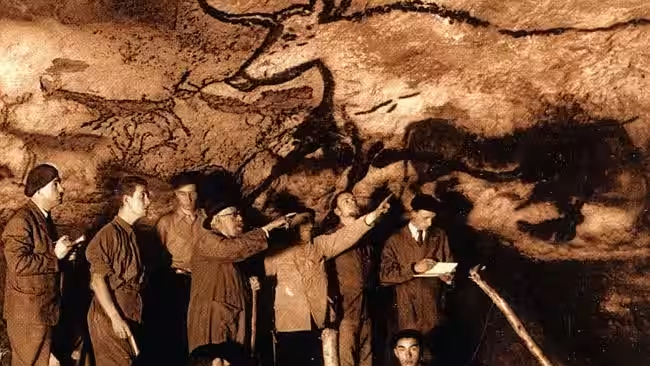
Following the boys’ report, local educator Léon Laval visited the site, soon followed by renowned archaeologist Henri Breuil, who validated the antiquity and cultural importance of the cavern. However, the site’s transition from a hidden treasure to a public sensation brought unintended consequences.
The Cost of Accessibility
For nearly two millennia, the cave’s environment remained remarkably stable. When it opened to the public in 1948, that delicate balance was shattered. At its peak, the cave hosted 1,200 visitors daily. The influx of human breath, heat, and carbon dioxide, paired with artificial lighting, introduced hazardous levels of humidity and light exposure that triggered the growth of fungi, lichens, and algae. By 1963, facing a crisis of accelerating degradation, the French government shuttered the site to prevent its complete destruction.
Even in isolation, the cave faced threats. A 2001 maintenance error involving the air-conditioning system introduced a Fusarium fungus, necessitating years of aggressive antibiotic and antifungal treatments to stabilize the environment. Today, the original cave remains restricted to a handful of specialists and conservationists.
Engineering an Immersive Legacy
To preserve the site’s educational value, France turned to high-fidelity replication. The process began in 1983 with Lascaux II, a partial replica constructed using the same materials and techniques as the original Paleolithic creators. Subsequent efforts, including the traveling Lascaux III exhibit, expanded public access, but the most ambitious project arrived in 2016 with Lascaux IV.
Located at the Centre International de l’Art Pariétal, Lascaux IV offers a comprehensive reproduction that uses 3D modeling and precise environmental controls to mimic the physical sensation of the original cavern. Dinah Casson, the project’s lead scenographer, emphasized that the goal is to maintain the mystery of the site while providing a transparent experience for the visitor. “The minute one small omission, one bit of wool over the eyes, one bit of distortion is detected, that trust disappears,” she noted. In 2024, the site attracted 300,000 visitors, and officials plan to debut even higher-resolution scans of the Axial Gallery by late 2026.
Unanswered Questions of Prehistory
Despite decades of study, the fundamental purpose of the Lascaux art remains a subject of intense academic debate. The placement of paintings in deep, remote sections of the cave suggests they were not intended for casual viewing, potentially pointing toward ritualistic or ceremonial significance.
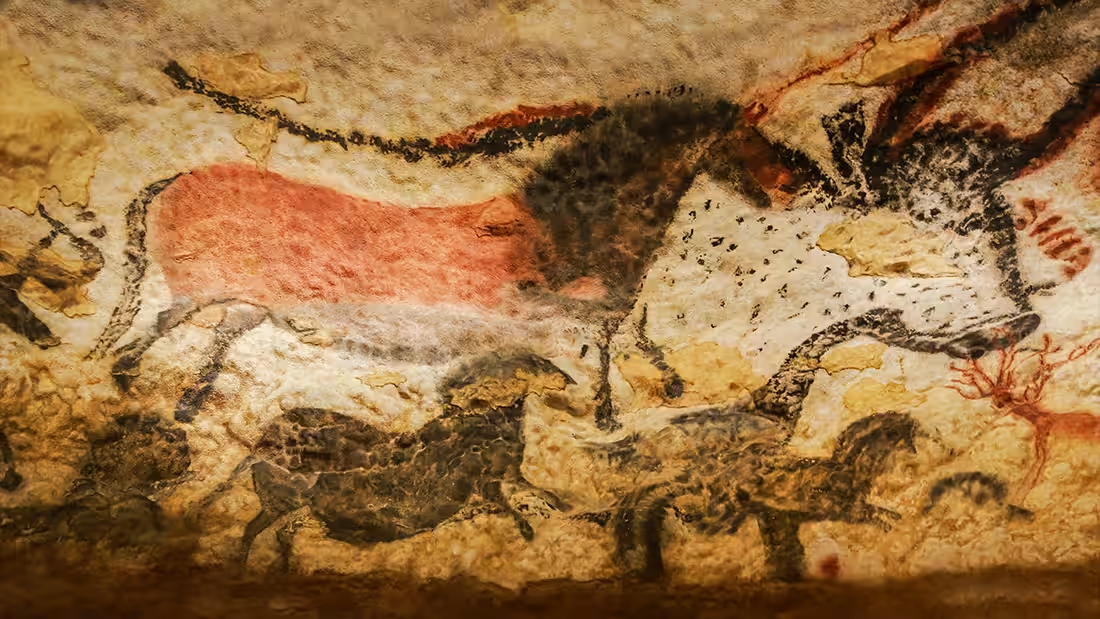
One particular image, the “birdman” scene in the Shaft, depicts a figure near a disemboweled bison, fueling theories of shamanic practices or complex mythological storytelling. While some researchers interpret these as records of hunting magic or markers of territory, others urge caution against applying modern paradigms to ancient behaviors. With no written records to bridge the gap, the art of Lascaux persists as an evocative, yet silent, testament to the human imagination of the distant past.
This article has been fact checked for accuracy, with information verified against reputable sources. Learn more about us and our editorial process.
Last reviewed on .
Article history
- Latest version
Cite this page:
- Posted by Hassan Raza