Fossilized Dinosaur Dung Reveals a Rare Snapshot of a Prehistoric Predator Last Meal
A rare fossilized dinosaur dropping from Montana reveals preserved feathers and fish scales, offering new insights into ancient bird evolution.
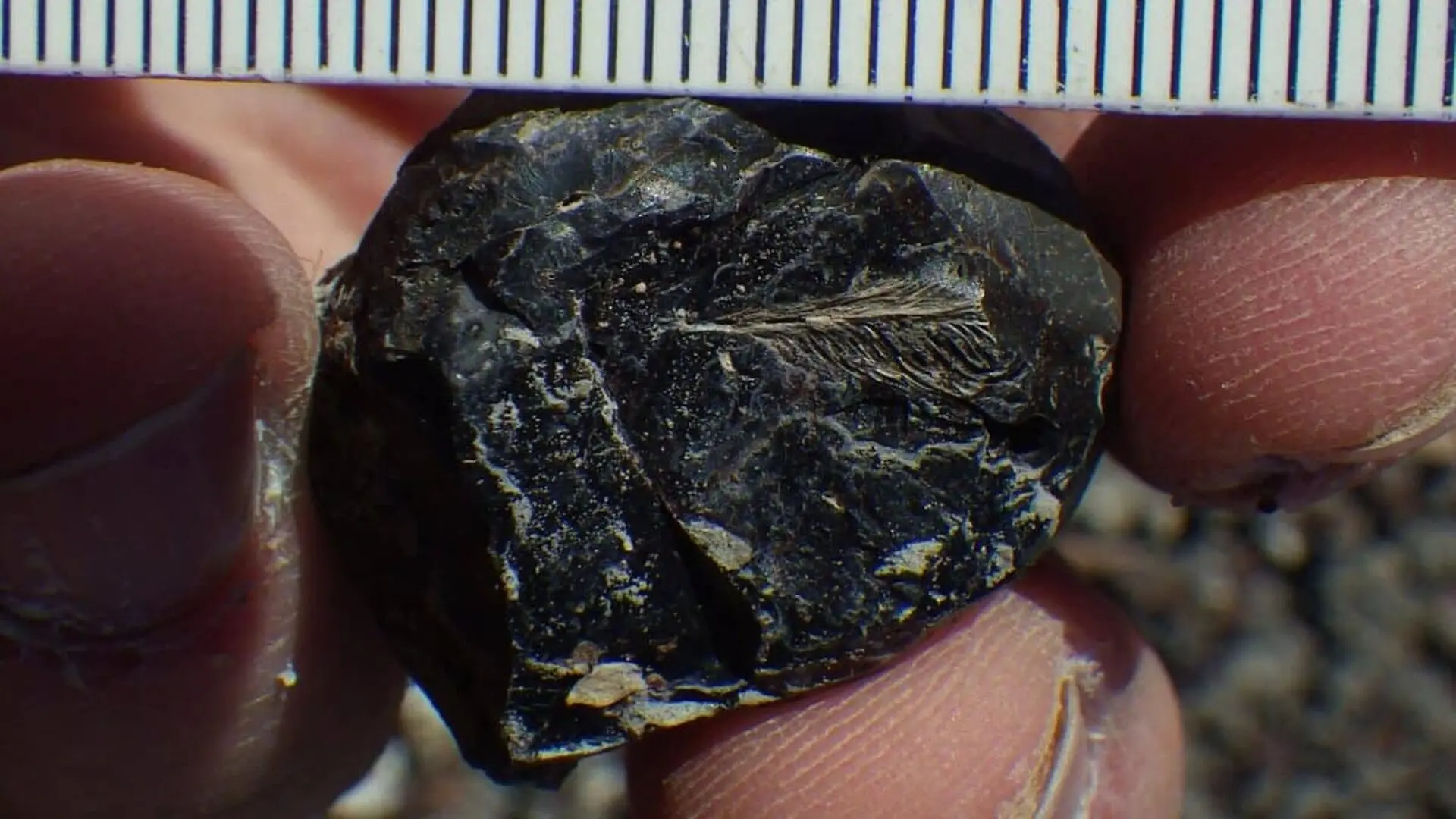
A remarkable discovery from Montana’s Hell Creek Formation has offered scientists a rare, multi-layered glimpse into an ancient food chain dating back 66 million years. Paleontologist David DeMar Jr. unearthed a fossilized dropping, or coprolite, that contains a complex record of prehistoric life: the remains of a bird, its final meal, and the predator that consumed them both.
A Three-Tiered Snapshot of Ancient Life
The specimen, which was analyzed in a study published in Current Biology, serves as a biological time capsule. Researchers led by Jingmai O’Connor of the Field Museum utilized non-invasive micro-CT scanning to peer inside the fossil, revealing a startling sequence of events. The coprolite contained bone fragments and feathers belonging to a hesperornithiform—a lineage of flightless, aquatic birds—alongside tiny fish scales, which likely represent the bird’s last meal before it was hunted.
The predator responsible for this waste is believed to be a medium-sized theropod dinosaur. While a definitive identification remains challenging, experts suggest that creatures such as Tyrannosaurus rex or Nanotyrannus are plausible candidates given the ecosystem composition of the Hell Creek region at the time.
Evolving Plumage and Extinction Resilience
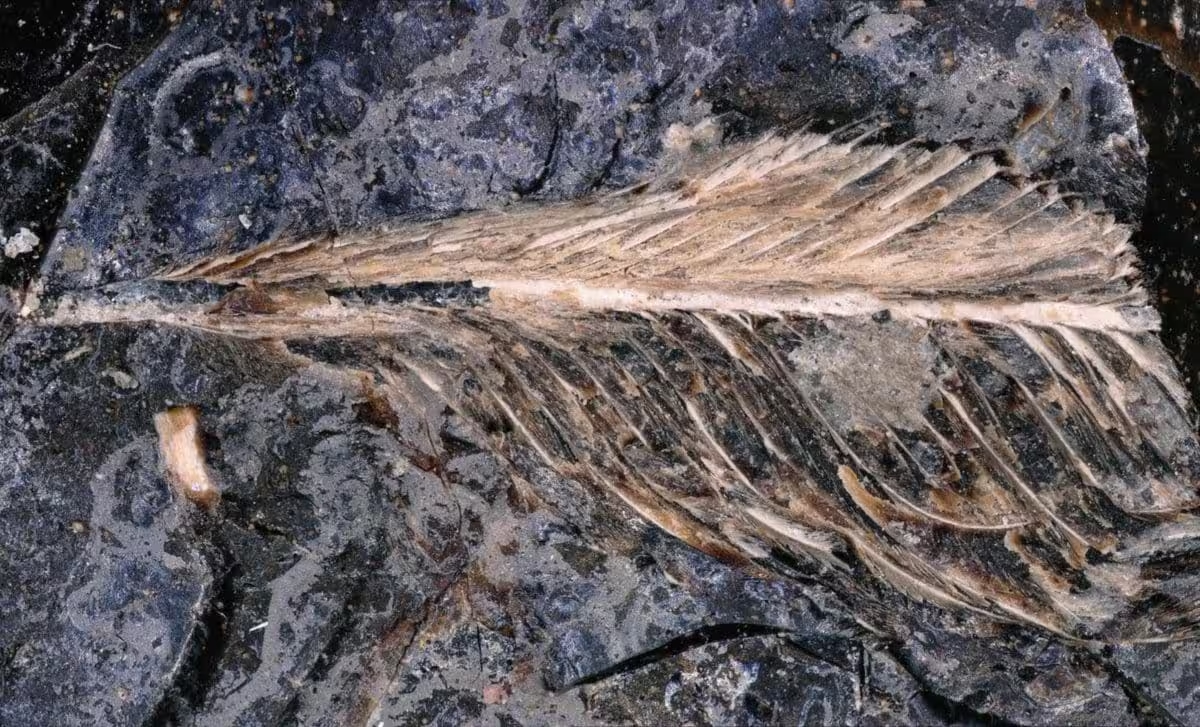
The preservation of feathers within the coprolite is particularly significant, as such delicate structures are rarely found in the Late Cretaceous fossil record. According to co-author Gregory Wilson Mantilla of the University of Washington, these specimens offer an unusual opportunity to examine avian biology in high detail. The feathers identified by the team display a mixture of traits, with some exhibiting a unique, sponge-like internal structure within a square shaft—a feature previously thought to appear only much later, during the Eocene period.
This discovery has sparked new hypotheses regarding why certain bird lineages survived the mass extinction event that wiped out the non-avian dinosaurs. While some theories suggest that aquatic habitats offered a refuge during the subsequent impact winter, the fact that these specialized water-dwelling hesperornithiforms vanished suggests that environmental factors alone were not the only determinant for survival.
The research team proposes that the specific evolutionary development of feathers—and the thermal insulation they provided—might have played a critical role in determining which species could weather the plummeting global temperatures. Because these birds possessed both primitive, fuzzy down and more modern structures, they offer a living laboratory for understanding how avian ancestors navigated a rapidly changing planet.
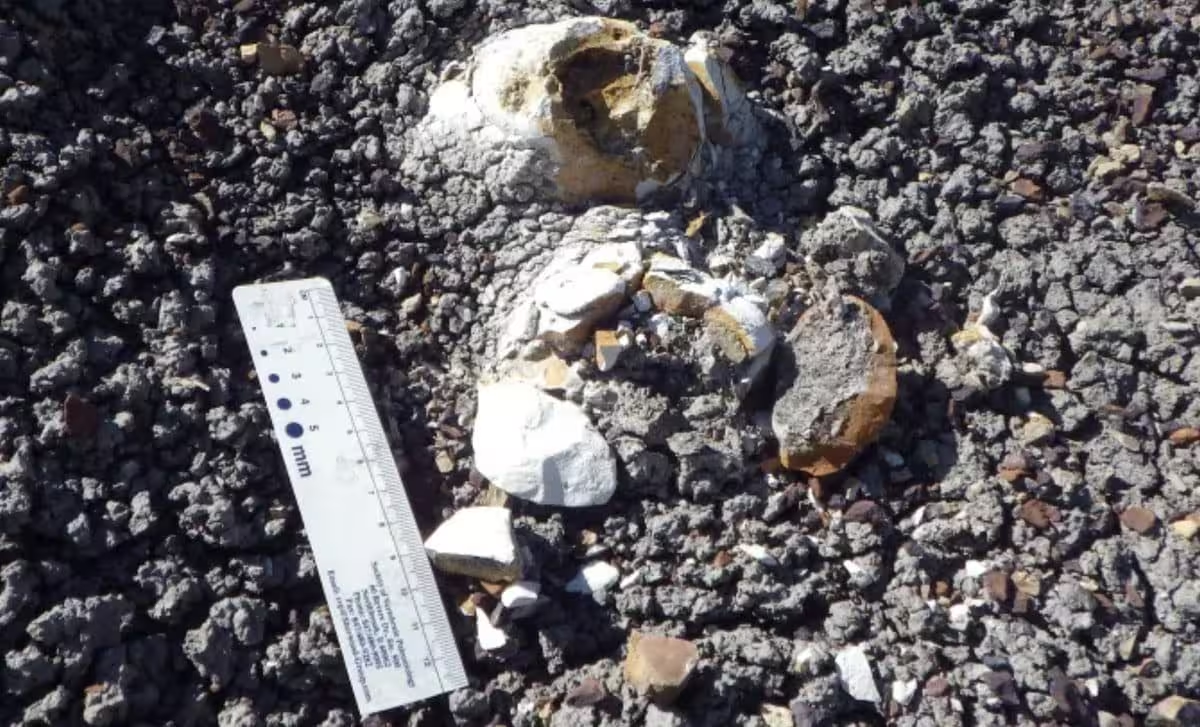
Beyond the insights into bird evolution, this fossil demonstrates the untapped potential of coprolites in paleontological research. By treating these waste products as archives of ecosystem behavior, researchers may uncover hidden details about dietary habits and predator-prey dynamics that are otherwise lost to the fossil record.
This article has been fact checked for accuracy, with information verified against reputable sources. Learn more about us and our editorial process.
Last reviewed on .
Article history
- Latest version
Cite this page:
- Posted by Hassan Raza