Why Symbolic Logic and Neural Networks Define Modern Artificial Intelligence
A comprehensive look at how symbolic rules and deep learning architectures shape computational models for humans and machines.
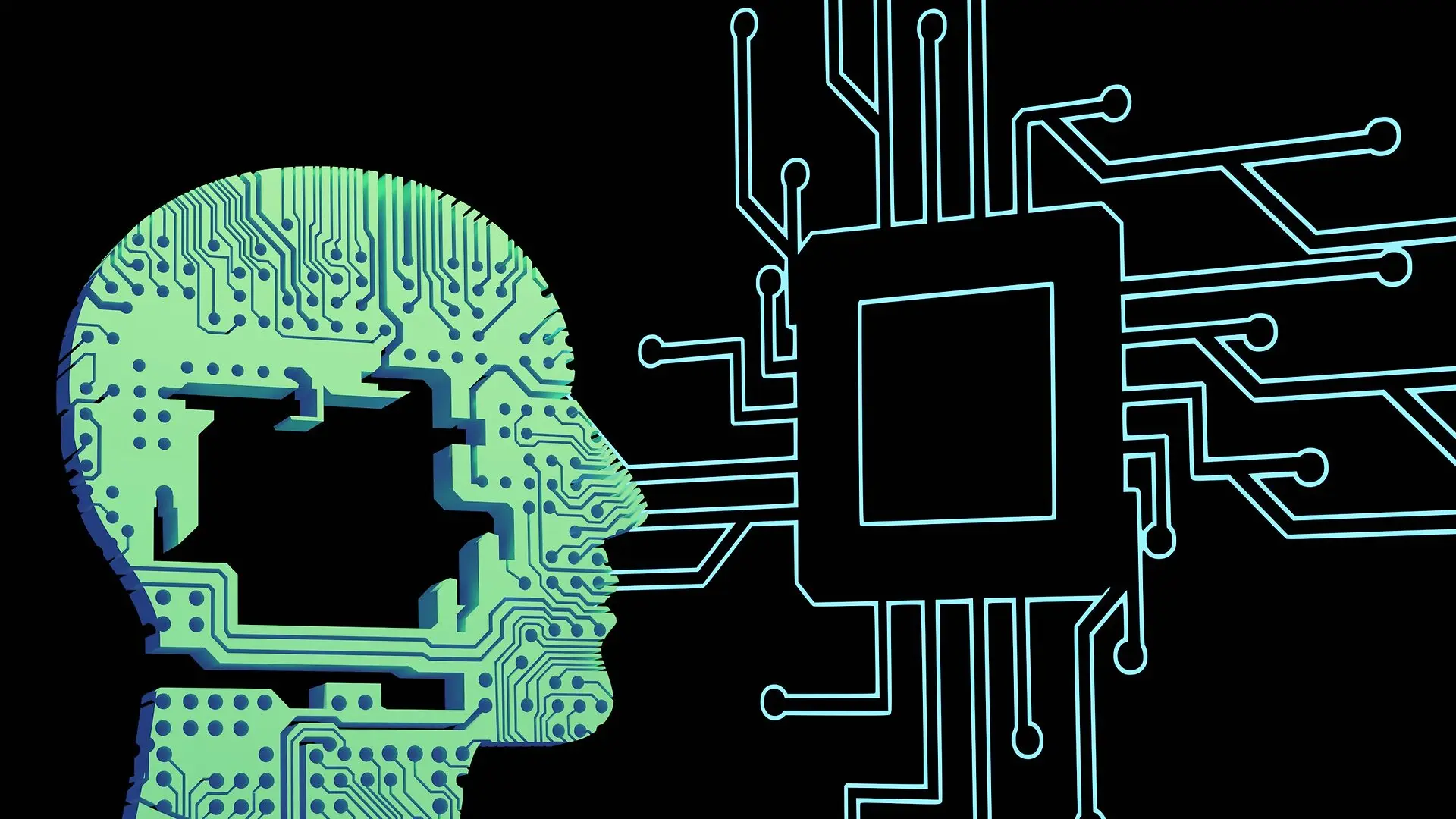
When chess computer Deep Blue defeated world champion Garry Kasparov in 1997, it marked a turning point where machines surpassed human experts in a dedicated domain, shifting what was once considered mysterious artificial intelligence into ordinary algorithms. Artificial intelligence, established as an academic research field in the 1950s, has evolved from early mechanical calculation devices into a diverse collection of symbolic reasoning methods and sub-symbolic neural networks. Researchers and computer scientists have long debated how these computational mechanisms compare to human cognition, which relies on perceptual experience, episodic memory, and causal reasoning rather than purely statistical next-token predictions. To understand how these computational structures represent the world, John Krogstie explored these foundational modelling techniques in his book published in the Quality of Models for Man and Machine.
How Symbolic AI Organises Knowledge Through Explicit Rules
Symbolic artificial intelligence attempts to represent knowledge using explicit rules and formal structures so that machines can derive results logically. Traditional modeling perspectives include structural entity-relationship diagrams, behavioral state machines, and business process modeling notations. For instance, finite state machines use defined states, events, and transitions to describe how a system responds to external stimuli, while Petri nets model concurrency and synchronization using tokens and places.
Another central pillar of symbolic reasoning is rule-based modeling, which operates through conditional statements specifying what must happen or what is prohibited. While these declarative rules offer high problem-orientation and maintainability, they often become flat and difficult to navigate as rule bases expand. To bridge this gap, structured ontologies such as the Web Ontology Language provide formal vocabularies that allow machines to perform automated reasoning about class membership and logical consistency.
The Rise of Sub-Symbolic Deep Learning and Its Mathematical Limits
In contrast to symbolic logic, sub-symbolic artificial intelligence mimics aspects of biological neural networks to learn patterns directly from data. Deep learning models, including convolutional neural networks for image processing and recurrent neural networks for sequential text data, rely on universal approximation theorems to map complex mathematical functions. These theorems guarantee that a neural network with sufficient hidden layers can approximate continuous functions, providing the theoretical foundation for modern machine learning.
However, sub-symbolic systems face significant limitations, including opacity, high energy consumption, and vulnerability to out-of-distribution errors. Because neural networks operate on statistical correlations rather than causal models, they lack metacognition and frequently produce hallucinations when prompted outside their training distribution. Furthermore, statistical methods are susceptible to overfitting, where a model fits training data perfectly but fails to generalize to unseen real-world scenarios.
Bridging Gaps Through Neuro-Symbolic Computing and Explainable Systems
To overcome the individual weaknesses of symbolic logic and sub-symbolic neural networks, contemporary research increasingly focuses on neuro-symbolic computing. This hybrid architecture combines fast, intuitive pattern recognition with slow, deliberative symbolic reasoning, mirroring human cognitive dual-process models. Additionally, retrieval-augmented generation systems integrate external knowledge bases with large language models to ground generated text in verified source documents.
Explainable artificial intelligence techniques such as local interpretable model-agnostic explanations and Shapley additive explanations attempt to make black-box models more transparent by assigning importance values to input features. Despite these advancements, explanation methods also have limitations, as they often highlight statistical correlations rather than true causal relationships, reminding researchers that computational models remain constrained representations of a complex world.
The research was published in Quality of Models for Man and Machine on January 1, 2027.
This article has been fact checked for accuracy, with information verified against reputable sources. Learn more about us and our editorial process.
Last reviewed on .
Article history
- Latest version
Reference(s)
- Krogstie, John. “Approaches to AI and Modelling.” Quality of Models for Man and Machine, November 1, 2026, pp. 65-121. Springer Nature Switzerland, doi: 10.1007/978-3-032-42129-6_2. <https://doi.org/10.1007/978-3-032-42129-6_2>.
Cite this page:
- Posted by Joseph Jackson