Why Official Safety Warnings Often Trigger Public Panic Instead of Calm
A classic critique of risk communication reveals seven hidden paradoxes that continue to trip up modern emergency managers and regulatory authorities.
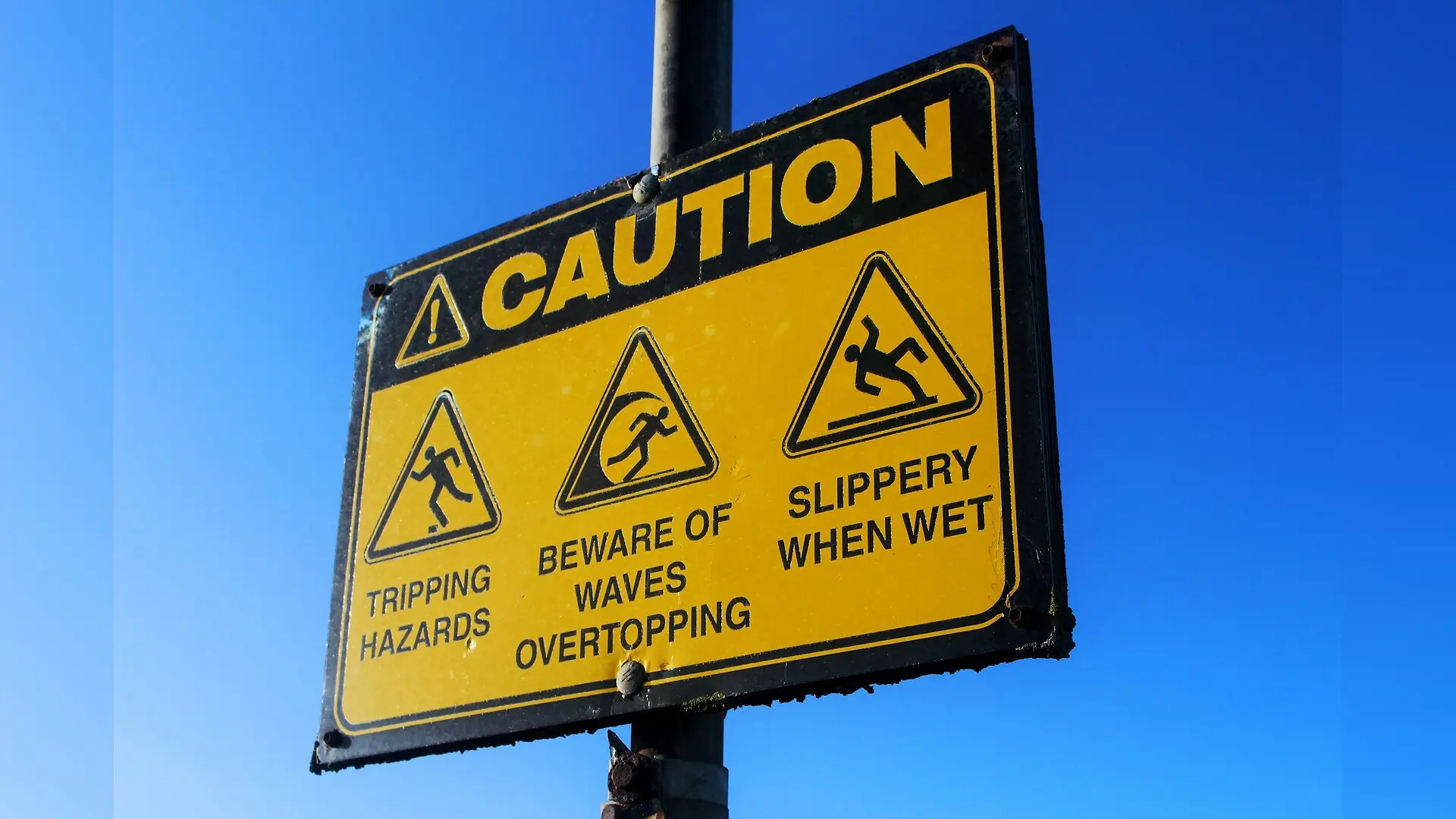
When a chemical plant or a dam is built near a town, officials often assume that handing out reassuring brochures will keep public panic at bay. Decades ago, social scientists began questioning whether standard public information campaigns actually address what communities think and feel about major technological hazards. A foundational critique of these methods, originally published in 1989, argued that treating risk communication as a simple tool to persuade the public ignores the messy reality of social relationships and institutional power.
Why Standard Risk Perception Surveys Miss the Bigger Picture
Beginning in the late 1960s, researchers relied heavily on pre-structured questionnaires to map how individuals evaluate hazards. This approach, later known as the psychometric paradigm, used statistical techniques like factor analysis to measure expressed preferences and attitudes. While it represented an upgrade from purely economic cost-benefit models, critics argued it remained trapped inside a narrow framework. Scholars such as Harry Otway and Brian Wynne, whose work is revisited in Six Decades of Risk Research, pointed out that these surveys focused too narrowly on isolated individuals. They ignored the broader social context, power dynamics, and the multiple actors involved in any crisis.
Rather than seeing the public as irrational or misinformed, the authors identified seven specific paradoxes that conventional risk communication strategies consistently fail to navigate. These paradoxes reveal why official messages often backfire, transforming routine safety updates into sources of public distrust and confusion.
How Reassurance Efforts Can Accidentally Spark Public Alarm
The first tension, known as the reassurance-arousal paradox, arises when emergency planning messages contradict safety assurances. Telling a community that everything is completely under control while simultaneously conducting intensive evacuation drills sends mixed signals. When authorities try too hard to project absolute safety, they often trigger suspicion instead of calm.
Another major trap is the information-targeting paradox, where leaders withhold details out of fear that citizens will overreact. This paternalistic mindset, sometimes called elite panic, leads officials to discount local knowledge and practical experience. A tragic real-world example occurred during the 2009 earthquake in L’Aquila, Italy, where emergency managers worried about public panic after months of tremors and issued overly reassuring statements that ultimately proved inaccurate and harmful.
What Happens When Different Agencies Speak in Conflicting Voices
During a major emergency, multiple institutions often step in simultaneously, each carrying its own administrative mandate and communication style. This information-cultures paradox creates a cacophony of conflicting announcements. While some organizations operate with total transparency, others cling to secrecy, leaving residents bewildered about whom to trust.
Furthermore, public demand for information is rarely stable or predictable. The information-demand paradox shows that quiet citizens do not necessarily accept a hazardous technology. Silence often reflects alienation, powerlessness, or a feeling that authorities will not listen anyway. When protests finally erupt over industrial projects or new technologies like agricultural biotechnology, they usually stem from deeper concerns about corporate control, lifestyle changes, and ethical responsibilities rather than a simple misunderstanding of scientific facts.
Why Non-Verbal Cues and Trust Matter More Than Fact Sheets
Communication extends far beyond spoken words and written reports. The body-language paradox highlights that silence, past management failures, and even the physical presence of protective structures carry powerful symbolic messages. When institutions try to hide uncomfortable truths, silence is quickly interpreted as a cover-up, especially in the era of social media amplification.
Finally, the credibility-authenticity paradox draws a sharp line between manufactured credibility and genuine relationships. Officials can easily distribute polished, technically correct information while maintaining an inauthentic relationship with the public. True communication requires acknowledging unavoidable uncertainties and fostering mutual respect over time, rather than treating public engagement as a mere regulatory checkbox.
The research was published in Six Decades of Risk Research on January 1, 2027.
This article has been fact checked for accuracy, with information verified against reputable sources. Learn more about us and our editorial process.
Last reviewed on .
Article history
- Latest version
Reference(s)
- Scolobig, Anna., et al. “Revisiting Otway & Wynne (1989)—Risk Communication: Paradigm and Paradox.” Civil Protection, Disaster Management, and Resilience, November 3, 2026, pp. 146-155. Springer Nature Switzerland, doi: 10.1007/978-3-032-30515-2_15. <https://doi.org/10.1007/978-3-032-30515-2_15>.
Cite this page:
- Posted by Rabia Shah