Camper Mistakes Rare Mastodon Tooth for a Flip-Flop on Canadian Lake Shore
A camper’s casual find near a lake shore turned out to be a rare prehistoric tooth, an extraordinary discovery that has stunned local museum experts.
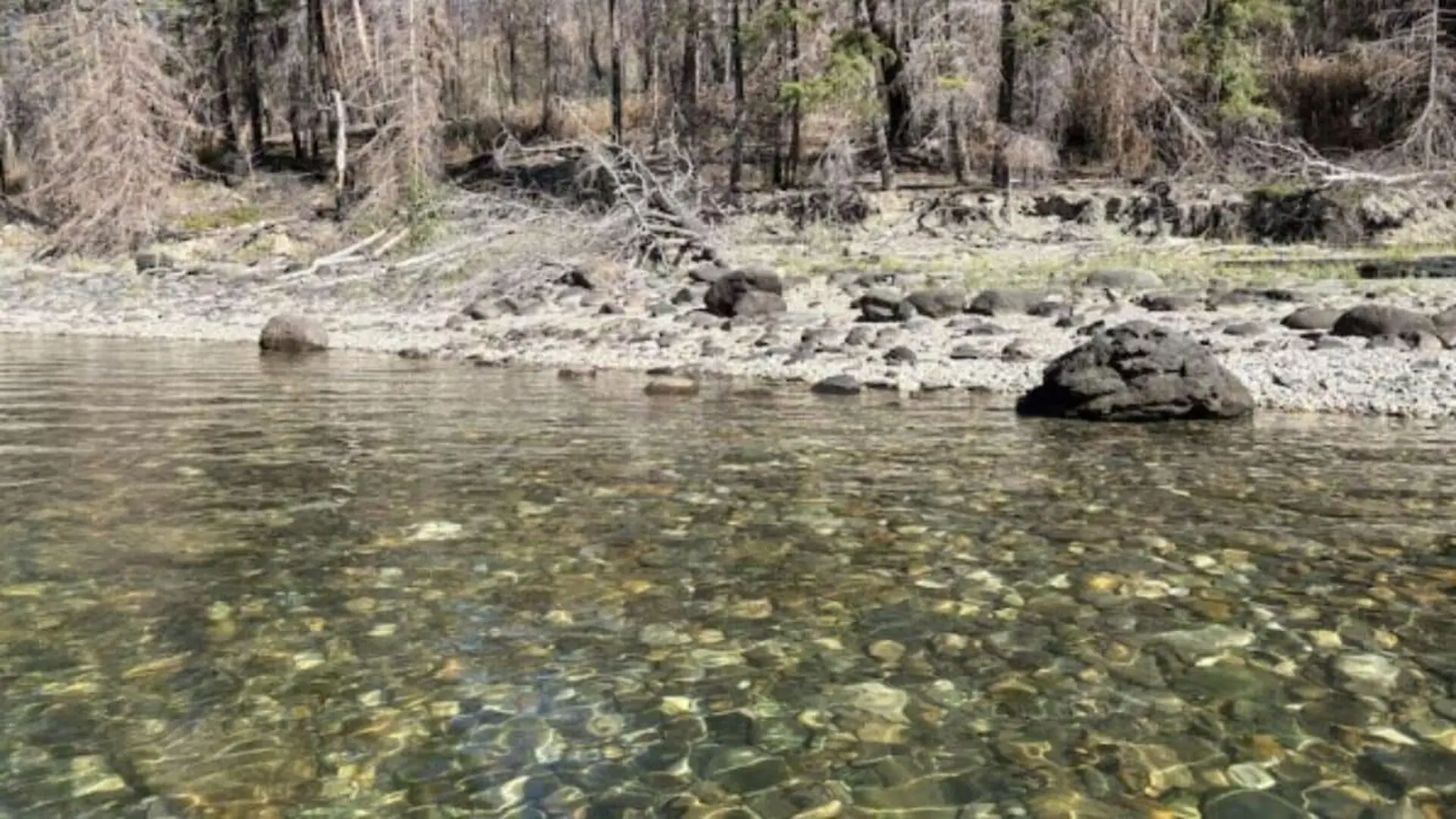
A routine camping trip along the shores of British Columbia’s Adams Lake has yielded a rare glimpse into the province’s prehistoric past. Ron Storie, a resident of Kamloops, was walking the shoreline on September 14 when a dark, oddly shaped object caught his attention. Initially assuming he had stumbled upon a discarded piece of footwear, Storie quickly realized the item was something far more ancient: a heavy, fist-sized fossilized mastodon tooth.
The discovery is a significant find for regional paleontology. According to experts at the Royal B.C. Museum, this is only the third specimen of its kind ever documented within British Columbia.

A Rare Paleontological Data Point
After finding the 2.2-pound fossil, which features a distinct double set of molars, Storie reached out to the Royal B.C. Museum. Derek Larson, a paleontology researcher and collections manager at the institution, confirmed the identity of the specimen. Mastodons, which were elephant-like mammals that roamed North America, vanished approximately 10,000 years ago.
“I knew that they were very rare in British Columbia,” Larson told the Canadian Broadcasting Corporation. He noted that while scientists have long suspected the presence of these megafauna in the region, the local fossil record has remained frustratingly thin. While a single tooth is not enough to reconstruct an entire ecosystem, it provides a crucial, verifiable data point in a landscape where such evidence is historically scarce.
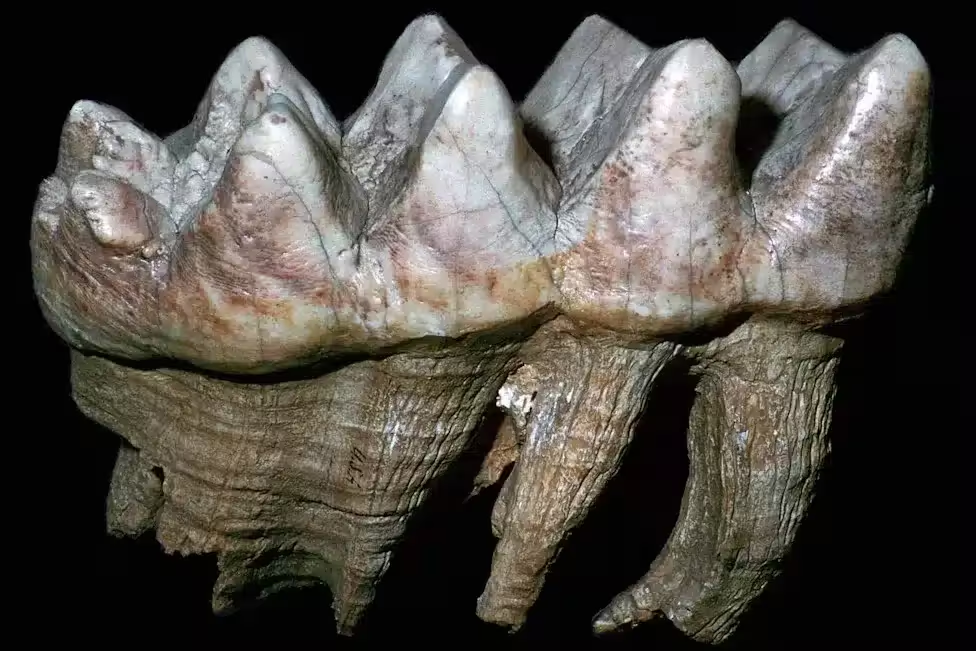
Unlocking the Timeline of the Last Ice Age
Determining the age of the fossil is the next major objective for researchers. According to Larson, the tooth could date back to an interglacial period occurring between 75,000 and 125,000 years ago, a time when lush forests spanned vast stretches of the continent. However, the possibility remains that the specimen is more recent, potentially dating to the tail end of the last Ice Age, roughly 10,000 to 11,000 years ago.
If the tooth proves to be from a more recent period, it could offer new insights into the existence of ice-free corridors in the region during the height of the glacial epoch. The precise age of the specimen is still under investigation.
For Storie, the experience has turned a casual camping trip into a profound encounter with geological history. He plans to donate the fossil to the Royal B.C. Museum to ensure it is properly curated and studied. “How old is it? Was it a male or a female? How did it die?” Storie remarked on the curiosity sparked by his find. “All of these questions pop into your head and it just kind of makes you think more about life.”
@cbcbritishcolumbia A Kamloops, B.C., man has made a prehistoric discovery, unearthing a rare mastodon tooth while camping along the shores of Adams Lake. Ron Storie was walking the shoreline Monday last week when an unusual, dark shape caught his eye. Initially mistaking it for the sole of a flip-flop, Storie quickly realized he had found something much more significant. #BritishColumbia#Mastodon#Fossil#Kamloops#CBCNews
♬ original sound – CBC British Columbia – CBC British Columbia
This article has been fact checked for accuracy, with information verified against reputable sources. Learn more about us and our editorial process.
Last reviewed on .
Article history
- Latest version
Reference(s)
- “Kamloops man finds rare mastodon tooth on B.C. Interior lakeshore | CBC News.”, September 24, 2026 CBC <https://www.cbc.ca/news/canada/british-columbia/adams-lake-mastodon-tooth-kamloops-9.7356189>.
Cite this page:
- Posted by Hassan Raza