Meet the World’s Smallest Wild Cat That Is Almost Impossible to Spot in the Wild
Found across India, Sri Lanka, and Nepal, the elusive rusty-spotted cat is one of the world’s smallest felines, yet much of its wild behavior remains a mystery.
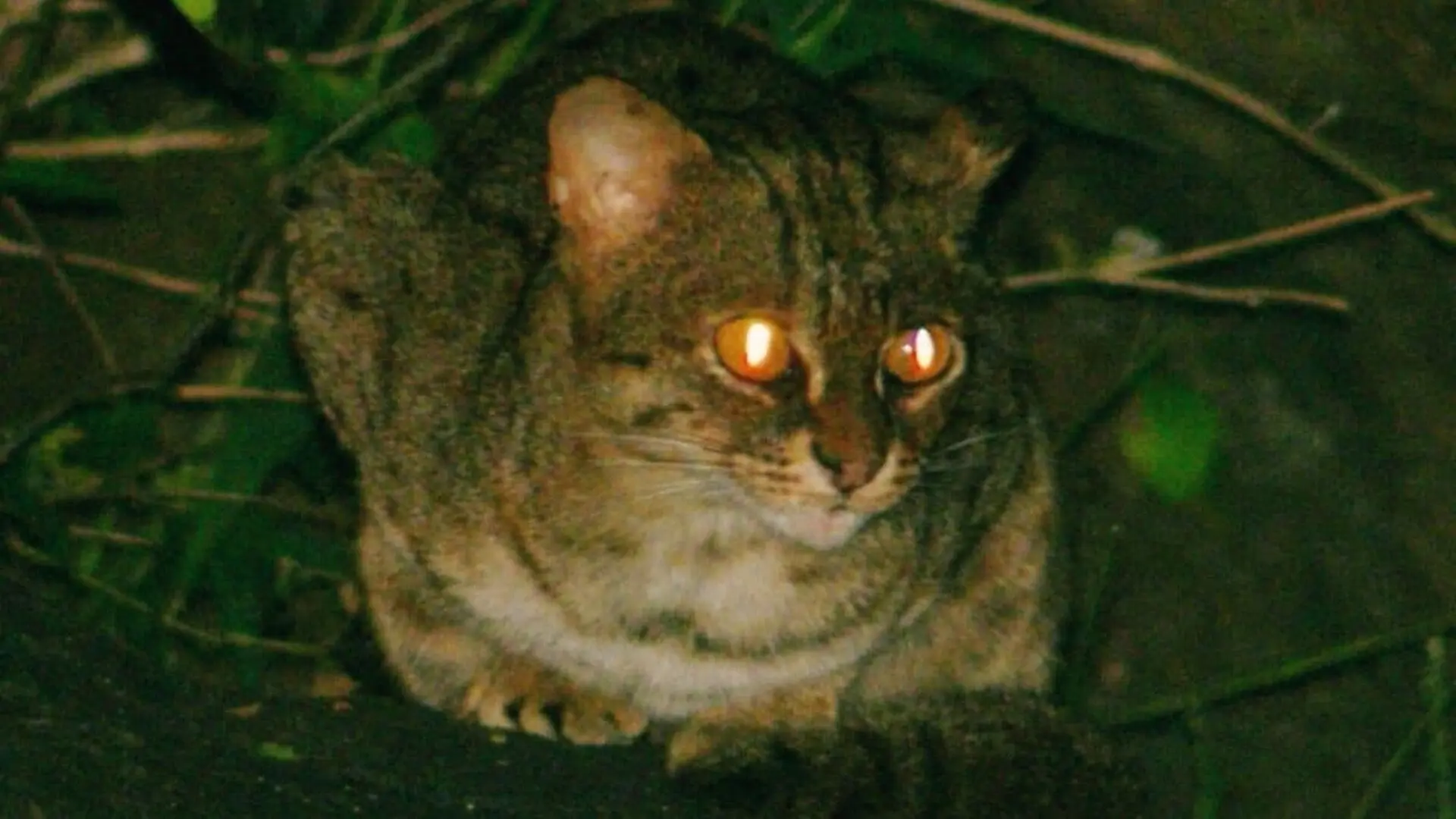
Deep within the varied landscapes of India, Sri Lanka, and Nepal, the world’s smallest wild cat remains a master of stealth. Known to science as Prionailurus rubiginosus, the rusty-spotted cat is a miniature marvel of evolution, measuring just 13 to 19 inches in length and tipping the scales at a mere 1.8 to 3.5 pounds. Despite its diminutive stature, this elusive predator maintains a diverse diet, ranging from small rodents and birds to insects and amphibians.
Ecological Range and Adaptability
While the rusty-spotted cat is related to other Asian felids like the leopard and fishing cats, it possesses a unique ability to thrive in a vast array of environments. Research indicates the species occupies habitats as diverse as moist forests, dry scrublands, grasslands, and even arid desert regions, ranging from sea level to altitudes of 2,480 meters. According to the Felidae Conservation Fund, the cat is easily identified by its grayish coat adorned with rust-colored spots and distinctive dark markings across its head and face.
Studying these cats in the wild has proven notoriously difficult. Most behavioral insights currently stem from captive observations or rare camera trap footage. Historically, 19th-century accounts from naturalists like Robert Armitage Sterndale highlighted the species’ agility and propensity for climbing, yet researchers caution that these captive behaviors may not fully capture their natural survival strategies. Current evidence suggests a largely nocturnal lifestyle, with some reports noting hunting activity near termite mounds following heavy rainfall.
Ongoing Conservation Challenges
The International Union for Conservation of Nature (IUCN) currently lists the rusty-spotted cat as Near Threatened, with populations identified as being in decline. Although a previous estimate suggested around 10,000 mature individuals, recent data remains elusive, and the last formal assessment in 2016 is noted as requiring an update.
— A Life Without Humans (@alifewithoutus) October 9, 2023
The survival of the species is threatened by a combination of human-driven factors, including habitat fragmentation due to agricultural expansion, infrastructure development, and mining. Furthermore, these small predators often find themselves in conflict with rural communities when they target domestic poultry, leading to retaliatory killings. Evidence also suggests that their pelts are occasionally found within the illegal wildlife trade.
Conservation efforts are hindered by the cat’s low reproductive rate, with litters typically consisting of only one or two kittens. While the majority of the population is believed to reside within protected areas, the absence of a comprehensive recovery plan or systematic monitoring leaves the long-term outlook for the rusty-spotted cat uncertain. As researchers continue to map their range, answering fundamental questions regarding their wild lifespan and population density remains a top priority for wildlife biologists.
This article has been fact checked for accuracy, with information verified against reputable sources. Learn more about us and our editorial process.
Last reviewed on .
Article history
- Latest version
Reference(s)
- “Which is the world's smallest wild cat? | Felidae Conservation Fund.” Felidae Conservation Fund <https://felidaefund.org/news/ask-a-biologist/which-is-the-worlds-smallest-wild-cat>.
Cite this page:
- Posted by Hassan Raza