DNA From Abandoned Island Cattle Finally Settles a Century Old Evolutionary Mystery
Thirteen years after a herd of cattle mysteriously vanished, scientists have used 18 surviving DNA samples to uncover the secrets of their unique lineage.
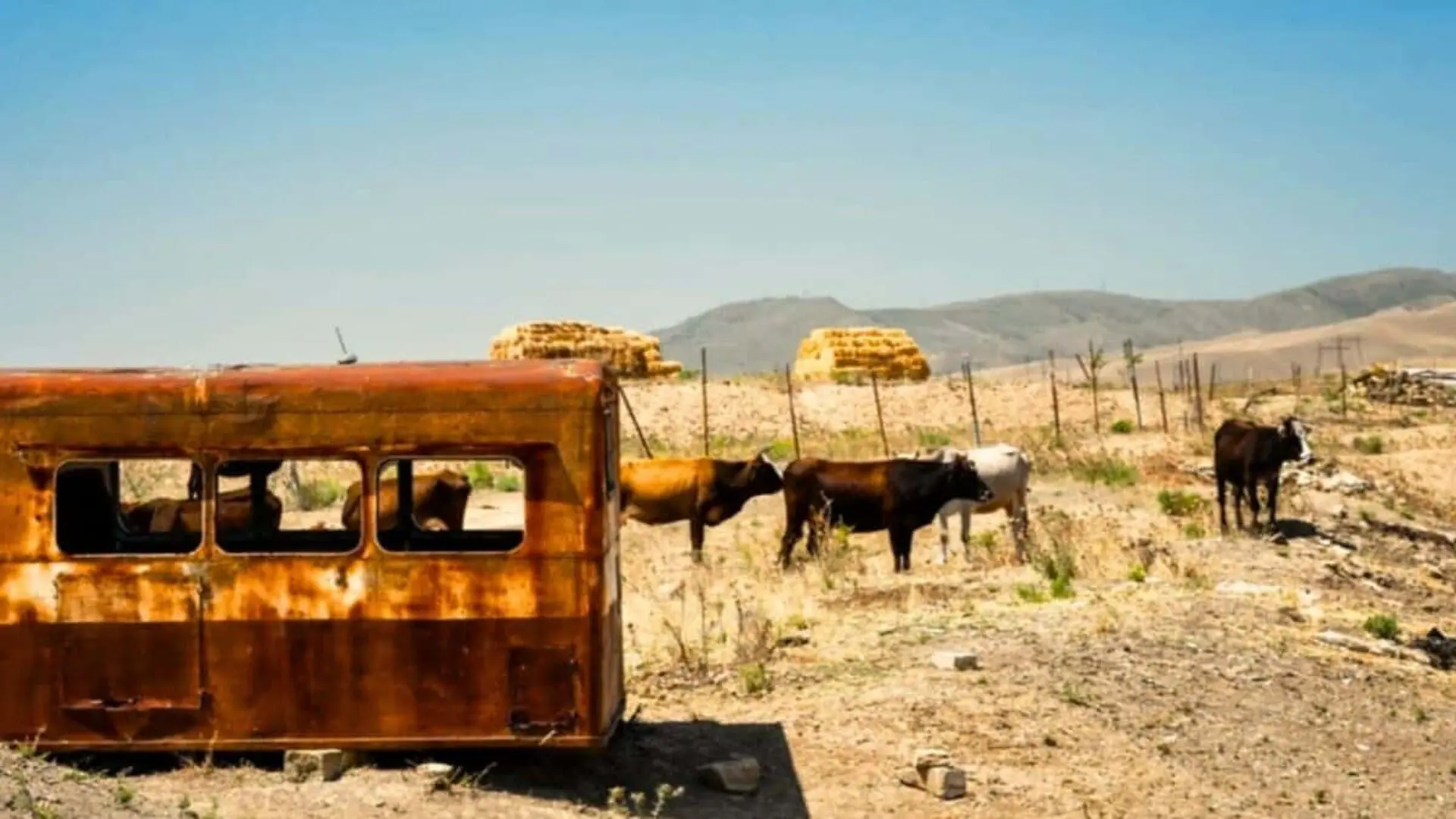
In 1871, five head of cattle were transported from Réunion to Amsterdam Island, a remote volcanic outcrop in the southern Indian Ocean. Abandoned in a landscape devoid of predators or competitors, the small group flourished in isolation. By 1952, the population had swelled to approximately 2,000 animals. Despite a significant disease-related crash in the mid-20th century, the herd rebounded, reaching similar numbers by 1988 before being entirely eradicated in 2010 to protect fragile local ecosystems.
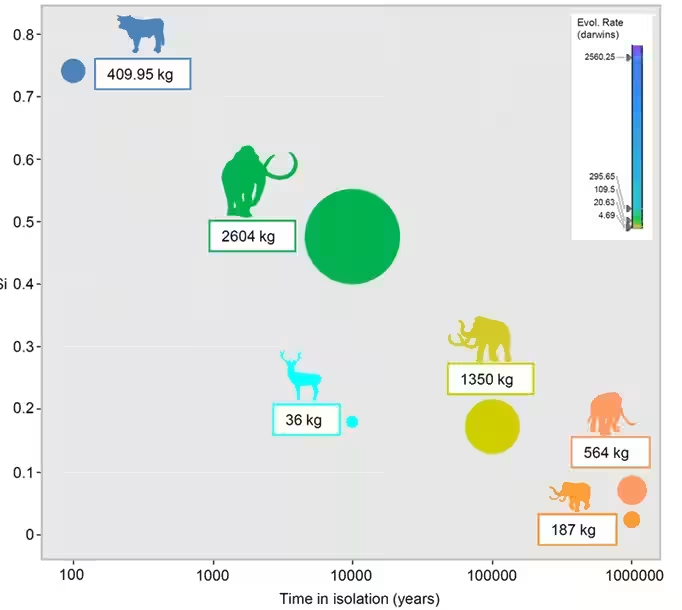
For years, researchers cited this population as a premier example of rapid evolutionary adaptation. A 2017 study published in Scientific Reports suggested the cattle had undergone dramatic island dwarfing, shrinking to roughly three-quarters of their ancestral size in just over a century—a pace significantly faster than any previously documented case in large mammals.
Genomic Insights Refute Rapid Dwarfism
However, new genetic analysis published in Molecular Biology and Evolution challenges this narrative. A team led by Mathieu Gautier of the French National Research Institute for Agriculture, Food and Environment (INRAE) analyzed DNA from 18 animals sampled between 1992 and 2006. Their findings indicate that the cattle did not evolve smaller bodies after arriving on the island; rather, they were small from the start.
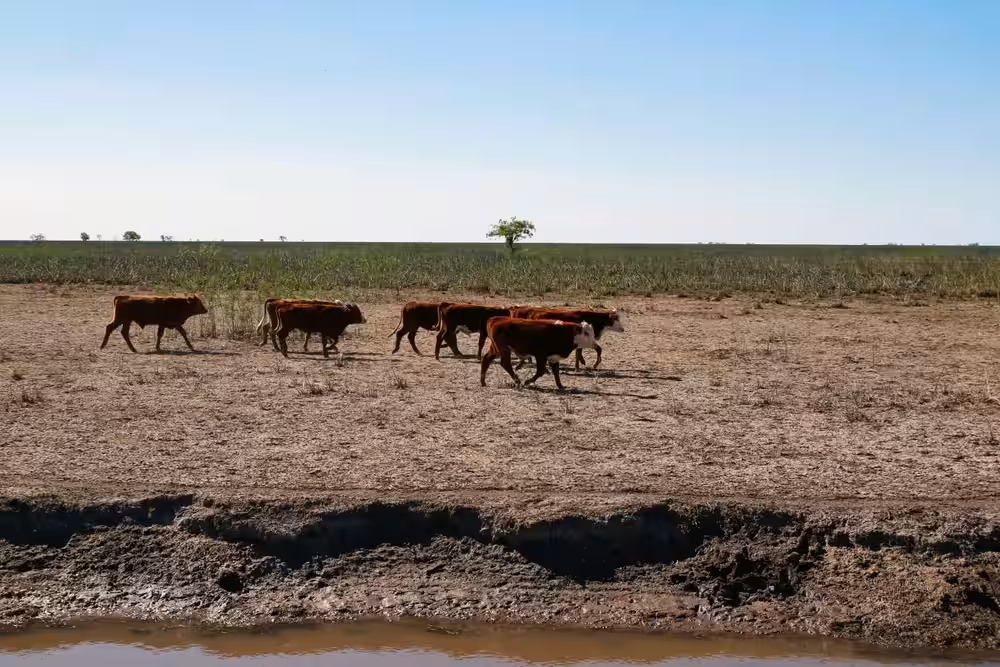
The genomic data reveals that the herd possessed a hybrid ancestry. Roughly 73% of their genetic makeup traces back to European breeds—most notably the small-framed Jersey cattle—while 27% originated from Indian Ocean zebu. This combination appears to have been present in the original five founders. When researchers compared these genetic markers against 105 known variants associated with stature, they discovered that the Amsterdam Island cattle consistently carried genes linked to short stature, effectively ruling out the theory that environmental pressures drove rapid physical reduction.
Survival Through Rapid Expansion
The genomic study also clarifies the population’s survival strategies. Estimates confirm the herd was indeed established by a tiny group, with genetic bottlenecking suggesting only about 4.5 individuals contributed to the gene pool roughly 22 generations ago. Despite high levels of inbreeding, which affected approximately one-third of their genome, the population avoided extinction by expanding rapidly, which helped mitigate the accumulation of harmful mutations.
The researchers observed that the primary genetic changes occurred in genes associated with the nervous system. These adaptations were likely crucial for the animals’ rapid transition to a feral state, allowing them to shift from domestic behavior to the social structures required to navigate an untamed landscape.
The Conservation Dilemma
The eradication of the herd in 2010 was driven by the urgent need to protect the island’s biodiversity, particularly the endangered Amsterdam albatross and native flora that had been decimated by overgrazing. While the recent genetic findings do not dispute the ecological necessity of the removal, they highlight a missed opportunity for science. Because no biological samples were collected during the final culling process, the existing research relies entirely on samples obtained years before the herd’s destruction.
Today, Amsterdam Island continues to recover. According to reports from the Agreement on the Conservation of Albatrosses and Petrels, native reforestation efforts are underway, and the infrastructure previously used to manage the cattle has been dismantled.
This article has been fact checked for accuracy, with information verified against reputable sources. Learn more about us and our editorial process.
Last reviewed on .
Article history
- Latest version
Reference(s)
- Rozzi, Roberto. “Rapid Dwarfing of an Insular Mammal – The Feral Cattle of Amsterdam Island - Scientific Reports.”, vol. 7, no. 1, August 18, 2017, pp. 8820 Nature, doi: 10.1038/s41598-017-08820-2. <https://www.nature.com/articles/s41598-017-08820-2>.
- <https://academic.oup.com/mbe/article/41/7/msae121/7695851>.
- “Agreement on the Conservation of Albatrosses and Petrels - Bye-bye moo-cows and bye-bye Mouflons! Recent conservation and restoration efforts at the French sub-Antarctic islands.” <https://www.acap.aq/news/news-archive/2012-news-archive/bye-bye-moo-cows-and-bye-bye-mouflons-recent-conservation-and-restoration-efforts-at-the-french-sub-antarctic-islands>.
Cite this page:
- Posted by Hassan Raza