Scientists Identify Potential New Target to Combat High Blood Pressure and Vascular Stiffness
Removing the protein TG2 from immune cells significantly reduces blood pressure, arterial stiffness, and inflammation in mice, a new study reveals.
Researchers at the University of Missouri have uncovered a potential new target for managing hypertension, pointing to a specific protein in the immune system that may drive the vascular damage associated with high blood pressure. By investigating the role of transglutaminase 2 (TG2) within myeloid cells, the team has identified a pathway that bridges immune activation and the physical stiffening of blood vessels.
While current medications are effective for many, hypertension remains a significant global health challenge. Understanding the underlying molecular mechanisms could pave the way for more precise, targeted therapies that carry fewer side effects. The findings, published in the American Journal of Physiology-Heart and Circulatory Physiology, offer a promising look at how immune cell function dictates vascular health.
Blocking Protein Expression Curbs Vascular Damage
Myeloid cells, which include monocytes and macrophages, are central players in the body’s inflammatory response. While previous research had implicated TG2 in arterial stiffening through its direct activity within vessel walls, scientists sought to determine if the protein’s influence extended to its presence in these immune cells.
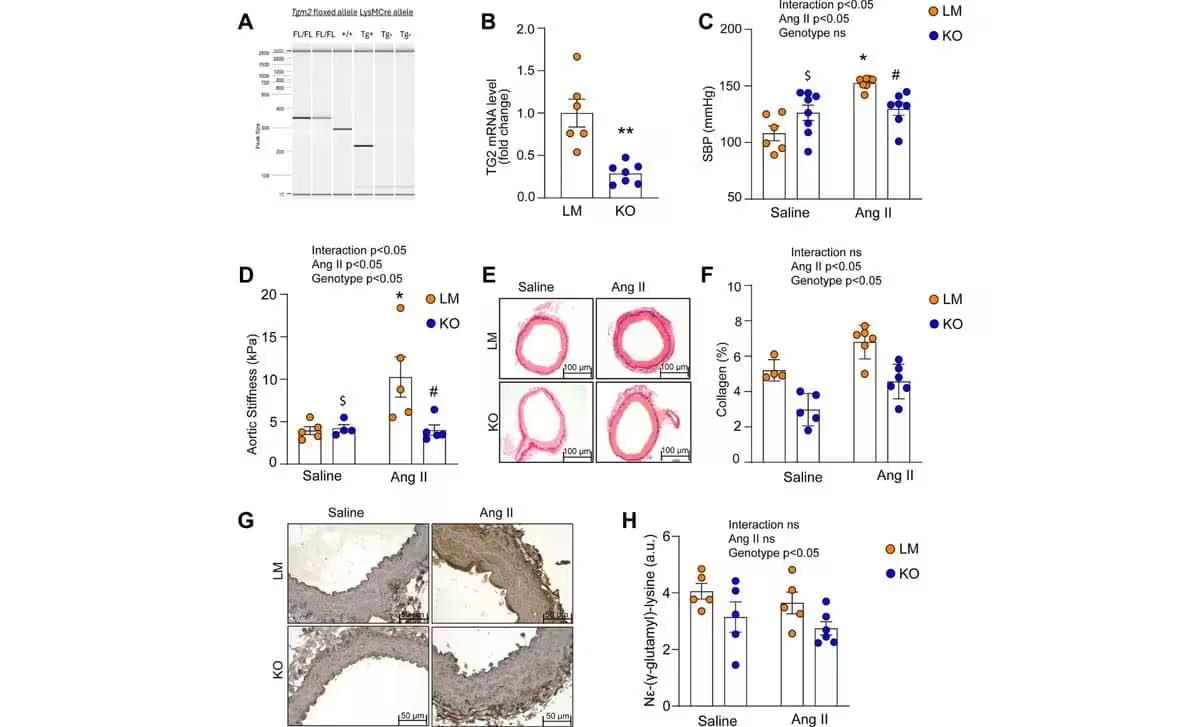
To test this, the research team utilized female mice, creating a model where TG2 was specifically deleted from myeloid cells. Both the study group and a control group with normal TG2 levels were administered angiotensin II for two weeks to induce high blood pressure and subsequent vascular remodeling. The results were stark: mice lacking TG2 in their myeloid cells experienced significantly lower blood pressure increases and reduced aortic stiffness compared to their counterparts. Furthermore, tissue analysis revealed lower levels of collagen deposition in the aortic walls and a marked decrease in inflammatory markers, such as TNF-α, MCP-1, and CD68.
Immune Balance and Regulatory Shift
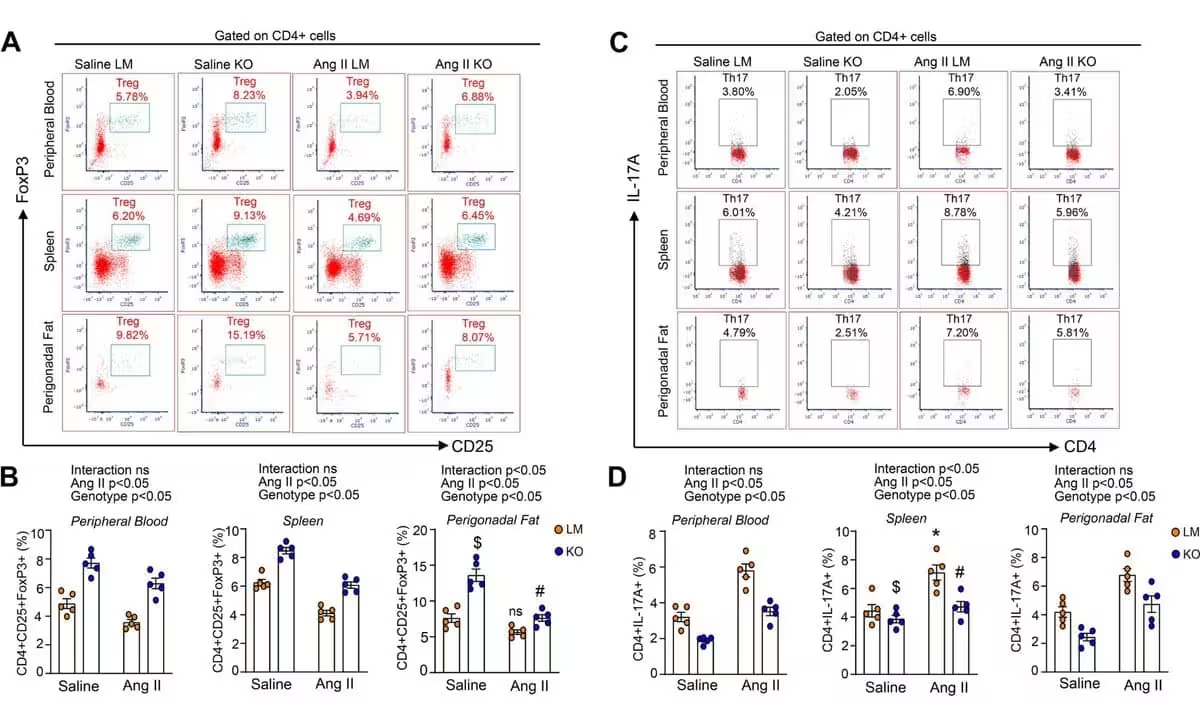
Angiotensin II exposure typically triggers a decline in protective Tregs and an uptick in inflammatory Th17 cells. However, in mice lacking TG2, this shift was successfully mitigated. The team observed that macrophages devoid of TG2 were more likely to foster Treg development while actively suppressing the polarization of Th17 cells and reducing the cytotoxic activity of CD8+ T cells. This immunological shift coincided with lower circulating levels of pro-inflammatory cytokines, including IL-6 and IFN-γ.
Camila Manrique-Acevedo, a professor at the University of Missouri School of Medicine, emphasized that these insights are a vital step in decoding the complex interactions that lead to blood pressure-related disease. The research team cautioned that while the findings are significant, the study was conducted exclusively in female mice. Further investigation is required to determine if these pathways function similarly in males and to evaluate the safety and feasibility of targeting TG2 in clinical settings.
This article has been fact checked for accuracy, with information verified against reputable sources. Learn more about us and our editorial process.
Last reviewed on .
Article history
- Latest version
Reference(s)
- Naz, Huma., et al. “Myeloid transglutaminase 2 regulates Treg-Th17 balance in a female model of angiotensin II-induced hypertension and vascular stiffening.” American Journal of Physiology-Heart and Circulatory Physiology, vol. 330, no. 6, June 1, 2026, pp. H1853-H1861. American Physiological Society, doi: 10.1152/ajpheart.00095.2026. <https://journals.physiology.org/doi/full/10.1152/ajpheart.00095.2026>.
- “Camila Manrique-Acevedo, MD | NextGen Precision Health.” <https://precisionhealth.missouri.edu/people/camila-manrique-acevedo-md>.
Cite this page:
- Posted by Hassan Raza