Recovering Grasslands May Never Truly Return To Their Original State After Disturbance
Grasslands recovering from human disturbance can remain biologically distinct from ancient ecosystems for centuries, a new global study reveals.
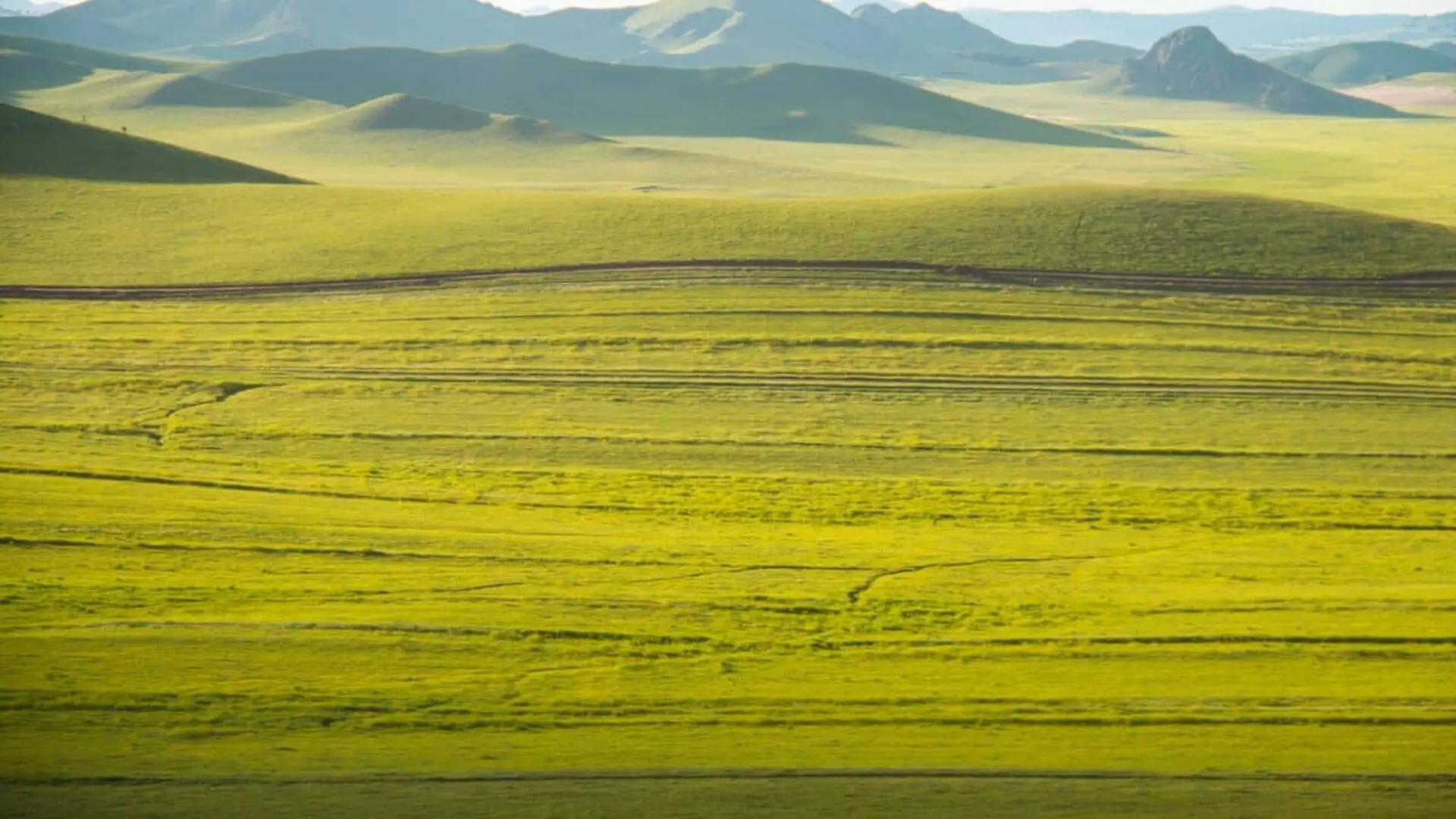
New research reveals that the path to ecological recovery for grasslands is far more complex than simply allowing nature to take its course. A comprehensive study comparing old-growth grasslands to those that have regrown after human disturbance highlights a persistent shift in plant composition, suggesting that ecosystems often fail to return to their original state even after centuries of recovery.
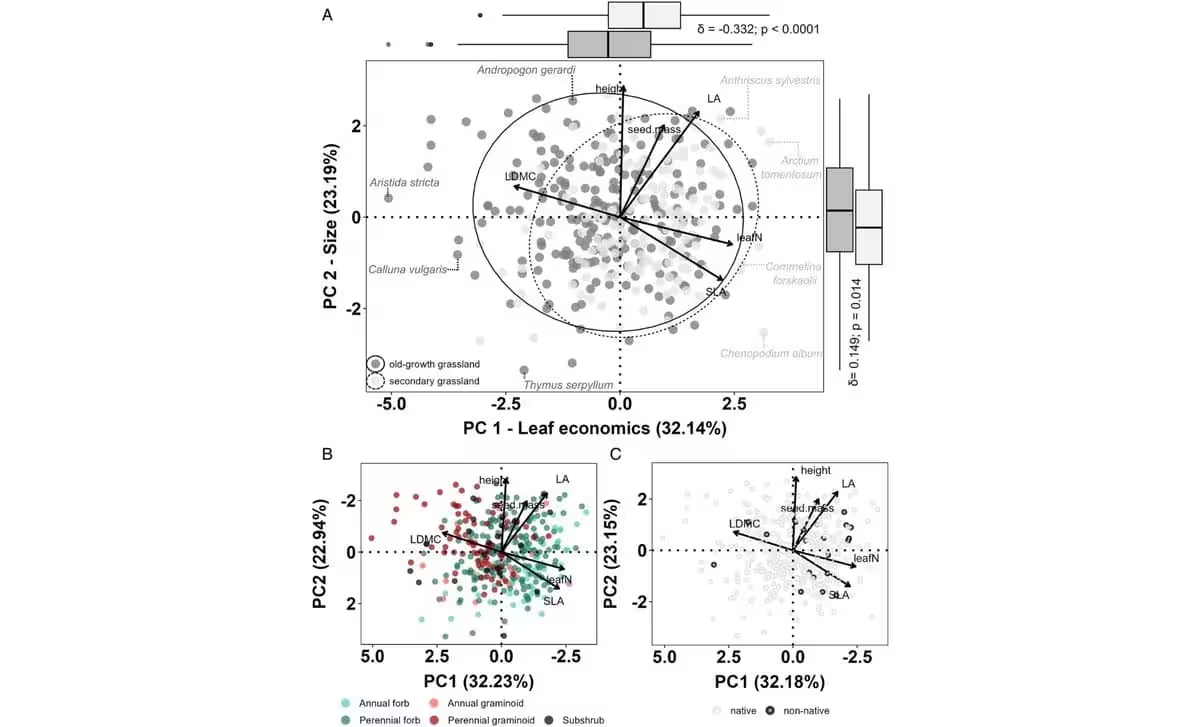
The findings, published in the Proceedings of the National Academy of Sciences, analyzed data from 24 different studies across six continents, encompassing 742 plant species and thousands of individual trait measurements. The investigation identified a clear divide: while old-growth grasslands foster slow-growing, resilient species capable of surviving fire, grazing, and drought, secondary grasslands are frequently overtaken by fast-growing, competitive plants.
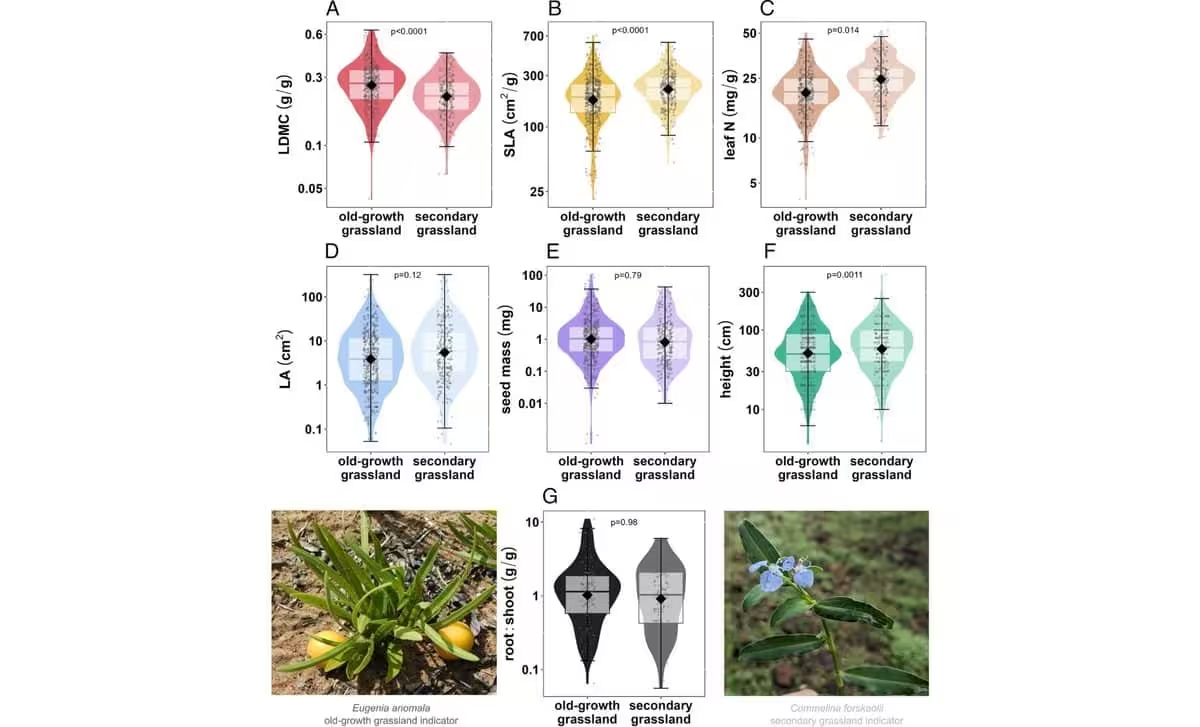
According to the authors, plants in recovering landscapes exhibit traits designed for rapid resource acquisition, such as taller growth forms, higher nitrogen content, and leaves with lower density. Conversely, vegetation in undisturbed, ancient grasslands favors conservation strategies, emphasizing durability and survival over speed of growth. This divergence is also visible in life cycles, with old-growth systems maintaining a significantly higher percentage of perennial indicator species—nearly 83 percent compared to roughly 60 percent in secondary sites.
Long-Term Ecological Legacies
Perhaps most striking is the longevity of these differences. Even when researchers examined sites that had been recovering for as long as 300 years, the trait disparities between secondary and old-growth grasslands remained evident. The persistent presence of these “acquisitive” plant types suggests that once the delicate balance of an ancient grassland is disrupted, it does not naturally transition back to its original biological configuration.
These findings hold significant weight for global conservation efforts. Grasslands cover approximately one-quarter of the planet’s landmass and serve as vital carbon sinks, yet they remain highly vulnerable to conversion. Lead author Ashish Nerlekar emphasized that the difficulty of restoring these ecosystems underscores the urgent need to protect existing old-growth areas, as their unique biodiversity is effectively irreplaceable once lost.
For restoration practitioners, the study serves as a call to action for more active intervention. Lars Brudvig, a professor at Michigan State University and co-author of the work, noted that simply leaving land to recover is unlikely to restore the functionality of ancient systems. Instead, active measures like human-assisted seeding or the strategic transplantation of specialized species may be necessary to steer secondary grasslands toward a more ecologically stable state.
This article has been fact checked for accuracy, with information verified against reputable sources. Learn more about us and our editorial process.
Last reviewed on .
Article history
- Latest version
Reference(s)
Cite this page:
- Posted by Hassan Raza