Ancient Fossil Analysis Reveals When Human Ancestors Finally Left The Trees Behind
An analysis of fossilized limb bones from seven early human relatives has revealed a surprising evolutionary pattern hidden deep within our ancient history.
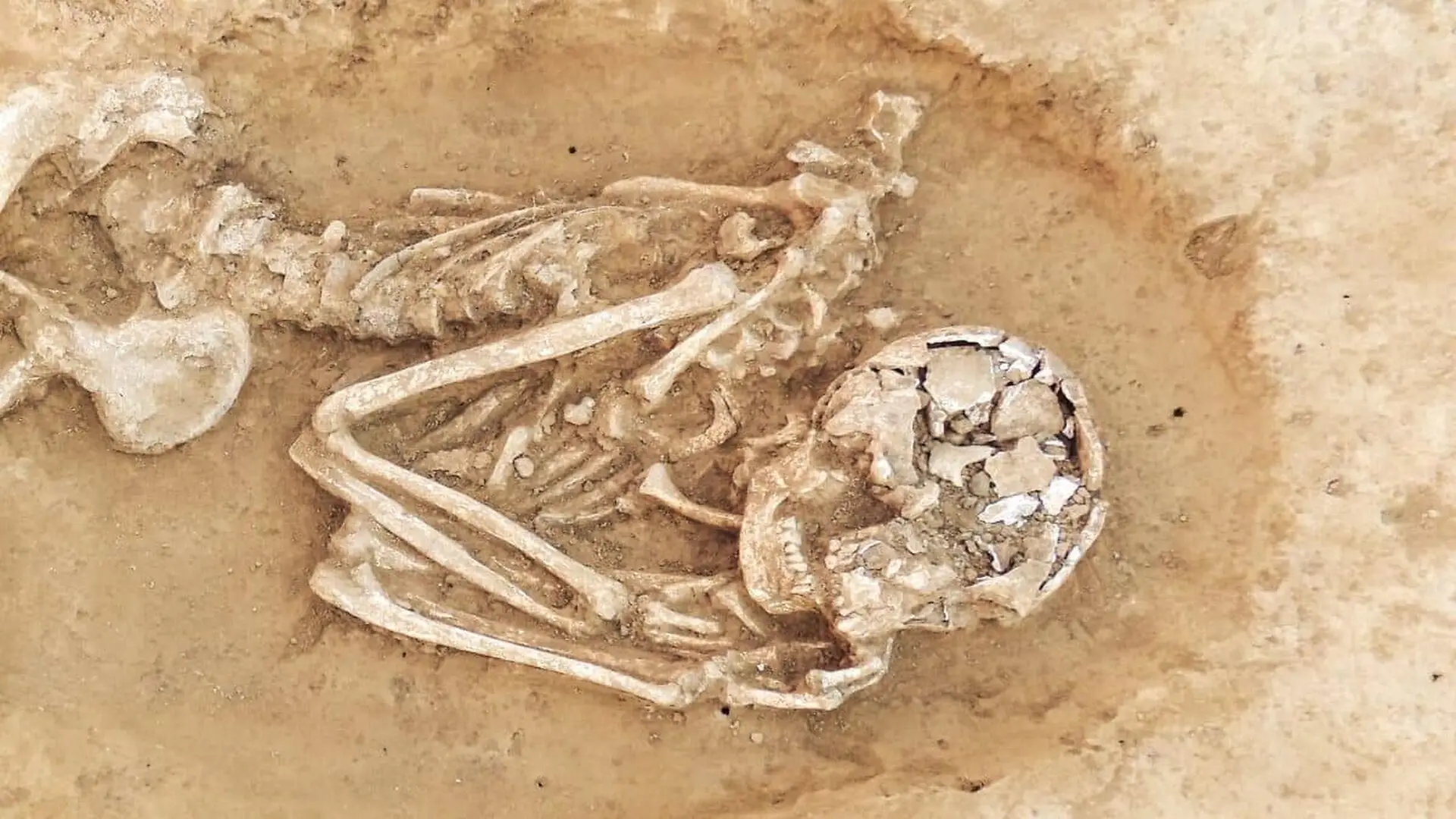
New evidence derived from the analysis of ancient fossilized limbs indicates that our ancestors were far more versatile than previously assumed. Research conducted by the Keck School of Medicine of USC and published in Science Advances reveals that while Australopithecus had mastered the art of walking upright, they remained adept at navigating the treetops, marking a distinct evolutionary strategy that predates the emergence of the genus Homo.
The development of bipedalism serves as a primary marker of human divergence from other apes. However, anthropologists have long debated the exact timeline of when our predecessors transitioned from a lifestyle split between arboreal and terrestrial movement to one fully committed to life on the ground. By examining fossil specimens from seven individuals ranging from 1.5 million to 3.7 million years old, researchers have provided a clearer timeline for this behavioral evolution.
Biomechanical Clues Hidden in Bone Density
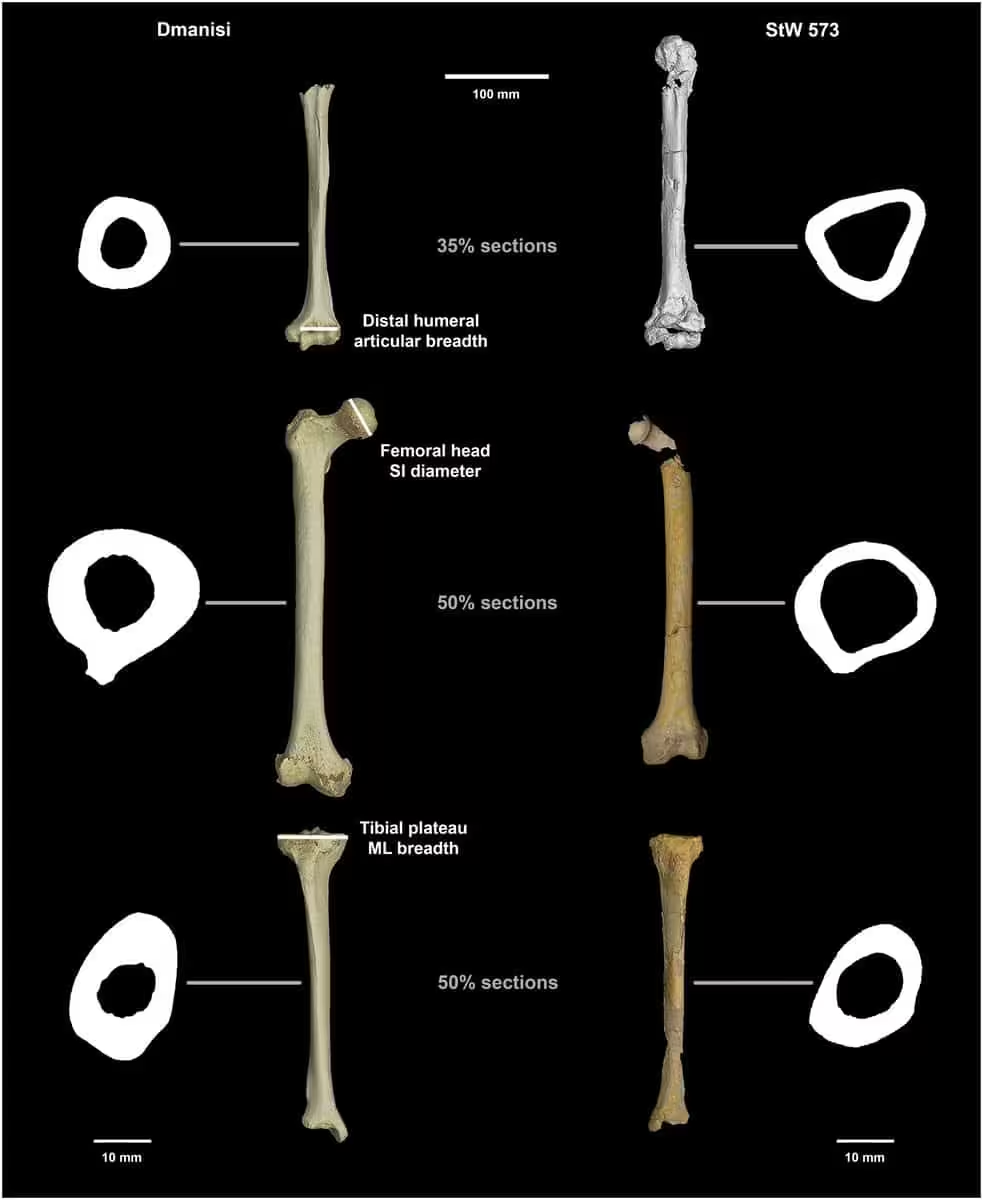
To understand the locomotor habits of these hominins, the research team utilized high-resolution computed tomography (CT) scans. Because skeletal structure responds to the physical stresses placed upon it during life, the team analyzed the thickness and internal architecture of the bones to determine how they resisted bending and twisting. By comparing the structural strength of the humerus, femur, and tibia within each specimen, the researchers could infer how these individuals primarily moved through their environments.
The Dual-Environment Lifestyle of Australopithecus
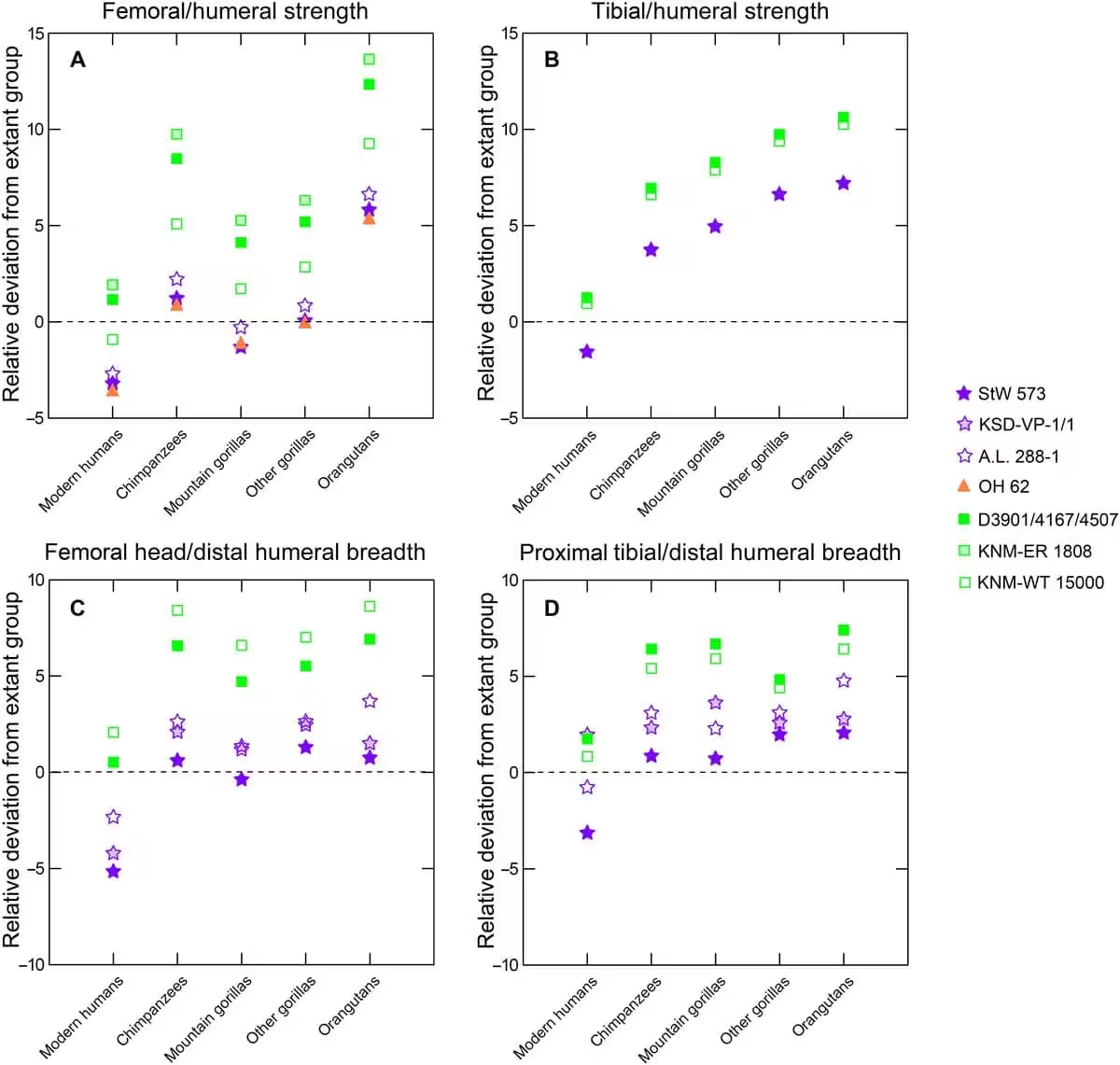
The analysis revealed a striking physiological compromise in Australopithecus. While their leg bones exhibited a distinctly human-like configuration suited for upright walking, their arm bones remained robust, showing high relative strength characteristic of modern tree-dwelling apes. This dual adaptation suggests that these hominins inhabited a unique ecological niche, utilizing their lower limbs for terrestrial travel while relying on their upper body strength to access the arboreal environment.
Australopithecus combined an ape-like upper limb strength with a human-like pattern in the legs, suggesting they had a unique movement strategy that has no modern comparison, said lead author Kristian J. Carlson, a professor of clinical medical education at the Keck School.
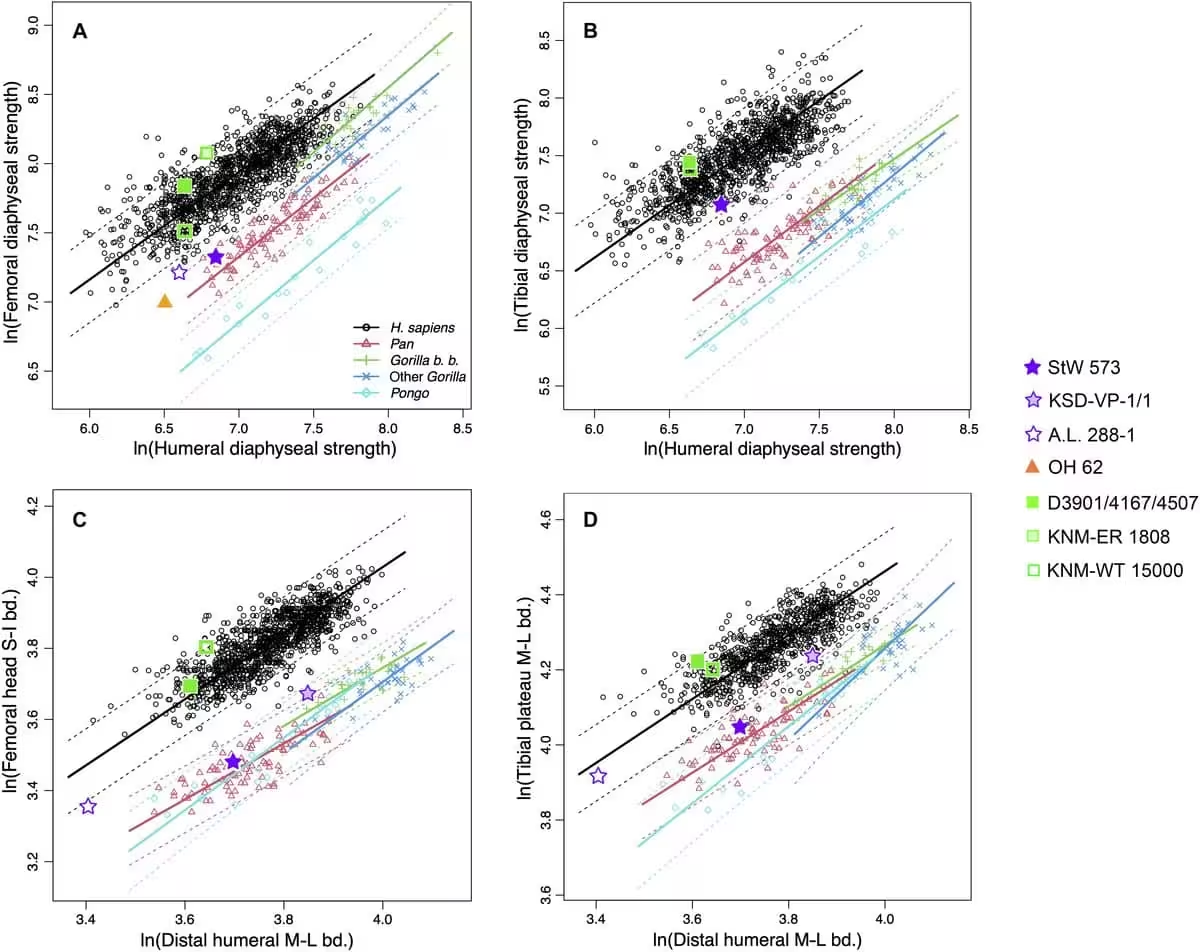
This finding challenges previous assumptions that Australopithecus had largely abandoned tree-dwelling behaviors. According to the peer-reviewed study, these creatures were likely much more integrated into forest ecosystems than traditionally depicted.
The Transition to the Genus Homo
The biomechanical profile shifts significantly with the appearance of early Homo between 1.8 million and 2.3 million years ago. In these fossils, the thigh bones are markedly stronger relative to the arms, mirroring the modern human pattern of terrestrial locomotion. Researchers propose that this shift signifies a critical behavioral threshold, where the ancestral reliance on arboreal movement was largely phased out.
This evolutionary turning point coincides with a period of rapid brain expansion. While scholars have long debated the drivers of this encephalization, including potential triggers like brain size growth, tool development, and dietary shifts, the research team suggests a direct link: “We speculate that the shift toward more walking may have placed new demands on the body and brain, which could help explain why these changes happened around the same time.”
This article has been fact checked for accuracy, with information verified against reputable sources. Learn more about us and our editorial process.
Last reviewed on .
Article history
- Latest version
Reference(s)
- <https://keck.usc.edu/faculty-search/kristian-j-carlson/>.
- Carlson, Kristian J.., et al. “Proportional limb strengths signal an adaptive shift in arboreality in early human evolution.” Science Advances, vol. 12, no. 38, September 18, 2026 American Association for the Advancement of Science (AAAS), doi: 10.1126/sciadv.aeh1752. <https://www.science.org/doi/10.1126/sciadv.aeh1752?referrer=https%3A%2F%2Fscitechdaily.com%2F>.
Cite this page:
- Posted by Hassan Raza