Scientists Discover Genetic Recipe That Allows Flatworms To Regrow Their Brains
Researchers have identified key genes that drive remarkable brain regeneration in flatworms, shedding light on the biological secrets of tissue repair.
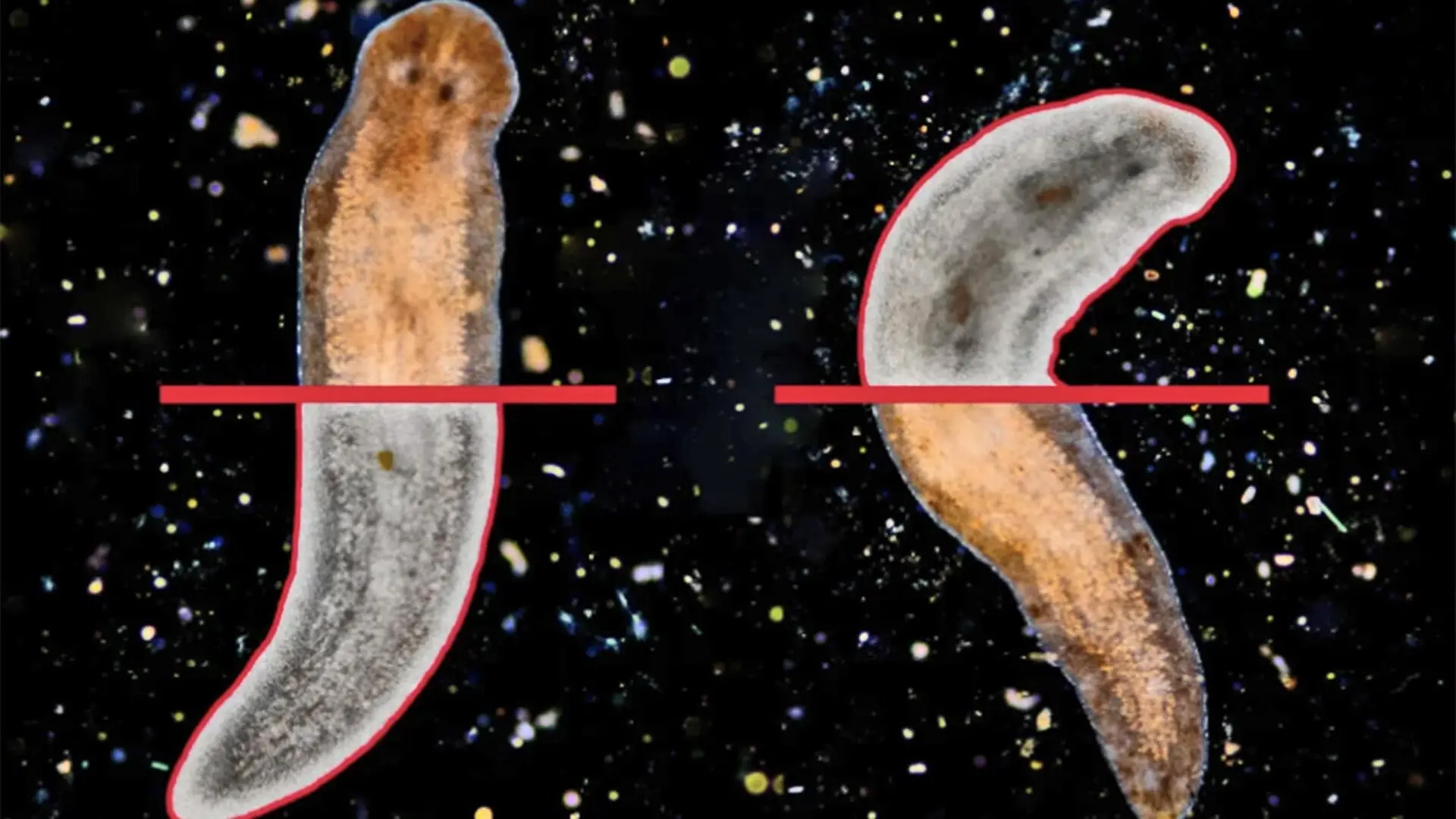
Unlike the human brain, which often struggles to recover from significant injury or degenerative disease, certain organisms possess the remarkable biological machinery required to rebuild complex tissues from scratch. New research from the University of Georgia has uncovered a specific genetic blueprint that enables flatworms to regenerate their entire brains, a discovery that researchers believe could eventually inform new medical approaches for treating neurological conditions in humans.
Unlocking the Genetic Blueprint of Regeneration
The study, published in Nature Communications, focuses on planarians—flatworms renowned for their ability to regrow entire bodies, including full central nervous systems, from tiny tissue fragments. By identifying the molecular instructions these creatures use to guide stem cells, scientists have moved closer to understanding why regenerative capabilities are so vastly different across species.
According to Rachel Roberts-Galbraith, an associate professor at the University of Georgia’s Franklin College of Arts and Sciences, the goal is to shift the paradigm of how we view human brain health. “The understanding of brain regeneration that we can develop using simple animals gives us a reason to be optimistic,” says Roberts-Galbraith. “It’s not an inherent property of brains that makes them bad at regeneration. It’s something specific to humans.”
The Role of Dopamine in Neural Repair
Central to the research is the regeneration of dopamine-producing neurons. These specialized cells are essential for movement and mood regulation in both humans and flatworms. In the study, researchers identified nearly a dozen genes responsible for both the creation of these neurons and their precise navigation to the correct locations within the worm’s anatomy.
When the team inhibited these specific genes, the planarians showed marked deficits in neurogenesis and began exhibiting motor control issues. These movement impairments mirrored the symptoms often seen in mammals, including humans suffering from Parkinson’s disease, where diminished dopamine levels lead to tremors and physical stiffness.
From Flatworms to Future Therapies
While humans also possess stem cells, our bodies lack the native instructions to effectively deploy them to repair damaged neural architecture. The researchers hope that by decoding the “genetic recipe” used by flatworms, scientists can develop more sophisticated ways to influence human stem cells, potentially leading to breakthroughs in how doctors treat traumatic brain injuries, Alzheimer’s, or Parkinson’s.
“We figured out the genetic recipe for making these cell types in planarians,” Roberts-Galbraith notes. “We’re hoping this work helps others figure out how to create dopamine-producing neurons from stem cells that can be more effectively transplanted into patients.”
By studying these organisms, which lack complex circulatory or respiratory systems yet manage to perform cellular feats far beyond human capabilities, the research provides a vital roadmap for regenerative medicine. This work underscores that the barrier to human brain repair is not a biological impossibility, but a regulatory hurdle that could one day be cleared through targeted genetic and cellular interventions.
This article has been fact checked for accuracy, with information verified against reputable sources. Learn more about us and our editorial process.
Last reviewed on .
Article history
- Latest version
Reference(s)
- Clay, Kendall B.., et al. “Combinatorial mechanisms specify cellular location and neurotransmitter identity during planarian neurogenesis.” Nature Communications, vol. 17, no. 1, September 21, 2026 Springer Science and Business Media LLC, doi: 10.1038/s41467-026-76397-4. <https://doi.org/10.1038/s41467-026-76397-4>.
Cite this page:
- Posted by Hassan Raza