Octopuses Can Use Reflections to Navigate and Find Hidden Prey
California two-spot octopuses have demonstrated the ability to use mirrors to locate hidden prey, revealing surprising cognitive skills in cephalopods.
Octopuses Demonstrate Advanced Ability to Use Mirrors for Spatial Navigation
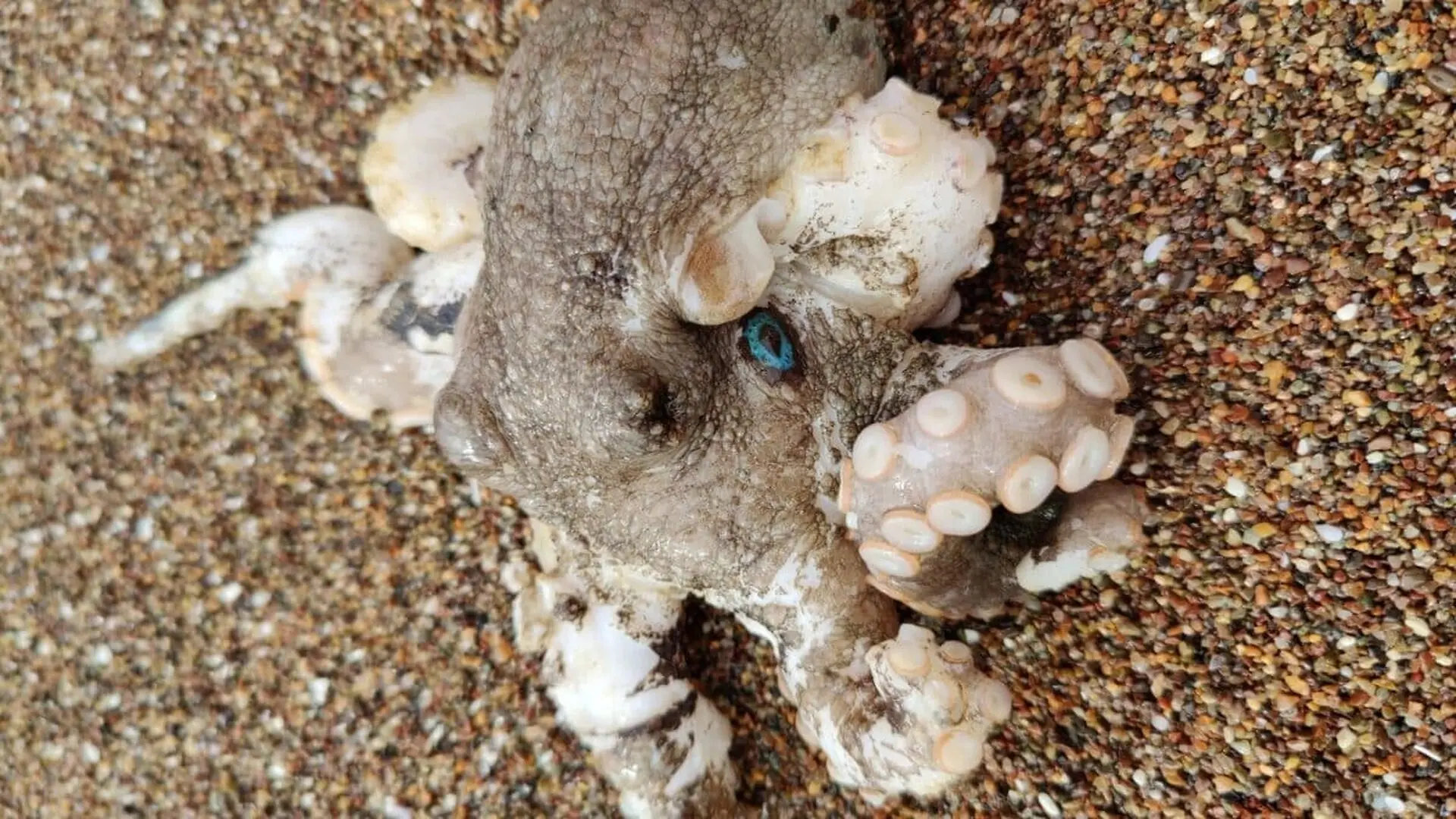
A recent study published in Current Biology has revealed that octopuses possess the capability to use reflections as a tool for navigation, a feat previously observed only in vertebrates. While the research does not suggest that octopuses recognize themselves in a mirror, it does provide compelling evidence that these invertebrates can interpret reflected light as actionable data to locate hidden targets.
The research focused on Octopus bimaculoides, also known as the California two-spot octopus. To ensure the subjects were focusing on the utility of the mirror rather than reacting to a perceived social encounter, the team first habituated the animals to the presence of reflective surfaces within their environment.
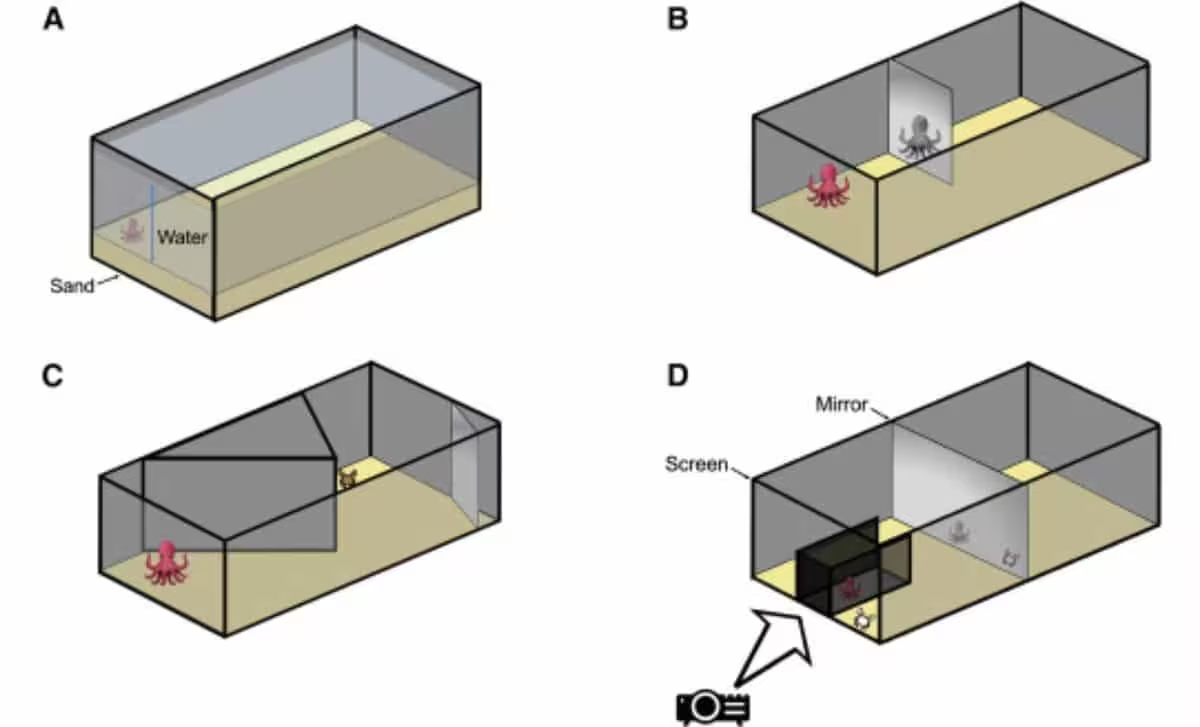
In the initial phase of the study, researchers hid a live crab inside a jar behind an obstacle, ensuring the prey was invisible from the starting position but clearly visible via its reflection. Initially, the octopuses approached the mirror itself. However, they quickly learned to bypass the reflection, instead navigating toward the actual location of the jar to claim their reward. This behavior became consistent after roughly a dozen trials.
Complex Navigation and Potential Spatial Awareness
To further test the animals, the researchers introduced a more difficult scenario: a virtual crab was projected onto a screen that was only visible to the octopus via a mirror. The octopuses were required to move toward the side of the tank corresponding to the projection. The subjects achieved a success rate of nearly 73 percent across 30 trials, a result that significantly outperformed random chance.
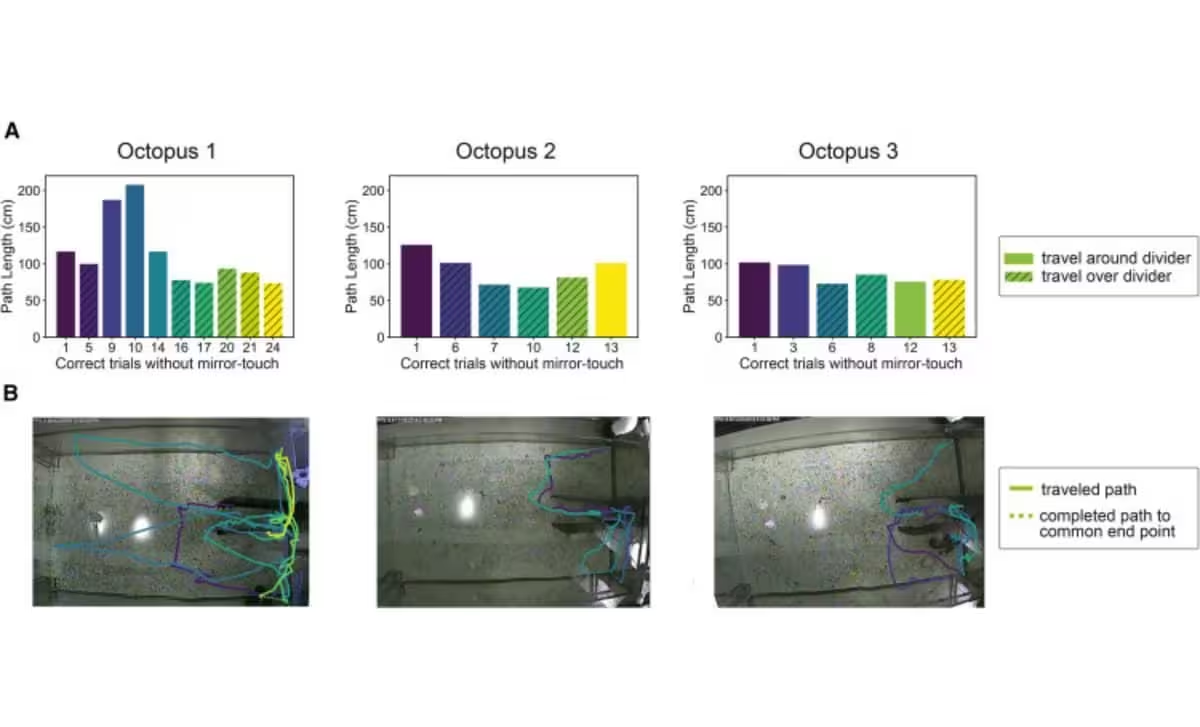
Notably, the octopuses often employed creative solutions to reach their destination. In more than half of the successful trials, the animals opted to climb over the side walls of their chamber to reach the target rather than exiting through the designated path. This suggests that the octopuses were potentially integrating visual information from the mirror with an internal mental map of the tank’s physical structure.
However, the authors of the study remain cautious about over-interpreting these results. They acknowledge that it is difficult to distinguish between high-level spatial reasoning and associative learning, where the animals simply linked a specific visual stimulus in the mirror to a rewarded location.
Future research, utilizing larger sample sizes and more complex experimental designs, will be necessary to definitively determine the cognitive mechanisms at play. Nevertheless, the study marks a significant milestone in comparative biology. Because cephalopods and vertebrates diverged hundreds of millions of years ago, the findings suggest that the ability to process reflected visual information to navigate the physical world may have evolved independently in disparate branches of the tree of life.
This article has been fact checked for accuracy, with information verified against reputable sources. Learn more about us and our editorial process.
Last reviewed on .
Article history
- Latest version
- Posted by Hassan Raza