Remarkable New Fossil Discovery Fills A Massive Gap In The History Of Early Mammals
A 120-million-year-old fossil from China, Archetheridium sinense, reveals the earliest known ancestor of marsupials and rewrites early mammal evolution.
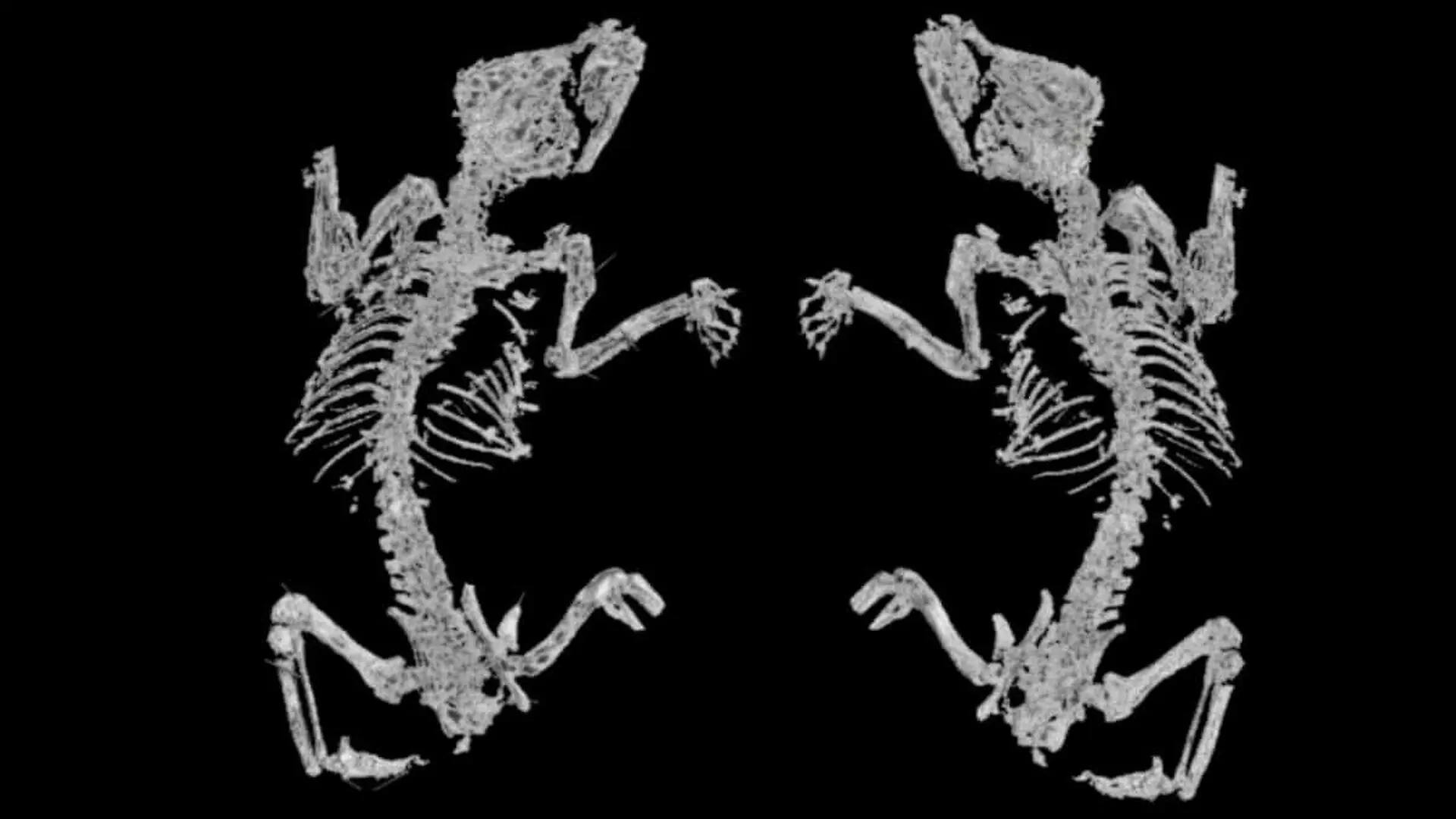
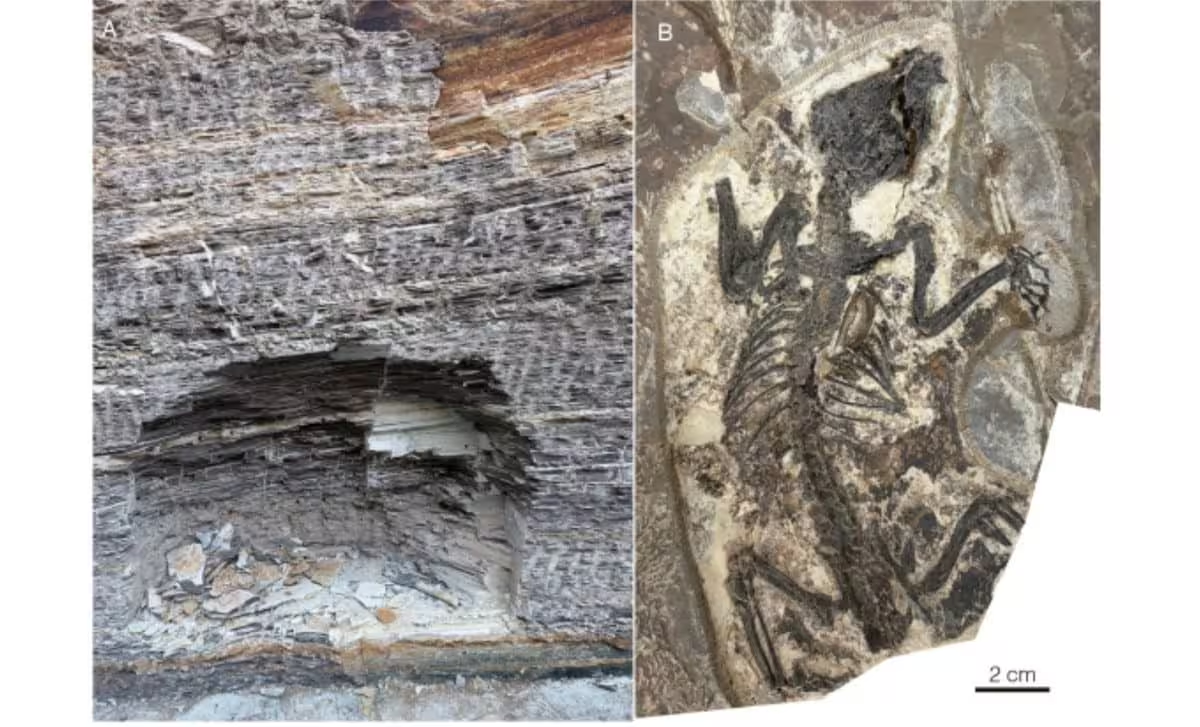
A remarkably preserved fossil discovery in China is providing paleontologists with a clearer window into the formative era of mammalian evolution. Unearthed in Liaoning Province’s Jiufotang Formation, the specimen, catalogued as IVPP V34823, dates back roughly 122 to 119 million years, placing it firmly within the Early Cretaceous period. Identified by researchers Hai-Bing Wang and Yuan-Qing Wang, the fossil belongs to the deltatheroidans, an ancient group of metatherians known for their specialized shearing teeth.
The discovery is particularly significant because it addresses a long-standing frustration in the field: the scarcity of high-quality fossils from the split between metatherians (the lineage leading to marsupials) and eutherians (the ancestors of placental mammals). While many specimens from this epoch consist of little more than isolated teeth or fragmentary jaws, this new find—dubbed Archetheridium—includes a substantial portion of the postcranial skeleton, alongside the skull and nearly complete upper dentition.
A Clearer Picture of Early Mammalian Anatomy
The researchers utilized high-resolution micro-computed tomography to analyze the specimen, which is currently housed at the Institute of Vertebrate Paleontology and Paleoanthropology in Beijing. The digital reconstruction revealed a precise dental formula—five upper incisors, one canine, three premolars, and four molars—a configuration that aligns with the metatherian lineage. Detailed analysis published in the journal Mesozoic indicates that Archetheridium possessed distinct features such as relatively narrow upper molars and a specialized postmetacrista, confirming its place within the Deltatheroida group.
The animal’s dentition suggests it was a faunivore, likely preying on smaller creatures. This dietary adaptation is supported by the presence of sharp cusps and robust shearing surfaces. Beyond the skull, the fossil’s preservation extends to the vertebrae, shoulder elements, and limbs, offering a comprehensive look at the anatomy of these early mammals that has rarely been documented in specimens of this age.
Rewriting the Evolutionary Timeline
Prior to this discovery, the earliest known deltatheroidans were identified from the Antlers Formation in Oklahoma, though their chronological placement remains debated. Archetheridium pushes the known history of these creatures back further, establishing them firmly within the Early Cretaceous of eastern Asia. This discovery complicates previous narratives, such as the debate surrounding Sinodelphys, which had been previously cited as the earliest known metatherian despite disagreements over its classification.
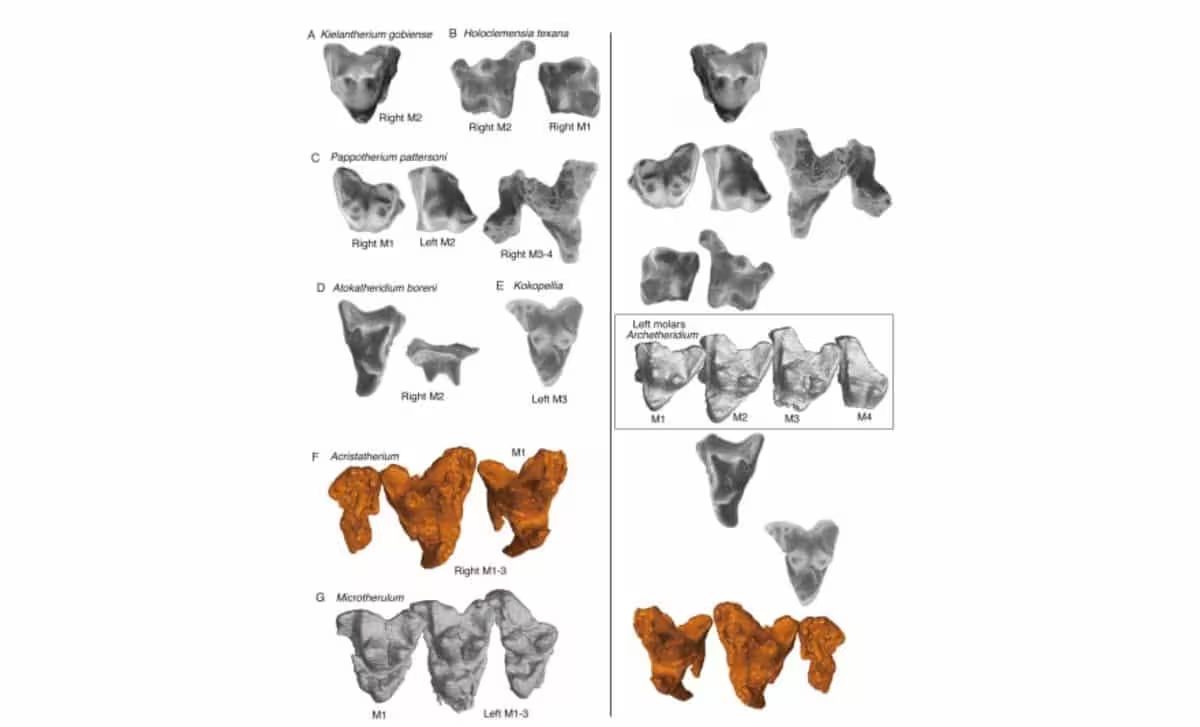
By relying on a broad suite of cranial and skeletal traits rather than isolated teeth, the authors contend that Archetheridium represents the oldest undisputed metatherian discovered to date. While the researchers caution that our understanding of metatherian origins remains subject to change as more fossils are uncovered, this find provides a critical anchor point. It demonstrates that the key anatomical foundations for both major branches of therian mammals were already undergoing rapid diversification in eastern Asia during the Early Cretaceous, bridging a significant gap in the paleontological record.
This article has been fact checked for accuracy, with information verified against reputable sources. Learn more about us and our editorial process.
Last reviewed on .
Article history
- Latest version
Reference(s)
- WANG, HAI-BING. “Metatherian origin in the Early Cretaceous.”, vol. 3, no. 3, pp. 245-258., doi: 10.11646/mesozoic.3.3.3. <https://www.mapress.com/mz/article/view/mesozoic.3.3.3>.
Cite this page:
- Posted by Hassan Raza