Scientists Discover How Removing Earth’s Magnetic Field Changes Animal Aging and Movement
New research reveals that near-zero magnetic fields alter lifespan and mitochondrial activity in fruit flies, with impacts varying based on genetic health.
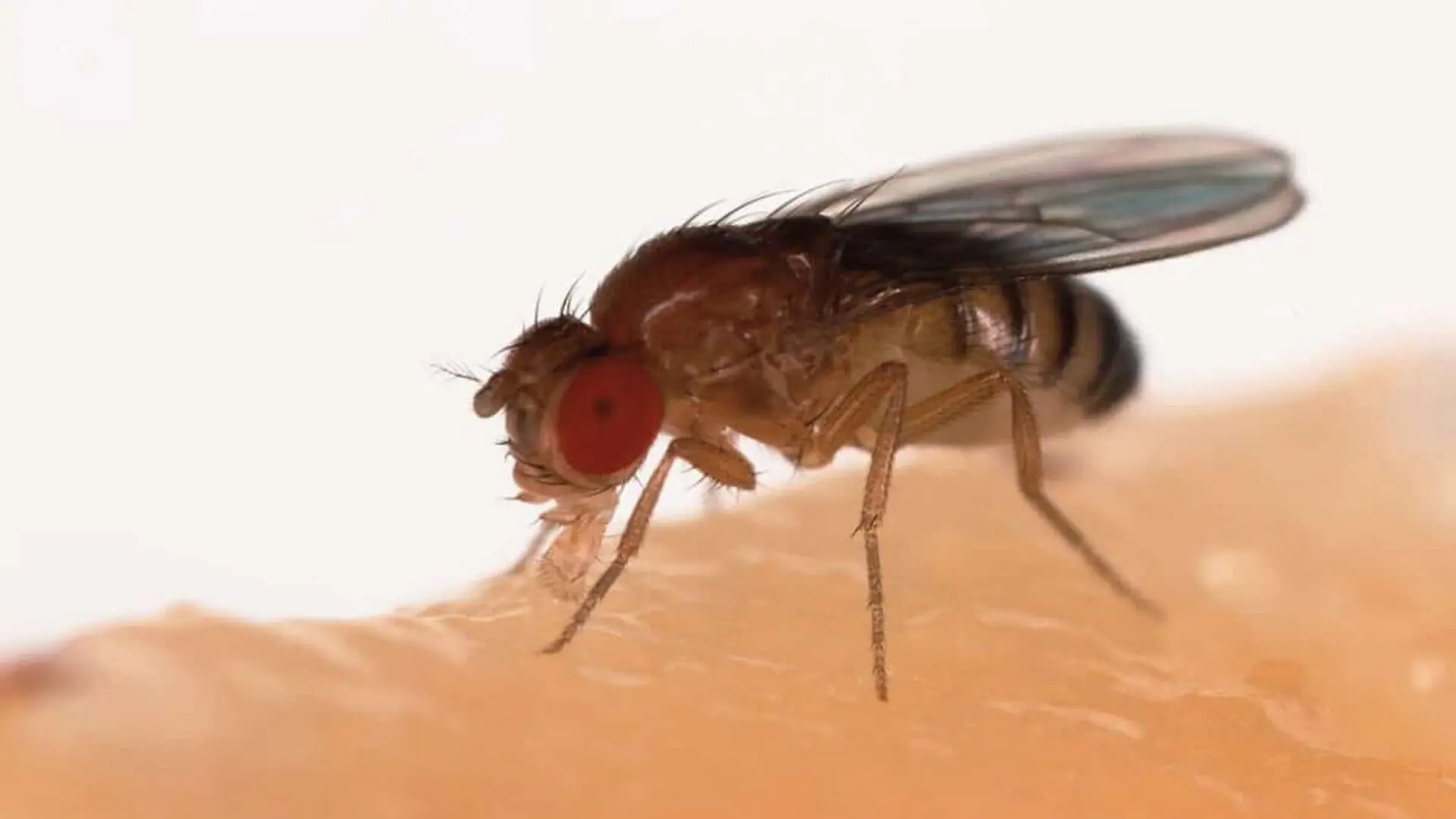
Earth’s magnetic field, typically fluctuating between 25 and 60 microteslas, is an ever-present force in the lives of organisms across the globe. While the ability of migrating species to navigate using this field has been a focus of scientific inquiry for decades, the broader impact of magnetic exposure on fundamental biological health remains a subject of mystery. A recent study has shed new light on this relationship by investigating how fruit flies, or Drosophila melanogaster, respond when placed in a shielded environment that lowers magnetic intensity to just 0.0056 microteslas.
Divergent Impacts on Mobility and Longevity
The research team examined two distinct cohorts of male fruit flies: healthy wild-type specimens and those with a Pink1 mutation. This specific genetic model is frequently used in laboratories to simulate early-onset Parkinson’s disease, as it mirrors critical biological markers such as mitochondrial failure, diminished physical coordination, loss of dopaminergic neurons, and a generally reduced lifespan.
According to the findings, the flies were introduced to this hypomagnetic environment at 10 or 20 days of adulthood. Over a 70-day observation period, researchers tracked survival rates and assessed physical fitness through climbing assays, which measured the ability of the insects to navigate vertical vials within a specific timeframe.
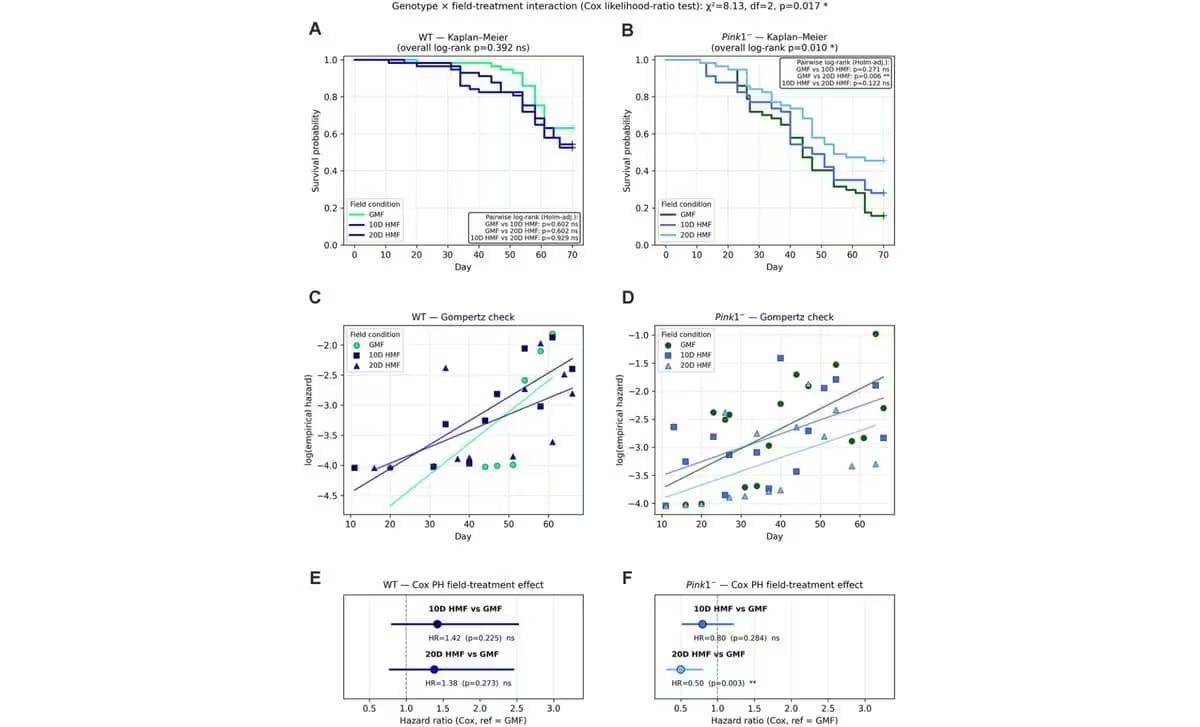
The most striking result occurred within the Pink1 group exposed to the shielded environment at the 20-day mark. These flies exhibited a significantly higher survival rate compared to their counterparts living in standard magnetic conditions, with a hazard ratio of 0.50. Interestingly, this boost in survival did not translate to better physical health; in fact, the Pink1 flies exposed to the low-magnetic environment struggled more in climbing tests. Conversely, healthy flies displayed the opposite effect, seeing an improvement in climbing performance while their overall lifespan remained largely unaffected.
Mitochondrial Mechanics and Magnetic Sensitivity
To understand the mechanisms behind these behavioral changes, the team investigated mitochondrial respiration. Given that mitochondria serve as the cell’s power plants and that the Pink1 protein is essential for clearing out damaged organelles, the researchers suspected a cellular link. High-resolution respirometry revealed that the shielded environment significantly altered mitochondrial output, particularly regarding Complex II of the electron transport chain.
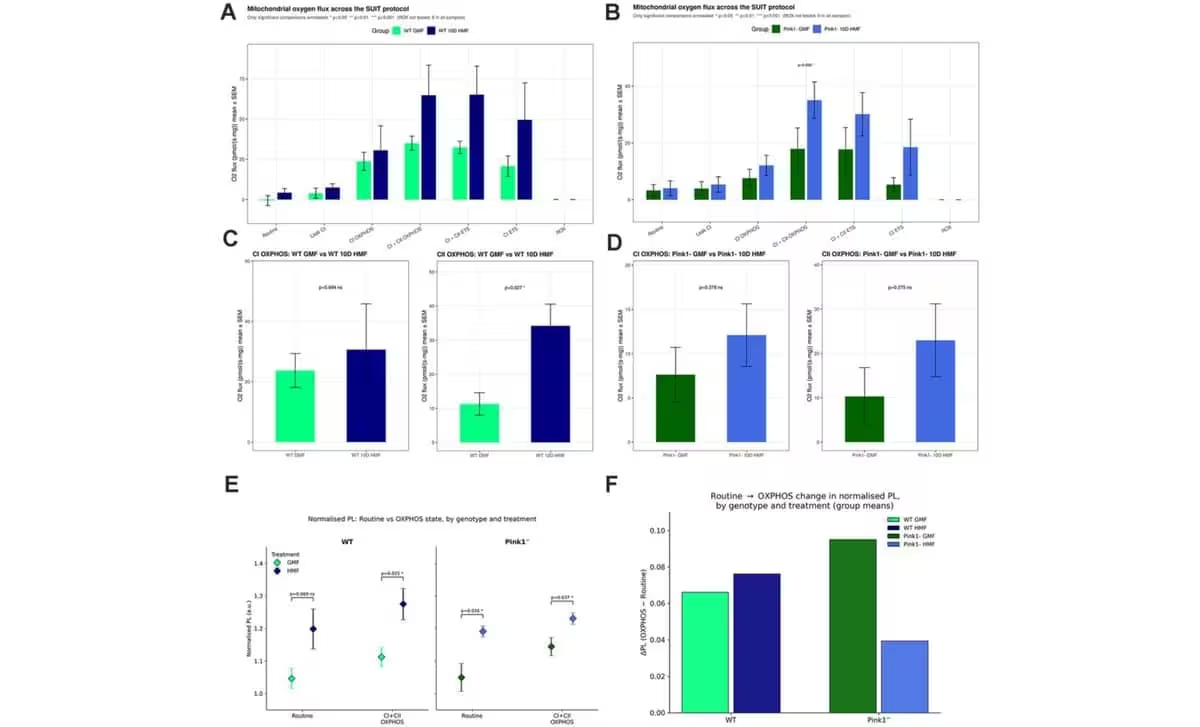
Utilizing quantum-sensing technology via nitrogen-vacancy centers in nanodiamonds, the scientists also tracked the production of free radicals. They found that in the Pink1 model, reduced magnetic fields led to higher free-radical levels during standard respiration, yet a slower accumulation of these radicals during peak oxidative phosphorylation compared to flies in normal magnetic fields. The researchers concluded that the influence of a reduced magnetic field is highly dependent on an organism’s specific genetic and mitochondrial profile.
While the study demonstrates a clear connection between geomagnetic exposure and physiological processes in this experimental model, the authors emphasize that these results are specific to fruit flies. Further research will be required to determine if these complex trade-offs between longevity and physical function hold true across other species.
This article has been fact checked for accuracy, with information verified against reputable sources. Learn more about us and our editorial process.
Last reviewed on .
Article history
- Latest version
Cite this page:
- Posted by Hassan Raza