Why Most Business Closures Are Not Actually Failures
A comprehensive multi-year study reveals that roughly one-third of entrepreneurial exits involve businesses continuing under new ownership.

When an entrepreneur closes up shop or walks away from a business, the event is frequently recorded in economic surveys as a single, uniform failure. A new empirical analysis published in PLOS One reveals that leaving a business actually encompasses radically different realities, ranging from successful ownership transfers and lucrative new opportunities to outright financial distress.
Decomposing the Hidden Realities Behind Business Closures
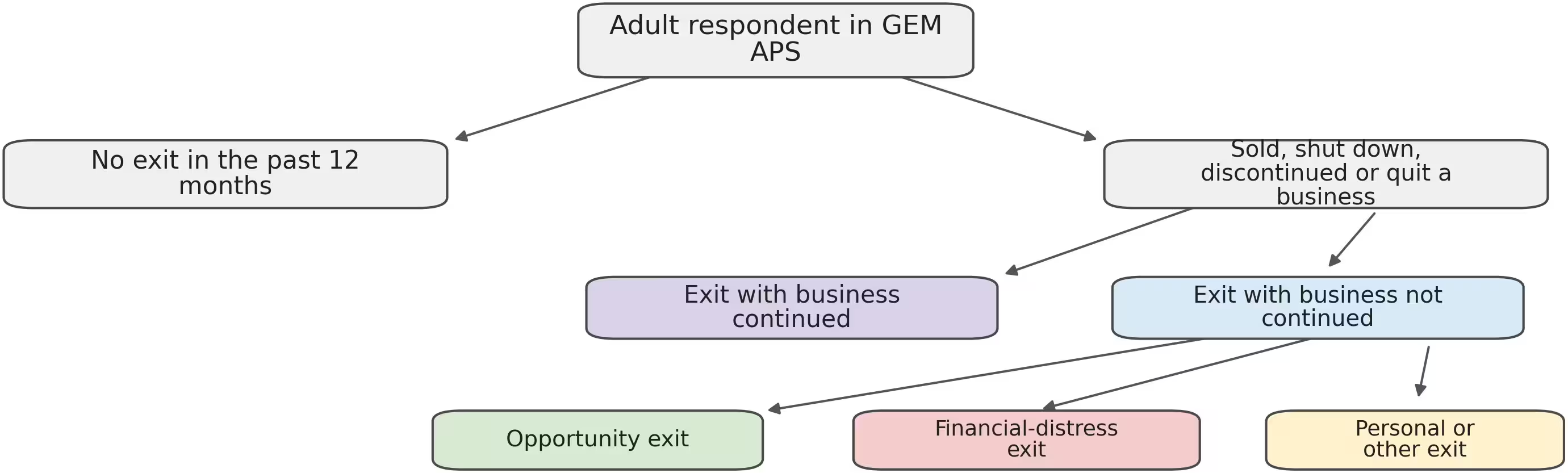
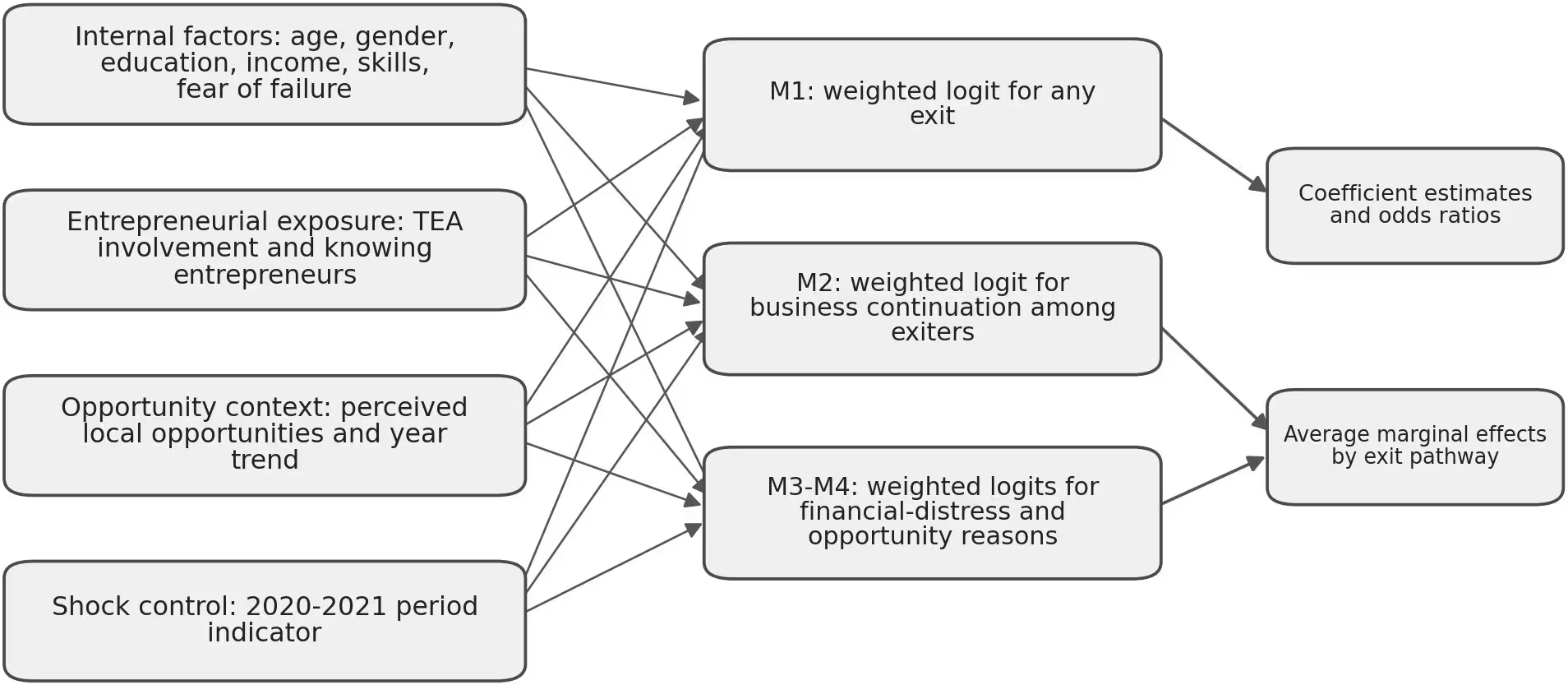
Researchers Giusy Sica, Chiara Spiniello, Tommaso Maria Cucchiarelli, Alessandra Micozzi, and Maria Palazzo analyzed harmonized data from the Global Entrepreneurship Monitor Adult Population Survey collected in Italy between 2007 and 2025. Their final harmonized file comprised 34,893 respondents aged 18 to 64, capturing 703 individuals who reported an entrepreneurial exit. Rather than treating all departures as the same, the study examined four distinct pathways: overall exit incidence, whether the business continued operating under a different owner, whether the departure stemmed from financial distress, and whether the exit was driven by a favorable new opportunity.
The investigation showed that approximately 31 percent of reported exits did not actually result in the disappearance of the enterprise. In these cases, the business continued to function after the original owner stepped away, highlighting that role disengagement by an entrepreneur does not equate to corporate death. Furthermore, the descriptive data mapped dramatic temporal shifts, including an unusually low weighted exit rate of 0.53 percent during the exceptional pandemic year of 2020, followed by a sharp surge to 5.08 percent in 2024 and 4.77 percent in 2025.
What Drives Different Types of Entrepreneurial Exits?
The statistical models demonstrated that the personal traits and resources predicting whether someone exits a venture differ entirely from the factors explaining why they leave. In the broad adult population sample, factors like possessing startup skills, knowing existing entrepreneurs, and active involvement in early stage entrepreneurial activity strongly predicted reporting any exit. However, when the authors restricted their analysis to the risk population of active entrepreneurs, those specific exposure variables lost their predictive power.
When looking at the specific motivations behind leaving a company, financial distress accounted for a substantial share of departures, particularly in the pre-2016 years. In the baseline exploratory models, financial distress exits exhibited links to higher fear of failure and lower perceived local business opportunities, though the authors noted these particular associations weakened after accounting for multiple statistical tests. Conversely, opportunity-oriented exits proved much less common at roughly 12.3 percent of reason-valid departures, and were heavily associated with younger age and high household income. Specifically, a high-income tertile displayed a strong positive association with opportunity exits, suggesting that individuals with greater financial resource slack possess the adaptive capacity to redeploy their efforts toward fresh commercial prospects.
Why Aggregate Economic Statistics Can Mislead Policymakers
The study highlights fundamental limitations when relying on a single binary survey indicator for business departures. Administrative bankruptcy figures and broad survey metrics often blend voluntary career pivots, healthy ownership sales, and devastating financial collapses into one ambiguous category. By tracking data across nearly two decades in Italy, a European economy heavily reliant on small, owner-managed firms, the work emphasizes that economic policy and research must look closely at organizational continuity rather than assuming every departure represents a failed enterprise.
The authors acknowledge several methodological boundaries in their work. Because the dataset relies on repeated cross-sections rather than a longitudinal tracking panel, the models identify statistical associations rather than direct causal effects. Furthermore, the subset of opportunity-driven exits contained only 54 observed events, which limits the precision of those specific effect magnitudes even after applying specialized rare-events penalization techniques. Despite these caveats, the findings suggest that interpreting entrepreneurial departures requires separating personal vulnerability from strategic mobility.
The research was published in PLOS One on November 19, 2026.
This article has been fact checked for accuracy, with information verified against reputable sources. Learn more about us and our editorial process.
Last reviewed on .
Article history
- Latest version
Reference(s)
- Sica, Giusy., et al. “Entrepreneurial exit pathways in Italy: Evidence from GEM Adult Population Survey data, 2007–2025.” PLOS One, vol. 21, no. 11, November 19, 2026, pp. e0355629 Public Library of Science (PLoS), doi: 10.1371/journal.pone.0355629. <https://doi.org/10.1371/journal.pone.0355629>.
Cite this page:
- Posted by Sana Malik