Why Criminal Gangs Are Increasingly Kidnapping Nigerian Healthcare Workers
A new study reveals how financial perceptions, facility vulnerabilities, and economic hardship drive the targeting of doctors and nurses in non-conflict regions.

Why are doctors and nurses increasingly being targeted by criminal gangs, and what makes these health professionals prime targets in non-conflict regions? A qualitative study published in PLOS One explores the complex web of financial, social, and structural pressures driving the kidnapping of healthcare workers in Nigeria.
The research, conducted by Ijeoma Okedo-Alex and colleagues between September and December 2024, utilized in-depth interviews with 53 participants. The sample included frontline healthcare workers, union representatives, media personnel, security actors, and policymakers across four Nigerian states, deliberately excluding areas with active armed conflict.
How Wealth Perceptions and Professional Visibility Shape Vulnerability
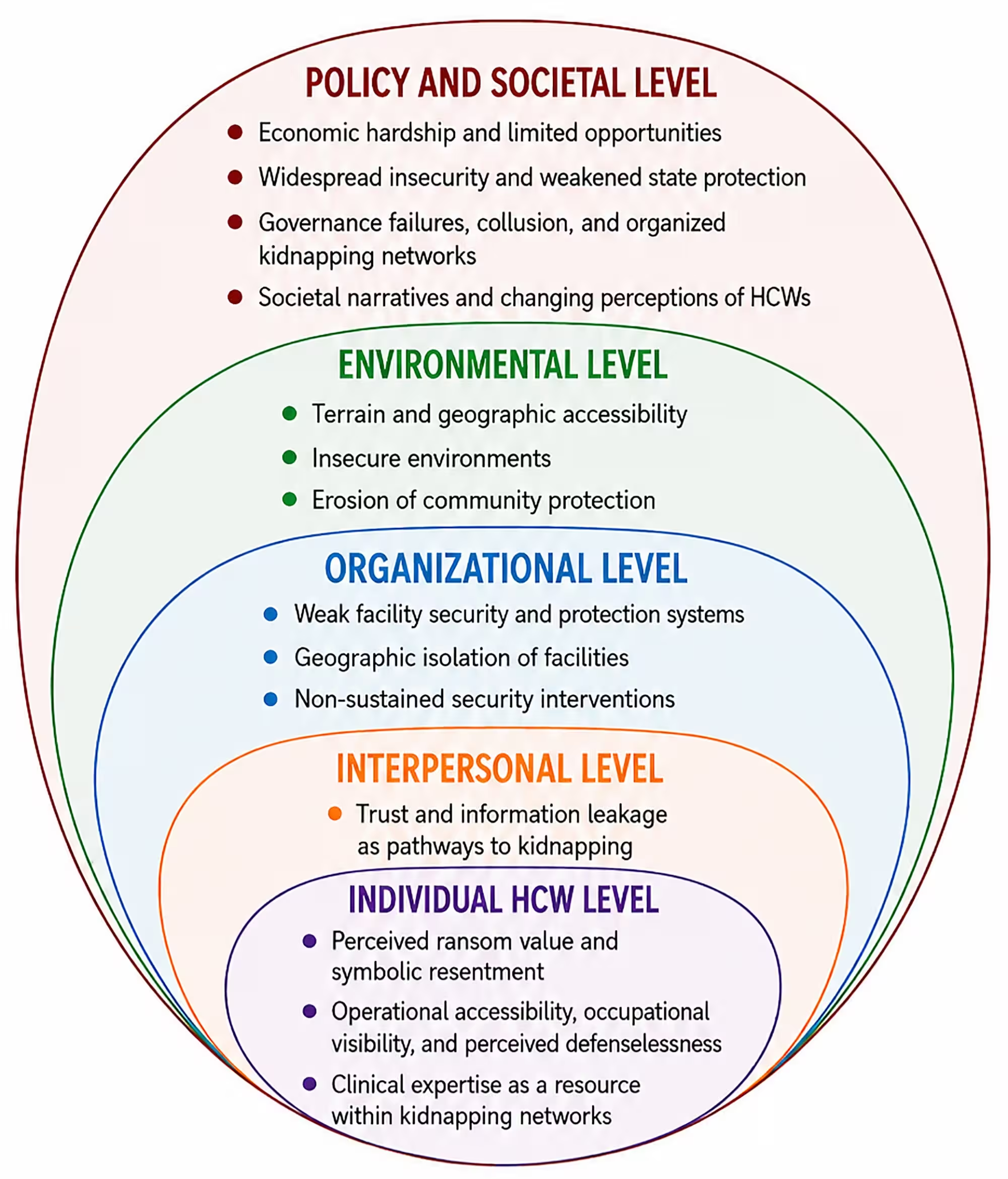
The findings point to a multi-layered phenomenon where health workers become targets due to a combination of economic perceptions and high visibility. Criminal networks often assume that doctors and nurses possess substantial personal wealth or can easily mobilize ransom funds through professional associations, institutional affiliations, and unions.
Furthermore, daily routines such as traveling during early morning hours or late at night along insecure transit routes heighten exposure. Visible professional markers, including uniforms, identification cards, and branded vehicles, further single out health workers in public spaces.
Beyond financial ransom, criminal groups frequently abduct medical professionals to exploit their clinical expertise. Kidnappers rely on captured doctors and nurses to provide emergency medical care and manage injuries for themselves and their hostages, thereby avoiding formal healthcare facilities where they might be apprehended.
The Role of Facility Insecurity and Environmental Lacks
At the organizational level, inadequate physical security within and around healthcare facilities creates an environment conducive to abductions. Poor perimeter fencing, unlit hospital grounds, an absence of security personnel, and overgrown bushes near buildings allow attackers to conduct surveillance and escape easily.
Environmental factors also play a critical role, particularly in isolated or difficult-to-access terrains like creeks or outskirt communities. Traditional community protection mechanisms, such as local vigilante groups and engagement with local leaders, have deteriorated, leaving health workers more isolated than in the past.
Broader Socioeconomic Pressures and Systemic Weaknesses
The authors note that wider societal drivers, notably severe economic hardship, high unemployment, and widespread poverty, underpin the rise in profit-driven kidnapping. In a country where a significant percentage of the population faces multidimensional poverty, criminal enterprises view abduction as a viable economic venture.
Weak judicial systems and alleged collusion with security actors were also perceived as sustaining criminal networks, allowing perpetrators to operate with limited legal consequences. The authors emphasize that tackling this crisis requires coordinated intersectoral responses, ranging from improved facility security and judicial enforcement to targeted economic empowerment programs that address the root causes of insecurity.
The research was published in PLOS One on November 19, 2026.
This article has been fact checked for accuracy, with information verified against reputable sources. Learn more about us and our editorial process.
Last reviewed on .
Article history
- Latest version
Reference(s)
- Okedo-Alex, Ijeoma., et al. “From healing to hostage: Drivers of healthcare worker kidnapping in Nigeria.” PLOS One, vol. 21, no. 11, November 19, 2026, pp. e0362302 Public Library of Science (PLoS), doi: 10.1371/journal.pone.0362302. <https://doi.org/10.1371/journal.pone.0362302>.
Cite this page:
- Posted by David Anderson